
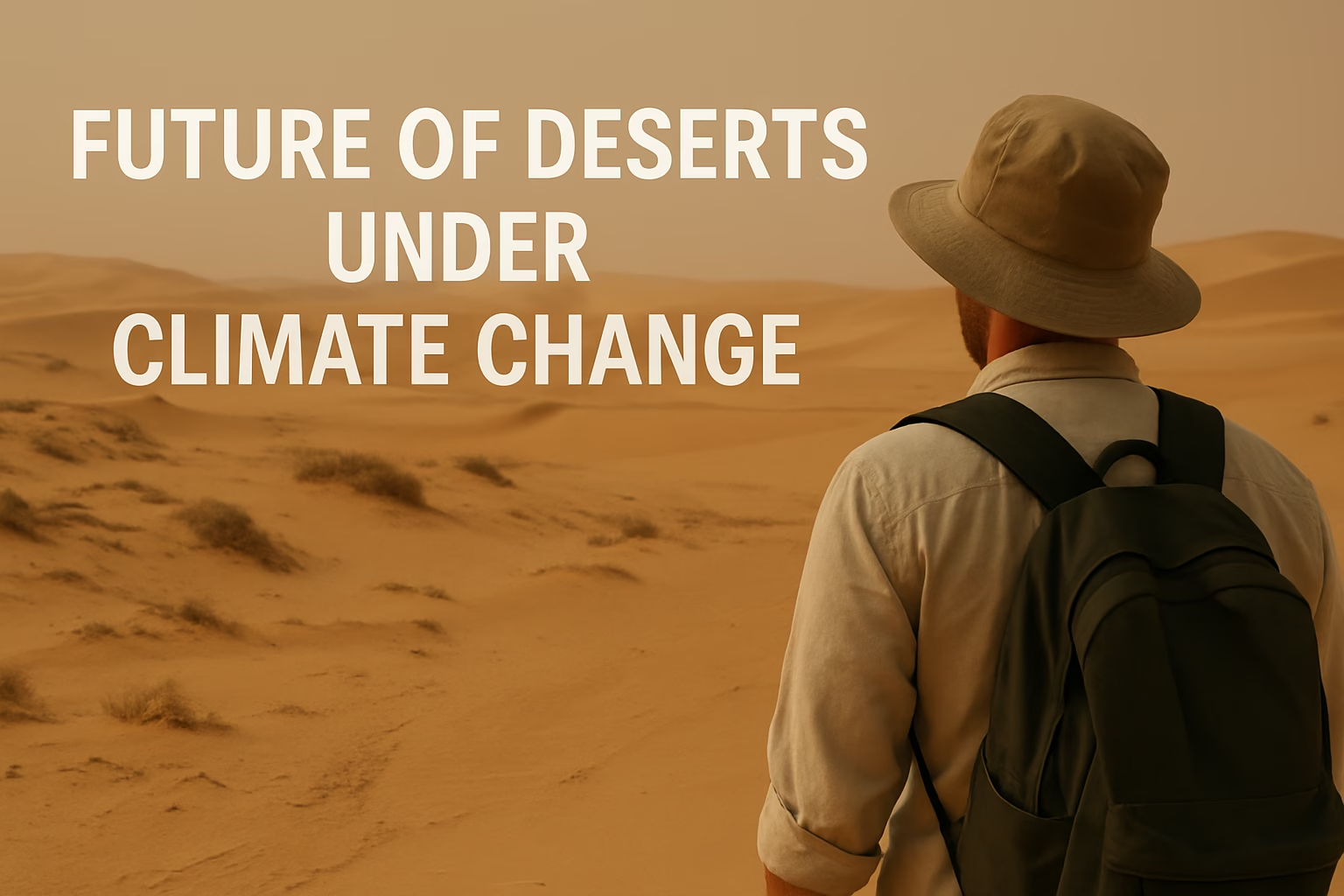
The future of deserts under climate change is not just about more sand and more heat. It’s about how these huge arid landscapes will shift, grow, shrink in places, and reshape the lives of millions of people living around their fragile edges.
As global temperatures rise, drylands and semi-arid regions are already changing their rhythm. Some places are getting hotter and drier, others face intense downpours instead of gentle rain. These changes can turn once-productive land into desert-like terrain much faster than many communities are prepared for.
How Climate Change Is Reshaping Desert Landscapes
Most deserts are already hot or very dry, but climate change is pushing them into new territory. We’re seeing more extreme heatwaves, shifting winds and different rainfall patterns that reshape dunes, stress plants, and influence where people can live. Many of these changes are tied to evolving desert climate patterns that control heat, wind, and rainfall across arid regions.
- Hotter days mean more evaporation, so scarce water disappears even faster from soils and shallow lakes.
- Warmer nights give plants and animals less time to cool down, stressing already fragile desert ecosystems.
- Shifting winds can move sand into new areas, creating fresh dune fields and burying roads, wells or farmlands.
These changes don’t happen evenly. Some desert regions may become drier, while others may receive more rainfall or experience stronger swings between dry periods and intense storms. Temperature, rainfall, soil moisture, wind, and land use all affect how an individual dryland responds.
What the 2026–2030 Climate Outlook Means for Drylands
WMO’s State of the Global Climate 2025, published on 23 March 2026, confirmed that 2015–2025 were the eleven warmest years on record. The organization estimated 2025 at about 1.43°C above the 1850–1900 average, making it the second or third warmest year depending on the dataset.
The next five years are also expected to remain very warm. WMO’s Global Annual to Decadal Climate Update 2026–2035, released on 28 May 2026, projects annual global mean near-surface temperatures during 2026–2030 at about 1.3°C to 1.9°C above the 1850–1900 average. It gives an 86% chance that at least one year in that period will be warmer than 2024 and a 91% chance that at least one year will temporarily exceed 1.5°C above the pre-industrial average.
- Temperature: warmer conditions raise heat stress across many drylands and increase the energy available to remove moisture from soils and surface water.
- Evaporation demand: higher temperatures can increase atmospheric demand for moisture, so the same amount of rainfall may leave less water available to plants, soils, reservoirs, and shallow lakes.
- Rainfall variability: warming does not mean rainfall falls everywhere. Some dry regions may become drier, while others may receive more precipitation or more rain in short, intense events.
- Regional differences: desert boundaries will not move outward at the same rate everywhere. Local rainfall, circulation, topography, vegetation, groundwater, and land management can produce very different outcomes from one dryland to another.
A temporary year above 1.5°C is also different from a long-term global warming level sustained over decades. For desert forecasting, the near-term WMO outlook is best read as evidence of continued high global temperatures, not as a prediction that every desert will expand by the same amount.
Desert Expansion vs. Desertification
Two ideas often get mixed up: natural desert expansion and desertification. They sound similar but they’re not the same thing, especially under a warming climate.
- Desert expansion is when the climate around an existing desert becomes more arid, so the desert climate zone spreads into nearby regions.
- Desertification is when fertile land is degraded by overgrazing, deforestation, poor irrigation or mismanagement, often worsened by climate stress.
Under climate change, desertification pressure can intensify where warming, water stress, vegetation loss, and damaging land use overlap. Existing desert climate zones can also shift, but their boundaries do not move outward uniformly; some drylands may become drier, others wetter, and many may experience greater rainfall variability.
Rain Falling Differently, Not Just Less
People usually imagine desert futures as simple: less rain everywhere. Climate models, though, paint a more complicated picture for drylands.
- Some regions may see slightly more total rainfall but packed into short, violent storms.
- Other regions may lose rain altogether, lengthening drought periods and drying up seasonal rivers.
- Rain may also shift seasons, arriving late or in unusual months, breaking traditional grazing and planting calendars.
For the land, intense downpours can be as damaging as no rain at all. Water hits hard, runs off quickly over sun-baked soil, and carries away topsoil and seeds instead of soaking in. That kind of rain feeds flash floods and deep gullies rather than quiet, hidden groundwater.
Future Desert Ecosystems: Tough Survivors and Sudden Blooms
Plants and animals in desert ecosystems are already tough, but climate change is raising the bar. Species that can’t handle extra heat or longer dry spells may vanish from some areas, while heat-loving, drought-resistant species spread.
- Deep-rooted shrubs might outcompete shallow-rooted grasses as soils dry out.
- Invasive plants could take advantage of disturbed land and odd rain patterns.
- Desert animals may shift their activity even more into the night, or move upslope and poleward to cooler micro-climates.
One surprising part of the future is the possibility of more frequent but short-lived desert blooms. When strong storms do arrive, they can trigger dramatic flushes of wildflowers and grasses, followed by long silent periods. The desert of tomorrow might swing harder between “shockingly green” and “extremely bare”.
Dust Storms, Global Skies and Far-Away Impacts
Where soils dry, vegetation thins, and winds can mobilize loose sediment, dust-storm risk can rise. The response is regional rather than uniform, because rainfall, soil condition, vegetation cover, wind, and land disturbance all affect whether a dry surface becomes an active dust source. Once airborne, dust can travel thousands of kilometers across countries and oceans.
- Air quality in cities far from deserts can drop sharply during major dust events.
- Dust carries nutrients and minerals that fertilize distant forests and oceans.
- In the atmosphere, dust particles interact with sunlight and clouds, subtly shaping regional climate patterns.
This means the future of desert dust is also the future of skies, soils and seas far away. What happens on one remote dune field can eventually influence crops, glaciers or coral reefs in another part of the world.
Life at the Desert Edge: Cities, Water and Migration
Many of the world’s fastest-growing cities sit close to desert and semi-desert zones. As climate change tightens the grip of heat and water stress, these places will have to adapt quickly just to keep daily life running.
- Water scarcity can intensify where higher evaporative demand combines with shrinking rivers, glacier retreat, low rainfall or already over-pumped aquifers.
- Heat stress will push urban design toward cooler materials, shade, and more clever ventilation.
- Rural communities at the desert fringe may be forced to move as farms fail, increasing climate-driven migration.
In many cases, the future of these regions depends less on the desert itself and more on how people manage water, land and energy. Smart planning can soften the blow; careless use of resources can turn stress into crisis.
Solar and Wind: Deserts as Energy Powerhouses
There’s another side to the story: many deserts have some of the best solar and wind resources on Earth. Long, cloud-free days and steady winds make them prime spots for large-scale renewable energy projects.
- Solar farms can turn intense sunlight into electricity for nearby cities and even distant regions via long transmission lines.
- Wind farms in certain desert passes can feed power grids during evening and night.
- Hybrid systems that combine solar, wind and storage can stabilize supply in harsh desert climates.
If planned carefully, this shift could turn some desert areas into clean-energy hubs. Poorly planned projects, though, might damage fragile habitats or local livelihoods, so design and consultation really matter.
Balancing Energy Dreams and Desert Ecosystems
Future projects need to respect desert biodiversity and traditional ways of using the land. That means mapping migration routes of wildlife, protecting key plant communities and listening to local and Indigenous knowledge about sacred sites or grazing routes.
Scenarios for the Desert Future
Scientists often explore several possible climate futures, from low emissions to very high ones. Each pathway has different consequences for desert regions and drylands.
| Scenario | Desert Climate Signal | Main Human Challenge |
|---|---|---|
| Lower warming | Lower additional heat and evaporative demand, with regional rainfall changes still varying by location. | Adjusting water and land use while protecting vulnerable dryland ecosystems. |
| Medium warming | More heat stress and higher evaporation demand, with drought or intense rainfall depending on the region. | Managing water, farming, cities, and grazing under greater climate variability. |
| High warming | Stronger heat and water stress across many drylands, while rainfall responses continue to differ by region. | Maintaining reliable water, food, health and energy systems under more severe extremes. |
Where we end up on this spectrum depends on present-day choices: how quickly we cut greenhouse gas emissions, how we manage land, and how seriously we treat adaptation plans in desert and dryland regions.
Adapting With the Desert, Not Against It
Communities that have lived near deserts for generations already know how to work with scarcity. Climate change makes their traditional strategies more valuable, not less, especially when blended with modern tools.
Nature-based options
- Restoring native shrubs and grasses to anchor soil and reduce dust.
- Protecting and reviving oases and wetlands as climate refuges.
- Using sand-dune stabilization with vegetation rather than concrete walls.
Human systems
- Improving water storage and reuse, from rooftop tanks to underground cisterns.
- Designing heat-resilient housing with shade, airflow and cool materials.
- Planning flexible grazing and farming systems that can shift with the climate.
When these approaches come together, they help create living deserts instead of empty ones: landscapes where people, plants and animals still have room to adapt, even as temperatures climb and rainfall patterns wobble.
What This Means for You and the Wider Desert World
Even far from any desert, people are connected to dry regions through food, energy, dust transport, trade and migration. Changes in desert water availability, heat, land productivity, and dust can therefore have effects well beyond the desert itself.
Water efficiency, careful land management, ecosystem restoration, and lower-emission energy systems can reduce some pressures on deserts and drylands. Their effects vary by region, especially where groundwater depletion, grazing pressure, farming, or habitat disturbance already influence the landscape.
The future of deserts under climate change will differ from region to region. Temperature rise, evaporation demand, rainfall timing, groundwater, vegetation, and land use will determine whether a dryland becomes hotter, drier, more variable, or—in some locations—temporarily wetter.