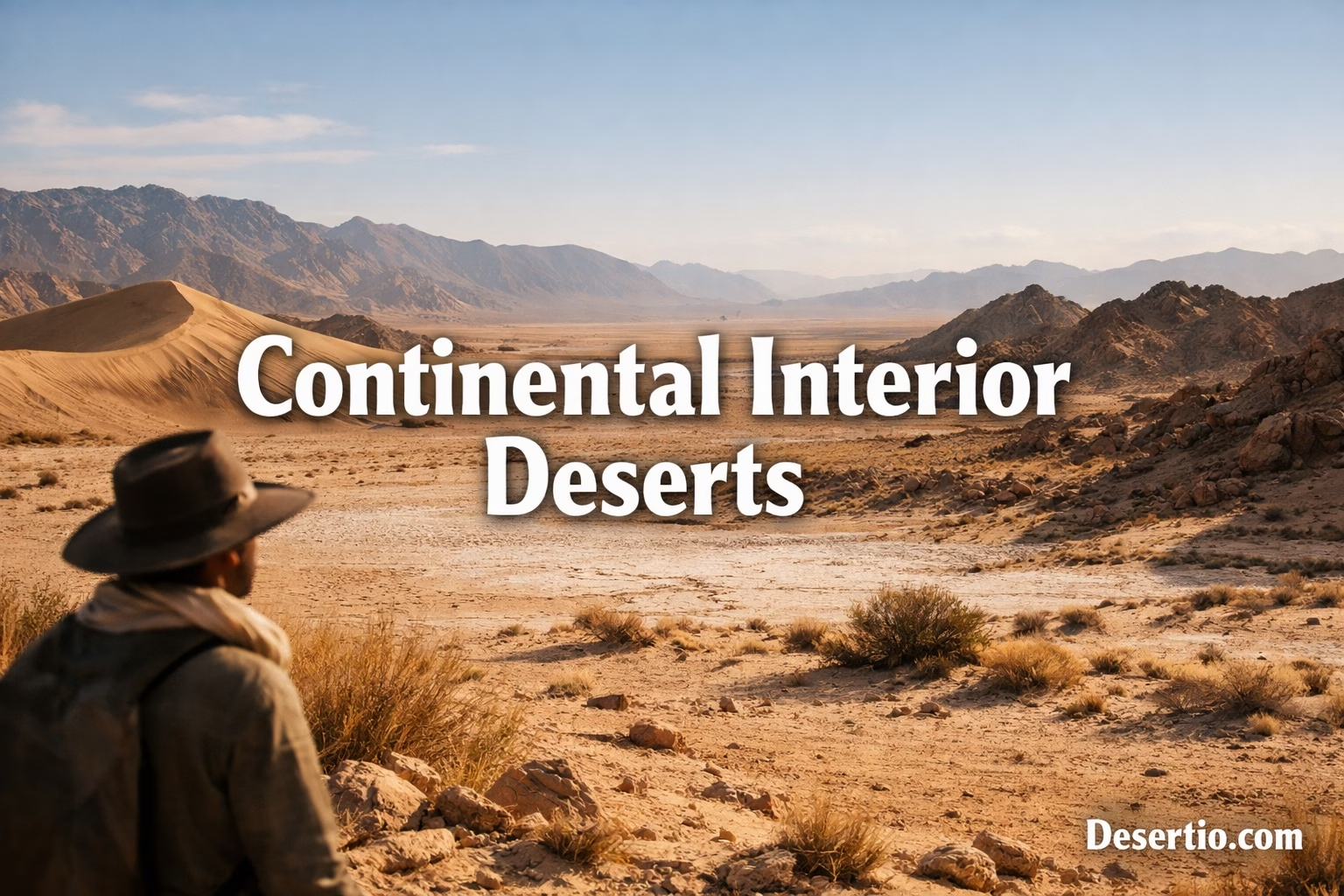
A continental interior desert is a dryland that sits deep inside a landmass, far from ocean moisture, so the air arrives already “wrung out.” Think of it like a giant bowl where clouds pass by with empty pockets. These places often feel wide, crisp, and shockingly changeable—cold nights, bright mornings, and afternoons that can flip from calm to gusty in a blink.
- Quick Snapshot of Continental Interior Deserts
- What Makes an Interior Desert “Continental”
- How Continental Interior Deserts Form
- Weather Patterns You Can Expect
- Precipitation Style
- Wind and Dust
- Signature Landforms of Interior Desert Basins
- Soils, Salts, and the Hidden Water Story
- Plants That Nail the “Do More With Less” Lifestyle
- Animals and Everyday Survival Tricks
- Heat and Cold Strategies
- Water-Smart Habits
- Well-Known Examples of Continental Interior Deserts
- How to Read the Landscape Like a Local
- Responsible Visiting Tips for Interior Deserts
- FAQs About Continental Interior Deserts
Quick Snapshot of Continental Interior Deserts
🌧️ Rainfall is usually low, often under 250 mm a year in the driest zones, with big year-to-year swings. The air is thirsty and evaporation stays high.
🌡️ Temperature ranges can be dramatic. Many are cold deserts with freezing winters, yet summers can feel boldly hot in sheltered basins. That daily temperture swing is part of the vibe.
💧 Water often collects in closed basins (endorheic areas), forming salty lakes, playas, and seasonal wetlands. It’s rare, patchy, and precious.
What Makes an Interior Desert “Continental”
The big idea is distance. When a region sits far from ocean moisture, winds have a long journey over land, and the air loses easy-to-drop water early. By the time clouds reach the continental interior, they’re often thin, stingy, and reluctant. Add mountains, basins, and a few stubborn weather patterns, and you get a dry, high-contrast, big-sky landscape.
Many continental interior deserts are also cold deserts. That surprises people. The word “desert” isn’t about heat—it’s about low precipitation. Some of the world’s most interior deserts can be icy in winter and still qualify as true deserts. In broader desert science, this idea is central to understanding what defines a desert climate, where persistent dryness matters more than temperature.
How Continental Interior Deserts Form
Interior deserts usually form through a stack of causes rather than one single switch. Picture layers of dryness building up like sand in a jar: each layer adds a little more aridity, reliability, and persistence.
- Continentality: Air masses crossing huge land areas lose moisture. The interior ends up with dry inbound air and big temperature swings that reduce gentle, steady rainfall.
- Rain Shadow Effects: Mountains can force moist air up, triggering rain on one side and leaving a dry leeward zone behind. That downwind region can become remarkably arid even if it’s not especially hot.
- Persistent High Pressure: Stable high-pressure systems encourage sinking air. Sinking air warms slightly, which makes clouds less likely to form. The result is clear skies, strong sun, and limited precipitation.
- Closed Drainage Basins: In many interior deserts, water doesn’t reach the sea. Streams end in basins, leaving salt flats and playa lakes that appear and dissapear with the seasons.
Interior deserts feel like nature’s minimalist studio: less water, more sky, and a clean stage where wind and stone do the storytelling.
Desert Note
Weather Patterns You Can Expect
A classic continental interior desert has sharp seasons and a high-contrast daily rhythm. Clear skies mean sunlight heats the ground fast, then nighttime cooling hits hard. That’s why mornings can feel brisk while afternoons turn bright and dry.
Precipitation Style
Rain often arrives as short bursts or brief seasonal showers, not the slow, soaking kind. Snow can matter a lot in cold interior deserts, because it melts gradually and feeds spring moisture that plants love.
Wind and Dust
Wind is a major sculptor here. Dry soil, sparse cover, and broad open space make it easier for gusts to lift fine sediment. A dusty day doesn’t always mean a storm—sometimes it’s just the desert breathing in slow motion.
Signature Landforms of Interior Desert Basins
Not every interior desert is a dune paradise. Many are a mix of basins, plains, and mountain islands. The magic is in the transitions: gravel fans, salt pans, and ridges that look carved with a careful hand.
- Alluvial Fans: Fan-shaped deposits where streams exit hills. They’re rocky, layered, and often show fresh channels after rare downpours.
- Playas and Salt Flats: Flat basin floors that can be powder-dry or briefly wet. Evaporation leaves salt crusts and shimmering textures.
- Desert Pavement: A natural “armor” of stones at the surface, with finer material beneath. It’s tough, stable, and gives many interiors that clean, pebbled look.
- Dune Fields: Where sand supply and wind line up, dunes appear—sometimes as crescent barchans, sometimes as long ridges with a soft sound underfoot.
Soils, Salts, and the Hidden Water Story
Interior deserts often have young-looking surfaces but surprisingly complex soils. Because rain is limited, minerals don’t wash away easily. Instead, they can build up as carbonates, gypsum, and salts. Over time, that creates crusts, nodules, and layers that influence where plants can root and thrive.
Water isn’t only about rainfall. In a continental interior desert, you’ll often find moisture in unexpected forms: brief runoff, shallow groundwater pockets, and spring-fed oases. Some basins also have ephemeral streams that flow just long enough to paint the landscape with green streaks before the dryness returns.
| Interior Desert Pattern | Typical Feel | Common Landforms | Water Clues |
|---|---|---|---|
| Cold Basin Desert (winter-dominant cold) | Crisp, clear, high-contrast | Playas, desert pavement, sage plains | Snowmelt pulses, seasonal wetlands |
| Rain-Shadow Interior (downwind dryness) | Bright, windy, lean | Alluvial fans, gravel plains, dune patches | Flash runoff, dry washes |
| High Plateau Desert (elevated interior) | Thin air, cool nights, strong sun | Rocky flats, salt pans, wind-carved ridges | Spring-fed spots, salty lakes |
Plants That Nail the “Do More With Less” Lifestyle
Vegetation in continental interior deserts is about smart choices. You’ll see deep roots, tiny leaves, and waxy coatings that slow water loss. Some plants wait as seeds for the perfect moment, then pop up fast after a shower like they’ve been rehearsing underground.
- Xerophytes: Water-savers with reduced leaf area and efficient stomata. They stay steady when moisture is rare.
- Salt-Tolerant Plants: Near playas and salty flats, some species handle salty soils like it’s normal life. Their stems can look plump, while their roots manage the mineral load.
- Ephemerals: Short-lived bloomers that appear after rain or snowmelt. They’re quick, bright, and gone before the next dry spell settles in.
Animals and Everyday Survival Tricks
Desert animals don’t “beat” dryness; they dance around it. Many are active at dawn or night, use burrows to escape heat and cold, and get moisture from food. In interior deserts, seasonal cold adds another layer—so flexibility becomes the superpower, and timing is everything.
Heat and Cold Strategies
- Burrowing: A natural thermostat. Burrows stay more stable than the surface and cut exposure to wind.
- Seasonal Coats: Many species shift between insulation and lighter coats as seasons flip, keeping energy use efficient.
Water-Smart Habits
- Night Activity: Cooler air reduces water loss. It’s simple, and it works.
- Food Moisture: Seeds, plants, and insects can provide hidden water. It’s like sipping from a living canteen.
Well-Known Examples of Continental Interior Deserts
Continental interior deserts show up across big inland regions where moisture struggles to arrive. A few famous examples include the Gobi Desert, the Taklamakan Desert, and the Great Basin Desert. Each has its own mix of cold seasons, basin geography, and wind-shaped terrain, but they share that core interior feel: dry air plus huge horizons—a pattern often discussed when exploring the major types of deserts found across the planet.
It’s also worth remembering that some interior “desert” landscapes blend into steppe and semi-arid grasslands. The boundary can be fuzzy, like a watercolor edge. The key is still the moisture budget: not enough steady precipitation to support dense forests, so the land leans toward open and sparse.
How to Read the Landscape Like a Local
Interior deserts leave clues everywhere. Once you know what to look for, the ground starts speaking in patterns, textures, and subtle color shifts. The trick is to slow down and notice the small stuff.
- Follow dry washes to see how rare floods move sediment. Their edges often hold denser plants and a slightly cooler microclimate.
- Look at the ground surface: a stone “skin” suggests desert pavement, while powdery flats hint at playa soils.
- Scan for wind direction in dune shapes and ripples. Dunes are like frozen waves—same physics, just slower motion.
Responsible Visiting Tips for Interior Deserts
These places can look empty, but they’re not “unused.” Life is often small, quiet, and spread out, so tiny disturbances can linger. A few simple habits keep the experience safe, comfortable, and respectful.
- Carry More Water Than You Think: Dry air increases water loss. Bring extra, and keep it accessible, not buried in a bag.
- Dress for Swingy Days: Layers matter in interior deserts. A light shell helps with wind, and warm layers help when sunset drops the temperature quickly.
- Stay on Durable Surfaces: Gravel, rock, and established tracks reduce impact. Biological soil crusts can be fragile, even if they look tough.
- Respect Salt Flats and Playas: They can be deceptively soft when wet. Give them space and enjoy the mirror-like patterns from the edges.
FAQs About Continental Interior Deserts
Are continental interior deserts always sandy?
Nope. Many are dominated by gravel plains, stone surfaces, and salt flats. Dunes appear when there’s enough sand supply and consistent wind, but a lot of interior desert scenery is more rocky than beach-like, with subtle textures.
Why do some interior deserts get so cold?
Clear skies let heat escape at night, and being far inland often means less moderating ocean influence. Add elevation in some regions and you get freezing nights, snowy winters, and bright sunny days. Desert status is about low precipitation, not constant warmth.
What does “endorheic basin” mean in simple terms?
It means water flows inward and stops. Streams and runoff head into a basin and end there instead of reaching the ocean. Over time, evaporation concentrates minerals, creating salty lakes, playas, and crusty flats that are a signature feature of many continental interior deserts.
What is the easiest way to spot an interior desert climate?
Look for the combo: big daily temperature swings, clear skies, and vegetation that’s spaced out rather than continuous. If the landscape is a patchwork of hardy shrubs, open ground, and dry channels, you’re likely in the neighborhood of an interior desert or its semi-arid transition zone.
