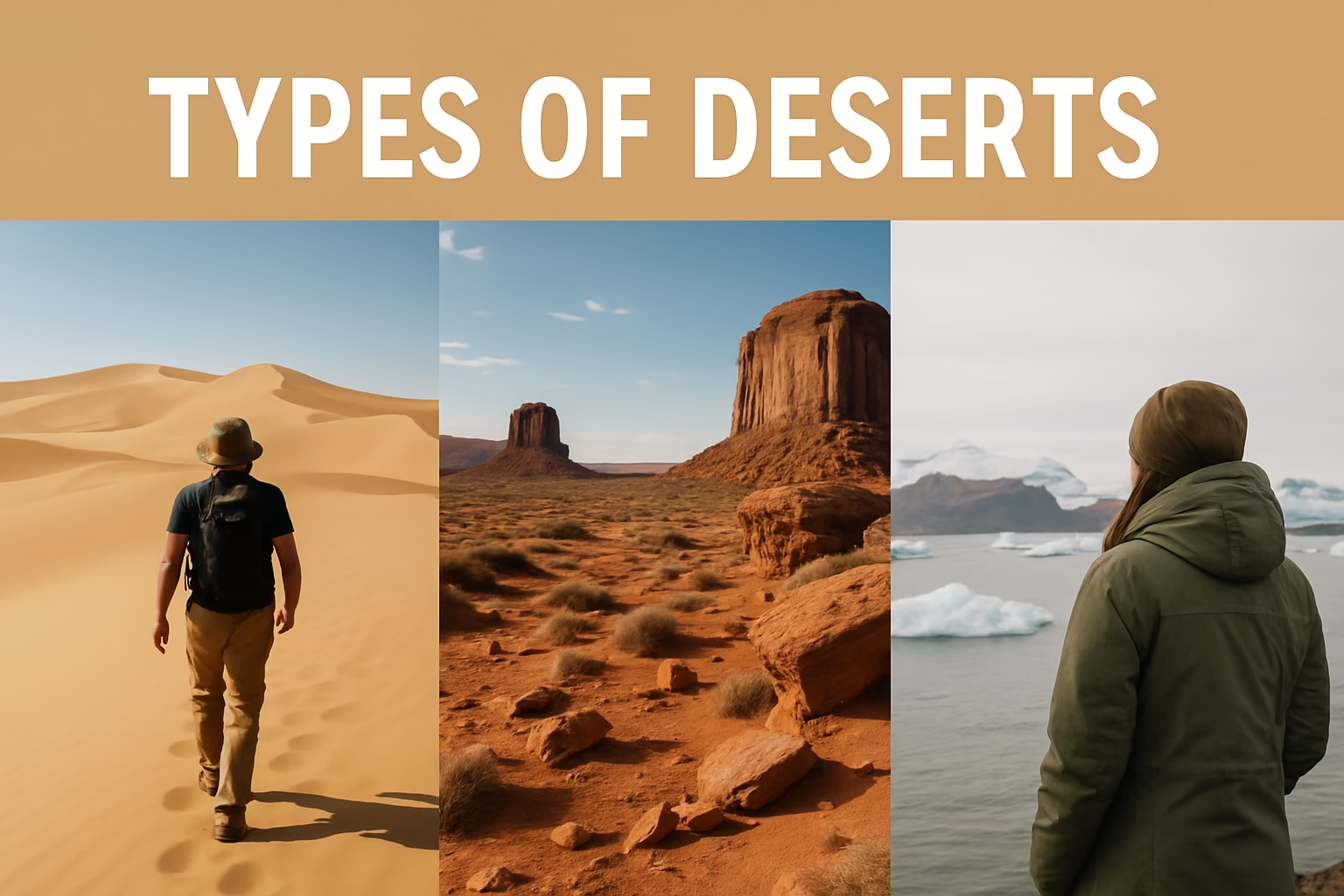
Deserts are not just endless sand under a burning sun. When you look closer, you find many types of deserts, each with its own climate, ground surface, plants and rhythms of life. Some are blazing hot, others are bitterly cold. A few rarely see clouds, while others live in the shadow of tall mountains.
- What Actually Makes a Desert a Desert?
- Main Types of Deserts by Climate
- 1. Hot Subtropical Deserts
- 2. Semi-Arid (Steppe) Deserts
- 3. Coastal Deserts
- 4. Cold Mid-Latitude Deserts
- 5. Polar Deserts
- Types of Deserts by Surface: Sand, Rock, Salt & More
- Erg – Sand-Sea Deserts
- Reg – Gravel or Pebble Deserts
- Hamada – Bare Rock Deserts
- Salt Flats and Playas
- Special Desert Types: Rain Shadow & Continental Deserts
- Rain Shadow Deserts
- Continental Interior Deserts
- Desertification: New Deserts in the Making
- How to “Read” a Desert When You See One
- Why the Different Types of Deserts Matter
This guide breaks down the main desert types in a simple, user-friendly way. You’ll see how scientists classify deserts, how travelers experience them, and how these dry landscapes shape life on Earth.
What Actually Makes a Desert a Desert?
Many people think a desert must be covered in sand. That’s not true. The key factor is extremely low rainfall. Most deserts receive less than about 250 mm (10 inches) of rain per year.
- Rainfall: very low, often irregular
- Evaporation: water disappears quickly into dry air
- Vegetation: sparse, tough plants only
- Temperature: can be very hot or very cold, depending on the type of desert
So a polar desert covered in ice and a subtropical sand sea are both deserts, even though they look nothing alike. The common thread is the harsh, dry enviroment.
Main Types of Deserts by Climate
A practical way to understand types of deserts is to examine climate patterns: temperature ranges and the timing and amount of rainfall. Below is a brief overview of the main categories.
| Desert Type | Typical Temperature | Rain Pattern | Example Regions |
|---|---|---|---|
| Hot subtropical deserts | Very hot summers, warm winters | Very little, often in short storms | Sahara, Arabian, Sonoran |
| Semi-arid (steppe) deserts | Hot summers, cool to cold winters | More frequent but still low | Edges of Sahara, parts of Central Asia |
| Coastal deserts | Mild, often foggy, not extreme | Very rare rain, heavy fog | Atacama, Namib |
| Cold mid-latitude deserts | Hot to warm summers, cold winters | Low rain or snow year-round | Gobi, Patagonian |
| Polar deserts | Very cold all year | Very low snow, strong winds | Antarctica, High Arctic |
Now let’s walk through each desert type in more detail, with simple examples and key features you can remember.
1. Hot Subtropical Deserts
When most people picture a desert, they imagine a hot subtropical desert. These deserts sit roughly between 15° and 30° latitude, where high-pressure systems keep the air dry and skies clear.
- Long, scorching summers with intense sunlight
- Short, mild winters
- Rain is rare and often arrives as sudden storms
- Common features: sand dunes, rocky plateaus, dry riverbeds
The Sahara, the Arabian Desert and the Sonoran Desert are classic examples. Life here focuses around oases, seasonal rivers (wadis), and hardy shrubs that can handle extreme heat.
2. Semi-Arid (Steppe) Deserts
Semi-arid deserts form a kind of transition zone between true deserts and grasslands. They are still dry, but not quite as extreme in either heat or drought.
- Moderate rainfall compared to hot deserts, yet still low
- Often called steppe regions
- More grasses and low shrubs, fewer tall trees
- Big seasonal differences between summer and winter
These semi-arid desert types often lie on the edges of larger hot deserts or in continental interiors. Overgrazing and poor land use can turn steppe areas into more severe deserts over time.
3. Coastal Deserts
Coastal deserts are one of the strangest desert types. They sit next to cold ocean currents, where cool air holds little moisture. The result: heavy fog but almost no rain.
- Mild temperatures most of the year
- Frequent fog and low clouds
- Extremely low rainfall, sometimes less than hot deserts
- Plants often harvest water directly from fog
The Atacama Desert in South America and the Namib Desert in Africa are famous coastal deserts. In these fog deserts, you may see beetles, lichens and shrubs that literally drink the mist.
4. Cold Mid-Latitude Deserts
Cold deserts in mid-latitudes are shaped by distance from the sea, mountains and strong seasonal changes. Summers can still be warm or hot, but winters are cold with frost and snow.
- Hot to warm summers, cold winters
- Low rainfall overall, often falling as snow
- Often located in rain shadows behind high mountain ranges
- Vegetation: grasses, hardy shrubs, some seasonal flowers
The Gobi Desert and parts of the Patagonian Desert are examples. These cold desert types can be especially challenging for animals that must handle both freezing winters and dry summers.
5. Polar Deserts
In the far north and south, polar deserts stretch across ice caps and frozen ground. The air is dry, the temperatures stay below freezing for most of the year, and snow may barely fall.
- Extremely cold temperatures
- Very low snowfall despite all the ice
- Strong winds that remove loose snow and expose bare ground
- Simple yet tough life forms like mosses, lichens and microbes
Large parts of Antarctica and the High Arctic count as deserts in climate terms. It’s a useful reminder that the word desert is really about dryness, not just heat.
Quick tip: if you’re trying to remember the main types of deserts, think in pairs: hot vs. cold, coastal vs. inland, and sand-rich vs. rock-dominated.
Types of Deserts by Surface: Sand, Rock, Salt & More
Climate is one way to classify desert types. Another is to look at the ground under your feet: dunes, boulders, gravel or salt. Even within one climate zone, the desert surface can change dramatically over a few kilometers.
Erg – Sand-Sea Deserts
An erg is a broad sea of dunes, shaped by wind into waves of sand. These sandy deserts are visually striking but actually not the most common surface type.
- Huge, shifting sand dunes
- Few rocks at the surface
- Found in parts of the Sahara, Arabian and other hot deserts
Reg – Gravel or Pebble Deserts
Reg deserts are covered mainly with pebbles, gravel or small stones. Wind has stripped away finer sand, leaving a firm stone pavement.
- Surfaces often stable and easy to walk on
- Looks bare, but small plants and insects hide between stones
- Very widespread in many hot deserts
Hamada – Bare Rock Deserts
A hamada is a desert of rock plates, cliffs and bedrock. Here, wind and water have removed most loose material, exposing hard stone.
- Steep slopes and rocky plateaus
- Can create dramatic canyon landscapes
- Common in parts of the Sahara and other large hot deserts
Salt Flats and Playas
In closed basins where water evaporates, salt flats and playas form. They look like white mirrors under the sun.
- Flat surfaces of salt, clay or silt
- Very reflective; can be blinding at midday
- Sometimes seasonally flooded, then dried again
Knowing whether a desert is mainly sandy, stony, rocky or salty helps travelers and researchers plan routes, choose gear and understand how plants and animals survive there.
Special Desert Types: Rain Shadow & Continental Deserts
Some desert types are defined less by temperature and more by their position on the map. Mountains, winds and distance from the sea can all create unique dry zones.
Rain Shadow Deserts
When moist air is forced up over a mountain range, it cools and drops rain on the windward side. By the time that air crosses the crest, it is dry. The land on the far side becomes a rain shadow desert.
- Often cold or mid-latitude deserts
- Clear link between mountains and dryness
- Good example: parts of the Patagonian Desert and some Central Asian deserts
Understanding this rain shadow effect explains why some areas are dry even when they are relatively near oceans or moist regions.
Continental Interior Deserts
Some deserts sit deep inside large continents, far from moist maritime air. These continental deserts can have very strong seasonal temperature swings.
- Far from the sea, so little moist air arrives
- Often cold or semi-arid desert types
- Large day-night and summer-winter contrasts
This pattern helps explain the climate of deserts in Central Asia and some parts of North America and Eurasia.
Desertification: New Deserts in the Making
Not all deserts are ancient. In some regions, land is slowly turning drier through a process called desertification. This doesn’t create a new formal climate type, but it does change the map of dry lands.
- Overgrazing and loss of plant cover
- Poor irrigation and soil salinization
- Deforestation and erosion
- Shifts in regional climate patterns
As vegetation disappears and soils degrade, areas that once looked like savanna or steppe can start to resemble semi-arid or true deserts. Monitoring these changes helps protect local communities and ecosystems.
Key idea: desertification doesn’t always mean sand dunes rolling in. Often, it’s a slow loss of soil, grasses and water that makes a land more like a dry, fragile desert over time.
How to “Read” a Desert When You See One
When you look at a desert landscape, you can quickly guess its type by asking a few simple questions. This makes maps, photos and real-life views much more meaningful and fun to explore.
- Is it hot or cold? Snow, frost and ice suggest cold or polar deserts.
- Near the coast or far inland? Fog and cool breezes hint at a coastal desert.
- What’s under your feet? Dunes, gravel, rock or salt flats point to different surface types.
- Any big mountains nearby? Dry lands tucked behind ranges might be rain shadow deserts.
With these questions in mind, you can start to classify desert types almost like a field guide: hot subtropical, semi-arid, coastal, cold, polar, erg, reg, hamada, salt flat and more.
Why the Different Types of Deserts Matter
Knowing the main types of deserts is more than a geography fact. It shapes how people live, how animals adapt, and how we plan travel, research and conservation.
For travelers, understanding whether a place is a hot sandy desert, a rocky plateau or a cold desert helps with gear, timing and safety.
For local communities, knowing how dry their region truly is can guide land use, water storage and farming methods that protect fragile soils.
For scientists, each desert type is a natural laboratory. Coastal fog deserts reveal unique water-harvesting strategies, polar deserts show how life survives near the limits of cold and dryness.
And for anyone curious about Earth, deserts remind us how life can adapt to almost impossible conditions—as long as we understand these dry worlds and treat them with care.
