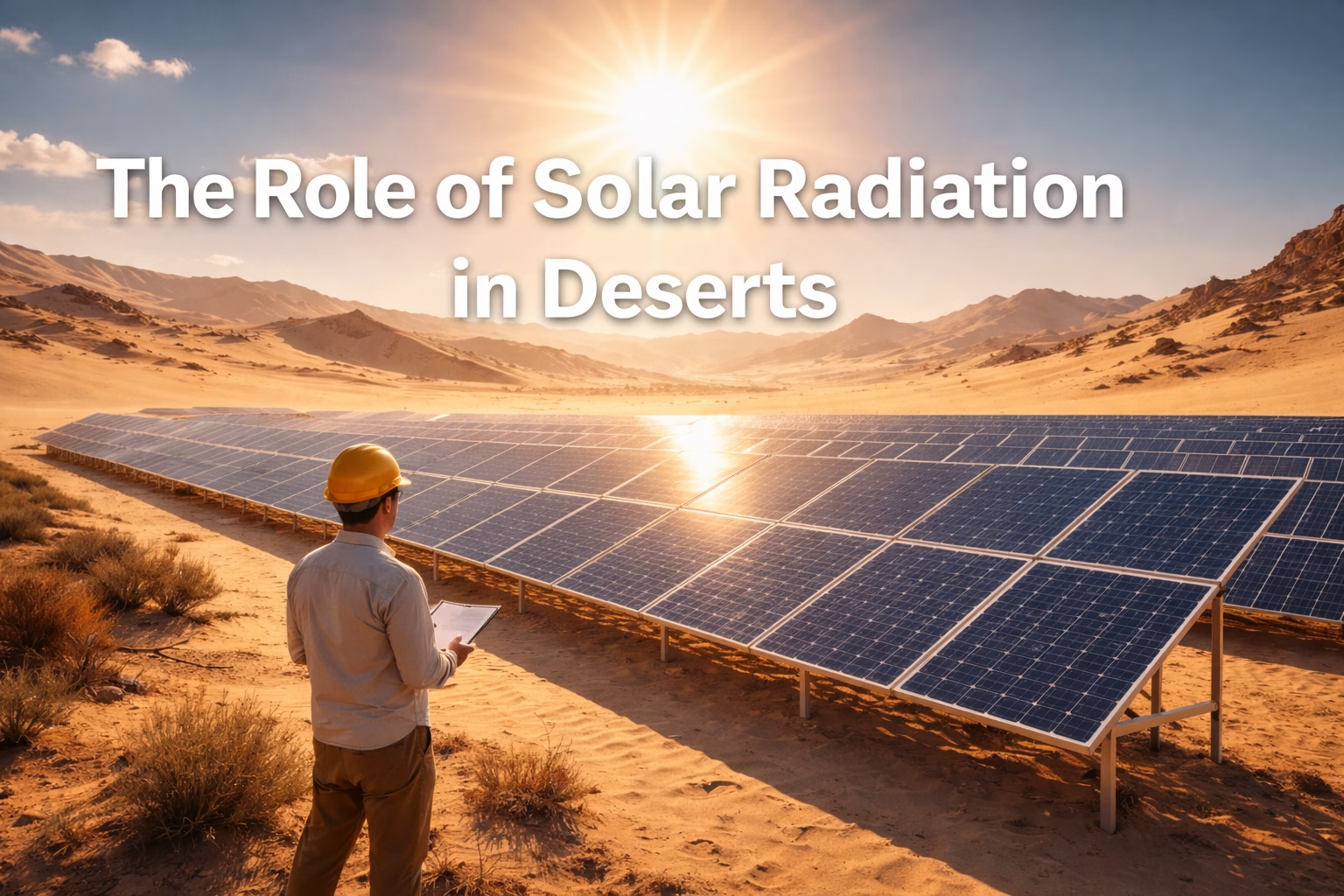
Solar radiation is the desert’s daily paycheck. Every bright hour delivers shortwave energy, and the land spends it fast—heating sand, rock, and air with a kind of clean intensity you can almost feel in your teeth. This steady input of sunlight is one of the main drivers of the broader desert climate system, shaping temperature patterns, winds, and daily energy flows across arid regions.
- What Solar Radiation Really “Does” in a Desert
- Solar Radiation as an Energy Budget
- A quick “why it matters” moment
- Why Desert Days Heat Up Fast (and Nights Cool Down Fast)
- By day: sunlight to ground
- By night: ground to sky
- Albedo: When the Ground Reflects the Sun Back
- Solar Radiation and the Desert Water Story
- A tiny detail people forget: dew and overnight moisture
- From Sun to Wind: Thermals, Mixing, and Dusty Spirals
- Life Under Intense Sunlight
- Measuring Solar Radiation in Desert Conditions
- Using Desert Solar Radiation: Practical, Positive Uses
- For solar energy
- For comfort and buildings
- Quick Myth Check
- Mini Glossary (So You Don’t Get Stuck on the Words)
What Solar Radiation Really “Does” in a Desert
Think of a desert as a giant outdoor laboratory where sunlight runs most of the experiments. With fewer clouds and often drier air, a lot of incoming solar radiation reaches the surface, and that shapes everything you notice—surface temperature, daily wind patterns, and even how life schedules its day.
- By day: solar energy turns ground into a hotplate, driving sensible heat and rising thermals.
- By night: with fewer “blankets” in the sky (clouds and water vapor), heat escapes as longwave radiation, so temperatures can drop quickly.
- Over seasons: the sun’s angle changes the energy budget, nudging deserts between milder and harsher periods without needing drama.
Solar Radiation as an Energy Budget
In deserts, solar radiation is the biggest “income stream.” On a clear day, the sun can deliver roughly near-maximum irradiance around midday, and the ground responds immediately. Sand and rock don’t hold heat like water does, so they warm up fast, then pass that warmth to the air sitting right above them.
The simple story is: shortwave comes in, and the surface later pays it back as longwave (heat) going out. The real story has more characters—albedo, surface texture, humidity, and even tiny airborne particles that scatter light. Still, the headline stays the same: net radiation is the fuel, and deserts run lean and fast on it.
| Term | What it means in plain English | Typical desert-friendly intuition |
|---|---|---|
| Irradiance (W/m²) | Power from the sun right now | Midday on clear days can feel like a full blast lamp |
| Insolation (kWh/m²/day) | Total solar energy collected over a day | Clear-sky deserts often sit in the high range (think roughly 5–7.5+) |
| Albedo (0–1) | How much sunlight the surface reflects | Light sand reflects more; dark rock drinks more heat |
| Longwave radiation | Heat energy leaving the surface | Dry air + clear skies let heat escape quickly at night |
| Sensible heat | Heat you can “feel” warming the air | Often dominates when water is scarce |
If you’re building a mental model, picture a bank account: solar radiation deposits energy, and the desert spends it in a few ways—warming air (sensible heat), evaporating what little moisture is available (latent heat), and sending heat back out to the sky at night (longwave).
A quick “why it matters” moment
When you understand solar radiation, deserts stop feeling random. You can explain hot afternoons, cool nights, and the way wind suddenly springs to life like someone flipped a switch. It’s all connected by energy moving through the system.
Why Desert Days Heat Up Fast (and Nights Cool Down Fast)
Desert air often holds less water vapor, and that changes the whole feel of sunlight. Water vapor is a strong player in infrared trapping, so when it’s limited, the sky becomes a better “window” for heat to leave at night. That’s why a desert can serve you a sun-baked afternoon and then a surprisingly crisp evening—same place, same ground, different radiation balance.
By day: sunlight to ground
Shortwave radiation hits the surface, and the surface warms quickly. With limited moisture, there’s less “energy tax” paid to evaporation, so more energy turns into surface heat. The air right above the ground gets warmed from below and starts rising in shimmering waves.
- Clear skies often mean stronger direct sun.
- Dry ground means more energy becomes heat you can feel.
- Rising thermals help mix the lower atmosphere.
By night: ground to sky
After sunset, the ground “pays back” its heat as longwave radiation. With fewer clouds and often lower humidity, that heat escapes more easily. The air close to the surface cools, and the atmosphere can become calmer and more layered.
- Clear skies speed up nighttime cooling.
- Dry air reduces the infrared “blanket” effect.
- Cooler ground can create stable, quiet air near the surface.
This is also why desert weather can change its mood fast. A small shift in cloud cover, dust haze, or surface moisture tweaks the radiation balance, and the whole day’s “temperature storyline” edits itself on the fly.
Albedo: When the Ground Reflects the Sun Back
Albedo is a fancy word for “how shiny the ground is.” Light-colored sand can reflect a chunky share of solar radiation, while darker rock absorbs more and heats up more aggressively. That difference isn’t just trivia—it shapes surface temperature, local breezes, and how comfortable a spot feels when you’re standing there.
Here’s a practical way to feel it: stand over pale sand and the sunlight feels like it’s coming from above and below. That reflected light can be surprisingly punchy, even if the air temperature isn’t extreme. Stand on darker ground and you’ll notice the heat rising like an invisible stove. That’s the same sun, but the surface is “interpreting” it differently.
Typical surface albedo vibes (no calculator needed)
Light sand often reflects more light than you expect. Dark rock usually absorbs more and heats faster. Crusted or salt-rich surfaces can be extra reflective and bright to the eye.
Albedo also nudges desert winds. If one patch warms faster than another, the warmer air rises more, pressure shifts, and small breezes can pop up. It’s subtle, but it’s real—solar radiation turns patchy surfaces into a patchy wind map.
Solar Radiation and the Desert Water Story
Even in dry places, water matters—because solar radiation is always trying to turn liquid into vapor. That “pull” is often described as evaporative demand. When sunlight is strong and the air is dry, the atmosphere acts like a thirsty sponge. If water is present (in soil, plants, or shallow surface moisture), the sun will push a lot of energy into evaporation.
But deserts usually don’t have much water to spare, so the energy gets routed into sensible heating instead. That’s a key desert signature: the sun isn’t “wasting” as much energy on evaporation, so the ground and air warm more directly. Sometimes, after a rare wet spell, deserts can feel different for a while—less sharp heat, more energy going into latent heat, and a slightly softer temperature curve.
A tiny detail people forget: dew and overnight moisture
Nighttime cooling driven by longwave radiation can sometimes chill surfaces enough for dew or thin moisture films to appear. It’s not a daily miracle everywhere, but it’s one reason desert micro-habitats can be surprisingly nuanced—small moisture inputs can matter when the sun is strong.
From Sun to Wind: Thermals, Mixing, and Dusty Spirals
When solar radiation heats the ground, the lowest layer of air warms from below. Warm air rises, cooler air slides in, and suddenly you’ve got motion. This is the desert’s everyday engine: convection. It’s the same basic physics behind a pot of water starting to circulate as it heats—just scaled up to the size of landscapes.
On some afternoons, rising bubbles of warm air can organize into little spinning columns. They look playful, almost like the desert is stirring its own atmosphere. These features are powered by sharp surface heating, so again, it’s solar radiation doing the heavy lifting.
In deserts, sunlight doesn’t just warm things. It moves things.
Life Under Intense Sunlight
Desert life treats solar radiation like a strict schedule. Many plants and animals don’t fight the sun head-on; they negotiate with it. You’ll see strategies that reduce absorbed radiation, reduce water loss, or shift activity to cooler hours. It’s less about toughness and more about timing.
- Plants: reflective leaf surfaces, tiny hairs, waxy coatings, and compact forms that manage solar load.
- Animals: shade-seeking, burrowing, and activity patterns that dodge peak surface heat.
- Micro-habitats: under rocks, in shallow hollows, or near vegetation where radiation and wind are slightly muted.
For people, the desert sun is manageable with smart choices: shade design, breathable clothing, and pacing outdoor time around the day’s radiation peak. A little planning goes a long way. Also, that reflected glare can be sneaky—light sand can bounce extra brightness, so eye comfort matters too (sunglasses are your friend).
Measuring Solar Radiation in Desert Conditions
If you want numbers, not vibes, you measure. A pyranometer tracks global horizontal irradiance (sunlight from the whole sky dome), while a pyrheliometer focuses on the direct beam. Deserts are great measurement environments because skies are often clear, so you can capture strong day-to-day patterns with less cloud chaos.
Still, deserts have quirks. Heat can affect sensor electronics, dust can settle on domes, and reflections from bright ground can “boost” readings depending on setup. In other words: solar radiation is easy to feel, but precise measurement needs care.
Field checklist for cleaner solar data
- Keep sensor domes clean (dust films matter).
- Log air temperature and basic weather with the radiation data for context.
- Mount level and stable; tiny tilts can skew irradiance.
- Note nearby reflective surfaces (bright sand, pale rock) that can influence readings.
Using Desert Solar Radiation: Practical, Positive Uses
Desert sunlight is a resource. Whether you’re thinking about solar panels, passive building design, or scheduling work outdoors, it helps to treat solar radiation like a predictable rhythm instead of a surprise attack.
For solar energy
Clear skies often mean strong production potential. But heat can reduce PV efficiency a bit, so airflow and mounting design matter. In deserts, even small improvements in panel cooling can feel like free performance—smart engineering beats brute force.
For comfort and buildings
Shade, ventilation, and reflective surfaces can reduce indoor heat gain dramatically. You’re basically editing the building’s radiation balance. A good roof color and a shaded outdoor transition space can change how a place “feels” more than you’d think.
And yes, there’s a personal trick here: if you’re outdoors, aim to do the most active stuff in the morning or late afternoon. Midday sun is often the peak of solar load, and that’s when sunlight feels almost too honest.
Quick Myth Check
Myth: “Deserts are always the hottest places.”
Deserts can be hot, but temperature depends on more than solar radiation. Elevation, wind, and how efficiently heat escapes at night all matter. Some deserts run warm days and cool nights like it’s their signature move.
Myth: “If the sun is strong, nights must stay warm.”
Strong daytime sun doesn’t guarantee warm nights. In many deserts, clear skies and drier air let longwave heat escape fast after sunset, so nighttime cooling can be surprisingly effective.
Myth: “Sand is the main reason deserts get hot.”
Sand is part of the story, but the bigger driver is the radiation balance plus low moisture. Rocky deserts can heat intensely too. The key is how much energy goes to evaporation versus direct heating.
Mini Glossary (So You Don’t Get Stuck on the Words)
- Solar radiation: energy from the sun reaching Earth (mostly shortwave).
- Net radiation: what’s left after reflection and outgoing heat are accounted for.
- Latent heat: energy used to evaporate water (hidden cooling power).
- Longwave: heat radiation emitted by Earth’s surface back toward the sky.
- Albedo: the surface “reflectiveness” that changes how much sunlight becomes heat.
