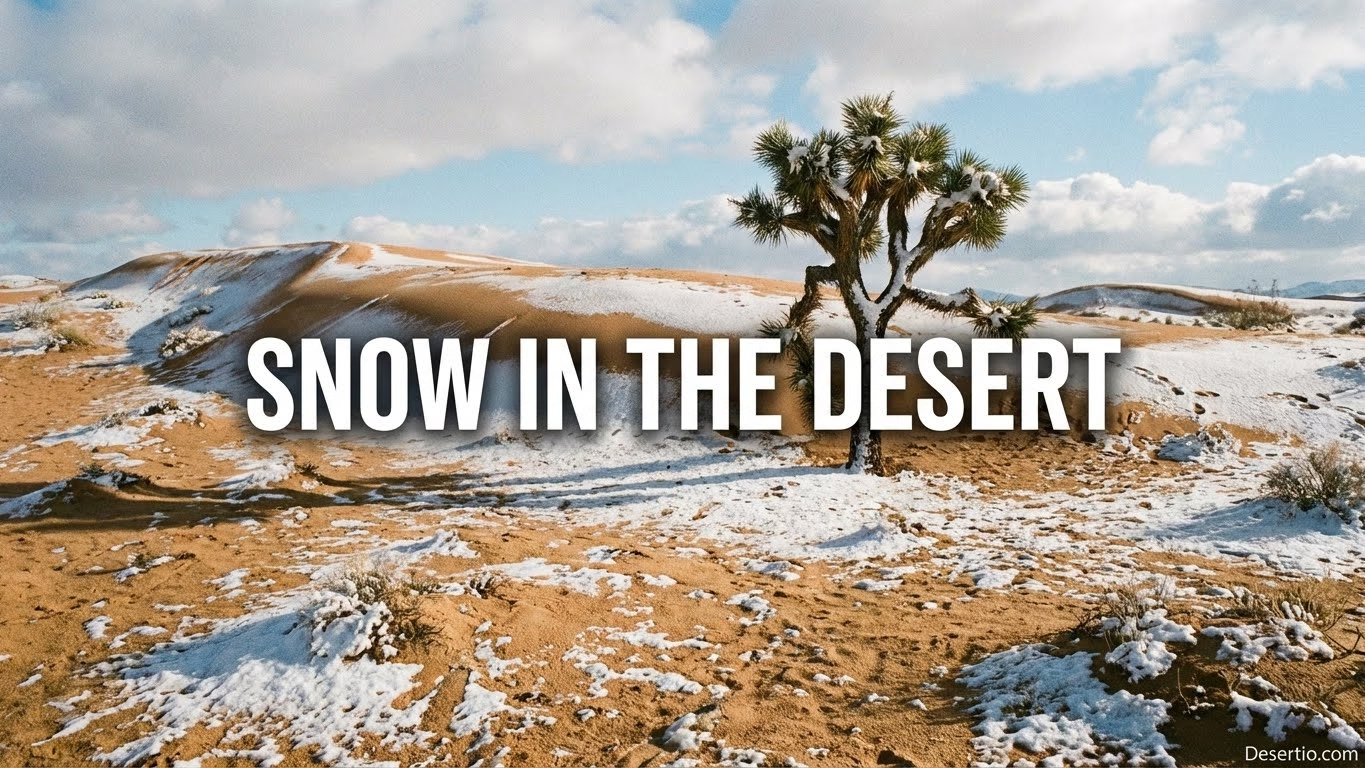
A White Surprise On Warm-Colored Ground
Desert snowfall is rare, brief, and wildly photogenic—like powdered sugar on toasted dunes. When it happens, the whole landscape feels new, even if the snow vanishes by lunch.
- A White Surprise On Warm-Colored Ground
- Why Snow Can Fall In A Desert
- The Two Ingredients
- The Desert “Amplifiers”
- Famous Real-World Snow-On-Sand Moments
- Edge-Of-Sahara Snowfall
- Snow In The Atacama Desert’s Higher Elevations
- What Happens When Snow Touches Desert Ground
- How To Tell If A Desert Is “Snow-Capable”
- A Handy Mental Picture
- Practical Tips For Enjoying Desert Snow
- Comfort Checklist
- Photo Tips That Work
- Questions People Ask A Lot
Snow in a desert sounds like a prank, but snow in the desert is a real meteorological combo. Here’s the trick: a desert is defined by low precipitation, not by constant heat. Many deserts have clear skies and thin humidity, so nights can cool fast—sometimes fast enough for sand to meet freezing air.
Quick Myth-Buster: “Desert” doesn’t mean “always hot.” It means water is scarce. A place can be arid and still get winter cold—especially where elevation or dry air amplifies the chill.
Why Snow Can Fall In A Desert
To get desert snow, you need the same basic ingredients as anywhere else: moisture and cold air. The difference is that deserts usually lack steady moisture, so storms arrive like surprise guests. When a weather system brings humid air over land that can cool below freezing—often at night or at altitude—snowflakes can form and survive long enough to hit the ground, a process shaped by broader arid climate patterns that control temperature swings across desert regions.
The Two Ingredients
- Cold enough air (at or below freezing) so ice crystals can grow.
- Moisture (clouds, a passing фронт, or lifted air) so precipitation actually forms.
Deserts often have big temperature swings. Under clear skies, heat escapes quickly after sunset. That rapid cooling—often called radiational cooling—can drop the surface temperature far below what daytime heat suggests.
The Desert “Amplifiers”
- Dry air holds less heat at night, so cooling accelerates.
- Elevation lowers average temperature, making snow more likely than rain.
- Nearby mountains can lift air, squeezing out moisture as orographic precipitation.
So yes, a desert can roast you at noon and still flirt with freezing after dark. It’s like a campfire that’s blazing in the evening, then suddenly goes out—quietly, completely.
Famous Real-World Snow-On-Sand Moments
Some snow in the desert stories became iconic because the contrast is unreal: orange sand and white snow in the same frame. These events are usually short. A few hours later, the desert is back to business, like nothing happened—except for the photos (and a few melted puddles).
| Desert Setting | What Makes Snow Possible | What People Usually Notice |
|---|---|---|
| Sandy margins near mountains | Cold air slips in while moisture arrives with a storm. | Dunes look “iced” and melt quickly in sun. |
| High-altitude desert plateaus | Elevation keeps air colder; passing systems can drop snow. | Wide white patches on rocky ground. |
| Cold deserts | Winter climates regularly support snowfall even with low precipitation. | Snow sits longer than in hot deserts. |
| Coastal deserts | Cool marine air and occasional storms; snow is uncommon but not impossible at higher spots. | Foggy chill that makes snow feel less “impossible.” |
Edge-Of-Sahara Snowfall
Near the Sahara’s northern edge, snow has fallen around the town of Aïn Séfra, between the Sahara and the Atlas Mountains. A well-documented event occurred on December 19, 2016, and another notable snow accumulation near the same area was observed on January 8, 2018. These moments tend to be short-lived, with snow often disappearing quickly once sunlight and warmer surfaces do their thing.
Snow In The Atacama Desert’s Higher Elevations
The Atacama Desert is famous for extreme dryness, yet higher parts can still catch snow when the atmosphere sets the stage. On June 25, 2025, a rare snowstorm blanketed portions of the higher-elevation Altiplano area in white. It’s a great reminder that arid doesn’t mean never snowy—especially where altitude keeps temperatures low.
Snow on sand is a contrast your brain doesn’t expect—like seeing ice on a warm loaf of bread. It looks unreal because it is rare, not because it’s impossible.
What Happens When Snow Touches Desert Ground
Most of the time, desert snow is a quick cameo. Sunlight is intense, and dry air encourages sublimation—snow turning directly into vapor. On sand, melting can be fast because the surface warms quickly, but you can still get a brief window where white crystals sit on golden grains like frosting on a biscuit.
Even short snowfalls can matter. A thin layer of meltwater can soak into the topsoil, feeding seeds, lichens, and biological soil crusts. In some places, that little drink helps plants time their next growth push. It’s not a flood; it’s more like a gentle sip—small, but sometimes perfectly timed.
Animals often react in simple ways: they follow easier routes, they drink from tiny melts, and they leave crisp tracks. You might notice footprints that look sharper than usual because the snow briefly “prints” the terrain. Then the wind arrives, and those marks soften, blur, and disappear. Deserts are good at erasing evidence, beleive it or not.
How To Tell If A Desert Is “Snow-Capable”
If you’re trying to understand whether snow in the desert is plausible in a given area, look for a few clues. Deserts with nearby mountains, higher plateaus, or frequent winter cold snaps have a better chance. The key is not “Is it hot here?” but “Can it get cold enough while moisture is present?” That’s the whole game.
- Elevation: Higher ground means colder air, so snow wins more often than rain.
- Winter storm tracks: If storms pass nearby, occasional moisture can spill in.
- Clear, dry nights: Strong night cooling makes freezing temps more likely.
- Cold desert classification: Some deserts are naturally wintery, with snowfall built in.
A Handy Mental Picture
Think of a desert like a dry sponge left outside. In the day it warms up fast. At night, it cools fast. Add a sudden splash of moist air plus freezing temperatures, and you can get snow—briefly—before the “sponge” goes dry again.
Practical Tips For Enjoying Desert Snow
When desert snowfall happens, it’s often paired with sharp temperature changes. Dress for a day that can start cold and end bright. And remember: even a thin snow layer can hide uneven ground. Treat it like a beautiful surface, not a predictable one.
Comfort Checklist
- Layering: a light base layer, an insulating middle, and a wind shell.
- Dry gloves: snow feels fun until your hands are wet and cold.
- Sun protection: snow reflects light; glare can be intense.
- Water: cold air still dehydrates, and deserts stay dry.
Photo Tips That Work
- Expose for snow: bright white can trick cameras; watch highlights.
- Look for contrast: ripples in sand + thin snow = instant texture.
- Shoot early: the best patterns appear before melting and wind blur them.
- Include scale: a rock or shrub makes the scene feel real, not like a studio set.
Questions People Ask A Lot
Is desert snow always a sign of a “weird” climate?
Not necessarily. Snow in the desert can happen when normal atmospheric pieces line up: cold air plus moisture. It’s uncommon because moisture is uncommon, not because snow physics changes. The event can still be rare without being mysterious.
Does snow help deserts “green up” right away?
Sometimes you’ll see a subtle response, sometimes none. A brief snow dusting can add soil moisture, but plant growth also depends on temperature and seed timing. Think of snow as a bonus sip, not a guaranteed “make everything bloom” switch.
Why does snow vanish so fast on sand?
Two big reasons: strong sunlight and dry air. Sand warms quickly, and low humidity encourages sublimation. So the snow can melt or evaporate faster than you’d expect—even when the air still feels chilly.
Snow doesn’t “belong” to forests or mountains. It belongs to cold air and moisture. If those meet above sand, the desert can turn white—quietly, briefly, beautifully.
