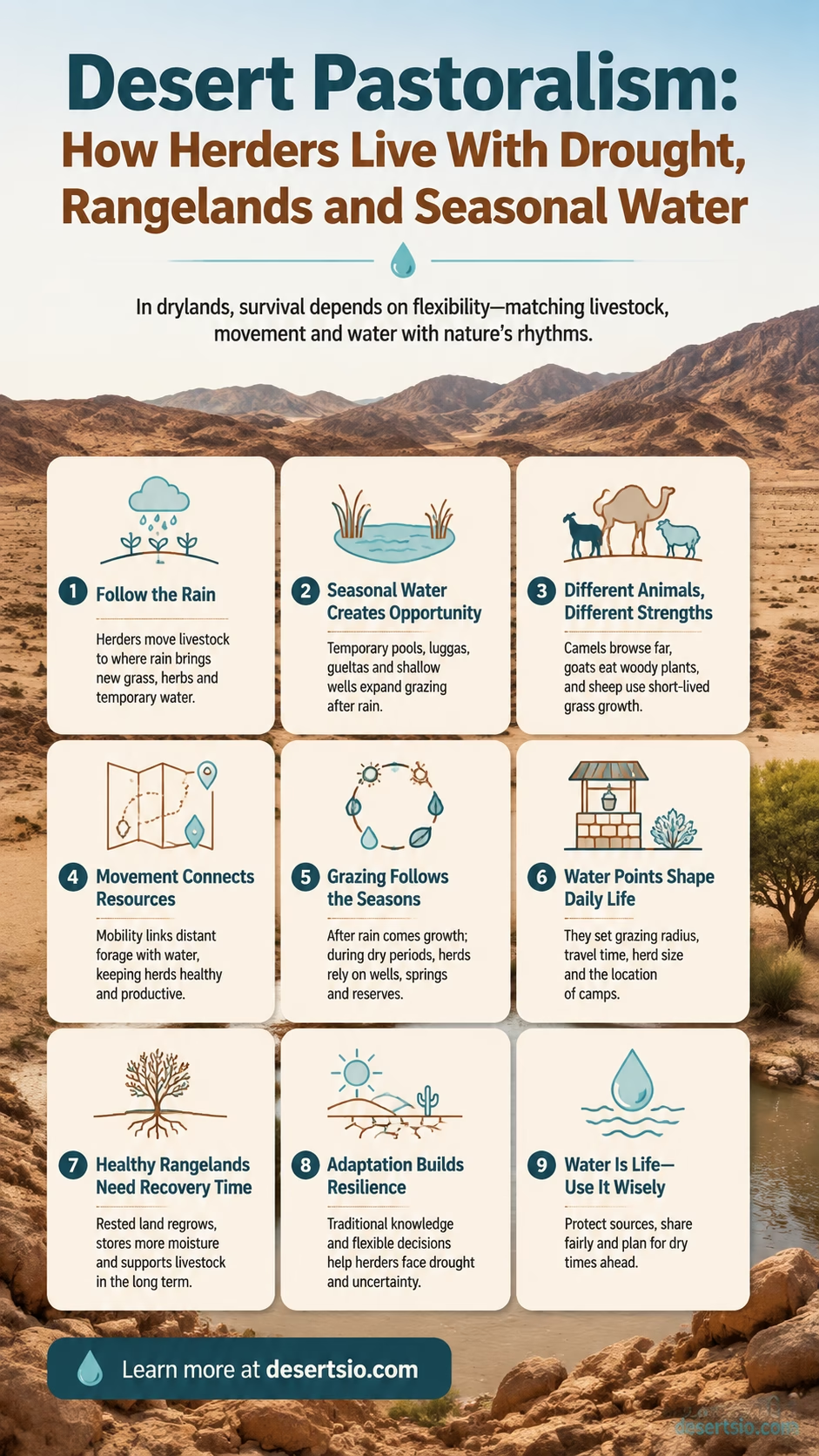
A desert herder rarely works with a fixed map of usable land. A pasture that is nearly bare in one month may carry fresh annual grasses after scattered rain; a shallow pool can appear, serve livestock for weeks, then disappear again. Desert pastoralism works around this instability. Herders match livestock movement with changing forage, seasonal water, animal condition and the recovery of dryland vegetation rather than expecting every part of the rangeland to remain productive year-round.
The result is a mobile livestock system shaped by ecology. Camels may reach browse that cattle cannot use efficiently. Goats feed on many woody plants. Sheep exploit short-lived grass growth. Wells support dry-season grazing, while temporary ponds can open distant pasture after rain. Movement connects these scattered resources.
Pastoralism is not one fixed lifestyle. Mobile pastoralists may move most of a herd between grazing areas, transhumant herders may follow regular seasonal routes, and agropastoral households may combine livestock with crops. What links these systems is their reliance on rangeland vegetation rather than continuously cultivated feed.
How Seasonal Water Sets the Shape of a Grazing Year
Rain does more than refill a water source. In arid landscapes it can temporarily change where livestock can travel, which plants become available and how long animals can remain away from a permanent well. A few storms may therefore rearrange the usable grazing map without changing any road, boundary or settlement.
After rain, ephemeral grasses and herbs can germinate rapidly. Depressions collect runoff. Dry channels may carry water briefly, and shallow groundwater can become easier to reach in sandy riverbeds. In parts of East Africa, such seasonal channels are known as luggas. Across parts of the Sahara, rocky pools may be called gueltas. Their local hydrology differs, but their pastoral value comes from the same basic fact: water can make otherwise distant forage usable.
Temporary water appears, annual plants germinate and the practical grazing range expands.
Livestock can use fresh grass, herbs and browse farther from permanent water points.
Surface water contracts and the distance between usable forage and dependable water becomes more important.
Reliable wells, springs, reserve pasture and livestock species with greater travel tolerance carry more value.
This cycle explains why a pasture cannot be judged only by its vegetation. A grassy area without reachable water may have little immediate grazing value. The reverse is also true: a permanent water source surrounded by exhausted forage cannot support unlimited livestock simply because water remains available.
Water Points Define More Than Drinking Access
A herd must repeatedly connect forage with water. That creates a geographical relationship between grazing radius, livestock type, temperature, forage moisture and water reliability. The practical distance varies enormously, so fixed universal limits are misleading.
Permanent Water Sources
Deep wells, boreholes, perennial springs and dependable river reaches allow livestock to remain in an area after temporary surface water disappears. In very dry seasons these points can become anchors around which grazing movements are organized.
- Wells: groundwater access may remain usable when surface pools have dried.
- Boreholes: deeper groundwater can support livestock where suitable aquifers exist.
- Springs: dependable flow can create highly valued dry-season grazing zones.
- Perennial channels: where present, they can support repeated watering along established routes.
Seasonal and Temporary Water
Temporary water can be just as important, even though it lasts for a shorter period. Rain-fed pans, shallow pools, flood-fed depressions and ephemeral streams let herders use pasture that may sit too far from a permanent source during the driest months.
Some drylands also use constructed storage. A berkad, for example, is a water-storage structure associated with pastoral landscapes in the Horn of Africa. Other regions use cisterns, tanks, reservoirs or excavated ponds adapted to local rainfall and geology.
Water availability and usable pasture are not the same thing. Livestock need both within a workable travel pattern. This simple relationship explains much of the seasonal movement seen across desert and semi-arid pastoral regions.
Why Heavy Use Often Appears Around Water
A permanent well can increase access to dryland pasture, but it can also concentrate animals within the surrounding landscape. Livestock drink, rest, gather and repeatedly pass through the same zone. The effect usually weakens with distance from the water point.
Ecologists often describe this spatial pattern as a piosphere: grazing intensity, trampling, dung deposition and plant composition may change along a gradient extending away from a livestock water point. The exact shape depends on soils, stocking patterns, rainfall, species and how frequently the site is used.
- Closest to water: repeated animal movement and grazing can be concentrated.
- Intermediate zone: livestock still graze regularly, but pressure may be more dispersed.
- Farther pasture: forage may remain less used if the return journey to water becomes inefficient.
So, adding water does not merely add drinking capacity. It can change the distribution of grazing across the surrounding rangeland.
Camels, Goats, Sheep and Cattle Use Drylands Differently
Pastoral drought adaptation also happens through herd composition. A mixed herd can draw food from several layers of vegetation and spread exposure to changing forage conditions.
| Livestock | Typical Feeding Pattern | Dryland Strength | Management Constraint |
|---|---|---|---|
| Camels | Browse leaves, twigs, shrubs and some grasses | Long-distance movement and strong tolerance of hot, dry conditions | Forage quality, reproductive condition and workload still affect water needs |
| Goats | Browse shrubs, leaves and mixed vegetation | Can use woody forage unavailable to strict grazers | Repeated browsing in one small area requires careful movement |
| Sheep | Mostly grasses and low-growing plants | Efficient use of seasonal herbaceous growth | Depend more strongly on accessible ground-level forage |
| Cattle | Primarily grasses | Productive where grass and water remain dependable | Frequent water access and sufficient grass strongly influence usable range |
These categories are broad. Breed, body size, lactation, ambient temperature, salt intake and moisture in the feed can all alter how often an animal drinks. That is why claims such as “a camel can always go a fixed number of days without water” are poor management rules. Physiology changes with conditions.
A Mixed Herd Can Use More of the Vegetation
Imagine a dryland pasture with short grasses, thorny shrubs and scattered trees. Sheep focus heavily on the herbaceous layer. Goats browse shrubs. Camels can reach higher woody vegetation. Cattle concentrate more strongly on available grasses. The animals do not see exactly the same pasture.
This is one reason herd composition can function as a form of drought planning rather than simply a preference for one livestock species.
Herders May Split a Herd Instead of Moving Every Animal Together
Pastoral mobility does not always mean one large herd moving as a single unit. Different animals can have different destinations.
Lactating animals may remain closer to households because milk is collected frequently. Young animals may need shorter journeys. Stronger adult animals can sometimes travel farther toward remote forage. Camels and small stock may also follow different grazing circuits when their preferred foods occur in separate parts of the landscape.
- Separate animals by nutritional needs. Lactating or young stock may receive access to more dependable forage and water.
- Send suitable animals toward distant pasture. This reduces the need to keep the whole herd around one water point.
- Spread grazing across several areas. One pasture does not carry every animal at the same time.
- Recombine groups when conditions change. A new rainfall event can open another route or grazing area.
In practical terms, herd splitting spreads ecological risk across space.
Mobility Functions Like Pastoral Infrastructure
In settled agriculture, infrastructure often means irrigation canals, fences, storage buildings and roads. Mobile pastoralism depends on another kind of connection: the ability to move livestock between patches of forage and water at the right time.
A pasture several dozen kilometres away may look excellent on a vegetation map, yet it is useful only if the herd can reach water along the route, travel the distance in suitable condition and remain there long enough to justify the journey. A route, then, is part of the resource.
Seasonal routes may therefore connect places that look unrelated on a conventional map. One location supplies water, another supplies grass, another provides browse, and another becomes useful only after runoff fills a temporary depression.
How Herders Read a Drying Landscape
Drought decisions begin before animals run out of forage. Herders can observe a chain of smaller changes: rainfall arrives late, annual grasses mature early, a seasonal pool recedes faster than usual, milk production shifts, or livestock walk farther between feeding patches.
No single sign gives the whole picture. Together, though, they can reveal how much flexibility remains in the grazing system.
Rainfall Timing
Total annual rainfall matters, but timing matters too. Twenty millimetres falling in a single intense storm does not produce exactly the same pasture response as the same amount spread across several events. Soil texture, runoff, temperature and the interval between storms alter germination and plant survival.
Forage Condition
Herders can distinguish fresh growth from vegetation that has already become fibrous or sparse. They also watch which plants livestock select. When preferred species become harder to find, animals spend more time walking and less time feeding.
Water Recession
A shrinking seasonal pond provides another clock. If it normally lasts well into the dry season but begins disappearing earlier, the practical grazing window around it becomes shorter.
Animal Condition
Body condition, milk yield, walking behaviour and appetite all carry information. Livestock themselves become indicators of how successfully the surrounding land is meeting their needs.
Dry-Season Management Starts Before the Driest Months
Waiting until forage is nearly gone leaves fewer choices. Pastoral systems can instead adjust movement, herd structure and grazing location while several options are still available.
- Move earlier: shift toward dependable dry-season areas before local pasture becomes heavily used.
- Use temporary pasture while it lasts: rainfall can briefly reduce pressure around permanent wells.
- Split livestock groups: match different animals with different forage and water needs.
- Retain reserve grazing: leave selected pasture for the part of the year when alternatives narrow.
- Adjust herd composition over time: livestock species and breeds can be chosen partly for the environments in which they perform well.
This is why mobility is better understood as resource timing than wandering. The destination matters, yes, but so does the date of arrival.
Seasonal Dryness and Prolonged Drought Are Different Problems
Desert pastoral systems already expect a dry season. Drought becomes harder to absorb when rainfall remains low across a wider area, seasonal water fails to recharge as expected, or poor growing seasons occur in succession.
| Seasonal Dry Period | Prolonged Drought |
|---|---|
| Part of the normal annual cycle | Rainfall and pasture renewal remain below the usual seasonal pattern |
| Known dry-season water points generally remain central | Some normally dependable options may carry less water or forage |
| Reserve pasture can bridge the seasonal gap | Reserve areas may also receive weak plant growth |
| Routine seasonal movement often remains workable | Longer journeys or earlier movement may be required |
| Pasture renewal follows the next normal growing period | Recovery depends on later rainfall, plant response and remaining livestock condition |
Pastoralism is well suited to variability, but no livestock system can create rain or forage where neither is available. Its strength lies in keeping several options open: movement, mixed livestock, seasonal reserves and multiple water sources.
Reserve Pasture Stores Forage in the Landscape
Not every usable pasture needs to be grazed immediately. In some pastoral systems, particular grazing areas remain lightly used or are saved for the dry season, livestock with higher nutritional needs, or years when other pasture performs poorly.
The idea is straightforward: standing vegetation can serve as stored forage. Instead of cutting every plant and moving it into a barn, herders may preserve access to the pasture itself.
That strategy has trade-offs. Mature dry grass can lose nutritional value, and dormant vegetation differs greatly among plant communities. Even so, spatial reserves give mobile livestock another option when fresh seasonal growth disappears.
Shared Water Depends on Timing and Local Management
A productive livestock well is both a physical water source and a place that requires coordination. Animals need time to drink, wells need maintenance, and nearby pasture needs enough recovery between periods of concentrated use.
Local arrangements vary widely. Some communities organize watering turns. Others distinguish between different seasons, livestock groups or water sources. Reciprocal access between neighboring grazing areas can also extend the range available to herders during dry periods.
A well is not isolated from the rangeland around it. Watering schedules, herd numbers, grazing duration and recovery time all influence how useful the surrounding pasture remains through the season.
Grazing and Overgrazing Are Not the Same Process
Livestock grazing is a normal ecological process across many rangelands. Whether an area becomes overused depends on more than the simple presence of animals.
- Animal density: how many animals use the area.
- Duration: how long they remain there.
- Recovery time: how long vegetation grows before the next heavy use.
- Rainfall: how much moisture is available for regrowth.
- Soil: infiltration, texture and erosion sensitivity differ from site to site.
- Plant community: grasses, annual herbs and woody browse respond differently to grazing.
- Mobility: movement can redistribute grazing instead of keeping livestock concentrated in one place.
A mobile herd may use a pasture and leave before the next growth period. A herd that repeatedly returns to the same small area around dependable water creates a different grazing pattern. Duration and distribution matter.
What Happens to Desert Rangeland After Rain
Dryland plant production often arrives as a pulse rather than a smooth annual supply. Seeds already present in the soil can germinate when moisture and temperature align. Annual grasses grow, flower and set seed within a relatively short window. Perennial shrubs may produce new leaves. Grasses that appeared dormant can resume growth.
Dry stems, dormant perennial plants, exposed soil and seeds waiting in the soil seed bank.
Germination, fresh leaves and rapidly expanding herbaceous forage follow suitable moisture.
Annual plants mature, moisture declines and livestock diets shift toward remaining dry grass and browse.
For a herder, catching this short-lived production matters. Arrive too late and much of the nutritious green growth has already matured. Stay too long and animals may spend more energy searching for forage. The grazing calendar follows plant phenology surprisingly closely.
Three Dryland Pastoral Systems Show Different Solutions
Desert pastoralism occurs in hot deserts, cold deserts and high-elevation drylands. The livestock and seasonal schedules differ, yet water, forage and movement remain tightly connected.
East African Drylands: Wells, Luggas and Scattered Rain
Across dry parts of the Horn of Africa and East Africa, rainfall can vary sharply over short distances. One grazing area may receive a productive storm while another remains dry. Livestock systems commonly include combinations of camels, goats, sheep and cattle, allowing households to use both grass and browse.
Ephemeral channels known in some areas as luggas can briefly carry runoff and may retain subsurface moisture after surface flow ends. Permanent wells become more important as temporary sources disappear. The grazing landscape expands and contracts with these changes.
Gobi and Central Asian Drylands: Pasture Across Extreme Seasons
Cold deserts add a different constraint: winter. Pastoral herds in Mongolia and neighboring drylands may include sheep, goats, cattle, horses and Bactrian camels. Here, seasonality involves temperature, snow, wind exposure and access to winter forage as well as summer water.
The Mongolian term otor refers to livestock movement toward temporary or reserve grazing areas outside the normal seasonal pasture pattern. Such movement can help match animals with forage when conditions differ between locations.
Andean and Patagonian Drylands: Vertical Seasonal Movement
Some South American drylands use elevation as well as horizontal distance. Livestock may move between lower winter grazing and higher summer pasture where snowmelt and warmer-season plant growth create another feeding opportunity.
In parts of the Andes, veranada refers to summer grazing in higher country, while lower seasonal grazing can be associated with invernada. The pattern demonstrates an important point: pastoral mobility follows seasonal productivity, not a single desert template.
Satellite Data Can Add Another Layer to Local Observation
Pastoral decisions have long relied on direct observation: rainfall, plant growth, animal condition, water depth and knowledge of seasonal routes. Remote sensing now adds information across areas too large to inspect continuously from the ground.
- Rainfall estimates show where precipitation has recently occurred.
- Vegetation indices can indicate changes in green plant cover across large rangelands.
- Seasonal forecasts provide probability-based information about coming rainfall conditions.
- Mobile communication allows faster exchange of information about pasture, water and livestock conditions.
A satellite can detect a broad vegetation response, but it cannot always tell whether a route is practical for a particular herd, whether the available plants are preferred forage or how long a shallow water source will remain usable. Remote data and ground knowledge answer different questions.
Rangelands Have a Global Role Far Beyond Deserts
Rangelands include deserts, semi-arid grasslands, shrublands, savannas, steppes, tundra and other areas dominated by natural or semi-natural vegetation. Global assessments place them across roughly 54% of the planet’s land surface. Their scale explains why pastoral livestock systems occur across such different climates.
The United Nations designated 2026 as the International Year of Rangelands and Pastoralists, bringing unusual attention to the relationship between grazing lands, mobile livestock production and the people who manage these landscapes. FAO materials associated with the year describe pastoralists as managing roughly one billion animals worldwide, while international dryland assessments place the number of people connected to pastoral livelihoods in the hundreds of millions.
Those numbers include far more than hot deserts. Still, the desert examples are especially useful because they make one ecological rule very easy to see: when productivity moves through space and time, livestock management must remain flexible enough to follow it.
A Pastoral System Works by Keeping Several Options Open
Pastoral resilience rarely comes from one technique. It emerges from several interacting choices: livestock species that use different plants, water sources with different seasonal roles, reserve grazing, movement between pasture zones and close observation of animal condition.
creates temporary growth
provides grass and browse
sets practical access
connects separate resources
matches animals to vegetation
Remove the connection between those resources and the usable grazing landscape becomes smaller. Keep them connected, and even an environment with low and irregular rainfall can support livestock through repeated seasonal adjustment.
That is the working logic of desert pastoralism. The herd moves because the productive landscape moves first—through rainfall, plant growth, drying water points and the return of another grazing season.