How Little Rain Are We Talking About?
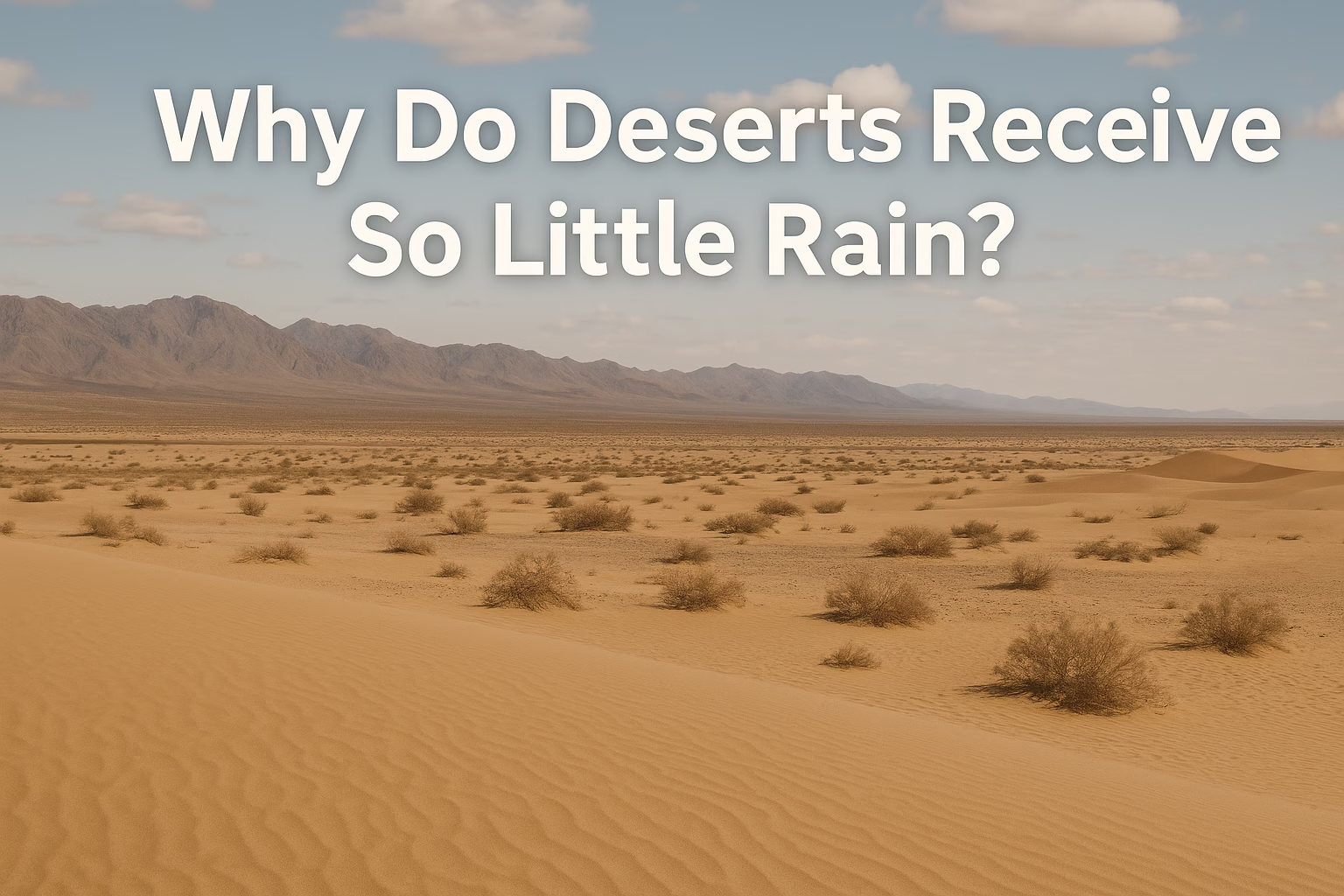
Deserts are officially dry when they receive less than about 250 mm (10 inches) of rain a year. That’s tiny compared to a lush forest, which can get over 2,000 mm. In many deserts, rain doesn’t just fall rarely – it can skip whole years, then arrive suddenly in a short, violent burst.
- How Little Rain Are We Talking About?
- A Quick Visual Explainer
- The Big Reason: Dry, Sinking Air Over Deserts
- High-Pressure Systems: Permanent Dry Weather Machines
- Mountains and the Rain Shadow Effect
- Cold Ocean Currents: Foggy but Still Very Dry
- Far from the Sea: Interior Deserts
- Putting It Together: Why Different Deserts Are Dry
- Why Deserts Still Get the Occasional Storm
- Evaporation: The Silent Thief of Desert Water
- What Low Rainfall Means for Life in Deserts
- In Short: Deserts Stay Dry by Design
So when we ask “Why do deserts receive so little rain?”, we’re really asking why the atmosphere and the landscape work together to keep air dry, clear and cloud-free most of the time.
- Very low yearly rainfall – usually under 250 mm.
- Long dry spells with months or even years between real storms.
- High evaporation – whatever little water falls is quickly lost back to the air.
- Thin or patchy vegetation, because plants struggle to find enough moisture.
A Quick Visual Explainer
If you like seeing things rather than just reading about them, this short video walks through why deserts stay so dry and how global winds and geography block rain.
The Big Reason: Dry, Sinking Air Over Deserts
Most of the world’s hot deserts sit in broad belts around 20–35° north and south of the equator. In these zones, the air is usually sinking instead of rising, and that totally changes how much rain can form.
Here’s the simple version of the global circulation story:
- Near the equator, warm, moist air rises, cools, and drops heavy rain (tropical storms, daily showers).
- That rising air then flows poleward high in the atmosphere.
- Around 30° latitude, it sinks back down toward the surface.
- As it sinks, it warms and dries out, pushing clouds away instead of building them.
Sinking air acts a bit like a giant, invisible lid. It makes the sky over many deserts clear, stable and mostly cloud-free. With no strong upward motion, you don’t get tall storm clouds, and with no big clouds, you barely get rain. It’s a quiet, sunny kind of dryness, not just “no clouds today” but “no clouds most of the year”.
High-Pressure Systems: Permanent Dry Weather Machines
Above many deserts sits a semi-permanent high-pressure system. You can think of it as a huge dome of dry, heavy air pressing downward.
- High pressure = air slowly sinks.
- Sinking air warms, which reduces relative humidity.
- Warmer, drier air makes it harder for clouds to form.
- Fewer clouds mean much less rainfall.
This setup is strong over deserts like the Sahara and the Arabian Desert, where the atmosphere is so stable that big storms almost never build. The sun heats the surface hard, but the air above just doesn’t cooperate to make rain.
Mountains and the Rain Shadow Effect
Sometimes deserts are dry not because of global wind belts, but because mountains steal the moisture first. This is called the rain shadow effect.
- Moist air moves in from the ocean.
- It hits a mountain range and is forced to rise.
- As it rises, it cools and condenses, dropping rain on the windward side.
- By the time the air passes the top, it’s lost most of its moisture.
- On the leeward side, the air sinks, warms, and becomes very dry.
That dry, sinking air turns basins and plateaus into rain-shadow deserts. Famous examples include:
- Death Valley in the United States, tucked behind several mountain ranges.
- The Atacama Desert in South America, shielded by the Andes.
- Parts of Central Asia behind massive mountain walls.
In some of these places, yearly rainfall can be a few millimetres or less, and there are weather stations that record no measurable rain for several years in a row. That’s not a typo… unlike my temparature notes sometimes.
Cold Ocean Currents: Foggy but Still Very Dry
Some coastal deserts, like the Namib and parts of the Atacama, sit next to cold ocean currents. That cold water chills the air right above the sea, making it stable and dry.
- Cold currents create cool, dense air that doesn’t rise easily.
- Since the air doesn’t rise, tall rain clouds rarely form.
- Moisture can appear as fog, but fog droplets are too small to fall as real rain.
- When that air reaches land, it’s still dry overall, so precipitation stays very low.
This is why you can find foggy deserts where surfaces are often damp at dawn, yet actual rainfall over the whole year is almost zero.
Far from the Sea: Interior Deserts
Water for rain usually starts its journey by evaporating from oceans. If an area lies very far inland, that moist air has to travel a long way over land, losing water along the route. The result is a continental or interior desert.
- Moist air from the sea rains out on coastal regions first.
- As the air mass moves inland, it has less and less moisture.
- By the time it reaches the interior, there isn’t much water left to fall as rain.
Large parts of Central Asia and the Australian interior fit this pattern. These areas are dry mainly because of distance from reliable moisture sources, not just because they’re hot.
Putting It Together: Why Different Deserts Are Dry
Most major deserts are dry for a mix of reasons. The table below connects location, main drying factor and a well-known example.
| Type of Control | How It Reduces Rain | Example Desert |
|---|---|---|
| Subtropical high pressure | Sinking, warming air stops clouds and storms from forming. | Sahara, Arabian Desert |
| Rain shadow | Moist air rains on one side of mountains; dry air descends on the other side. | Death Valley, Taklamakan |
| Cold ocean currents | Cool, stable air above cold water limits rising motion and deep clouds. | Namib, parts of the Atacama |
| Distance from oceans | Air masses lose moisture as they travel inland, leaving dry interiors. | Australian interior, central Asian deserts |
| Polar & cold deserts | Very cold air holds little water vapour, so precipitation stays low. | Antarctic and Arctic deserts |
Why Deserts Still Get the Occasional Storm
“Almost no rain” doesn’t mean never. Deserts can still have short, intense storms, especially when unusual weather patterns push moist air into normally dry regions.
- Summer thunderstorms can briefly break the heat in some hot deserts.
- Tropical systems or remnants of hurricanes can occasionally reach desert edges.
- Rare wet years may lead to flash floods and carpets of wildflowers.
Because the soil is often hard and bare, and plants are sparse, water from a sudden storm can’t soak in quickly. It rushes across the surface, forming fast, dangerous floods even though the total yearly rainfall is still very low.
Evaporation: The Silent Thief of Desert Water
Even when deserts do get a shower, high temperatures, strong sunshine and dry air mean the water doesn’t stay long.
- Hot ground heats shallow puddles from below.
- Dry winds carry water vapour away quickly.
- With little shade, direct sunlight boosts evaporation all day.
In many deserts, the potential evaporation (how much water could evaporate) is many times higher than the yearly rainfall. This is a key reason why streams rarely last unless they are fed from outside the desert, like rivers flowing in from wetter mountains.
What Low Rainfall Means for Life in Deserts
For plants, animals and people, the tiny amount of rain shapes everything. Desert life survives by using every drop efficiently.
- Plants often have deep roots, small leaves, or thick skins to reduce water loss.
- Animals may be active at night, hide in burrows, and get water from their food.
- People depend on oases, wells, seasonal rivers, or water stored from rare rains.
Because rainfall is so low and unreliable, small shifts in climate or water management can have big impacts. Understanding exactly why rain is scarce in each desert – high pressure, rain shadows, cold currents or distance from the sea – helps us manage land better and avoid pushing fragile areas into even more extreme dryness.
In Short: Deserts Stay Dry by Design
Deserts don’t randomly miss out on rain. They sit where atmospheric circulation, mountains, oceans and distance all work together to limit rising air and cloud growth. Add strong sun and fast evaporation, and you get landscapes where rain is rare, precious, and powerful each time it finally arrives.
