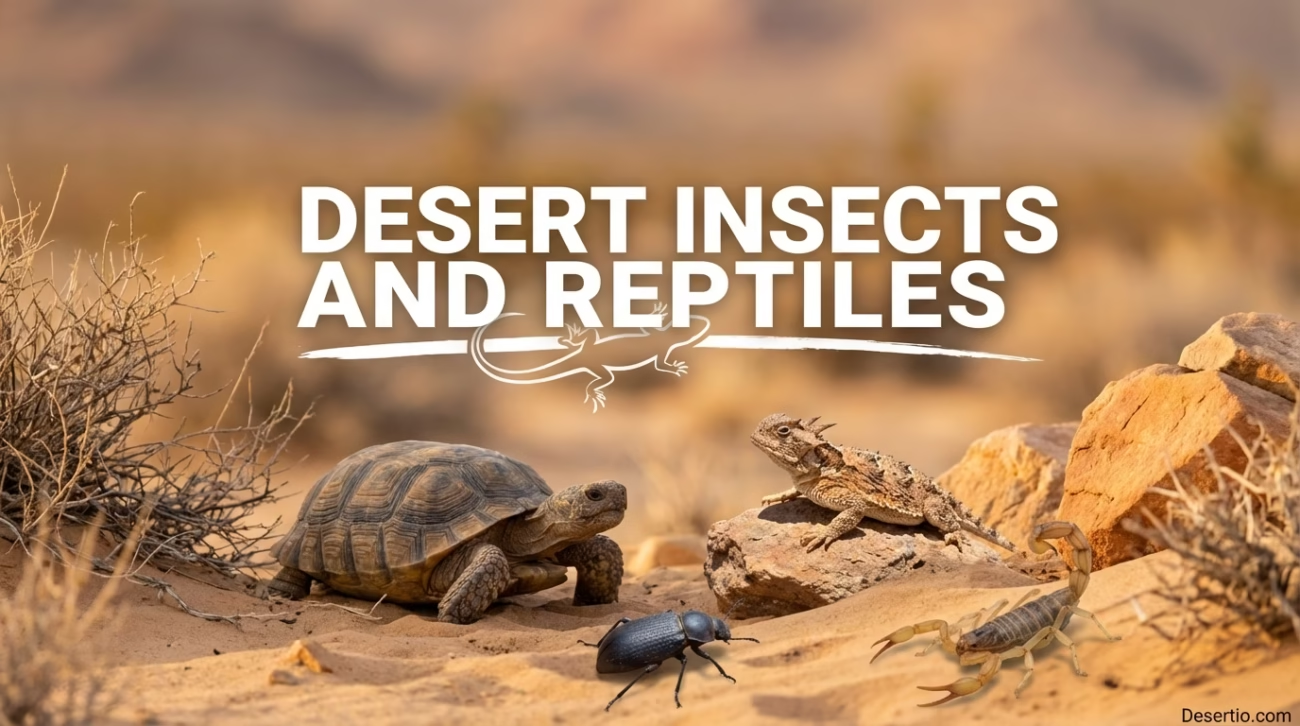
Deserts look empty from a distance, yet up close they’re busy, clever places where insects and reptiles carry much of the daily action. These animals aren’t “surviving by luck.” They run on tight budgets of water, heat, and energy, using behaviors and body designs that feel like practical engineering—patterns typical of many desert wildlife adaptations. If you’ve ever wondered why a tiny beetle can outlast blistering afternoons, or how a lizard stays active when the ground can burn bare skin, you’re in the right landscape.
- Why Insects and Reptiles Stand Out in Deserts
- Why Desert Life Plays by Different Rules
- Desert Insects: Small Bodies, Big Engineering
- Water Saving Strategies
- Heat Management Moves
- Feeding Roles That Keep Deserts Running
- What “Desert Insect” Usually Means
- Desert Reptiles: Masters of Sun and Shade
- Skin, Scales, and Water Balance
- Temperature Control Without a Furnace
- Common Desert Reptile Groups and What Makes Them “Desert-Ready”
- Night Shift, Dawn Patrol, and the Midday Pause
- A Typical Hot-Day Rhythm
- Why Many Species Are Active at Night
- Microhabitats: The Tiny Places That Decide Who Lives Where
- Adaptations You Can Actually Notice
- Insects: Visual Clues
- Reptiles: Visual Clues
- Feeding and Hunting: What They Eat and Why It Matters
- How Desert Insects Find Enough Food
- How Desert Reptiles Keep Energy Costs Low
- Life Cycles in Dry Places: Eggs, Timing, and Patience
- Insects: Fast When It Counts
- Reptiles: Stable Investments
- When Rain Arrives: A Short Season of Abundance
- Desert Dangers That Aren’t Dramatic but Matter
- How Shelter Works Like a Natural Air Conditioner
- The Big Idea to Keep in Mind
Why Insects and Reptiles Stand Out in Deserts
In many deserts, big animals are limited by heat load and water needs. Smaller bodies and scaly skins can be a huge advantage. Insects often win by minimizing water loss and hiding from extreme temperatures. Reptiles often win by managing body temperature with smart timing—sun when it helps, shade when it doesn’t.
- Low rainfall means meals and breeding opportunities arrive in bursts.
- High daytime surface temperatures reward animals that can pause, burrow, or switch to night activity.
- Big swings between day and night favor flexible routines over brute strength.
Why Desert Life Plays by Different Rules
The desert challenge isn’t just “hot.” It’s the combo of dry air, intense sun, and unpredictable food. Many desert surfaces heat faster than the air above them, so an animal can experience a sharp temperature jump just by moving from shade onto open ground. Add scarce standing water, and suddenly every drop and every minute in the wrong place matters.
That pressure shapes two big patterns. First, desert animals lean hard on behavior—timing, hiding, and micro-moves like shifting posture or changing perch height. Second, many desert species are built to store, save, or recycle water inside the body. The result is a community that looks calm at noon, then suddenly feels alive at dusk and after dark.
Desert Insects: Small Bodies, Big Engineering
Insects dominate desert ground, shrubs, and dunes because they can run lean. Many are protected by a waxy outer layer (the cuticle) that helps reduce water loss. Their tricks are rarely flashy. They’re more like tight seals, smart schedules, and tiny “cooling” behaviors that add up. Think of them as ultra-efficient commuters in a city where gas stations are rare.
Water Saving Strategies
Desert insects often aim to lose as little water as possible, then make the most of what they get from food or brief moisture pulses. Evaporation is the big enemy, so many species avoid the hottest, driest hours and rely on sheltered spaces with slightly higher humidity.
- Sealed body surfaces with waxy layers that slow drying.
- Minimal breathing water loss by reducing how often air exchange happens.
- Water from food (seeds, plant sap, prey) rather than open pools.
- Microhabitat use: under stones, in leaf litter, inside burrows.
Heat Management Moves
When the sand is scorching, body temperature can rise fast. Many desert insects keep safe by staying near cooler layers of air close to the ground in shade, or by darting between thermal islands—a pebble’s shadow here, a plant base there.
- Timing: activity at dawn, dusk, or night.
- Stilting: long legs that lift the body away from hot ground (common in some ants and beetles).
- Burrowing: cooler temperatures a few centimeters down.
- Reflective colors in some species that reduce heat absorption.
Feeding Roles That Keep Deserts Running
Insects aren’t just “background noise.” They’re often the core workforce of desert ecosystems, moving nutrients, breaking down plant litter, and turning brief blooms into stored energy in the food web. Even when plants look sparse, insects can be active below the surface or inside plants. A desert can look quiet and still be metabolically busy.
- Decomposers: beetles and larvae that process dead plant material.
- Seed movers: ants that carry seeds and influence where plants sprout.
- Pollinators: bees, wasps, flies, and moths active around flowering windows.
- Predators: mantises and other hunting insects that help balance smaller arthropods.
What “Desert Insect” Usually Means
People often say “insects” when they mean small desert arthropods in general. True insects have six legs and three main body sections. Other desert regulars—like scorpions and spiders—are close neighbors in the same broader group, but they’re not insects. In this article, the spotlight stays on insects and reptiles, while recognizing that deserts are full of supporting characters.
Desert Reptiles: Masters of Sun and Shade
Reptiles thrive in deserts partly because their skin and physiology help limit water loss, and partly because they can use the landscape like a thermostat. They don’t need to burn constant energy to stay warm. Instead, they shift between sun, shade, rock crevices, and burrows. Heat becomes a tool, not just a threat. A desert reptile is often a careful timekeeper.
Skin, Scales, and Water Balance
Reptile skin is generally more resistant to drying than the skin of many amphibians and mammals. Scales and the outer layers of skin reduce evaporation. Many species also produce waste in forms that conserve water compared with watery urine.
- Low-permeability skin helps slow water loss.
- Efficient kidneys in many species support water conservation.
- Behavioral choices reduce exposure during the driest hours.
Temperature Control Without a Furnace
Because reptiles rely heavily on external heat, deserts offer a huge advantage: sunlight is plentiful. The challenge is precision. Too hot is dangerous. Too cool slows movement and digestion. Many desert reptiles “dial in” temperature by choosing the right surface at the right moment.
- Basking in morning sun, then retreating as ground temperatures rise.
- Shade tracking as shadows shift across rocks and shrubs.
- Burrow use to access stable underground temperatures.
- Posture shifts that change how much body surface heats up.
Common Desert Reptile Groups and What Makes Them “Desert-Ready”
Desert reptiles show up in many lineages. The details differ, but the themes repeat: efficient movement on loose ground, smart shelter use, and season-aware routines that match rainfall and temperature swings. Below are broad groups you’ll find in deserts worldwide, with traits that help them fit in.
Lizards
Often the most visible daytime reptiles. Many species sprint between shade patches and use burrows or crevices as “cool rooms.” Some have toe fringes or specialized feet for sand, while others prefer rocky slopes.
- Fast bursts of movement to reduce time on hot surfaces.
- Rock and shrub sheltering to avoid peak heat.
- Diet flexibility: insects, plants, or both depending on season.
Snakes
Many desert snakes avoid the harshest daytime heat by shifting activity into cooler hours. Their movement styles can be surprisingly efficient on loose sand, and many rely on ambush tactics that conserve energy.
- Low-energy hunting with patient waiting.
- Sand and soil use for hiding and temperature buffering.
- Seasonal timing linked to prey availability and weather patterns.
Tortoises
Built for longevity and patience. Many desert tortoises use deep shelters to escape heat and cold, and they often time surface activity around mild conditions. Their diets are frequently plant-focused.
- Burrow reliance for stable temperatures.
- Slow metabolism that matches scarce food periods.
- Seasonal feeding tied to green-up after moisture arrives.
| Theme | Desert Insects | Desert Reptiles |
|---|---|---|
| Water Strategy | Reduce loss with waxy cuticle; gain water from food; shelter in humid microspaces | Limit evaporation with skin; conserve internally; use shade and burrows to reduce dehydration |
| Heat Strategy | Schedule activity; stilt above hot ground; retreat below surface | Use sun and shade deliberately; choose surfaces; regulate with behavior and posture |
| Activity Pattern | Often crepuscular or nocturnal in hottest seasons; fast bursts | Many shift between basking and retreat; some strongly nocturnal |
| Food Web Role | Decomposition, pollination, seed movement, prey base for many animals | Predators of insects and small animals; some herbivory; important nutrient links |
| “Hideouts” | Under stones, leaf litter, inside plants, shallow burrows | Rock crevices, deep burrows, under shrubs, in cooler soil layers |
In deserts, success is rarely about being “tough.” It’s about being precise.
Night Shift, Dawn Patrol, and the Midday Pause
Daily timing is a hidden map of desert life. The same open patch of sand can be safe at sunrise and risky by late morning. Many insects and reptiles shape their lives around temperature windows—periods when the environment lines up with movement, digestion, hunting, and water balance. Noon often belongs to shade. Night often belongs to motion.
A Typical Hot-Day Rhythm
- Early Morning: reptiles bask briefly; insects start moving before surfaces overheat.
- Mid-Morning: peak for active hunting and foraging in many daytime species.
- Midday: retreat phase—burrows, crevices, deep shade, and stillness.
- Late Afternoon: a second surface window opens; activity rises again.
- Night: many insects surge; some reptiles become most active when the ground cools.
Why Many Species Are Active at Night
Night air is usually cooler, and surfaces release stored heat quickly. This reduces dehydration risk and allows longer periods of safe movement. Many desert insects use these cooler hours, and some reptiles hunt during the same window. Lower heat stress also supports more efficient energy use.
Microhabitats: The Tiny Places That Decide Who Lives Where
“The desert” isn’t one uniform surface. A few meters can separate a furnace from a refuge. Insects and reptiles often specialize in microhabitats that offer better temperature control, better food, or better hiding. Shade edges, plant bases, and rock cracks can be as important as rainfall totals. Small differences make big outcomes.
Dunes and Loose Sand
Loose sand shifts underfoot and heats fast, but it also allows quick burying and access to cooler layers below. Many insects use shallow burrows as heat shelters, and some reptiles move efficiently over dunes by reducing slip and sink.
- Insects: fast runners, burrowers, nocturnal foragers.
- Reptiles: sand-adapted lizards; snakes that use sand for concealment.
Rocky Slopes and Outcrops
Rocks create shade patterns and stable crevices. They can warm quickly in sun and stay warmer after sunset, giving reptiles reliable basking options and offering insects hiding pockets with slightly different humidity.
- Thermal variety: sunlit rock faces versus cool cracks.
- Shelter density: more hiding spots means more daytime survival.
Gravel Plains and Hardpan
Hard surfaces can get extremely hot, but they also allow quick travel. Insects may use stones and sparse vegetation for shade, while reptiles often rely on timing—short movement bursts between refuges.
- Insects: shade-trackers that navigate from pebble to pebble.
- Reptiles: fast movers that sprint, pause, and shelter repeatedly.
Washes, Dry Riverbeds, and Desert Shrub Zones
Where water occasionally flows, plant growth is often denser. That means more insects, more hiding options, and more prey for reptiles. Even when dry, these corridors can function as food highways.
- Higher insect density around seasonal flowers and shrubs.
- Reptile hunting zones near plant edges and burrow networks.
Adaptations You Can Actually Notice
Some desert adaptations are hidden chemistry, but many are visible if you know what to look for. The most reliable clue is usually how an animal uses space: does it hug shade, climb to catch airflow, or vanish into sand like a zipper closing? Pair that with body shape and movement style, and desert logic starts to appear. Form and routine often tell the story.
Insects: Visual Clues
- Long legs that lift the body from hot ground.
- Fast stop-and-go movement between shade patches.
- Burrow entrances near plants or stones that act as “cool anchors.”
- Compact bodies that can shelter in tight cracks and under bark.
Reptiles: Visual Clues
- Basking posture in early hours, then quick retreat later.
- Crevice use where only the head or tail is visible.
- Sand or rock matching that helps them blend into their main surface.
- Short bursts of movement with long pauses to manage heat and energy.
Feeding and Hunting: What They Eat and Why It Matters
Food in deserts arrives in pulses. A short flowering period can trigger insect booms, and those booms feed reptiles and other predators. In quieter stretches, many insects rely on stored plant material, seeds, or tough organic scraps, while reptiles may slow down and feed less often. Desert feeding is often about timing, not constant grazing. The menu changes with the weather.
How Desert Insects Find Enough Food
- Scavenging: using wind-blown plant fragments and dry organic matter.
- Seed use: a reliable, storable resource in many deserts.
- Plant feeding: tapping into sap, nectar, or leaves during greener moments.
- Predation: some insects hunt smaller arthropods when plant resources are limited.
How Desert Reptiles Keep Energy Costs Low
Many desert reptiles lean on strategies that reduce wasted movement. Ambush hunting is common: wait in a good spot, strike quickly, then return to shelter. Plant-eating reptiles often focus on brief windows when fresh growth appears. Either way, the key is that movement is expensive when heat and dehydration are in play. Stillness can be a strategy.
Life Cycles in Dry Places: Eggs, Timing, and Patience
Desert life cycles often run on a “wait, then sprint” schedule. Many insects can pause development during harsh periods, then ramp up quickly when conditions improve. Reptiles typically invest in fewer offspring than insects do, but they often place eggs or young in spots that buffer temperature swings. Timing is the quiet superpower here. Being early or being late can decide survival. Desert calendars are written in temperature and rain.
Insects: Fast When It Counts
Many desert insects use diapause (a developmental pause) or keep eggs protected until conditions are suitable. After moisture arrives, growth and reproduction can accelerate. It’s not chaos—it’s a tuned response to rare good days.
- Rapid breeding after rain or plant flushes.
- Protected eggs placed in soil, plant tissue, or sheltered crevices.
- Short generation times for many species, allowing quick population rebounds.
Reptiles: Stable Investments
Reptile reproduction is usually slower-paced. Nest location matters because it shapes temperature and moisture exposure during incubation. In some reptile species, incubation temperature can influence sex ratios, making nest placement even more meaningful.
- Nest site selection that avoids temperature extremes.
- Seasonal breeding aligned with milder weather and food availability.
- Burrow use by many species to stabilize conditions for adults and young.
When Rain Arrives: A Short Season of Abundance
Rain doesn’t just add water. It changes temperature patterns, wakes dormant seeds, and can trigger bursts of flowers and fresh leaves. That shift can produce quick spikes in insect activity—more pollinators around blooms, more larvae where plants green up, more scavengers processing sudden plant litter. Reptiles often respond by feeding more during these windows. For a desert, rain is a temporary rewrite of the script.
- Bloom-driven traffic: insects concentrate around flowering plants and nectar sources.
- Short-lived resources: many meals appear briefly, then fade as soils dry.
- Predator response: reptiles increase hunting when insect numbers rise.
Desert Dangers That Aren’t Dramatic but Matter
Desert risks are often quiet and physical: heat stress, dehydration, and sudden temperature drops at night. That’s why so many insects and reptiles depend on refuges—burrows, cracks, and shaded soil layers. These shelter spots aren’t just hiding places. They’re climate control for bodies that must stay within safe limits. A good refuge can be the difference between a normal day and a dangerous one.
How Shelter Works Like a Natural Air Conditioner
Shade isn’t only “less sun.” It can mean cooler ground, slower water loss, and a gentler temperature curve through the day. Burrows go further: even shallow soil can be cooler than open surface sand during midday, and deeper refuges stay more stable across day-night swings. This is why many desert insects and reptiles spend far more time hidden than visible. Visibility is optional. Stability is essential.
The Big Idea to Keep in Mind
Desert insects and reptiles aren’t defined by one magic trait. They’re defined by a stack of small advantages: smart timing, tight water control, and constant use of microhabitats. Put together, that stack turns a harsh landscape into a workable home. Deserts reward the animals that treat the environment like a schedule, not a battlefield.
