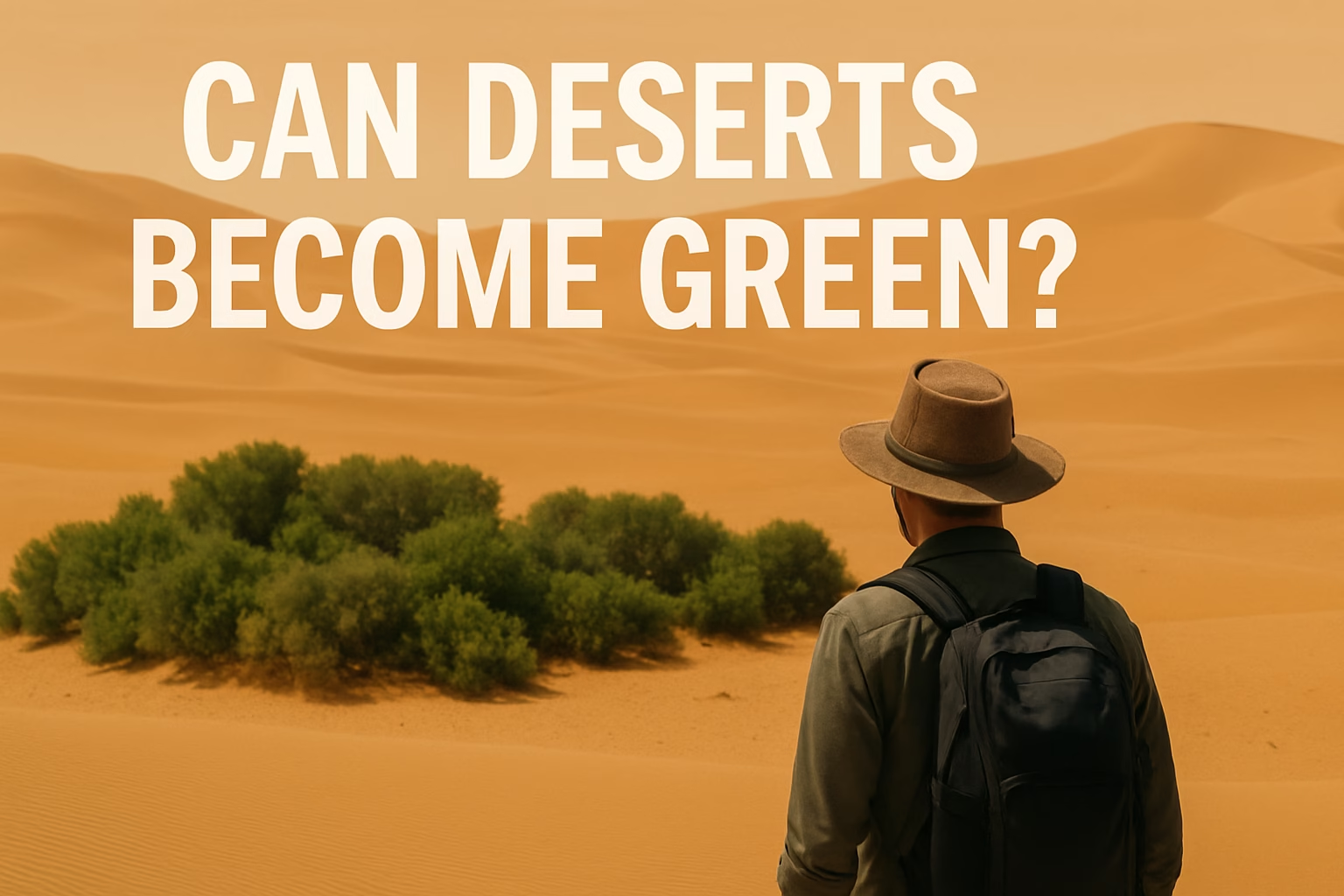
What really happens when we try to turn dry, dusty land into living green space?
- What Do We Really Mean by “Greening a Desert”?
- Where Desert Greening Is Actually Possible
- How Do We Actually Make Dry Land Green?
- 1. Water Is the Boss
- 2. Soil Is More Than Dust
- 3. The Right Plants, Not Just Any Plants
- 4. People and Knowledge Matter Most
- Examples of Desert Greening in the Real World
- Restoring Desertified Land
- Oases, Irrigated Farms, and High-Tech Greenhouses
- Shelterbelts, Windbreaks, and “Green Walls”
- What Are the Limits and Risks of Desert Greening?
- Role of Technology and Renewable Energy
- So, Can Deserts Become Green?
Short answer? Yes, some deserts and drylands can become a lot more green and productive than they are today. But it’s not as simple as planting a few trees and waiting for rain. Real desert greening is about careful water use, choosing the right plants, and respecting the fragile desert ecosystems that already exist.
Before dreaming of turning the Sahara into a giant forest, we need to ask a better question: which dry places can we heal, and how far should we go? That’s where things get interesting, and a bit messy too.
What Do We Really Mean by “Greening a Desert”?
First, not every desert is a “problem” that must be fixed. A desert is usually defined by very low rainfall, not by how much green you can see. Many deserts are full of life: hardy shrubs, insects, reptiles, mammals, and people who know exactly how to live with heat and dryness.
So when we talk about “desert greening”, we are often mixing two different ideas:
- Natural deserts – places that have always been dry, with unique desert ecosystems.
- Desertified land – areas that used to be more fertile but became dry and degraded because of overgrazing, deforestation, bad farming, or climate change.
Greening desertified land is usually a great idea. You’re basically repairing damage. Trying to completely transform an ancient desert into dense forest, though, can be risky and sometimes just unrealistic.
Key idea: When people ask, “Can deserts become green?” the more useful question is: “Which dry areas can we restore without destroying the natural desert?”
Where Desert Greening Is Actually Possible
Not all dry lands are equal. Some have hidden potential, others really don’t. Places with the best chances for realistic greening usually have:
- At least a little rainfall – even 200–400 mm a year can work with smart water harvesting.
- Soil that still holds some life – a few seeds, roots, or organic matter left.
- Access to extra water – such as groundwater, treated wastewater, or desalinated seawater.
- Local communities who are ready to care for trees and crops over many years.
These places are often on the edges of big deserts or in semi-arid regions that are slowly drying out. There, careful greening can stop land from sliding into full desert conditions.
| Type of land | Greening potential | Typical goal |
| Natural hyper-arid desert | Very low | Protect wildlife, maybe small oases |
| Arid desert edges | Medium | Windbreaks, shrubs, small agroforestry |
| Semi-arid / drylands | High | Restore soils, trees, mixed farming |
| Desertified former farmland | High (with effort) | Regeneration, erosion control, grazing plans |
If you imagine a map, the “greening sweet spot” is not the heart of the biggest deserts but the surrounding drylands where nature is already trying to stay green and just needs some help.
How Do We Actually Make Dry Land Green?
1. Water Is the Boss
In dry regions, every drop counts. Desert greening starts with catching, saving, and reusing water as smart as possible:
- Rainwater harvesting – small earth bunds, swales, and trenches slow down runoff so water seeps into the ground.
- Drip irrigation – delivers water right to the roots, wasting almost nothing.
- Mulch – a layer of straw, leaves, or stones that keeps the soil cool and reduces evaporation.
- Fog nets & dew collectors – in some coastal deserts, people literally “harvest” water from the air.
2. Soil Is More Than Dust
To make a desert truly green, the soil has to come back to life. That means:
- Adding organic matter – compost, manure, or even shredded branches to feed microbes.
- Using biochar (charcoal mixed into soil) to hold water and nutrients for longer.
- Building small sand dams and check dams in dry riverbeds to trap silt and moisture.
- Protecting bare ground from wind so the topsoil doesn’t just blow away.
3. The Right Plants, Not Just Any Plants
Trying to grow thirsty species in a desert is like asking a polar bear to live in a sauna. It might survive for a bit, but it’s not happy. Successful desert greening uses native or adapted plants that can handle heat, drought, and poor soil.
- Drought-tolerant trees – for shade, fodder, and wind protection.
- Deep-rooted shrubs – stabilize soil and store moisture lower down.
- Hardy grasses – cover the ground and reduce erosion.
- Food crops chosen for short growing seasons and low water needs.
4. People and Knowledge Matter Most
Even the best plan fails if local communities are not involved. Desert greening works when:
- Projects respect traditional knowledge of pastoralists and farmers.
- People have a reason to protect trees – fodder, fruit, shade, or fuel.
- There is long-term support, not just a one-time photo-op with seedlings.
In the end, social roots are as important as plant roots. Without them, young forests simply die or get cut down. (This sounds harsh, but it’s teh reality.)
Examples of Desert Greening in the Real World
To see whether deserts can become greener, it helps to look at places where people have already tried – and sometimes succeeded in amazing ways.
“Dryland restoration is slow magic: you don’t notice it day by day, but come back in 10–20 years and the land feels completely different.”
Restoring Desertified Land
In several regions around the world, abandoned, eroded hills have been turned into landscapes with terraces, shrubs, and trees. The recipe is usually the same: slow down runoff, protect the soil, let vegetation return, and give people alternatives to overgrazing or cutting the last bushes.
After years of effort, dry, dusty slopes can hold moist topsoil, seasonal streams reappear, and farmers can grow crops again on small plots between restored areas. It’s not a jungle, but it’s definitely greener than before.
Oases, Irrigated Farms, and High-Tech Greenhouses
In some deserts, people use groundwater or desalinated seawater to grow crops in the middle of the sand. You’ll see circular green fields from center-pivot irrigation or long lines of plastic greenhouses. With enough technology, almost any desert can show patches of bright green.
But there’s a catch: this kind of greening depends on constant energy and water. If water is pumped faster than aquifers recharge, the system collapses. So while high-tech desert agriculture looks impressive, it’s not always sustainable on a large scale.
Shelterbelts, Windbreaks, and “Green Walls”
Another strategy is to plant long lines of trees and shrubs to break the wind, hold sand in place, and protect fields and villages. These belts may not look like forests, but they can dramatically reduce dust storms and create micro-climates where other plants can grow more easily.
Done well, these projects mix native species, water-saving planting methods, and local labor. Done poorly, they use the wrong trees, waste water, and fail within a few years. The details matter more than the slogans.
What Are the Limits and Risks of Desert Greening?
It’s easy to fall in love with the idea of turning huge deserts into endless green. But there are some hard limits we can’t ignore.
- Water limits – If extra water comes from fossil groundwater or unsustainable sources, greening is only temporary.
- Soil salinization – In hot, dry climates, irrigation can leave salts behind, slowly poisoning the soil.
- Ecosystem damage – Planting dense forests in places that were naturally open desert can harm native species adapted to sparse vegetation.
- Economic reality – Large-scale greening projects are expensive and take decades; many fail when funding or political interest disappears.
Greening efforts also need to think about climate change. Warmer temperatures and shifting rainfall can make some dry regions even more stressed. These limits are tied closely to underlying desert climate conditions. New projects must be flexible, using plants and designs that can handle a more variable climate.
Important balance: The goal is not to “erase” deserts, but to restore damaged drylands, protect people from dust and hunger, and still keep the wild beauty of natural deserts.
Role of Technology and Renewable Energy
Modern technology can help desert greening become more realistic in some regions.
- Solar-powered pumps can move water with clean energy instead of diesel.
- Desalination plants turn seawater into fresh water, especially along coasts, when combined with renewable energy.
- Remote sensing & satellites monitor vegetation health and soil moisture over large areas.
- Smart irrigation controllers adjust watering based on weather and soil data.
Still, technology is only a tool. Without good planning, governance, and local participation, even the most advanced system can waste water or fail after a few years.
So, Can Deserts Become Green?
If by “green” you imagine a lush European forest suddenly appearing in the middle of a hot sand sea, the honest answer is probably not, and we shouldn’t even try. Natural deserts have their own value and beauty.
But if “green” means healthier drylands – more shrubs, trees in the right places, better soil, less dust, and more secure livelihoods for people – then yes, a lot of desertified and semi-arid land can absolutely become greener.
- We can restore degraded soils and stop desertification spreading.
- We can create belts of trees and shrubs that protect villages and farms.
- We can grow food in deserts using efficient, fair, and careful water use.
What really decides the future is how wisely we use water, how much we respect local communities and desert ecosystems, and whether we plan for decades instead of just a single planting season. If we get those parts right, then yes – more and more of today’s dry, tired landscapes can slowly shift toward living, resilient green.
