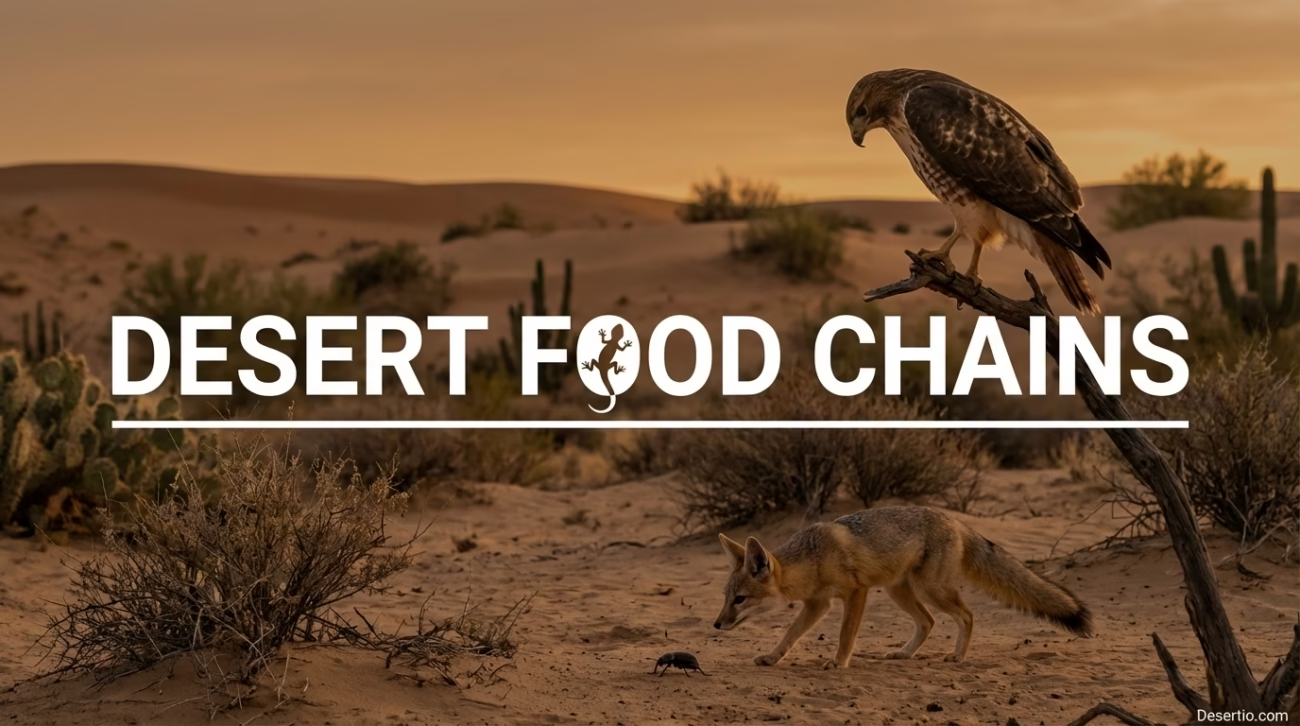
Desert food chains are like a carefully balanced budget: every calorie matters, and almost nothing goes to waste. In places where rain is rare and shade is precious, life still runs on a simple rule—energy moves, step by step, from the sun into plants and onward through animals, microbes, and the soil itself. These connections form the backbone of many desert wildlife ecosystems, where plants, animals, and microscopic life depend on each other to keep energy flowing.
- Desert Food Chains As A Living System
- Where Desert Food Chains Begin
- How Energy Moves From One Level To The Next
- Key Players You’ll See Again And Again
- Producers
- Consumers
- Decomposers: The Desert’s Recycling Crew
- Classic Desert Food Chain Patterns
- Adaptations That Shape Desert Food Chains
- Producer Strategies
- Consumer Strategies
- Desert Food Chains In Different Regions
- Sonoran-Type Hot Deserts
- Sahara-Like Sandy Deserts
- Cold Deserts And Semi-Deserts
- Coastal Deserts With Fog Influence
- Reading A Desert Food Chain Diagram Without Guesswork
- Common Misunderstandings About Desert Food Chains
- Core Terms That Make Desert Food Chains Click
Desert Food Chains As A Living System
A desert food chain describes a straight-line path of energy: one organism feeds another, and the “fuel” moves up the line. A desert food web is the bigger picture—many chains stitched together, because most desert creatures aren’t picky eaters. That flexibility is a quiet superpower in low-rain landscapes where food can appear in bursts and then vanish for long stretches.
Deserts come in hot, cold, coastal, and high-altitude flavors, but the logic of the chain stays familiar: sun → producers → consumers → decomposers. The details change depending on what grows there, which animals can handle the heat or cold, and how quickly water shows up and disappears. Think of it as the same song played with different instruments—the rhythm is energy.
Where Desert Food Chains Begin
Every desert food chain starts with primary producers—organisms that turn sunlight into usable energy. In many deserts, that means shrubs, grasses, hardy trees, and succulents. In some places, tiny soil crust communities also play a starring role. Those crusts can include algae, lichens, and microbes that bind soil and add life to surfaces that look empty at first glance. On a white-sand stage, they’re the quiet opening act that makes the rest possible.
Desert plants often “save” water and time the way a careful traveler saves snacks: store what you can, spend it slowly, and be ready to surge when conditions allow. Many plants have deep roots, waxy coatings, small leaves, or spines that reduce moisture loss. Some bloom fast after rain, creating short-lived banquets that ripple through the whole chain. That pulse-and-pause pattern is a big reason desert food webs can look calm one month and suddenly busy the next—like a market that opens overnight.
How Energy Moves From One Level To The Next
Food chains are often described using trophic levels. Each level is a job description: making food, eating plants, eating animals, or recycling what remains. Energy decreases as it moves upward, which is why deserts rarely support long, tall stacks of predators. Instead, you’ll often see shorter chains and a lot of overlap—animals that switch menus depending on the season. In deserts, efficiency isn’t a buzzword; it’s daily life.
| Trophic Level | Role In The Chain | Common Desert Examples | What Makes It “Desert-Ready” |
|---|---|---|---|
| Primary Producers | Capture sunlight and build biomass | Cacti, shrubs, drought-tolerant grasses, hardy trees, biological soil crusts | Water-saving structures and fast responses to rainfall |
| Primary Consumers | Feed on plants, seeds, nectar, or algae | Seed-eating rodents, grazing insects, nectar-feeding birds, plant-eating lizards | Activity timing (often dusk/night) and efficient digestion |
| Secondary Consumers | Feed on herbivores and smaller animals | Insect-eating reptiles, small foxes, owls, snakes | Heat-smart behavior and keen hunting senses |
| Top Consumers | Feed higher on the chain, often with broad diets | Large raptors, larger canids in some deserts, big snakes | Wide territories and flexible prey choices |
| Decomposers And Detritivores | Recycle nutrients back into soil | Fungi, bacteria, termites, beetles, ants | Rapid cleanup when moisture appears; survival through dry spells |
In deserts, the “missing” animals are often just hidden by timing. Many food chain links wake up after sunset, when temperatures drop and water loss slows.
A Useful Lens For Reading Desert Ecosystems
Key Players You’ll See Again And Again
Producers
Plants and soil crusts do the heavy lifting. Even in sparse landscapes, producers create seeds, fruits, nectar, and leaves that power entire networks. Many producers are specialists at “banking” resources—storing water, storing sugars, or timing growth to rare rainfall. If the desert food chain is a story, producers are the opening chapter.
- Seed producers (grasses and shrubs) often feed many animals at once.
- Nectar and fruit producers support pollinators and birds during brief windows.
- Soil crust communities can add stability and nutrients where plants struggle.
Consumers
Desert consumers range from tiny insects to birds of prey. Many are generalists, which means they can switch foods when one option disappears. A lizard might focus on ants in one season and beetles in another; a fox might alternate between insects, small mammals, and fruit. This menu-switching is not indecision—it’s survival strategy.
- Primary consumers often specialize in seeds, leaves, or nectar.
- Mid-level consumers link insects and small vertebrates to larger hunters.
- Top consumers often hold large territories and keep the system balanced.
Decomposers: The Desert’s Recycling Crew
It’s tempting to picture desert food chains as only plants and predators, but decomposers keep the entire system from stalling. Fungi and bacteria break down organic material, while detritivores like termites, beetles, and ants physically process it. When moisture arrives—even briefly—microbial activity can surge, returning nutrients to the soil that many desert animals and plants ultimately depend on. In a desert, decomposers are the clean, fast hands behind the scenes, turning leftovers into future growth.
- Termites and ants often move nutrients and reshape soil structure.
- Beetles and other detritivores help break material into smaller pieces that microbes can finish.
- Soil microbes recycle nutrients that producers need to rebound after rain.
Classic Desert Food Chain Patterns
Because deserts vary, there isn’t one universal chain. Still, certain patterns show up repeatedly. Most start with seeds, leaves, nectar, or algae, then move through small, efficient eaters, and finally into larger hunters that can travel farther to find food. Below are realistic examples that match common desert roles and relationships—each one is a simplified snapshot of a much richer food web.
- Seeds From Desert Grasses → Seed-eating rodent → snake → raptor
- Nectar Or Fruit From Succulents → nectar-feeding insect or bird → small carnivore
- Shrub Leaves → grazing insect → lizard → owl
- Algae Or Microbes In Moist Patches → tiny invertebrates → small fish or amphibians (where water persists) → wading birds
Why These Chains Are Often Short
Energy is “spent” at each step. In deserts, producers may grow slowly or only briefly, so the system tends to support fewer layers. That’s why flexible diets are common, and why many animals feed across multiple levels (for example, eating both seeds and insects). A shorter chain doesn’t mean a weaker ecosystem—it often means a smartly tuned one built for scarcity.
Adaptations That Shape Desert Food Chains
Desert food chains aren’t only about who eats whom—they’re shaped by timing, water, and heat management. Many interactions happen at night or during cooler hours. Some species store water in tissues; others rely on moisture in food. The chain is also shaped by movement: roaming predators connect distant patches of life, while small animals often stay close to cover. Picture the desert as a giant stage where the spotlight is harsh at noon, so many performers choose the evening show.
Producer Strategies
- Water storage in stems or leaves (common in succulents).
- Deep or wide roots to capture brief rain or tap deeper moisture.
- Fast growth after rain for short-lived plants that seed quickly.
Consumer Strategies
- Nocturnal activity to reduce heat and water loss.
- Burrowing and shade use to avoid extreme temperatures.
- Diet flexibility to handle seasonal “boom-and-pause” food supply.
Desert Food Chains In Different Regions
Different deserts feature different headline species, but the roles repeat: producers, seed-eaters, insect-eaters, hunters, and recyclers. Here are regionally grounded examples that stay true to widely observed relationships. Each chain is simplified on purpose, because real deserts run on interwoven food webs where one organism may connect to many others. The goal here is clarity—clean lines that reveal the pattern—without pretending the desert is simple. It’s not.
Sonoran-Type Hot Deserts
In hot deserts with cacti and seed-rich shrubs, energy often flows through nectar, fruit, and seeds. Many birds and insects time their activity around flowering and fruiting, while reptiles and small mammals convert plant energy into movement that larger hunters can follow. The chain can look “quiet” in midday heat, then feel lively after sunset—like a city that wakes up at night.
- Cactus Flowers And Nectar → insects → lizards → owls
- Shrub Seeds → kangaroo rats and other seed-eating rodents → snakes → hawks
Sahara-Like Sandy Deserts
In vast sandy deserts, plant cover is often sparse and uneven, so food chains depend on pockets of vegetation and short periods of insect activity. Small mammals and reptiles serve as key intermediaries, moving energy from plants and insects to higher predators. Many hunters rely on sharp senses and careful timing to locate prey in a landscape where food is scattered and often concealed.
- Desert Grasses And Shrubs → insects → lizards → raptors
- Seeds → jerboas and other small rodents → foxes
Cold Deserts And Semi-Deserts
Cold deserts and semi-deserts often blend desert traits with strong seasons. Producers can include shrubs and grasses that handle cold, and consumers may shift diets through the year. Seeds, roots, and insects remain important, but the calendar changes the menu. These systems can feel like a rotating pantry: what’s available depends on the season, so many animals use opportunistic feeding to keep energy flowing. Flexibility is the common thread.
- Grasses And Shrubs → grazing insects → small birds → hawks
- Shrub Seeds → small rodents → foxes → eagles
Coastal Deserts With Fog Influence
Some coastal deserts receive moisture not from rain, but from fog and mist. That can support unique plant communities and pockets of productivity. Food chains here often center on fog-fed plants, insects, and animals adapted to extracting water from humid air. The effect is subtle: a landscape that looks dry, yet quietly runs on airborne moisture. It’s like watching a candle burn—small flame, steady light—powered by tiny inputs.
- Fog-Supported Vegetation → insects → lizards → birds of prey
- Plant Litter → detritivores → insect-eaters
Reading A Desert Food Chain Diagram Without Guesswork
Food chain diagrams are common in classrooms and nature centers, but deserts can confuse people because life looks “spaced out.” The trick is to read the diagram as energy transfer, not as a crowded scene. Start with producers, then follow who consumes that energy, then look for recyclers that return nutrients to the base. If the diagram shows a web, focus on one path at a time. One clean line is easier than a tangle, and deserts love clean lines. So do good diagrams.
- Locate The Producers (plants, algae, soil crusts) and note what they provide: seeds, nectar, leaves, or biomass.
- Identify Primary Consumers that rely on those products, such as seed-eaters or nectar-feeders.
- Follow The Next Consumer Step and watch for animals that eat insects, reptiles, or small mammals.
- Finish With Recycling: decomposers and detritivores that return nutrients back to the soil and support new growth.
Common Misunderstandings About Desert Food Chains
“Deserts have simple food chains.” They often have short chains, but the web can be highly connected because many animals use mixed diets. The desert doesn’t always add more layers—it adds more routes. That’s why a single species can link multiple chains at once, acting like a crossroads for energy flow. Short doesn’t mean basic.
“Nothing happens unless it rains.” Rain can trigger dramatic growth, but deserts also run on steady, smaller inputs: long-lived plants, stored seeds, nocturnal activity, and soil-level processes. Even when the surface looks still, microbes and invertebrates may be quietly keeping the nutrient cycle moving. In deserts, subtle doesn’t mean inactive—it means efficient.
“Top consumers are always rare everywhere.” Large predators often need bigger territories because energy is spread out. That can make sightings uncommon, yet their ecological role can be strong: shaping behavior and distribution of other animals. In a desert web, a top consumer can be like a slow-moving conductor—not constantly visible, but still guiding the rhythm. Presence isn’t only about numbers.
Core Terms That Make Desert Food Chains Click
Food Chain
A single pathway of energy transfer: producer to consumer to consumer.
Food Web
A network of connected chains showing multiple feeding links.
Trophic Level
A feeding position in the chain, defined by what an organism eats.
Primary Producer
An organism that makes its own food using sunlight; the base of most chains.
Decomposer
Microbes like fungi and bacteria that break down organic matter into nutrients.
Detritivore
An animal that feeds on dead organic material and helps decomposition along.
