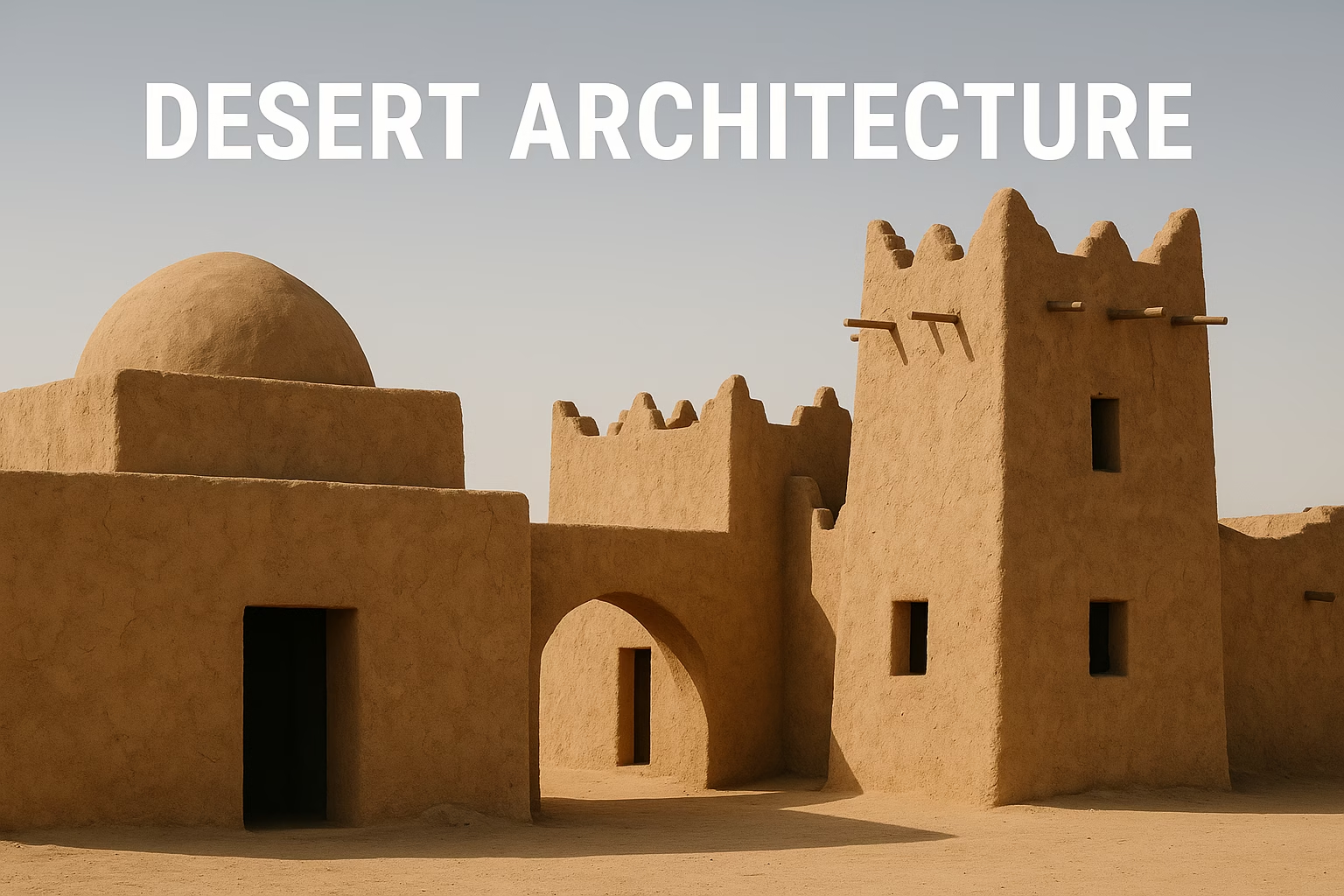
Desert architecture is not just a style, it’s a quiet survival manual written in mud, stone and shade. In the world’s big dry zones – from the Sahara to the Arabian Desert, from the Sonoran to the Thar – people have learned to build homes that stay cool when the sun feels almost cruel, and warm when nights drop close to freezing.
- What makes desert architecture different?
- Core design DNA of desert buildings
- Vernacular wisdom
- Contemporary upgrades
- Courtyards: the coolest room is outside
- Windcatchers, mashrabiya and other passive cooling tricks
- Regional flavors of desert architecture
- North Africa: kasbahs, ksour and earthen fortresses
- Middle East & Iran: courtyard houses and wind towers
- Desert cities of the Gulf: from wind towers to smart facades
- American deserts and beyond
- Modern sustainable desert architecture: old logic, new tools
- Practical design guidelines for hot-arid buildings
Instead of fighting the climate with huge air-conditioners, desert buildings lean on smart form, heavy walls, deep shade and moving air. Understanding these principles is useful if you’re an architect, a traveler exploring oases, or just someone curious about how humans tame extreme enviroments.
What makes desert architecture different?
Hot-dry climates push buildings to their limits. A typical desert climate brings intense solar radiation, almost no humidity and a huge temperature swing between day and night. Buildings here have to solve a few big problems at once:
- Extreme daytime heat – walls and roofs must block and delay heat instead of letting it rush indoors.
- Cool nights – structures should release stored heat slowly to keep interiors comfortable after sunset.
- Dust and sand-laden winds – openings need protection while still allowing natural ventilation.
- Low water availability – every cooling strategy must be water-wise.
- Glare and harsh light – light is filtered, bounced and softened, rarely allowed to hit directly.
Because of this, desert architecture tends to look compact, heavy and a bit inward-looking: thick walls, tiny windows, shaded courtyards and narrow streets that feel like canyons of shade.
Core design DNA of desert buildings
Across different deserts, traditional buildings share a kind of common DNA. The details change, but the main ideas repeat again and again because they work so well in hot-arid climates. Many of these ideas are deeply rooted in the everyday practices of people living in desert environments, where architecture evolves directly from climate and culture.
| Strategy | How it looks | What it does |
|---|---|---|
| Thermal mass | Thick walls of adobe, rammed earth, stone | Absorbs heat by day, releases it slowly at night |
| Compact form | Clustered houses, narrow alleys, shared walls | Reduces exposed surface; creates deep shade outdoors |
| Inward courtyards | Houses wrapped around a shaded inner void | Creates a cooler microclimate with air movement and greenery |
| Controlled openings | Small windows, screens, recessed doors | Lets in light and air while cutting glare and hot winds |
| Passive airflow tools | Wind towers, high vents, stairwells, atria | Pulls cooler air in, pushes warm air up and out |
Vernacular wisdom
Traditional desert settlements pack buildings tightly, turning streets into cool shade tunnels. Mud, earth and stone come from nearby ground, so the landscape almost flows into the walls.
Contemporary upgrades
Modern desert architecture keeps these ideas but adds better insulation, smart facades and efficient mechanical systems, so buildings use far less energy to stay comfortable.
Courtyards: the coolest room is outside
In many hot-dry cities, the real living room sits in the middle of the house. A central courtyard is protected from hot winds, shaded by walls and sometimes trees or canopies. This “room without a roof” moderates teperature and gives families a private outdoor space.
- Shade – tall walls block the low morning and evening sun.
- Stack effect – warm air rises out of the open top, pulling cooler air through lower openings.
- Evaporation – a small fountain, pool or even damp surfaces can cool air slightly as water evaporates.
- Greenery – plants humidify and soften the dry air, making it feel more pleasant.
When designed well, a courtyard can be several degrees cooler than the surrounding streets, turning the center of the house into a comfortable micro-oasis.
In desert towns, the most valuable square meter is often the one that has no roof at all.
on inward-facing courtyards
Windcatchers, mashrabiya and other passive cooling tricks
Desert builders developed a whole toolkit of passive cooling devices that work without electricity.
- Windcatchers (badgir) – tall towers with openings that face the wind, guiding cooler air into rooms below and pushing hot air out. Common in Iran and parts of the Arabian Peninsula.
- Mashrabiya screens – intricate wooden or stone lattice screens along facades. They filter light, cut glare, protect privacy and help cool air as it passes through, especially when combined with water jars behind the screen.
- Deep window reveals – recessing windows inside thick walls creates natural shading and reduces the amount of direct sun hitting the glass.
- Earth-sheltered spaces – semi-buried rooms or courtyards take advantage of the ground’s more stable subsurface temperature.
These elements turn hot winds and brutal sunlight into allies instead of enemies.
Regional flavors of desert architecture
North Africa: kasbahs, ksour and earthen fortresses
In the Sahara fringes of Morocco, Algeria and Tunisia, you’ll find kasbahs (fortified homes) and ksour (fortified villages). Their rammed earth and adobe walls rise like cliffs from the desert floor, tinted by the same soil they are built from. Inside, narrow passageways, stacked granaries and tiny windows keep the sun out and cool air in.
Here, thick earthen walls act as giant thermal batteries, while compact forms reduce exposed surfaces. Many of these structures have survived for centuries in harsh desert climates, a strong hint that the physics behind them is solid.
Middle East & Iran: courtyard houses and wind towers
In traditional cities across Iran, Iraq and the wider Middle East, classic courtyard houses combine deep basements, flat roofs, badgir windcatchers and central courtyards. Many homes are almost invisible from the street; the real life happens behind thick walls, wrapped around trees, pools and shaded patios.
The famous mashrabiya – those patterned screens that glow at sunset – are both beautiful and extremely practical. They soften light, protect privacy in dense urban neighborhoods and encourage gentle airflow by creating small pressure differences between inside and outside.
Desert cities of the Gulf: from wind towers to smart facades
Historic neighborhoods in places like Muscat, Sana’a and old Gulf towns used thick stone or mud walls, shaded alleys and simple windcatchers. Today, fast-growing cities in the same region face similar climate challenges but at a larger, high-rise scale.
Projects such as Masdar City in Abu Dhabi reinterpret traditional planning – narrow streets, courtyards, shade structures – with modern tech, aiming for low-carbon, walkable desert communities.
Another iconic example is Al Bahar Towers, where a dynamic facade inspired by mashrabiya opens and closes like mechanical umbrellas to reduce solar gain and glare while preserving views. It’s a high-tech version of a very old idea: move the shade instead of moving the people.
American deserts and beyond
In the Sonoran and Mojave deserts of North America, contemporary homes often combine deep overhangs, insulated lightweight walls and high-performance glazing with traditional ideas like courtyards, shaded patios and earth berming. Similar principles appear in parts of Australia’s interior and the Negev Desert too – different cultures, same physics.
Modern sustainable desert architecture: old logic, new tools
Good desert design today mixes vernacular wisdom with modern building science:
- High-performance envelopes – better insulation, airtight layers and reflective roofs reduce heat gain while keeping thermal mass where it matters.
- Adaptive facades – louvers, kinetic shading panels and responsive mashrabiya-inspired systems that react to the sun’s position throughout the day.
- Integrated renewables – large roof and canopy surfaces covered with solar panels provide shade and power at the same time.
- Water-sensitive design – greywater reuse, drought-tolerant landscaping and careful use of evaporative cooling where it truly makes sense.
The most successful projects borrow directly from traditional desert settlements – compact layouts, shaded pedestrian routes, layered courtyards – and then refine them with simulation tools and performance data.
Practical design guidelines for hot-arid buildings
If you think in terms of simple rules, desert architecture becomes much easier to understand – and to design:
- Shape first, technology later – choose compact building forms with minimal west-facing surfaces before adding gadgets.
- Prioritize shade – use overhangs, arcades, pergolas and vegetation to protect walls, windows and outdoor paths.
- Use thermal mass smartly – combine heavy walls or floors with good night-time ventilation so stored heat can escape.
- Design for moving air – align openings with prevailing winds, create cross-ventilation paths and use height differences to drive stack effect.
- Filter, don’t block, daylight – rely on screens, light shelves and small but well-placed windows instead of big, exposed glass walls.
- Protect entrances – recess doors, add porches and use screens to buffer sand-laden winds.
- Plan micro-oases – concentrate greenery, water features and seating in courtyards or shaded pockets where they have the most impact.
- Respect local materials – where possible, use local earth, stone or lime-based products that are already tuned to the climate.
At its heart, desert architecture is about listening to the landscape instead of overpowering it. Thick walls, shaded voids, clever openings and honest materials may look simple, but they embody centuries of experiment in some of the harshest places on Earth.
When you walk through a cool alley of a kasbah at noon or feel a night breeze slide down a courtyard wall, you’re experiencing design that treats heat, light, wind and sand as design partners. That’s the quiet genius of architecture born in the desert.
