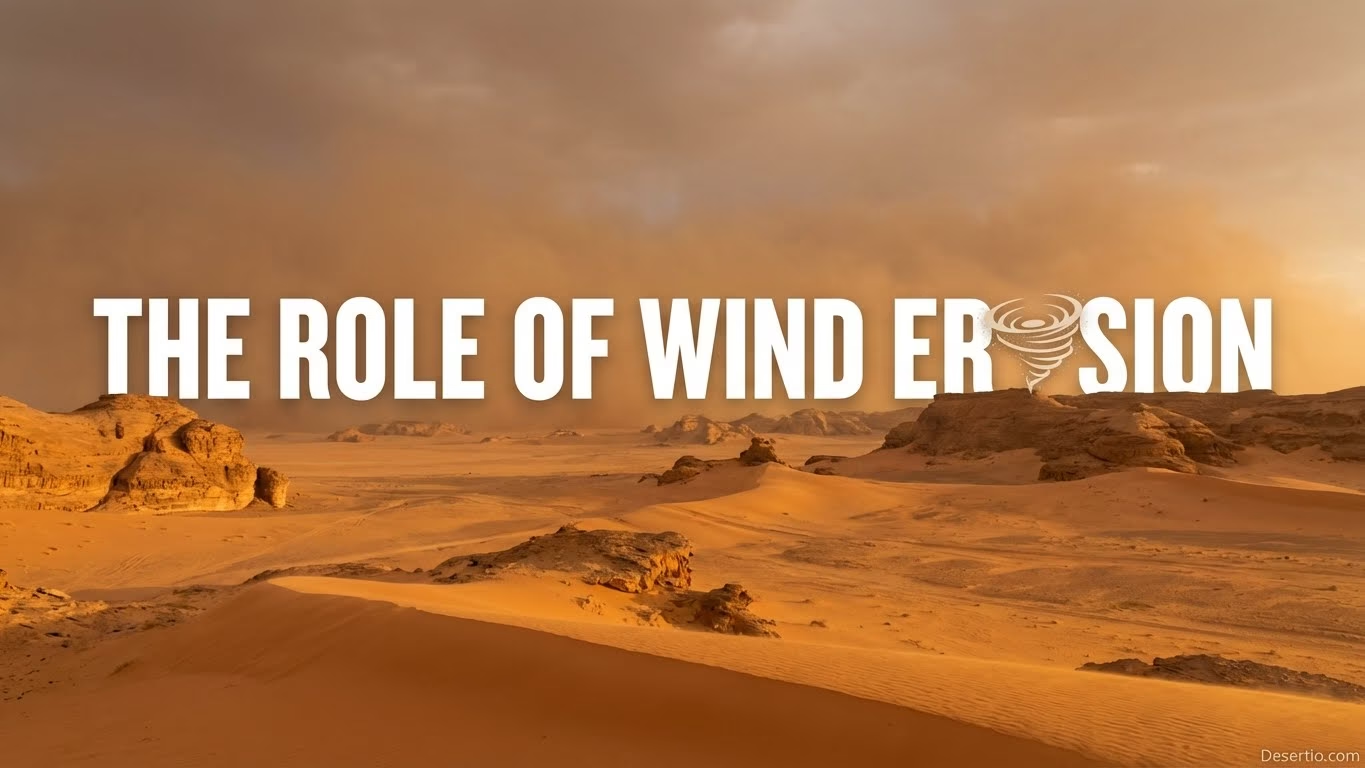
Wind erosion is the desert’s quiet engine. Aeolian processes don’t need rivers or rainfall to reshape a place—just dry ground, loose grains, and steady air on the move. If deserts are nature’s open-air workshop, wind is the tool that sands, carves, and rearranges the surface until it looks brand new.
- Wind Erosion
- Why Wind Becomes The Main Sculptor
- How Wind Erosion Works
- Deflation: When The Surface Gets “Vacuumed”
- Abrasion: Sandblasting In Slow Motion
- Transport Modes: How Sediment Actually Moves
- Landforms Wind Erosion Helps Create
- Erosional Features
- Depositional Partners
- Why Wind Erosion Matters In Desert Systems
- What Controls Wind Erosion Intensity
- A Simple Rule That Helps
- Practical Ways To Reduce Wind Erosion
- Surface Protection
- Wind Speed Reduction
- Common Questions About Wind Erosion
- Quick Field Checklist
Wind Erosion
Think of wind erosion as a three-part story: lifting, moving, and dropping sediment. In deserts, that story runs on repeat, shaping landforms you can spot with your eyes—sometimes even from a distance.
- Deflation removes loose fine particles like a gentle vacuum.
- Abrasion “sandblasts” rock surfaces with flying grains.
- Transport shifts material by hopping, rolling, or floating dust-high.
Why Wind Becomes The Main Sculptor
Wind gets “promoted” in drylands because water can’t always do its usual heavy lifting. When soil is dry and vegetation is sparse, particles sit exposed like sugar on a countertop—conditions typical of many desert climate conditions. Add open space—long, uninterrupted fetch—and air has room to speed up, grab grains, and start erosion.
It’s not only about “strong” wind. Even moderate winds can do serious work when the surface is smooth, loose, and crumbly. A bare flat can be more vulnerable than a rough surface dotted with stones or plants. That little bit of roughness interrupts airflow and reduces the wind’s ability to kick off particle movement.
How Wind Erosion Works
Wind erosion happens close to the ground, where airflow meets grit. First, wind must detach particles. Then it transports them. Finally, it deposits them when the wind slows or hits an obstacle. The real magic is that each moving grain can knock other grains loose, like a tiny chain reaction.
Picture a beach being swept by wind—one grain hops, taps another, and suddenly the surface comes alive. That hopping motion (saltation) is often the main driver, because bouncing grains hit the ground with enough punch to launch more grains into motion. It’s small physics with big landscape results.
Deflation: When The Surface Gets “Vacuumed”
Deflation is the removal of loose, fine material—silt, dust, and very small sand—from the surface. Over time, deflation can leave behind a protective layer of pebbles and gravel called desert pavement. It’s like shaking a mixed jar of nuts and flour: the fine stuff moves away first, and the heavier pieces settle into a tougher “lid.” That lid can slow future wind erosion.
Deflation can also scoop shallow basins called blowouts (or deflation hollows) when the surface is especially loose and unprotected. Once a hollow forms, airflow can swirl inside it, which keeps the process going. Over long periods, this can influence where sand gathers, where plants can take hold, and how a desert floor develops its patchwork look.
Abrasion: Sandblasting In Slow Motion
Abrasion is wind erosion’s “sandpaper” side. Wind itself is invisible, but wind-blown grains are not. When moving sand hits rock, it can polish, pit, and groove surfaces—the same way a stream polishes pebbles, just with air instead of water. Rocks shaped by this kind of wear are often called ventifacts, and they can develop flat faces and sharp edges like natural sculptures.
In places where soft material sits next to harder material, abrasion can carve long, streamlined ridges. These are known as yardangs. They tend to align with the prevailing wind direction, giving the landscape a “combed” look—like someone dragged a giant brush across the ground. It’s a simple recipe: persistent wind, a mix of weak and strong layers, and plenty of time for aeolian carving.
Transport Modes: How Sediment Actually Moves
Once grains are loose, wind transport usually happens in three main ways. The mode depends on particle size, surface roughness, and how energetic the wind is near the ground. Each mode leaves its own fingerprints on the surface, from ripples to dust coatings to gravel lag.
| Transport Mode | What You’d See | Why It Matters |
|---|---|---|
| Saltation | Sand grains hopping and bouncing close to the ground | Often the main “engine” that triggers more erosion |
| Suspension | Fine dust carried higher and farther | Moves nutrients and ultra-fine sediment across wide areas |
| Surface Creep | Larger grains rolling or sliding along the ground | Builds coarse lag layers that can slow future deflation |
Here’s a neat mental image: saltation is like popcorn hopping in a pan, suspension is like flour drifting in a sunbeam, and surface creep is like marbles nudged across a table. Different motions, same goal: moving sediment from “here” to “there.”
Landforms Wind Erosion Helps Create
Wind doesn’t just remove material; it also helps organize it. That’s why deserts can look both raw and strangely tidy at the same time. Below are features commonly tied to wind erosion and its close partner, wind deposition.
Erosional Features
- Ventifacts: rocks with faceted, grooved, or polished faces.
- Yardangs: streamlined ridges aligned with prevailing wind.
- Desert Pavement: pebble “armor” left after fine particles are removed.
- Blowouts: scooped hollows where loose sediment is lifted away.
Depositional Partners
- Sand Ripples: small wave-like ridges made by shifting grains.
- Dunes: mounds and ridges shaped by wind direction and sand supply.
- Sand Sheets: broad, flatter spreads of sand with subtle texture.
- Loess: wind-blown silt deposits that can form thick blankets.
Wind erosion is not a single action. It’s a choreography of deflation, abrasion, and transport that can turn plain ground into patterned terrain.
Why Wind Erosion Matters In Desert Systems
On the surface, wind erosion looks like “just sand moving.” But it affects far more than scenery. By removing fine particles, deflation can change how the ground holds moisture, how seeds settle, and how stable the surface becomes. That, in turn, influences plant patches and the micro-habitats that depend on them.
Wind can also carry fine dust that contains minerals and nutrients. When that dust settles elsewhere, it can lightly “fertilize” new surfaces, tint snow or rock, or add silt to soils. It’s a natural delivery system—subtle, slow, and wide-reaching. In other words, aeolian transport can connect distant landscapes without a visible trail.
What Controls Wind Erosion Intensity
Wind erosion isn’t constant. It turns up or down depending on a handful of controls. If you want to “read” a desert surface, start with these. They explain why one area stays stable while another becomes a shifting, textured field of motion.
- Wind Speed Near The Ground: faster flow increases the chance that grains start moving.
- Surface Roughness: rocks, clumps, and plants disrupt airflow and reduce lift.
- Soil Moisture: damp grains stick together more, resisting entrainment.
- Particle Size And Sorting: very fine dust lifts easily; coarse gravel usually doesn’t.
- Vegetation Cover: even partial cover can block wind at the surface and trap moving sand.
A Simple Rule That Helps
If the surface is smooth, dry, and open, wind has an easy job. Add roughness, moisture, or cover, and you’re basically putting speed bumps in front of wind erosion.
Practical Ways To Reduce Wind Erosion
Not every desert surface should be “fixed”—many are naturally dynamic and beautifully alive. But when wind erosion threatens soil, gardens, trails, or farmland, small changes can make a big difference. The goal is simple: reduce wind speed at the surface and keep particles from becoming airborne. That’s it. Everything below is just a different way of doing that.
Surface Protection
- Keep Cover On The Ground with plant litter, mulch, or natural residues.
- Use Roughness by leaving small clods, stones, or textured surfaces.
- Limit Disturbance during the windiest periods so grains stay bound.
Wind Speed Reduction
- Windbreaks (trees, shrubs, fences) slow air and trap moving sand.
- Shelterbelts work best when they’re continuous and thoughtfully spaced.
- Small Barriers like low edging can protect a garden bed or path edge.
Windbreaks deserve a special mention. They don’t “stop” wind; they reshape it, creating a calmer zone downwind. In that calmer zone, saltating grains lose energy and settle. Over time, this can reduce soil loss and keep the surface more stable. The best designs usually aim for a balance—enough density to slow the wind, but not so solid that air spills over in turbulent bursts.
Common Questions About Wind Erosion
Is wind erosion only a desert thing?
Not at all. Wind erosion can happen anywhere there’s exposed, dry, fine material and enough airflow—coastal flats, dry lakebeds, sandy plains, even construction sites. Deserts just make it more visible because there’s often less vegetation and more loose sediment ready to move.
Does wind erode solid rock by itself?
Wind needs “helpers.” Abrasion happens because sand and dust act like tools. Without grains, air alone has little ability to grind rock. With grains, the impact can polish and carve surfaces, forming ventifacts and shaping ridges over long time spans.
Why do dunes “move” but some deserts look paved?
Because deserts can be both mobile and armored. Where sand supply is high and surfaces are open, dunes can migrate. Where fine particles have been removed, a gravel layer can form desert pavement, which protects what’s underneath and slows more deflation.
Quick Field Checklist
- Look for ripples and fresh drifts around obstacles (active transport).
- Check for pebble “armor” like desert pavement (past deflation).
- Notice rock faces with grooves or polish—possible abrasion.
- Scan for streamlined ridges that point with the wind, like yardang-style shapes.
