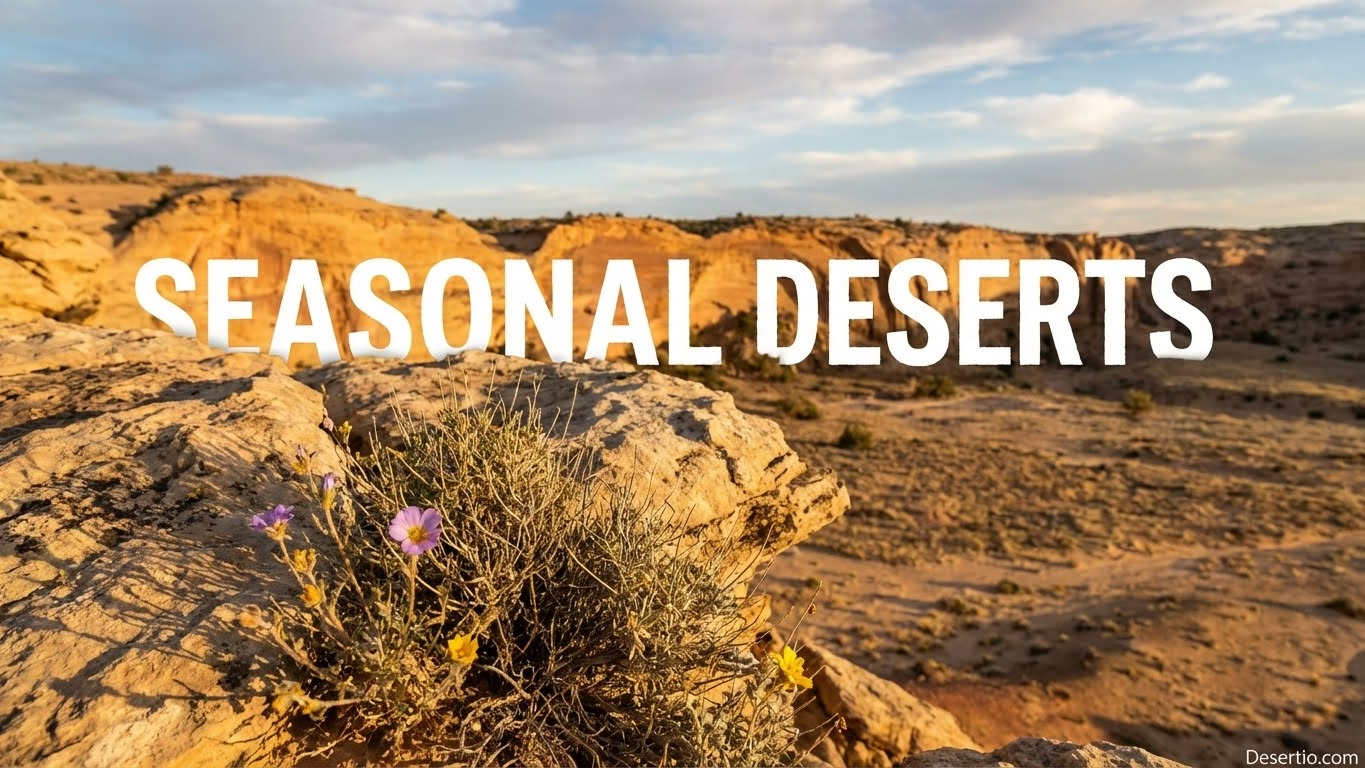
Seasonal deserts are the kind of drylands that feel like they have a heartbeat. Most of the year, water is scarce and the landscape looks still. Then a short wet season shows up like a surprise guest—quick storms, sudden green, and a burst of life that can vanish again in weeks. The key idea: it’s still a desert, just one with a predictable rainy window.
- What Makes A Desert “Seasonal”
- Seasonal Desert Quick Snapshot
- Why It Feels So Different
- How Seasonal Rain Shapes The Land
- Life Strategies In A Burst-And-Rest World
- Weather Rhythm You Can Actually Feel
- How To Recognize A Seasonal Desert On A Map
- Seasonal Desert Field Checklist
- Timing
- Gear And Comfort
- Seasonal Deserts And “Green Explosions”
- Common Terms You’ll See In Seasonal Desert Guides
- Seasonal Desert Myths That Trip People Up
What Makes A Desert “Seasonal”
A seasonal desert is defined less by how much rain it gets in a single storm and more by the annual rhythm. Deserts generally receive very low yearly precipitation (often under about 250 mm), and evaporation demand is high. In seasonal systems, a large share of that limited rain arrives in a tight wet-season bundle—think weeks to a few months—followed by a long, drying stretch where the sky closes up again.
This pattern often happens where shifting wind belts and tropical moisture lines move north and south through the year. When the moisture line swings overhead, short-lived rainfall can occurrs in pulses. When it swings away, subsiding air and clear skies return, and the landscape goes back to its dry default.
Seasonal Desert Quick Snapshot
- Core trait: one main rainy season plus a longer dry season
- Rain style: brief, intense storms with long gaps between them
- Water behavior: ephemeral flow in channels, quick infiltration, fast drying
- Biology: burst-and-rest cycles like a spring-loaded toy
- Traveler timing: right after rains for color and cooler air
Why It Feels So Different
Some deserts are “dry, dry, dry” almost all year. A seasonal desert is more like a stage with a spotlight: most of the time the cast waits in the wings, then the wet season hits and everything rushes on at once. Plants leaf out fast, insects appear, birds track food, and the ground can turn into a temporary garden—then it quiets down again without any drama.
You can also feel it in the air. Before storms, the atmosphere can flip from dusty to electric in minutes. Afterward, the scent of wet soil—often called petrichor—can hang around like a clean blanket, especially near rocky surfaces and dry washes.
How Seasonal Rain Shapes The Land
In a seasonal desert, water doesn’t usually sit around politely. It arrives in short bursts, runs hard, and disappears. That means landforms are built by episodes, not steady flow. Dry channels can become roaring streams for an hour, then go silent again—like someone turned off a faucet.
| Seasonal Feature | What You’ll Often Notice | Why It Matters |
|---|---|---|
| Dry Washes | Empty channels that suddenly carry water after storms | Main pathways for sediment and seeds |
| Alluvial Fans | Fan-shaped gravel spreads at mountain fronts | Fast-deposited material from flash flow |
| Playas / Salt Flats | Flat basins that briefly hold shallow water | Evaporation concentrates minerals |
| Crusted Surfaces | Hard soil skin that can look like varnish | Reduces erosion when intact |
| Desert Pavement | Tight pebbly cover with little dust between stones | Protects finer sediments underneath |
The “flashy” nature of these systems also explains why soil texture varies so much over short distances. A sandy patch may swallow rain quickly, while a nearby clay-rich surface sheds water into tiny rills. That small contrast can decide where seedlings survive and where the ground stays bare.
Life Strategies In A Burst-And-Rest World
Seasonal deserts are full of organisms that treat time like a tool. Many plants rely on seed banks—seeds waiting in the soil like sealed envelopes—until moisture and temperature line up. When the wet season comes, some species can sprout, flower, set seed, and fade in a single sprint. That’s the desert bloom phenomenon: not magic, just good timing.
Perennial plants play a different game. They may have deep roots for stored moisture, waxy leaves to slow water loss, or the habit of dropping leaves during the harshest months. Animals often adjust their schedules instead of their bodies: nocturnal movement, burrowing, and heat-avoiding behavior are common patterns across many desert animals that depend on seasonal pulses of food and water. It’s less “toughness” and more smart budgeting.
Seasonal deserts can look quiet, but they’re not empty. They’re paused—and ready to play the moment conditions turn favorable.
Weather Rhythm You Can Actually Feel
During the wet season, storm clouds can build quickly, and rainfall may come as brief downpours rather than gentle all-day rain. After storms, humidity can rise for a bit, nights can feel softer, and the surface cools—at least until the sun takes over again. In the dry season, skies tend to stay clearer, daily temperature swings can feel sharper, and wind-driven dust becomes more noticeable in open terrain.
If you like mental models, picture a seasonal desert as a sponge that only gets a short pour. Some water soaks in (especially in sandy or fractured ground), but a lot runs off fast in sheets and channels. That’s why ephemeral pools can appear after rain yet vanish quickly—blink and you miss them.
How To Recognize A Seasonal Desert On A Map
You don’t need fancy tools to spot a seasonal desert—just the right clues. Look for regions labeled as desert or semi-desert where rainfall charts show a single strong peak rather than evenly spread drizzle. If monthly bars stack up in one season and sit near zero the rest of the year, that’s a classic seasonal rainfall signature.
- Climate charts: one clear wet-season spike and a long flatline
- Drainage lines: many channels, but few permanent rivers—think ephemeral networks
- Vegetation maps: patchy cover with bursts of green that track seasonal rains
- Satellite “before/after”: sudden greening following storms is a big hint
Seasonal Desert Field Checklist
If you’re planning a visit or building a study list, use this seasonal desert checklist. It keeps things practical, not preachy, and it focuses on what actually changes between the wet and dry phases.
Timing
- Aim for right after rains if you want fresh growth and active wildlife
- Choose the dry season if you prefer clearer skies and firmer ground
- Expect rapid change—a single storm can rewrite the scene
Gear And Comfort
- Sun protection: hat, sleeves, and shade breaks matter more than bravado
- Footwear: closed shoes help with hot ground and gritty surfaces
- Water planning: carry enough for your route, plus a little buffer—simple and sensible
Seasonal Deserts And “Green Explosions”
When people hear “desert,” they often imagine endless beige. Seasonal deserts love proving that image wrong. After a good rain pulse, dormant plants wake up, annuals fill gaps, and the ground may look lightly painted with new shoots. This doesn’t mean the desert has “turned into” something else. It’s still a low-rainfall system; it’s just showing its short-lived productive side.
These green windows also help explain animal movement. Food and water become briefly easier to find, so activity can cluster in time and space. You might notice more tracks near washes, more birds near flowering patches, and more insect buzz around fresh growth. In a seasonal desert, life is often about showing up at the right moment, like catching the last train before the doors close.
Common Terms You’ll See In Seasonal Desert Guides
Desert writing gets confusing fast, so here are a few terms that pop up in seasonal desert discussions. Think of this as a small vocabulary kit—just enough to make maps, documentaries, and field notes easier to follow.
- Aridity: a measure of how dry the climate is, often tied to rain versus evaporation demand (not just rainfall)
- Ephemeral: short-lived; used for streams, pools, and plants that appear after rain (here today, gone soon)
- Dry wash: a channel that is usually dry but carries stormwater (storm-built pathways)
- Desert bloom: rapid flowering and growth after rain (timed biology)
- Biological soil crust: a living skin of microbes/lichens that can stabilize soil (fragile but important)
Seasonal Desert Myths That Trip People Up
Myth: “If it rains hard for a month, it’s not a desert.” Reality: a seasonal desert can have dramatic storms and still be desert overall because the annual total remains low and dry months dominate.
Myth: “Deserts are lifeless.” Reality: seasonal deserts can be wildly alive—just not always on your schedule. The life is often hidden, waiting, or active at cooler times of day, then it pops up when conditions click into place.
Myth: “Desert soil is always sandy.” Reality: seasonal deserts can include sand, gravel, silt, clay, crusted surfaces, and rocky slopes. That mix shapes how rain behaves and where plants cluster.
