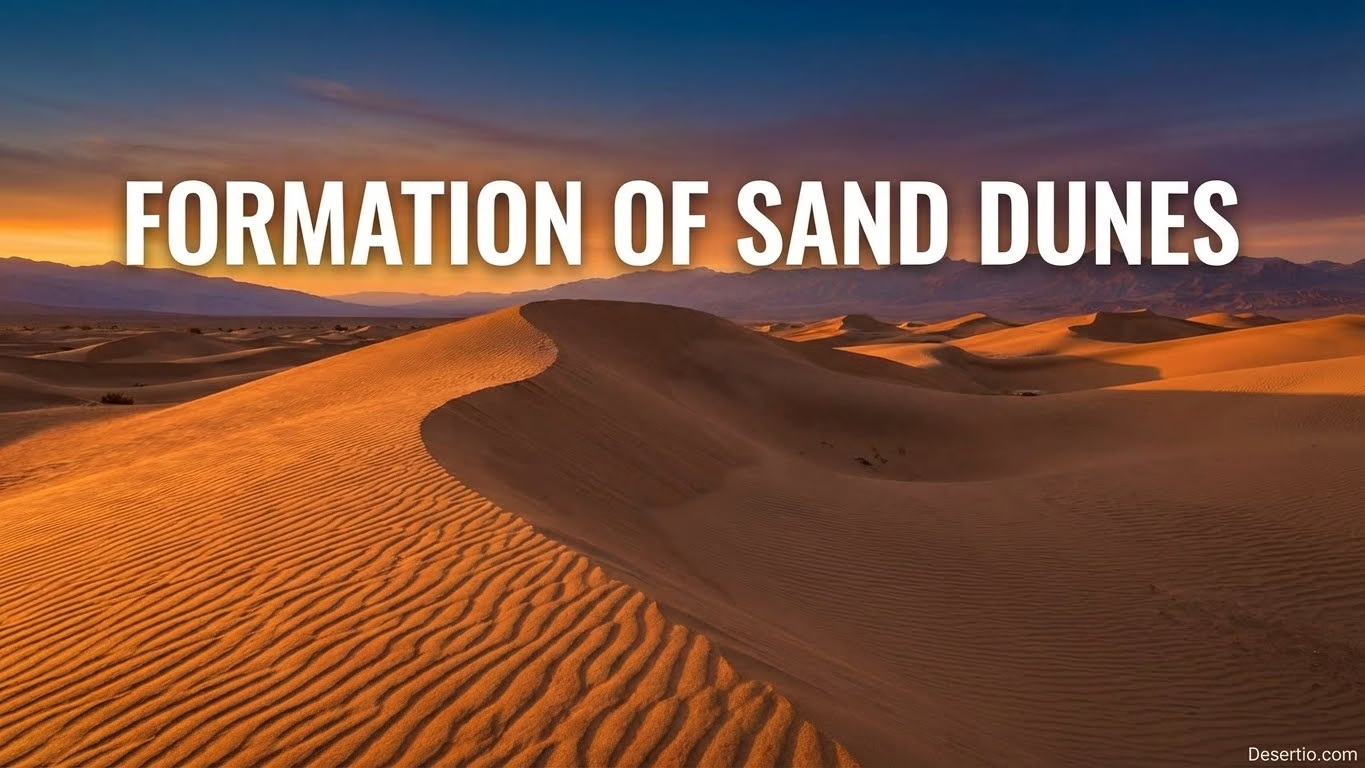
Sand dune formation looks wild, but it’s basically wind doing slow-motion sculpture with loose sand. Give that wind a steady push, a little “speed bump” on the ground, and time (lots of it), and you get a dune that behaves like a frozen wave—only it can move and even change shape.
- Quick Map Of Dune Formation
- What Dunes Need
- What You’ll Spot Fast
- The Ingredients Dunes Need
- Quick Reality Check
- How Wind Moves Sand
- Three Transport Modes
- What That Means On The Ground
- From Ripples To Dunes
- Dune Anatomy And Movement
- Why Dunes Take Different Shapes
- Coastal Dune Systems And Natural Anchors
- Common Stages You Can Recognize
- What Makes A Dune Stable Or Mobile
- Reading Dunes Like A Map
- Common Questions About Sand Dune Formation
Quick Map Of Dune Formation
Think of dunes as wind-made storage piles: sand gets picked up, moved, then dropped where the air slows down just enough to lose its grip.
What Dunes Need
- Sand supply (dry, moveable grains)
- Wind energy strong enough to lift grains
- Open fetch (space for wind to build speed)
- Traps like bumps, plants, or rough patches
- Time to repeat the cycle again and again
What You’ll Spot Fast
- Windward side: gentler slope where sand climbs
- Crest: the sharp ridge at the top
- Slip face: steeper lee side where sand avalanches
- Migration: dunes “walk” as sand flips over the crest
- Patterns: shape hints at wind direction and sand amount
The Ingredients Dunes Need
First ingredient: sand that can actually move. Dunes prefer grains that are dry, fairly uniform, and not glued together by moisture or salts. When sand stays loose, the wind can nudge it into motion and keep feeding dune growth.
Second ingredient: wind with a job to do. It doesn’t have to scream all day, every day—gusts matter. Once the wind reaches a lifting threshold, grains start hopping in saltation, which is the real engine of aeolian transport. That hopping knocks other grains forward, and suddenly a chain reaction is underway. These shifting airflows are part of broader desert wind systems that shape how sand moves and dunes gradually evolve across arid landscapes.
Third ingredient: a place for wind to get organized. Over a smooth, open surface, airflow can speed up and become more efficient at moving sand. Add a small obstacle—maybe a pebble patch, a plant, or a tiny ridge—and the airflow slows slightly behind it, making a perfect drop zone for settling grains in that wind shadow.
Quick Reality Check
If the surface is damp, crusted, or heavily anchored, dunes still can form—but they’ll behave differently. Moisture and vegetation act like invisible hands that hold grains together, changing how easily sand can build a slip face.
How Wind Moves Sand
Wind doesn’t carry most dune sand like smoke. It mostly makes sand bounce. In saltation, grains hop a short distance, land, then hop again. Each landing is like a tiny cue ball strike—one grain hits and kicks a few others forward. That’s why sand transport can ramp up fast once it starts.
Some grains are too heavy to hop much, so they roll and creep along the surface. Others—very fine particles—can get lifted higher and travel in suspension. But for classic sand dune formation, saltation plus surface creep does most of the work, like a moving walkway made of air.
Three Transport Modes
- Saltation (hopping)
- Surface creep (rolling grains)
- Suspension (fine dust carried higher)
What That Means On The Ground
- Ripples show active hopping and sorting
- Coarser grains tend to lag and armor the surface
- Smoother sand usually moves more easily
- Gusty wind can build steep faces faster
From Ripples To Dunes
Dunes don’t usually pop up out of nowhere. The early stage looks like small sand ripples, made by feedback: a tiny bump slows the air, sand drops, the bump grows, airflow changes again, and the pattern locks in. It’s a bit like combing hair—one pass creates little lines, and the next pass makes them sharper and more regular.
As the mound grows, it becomes big enough to force airflow up and over. Sand climbs the windward slope, reaches the top, and drops down the lee side. Once that lee slope hits the sand’s natural stability limit, grains start sliding in quick little avalanches, building a clean slip face with a crisp edge.
One simple rule: when the lee slope gets too steep, sand self-corrects by sliding down, keeping the slip face near the sand’s typical angle of repose.
Dune Anatomy And Movement
A dune has two personalities. The windward (stoss) side is usually smoother and less steep, where grains climb in tiny hops. The crest is the tipping point. On the lee side, sand falls and piles into the slip face, which can look like a giant, tidy ramp of sorted grains.
This is the secret behind dune migration: sand goes up the windward side, flips over the crest, then settles down the slip face. Repeat that enough times and the whole dune inches forward—quietly, steadily, and surprisingly far over long periods.
| Part | What It Looks Like | Why It Matters |
|---|---|---|
| Windward Side | Gentle, often rippled surface | Main zone of sand climbing and sorting |
| Crest | Sharp ridge or rounded top | Where transport flips from climb to drop |
| Slip Face | Steeper lee slope | Built by repeated grain falls and mini-avalanches |
| Horns Or Ridges | Extensions along the sides | Clues about wind direction and sand supply |
Why Dunes Take Different Shapes
Shape is a fingerprint. If wind comes mostly from one direction and sand supply is limited, you often get crescent-style dunes. If sand is abundant, dunes can line up into broad ridges. When winds arrive from multiple directions, dunes can build complex arms and multiple slip faces, almost like a compass rose drawn in sand.
Two controls matter most: wind regime (one direction vs. many) and sand availability. Add in surface moisture, vegetation, and obstacles, and the same beach or desert edge can produce dunes that look totally different—even when the sand is similar. Nature is definitely creative like that.
| Dune Type | Typical Wind Pattern | Sand Supply | Easy Visual Clue |
|---|---|---|---|
| Barchan (Crescent) | Mostly one dominant direction | Limited | Crescent with “horns” pointing downwind |
| Transverse | Mostly one dominant direction | High | Long ridges perpendicular to wind |
| Linear (Longitudinal) | Two main directions over time | Moderate | Long ridges aligned with net transport |
| Star | Many directions | High | Pyramidal with multiple radiating arms |
| Parabolic | One main direction, anchored edges | Moderate | U-shape with arms pointing upwind |
| Dome | Variable or weakly organized | Low to moderate | Rounded mound with no strong arms |
Coastal Dune Systems And Natural Anchors
Coastal dunes often begin with tiny piles of sand caught by driftwood, shells, or low plants. Those early mounds (sometimes called embryo dunes) can grow into a foredune ridge as onshore winds keep delivering fresh sand. The dune becomes a living edge: sand is always arriving, while plants quietly pin it down.
Vegetation changes the whole vibe. Stems and leaves slow the air at ground level, making sand drop out sooner. Roots bind the surface, which can reduce blowouts and keep dunes from shifting too fast. In other words, plants act like rebar in concrete—except this “concrete” is sand and the rebar is alive.
Common Stages You Can Recognize
In many coastal settings, dune development can look like a rough timeline: low sand catches first, then a ridge forms, then older dunes build farther inland as the surface becomes more stable and slightly vegetated.
- Embryo dunes: small, scattered catches close to the sand source
- Foredune ridge: a more continuous wall-like dune
- Back dunes: older shapes, often rougher and more anchored
What Makes A Dune Stable Or Mobile
Dunes are picky about conditions. A slightly damp surface can resist movement because moisture creates tiny bridges between grains. That can slow sand transport even when wind speed is decent. When the surface dries out again, movement can return fast, like someone unpausing a paused conveyor belt.
Surface roughness matters too. Pebbles, crusts, or dense plant cover change airflow right where saltation happens. If the wind’s lowest layer gets disrupted, grains don’t hop as cleanly. Sometimes the dune’s surface can shif from “active” to “quiet” just because a thin skin forms on top.
Reading Dunes Like A Map
You can learn a lot from a dune without any instruments. The main trick is to find the slip face: it usually sits on the lee side, away from the dominant wind. The windward side tends to be gentler, more rippled, and sometimes more polished by constant grain hopping.
- Crescent horns often point in the general downwind direction, while the steep slip face marks the lee side.
- Ridge alignment can hint at whether winds are mostly one-way or split across seasons.
- Star-like arms suggest winds arrive from multiple directions, building more than one active face.
- Vegetation patches often mark zones where sand is dropping and staying put, not just passing through.
Common Questions About Sand Dune Formation
Do dunes always move? Not always. Some dunes are highly active and migrate steadily, while others become partly anchored by moisture, crusts, or vegetation, making movement slower or more seasonal.
Why are some dunes tall and others low? Height often tracks how much sand is available and how long the wind has been stacking it in one area. Strong, consistent winds can build larger forms, while limited supply or frequent wind shifts may produce lower, more complex shapes.
Why do ripples look different from dunes? Ripples are smaller, faster-responding features created directly by saltation patterns. Dunes are bigger “storage” structures that involve airflow shaping on a larger scale, plus repeated building of a slip face and crest.
