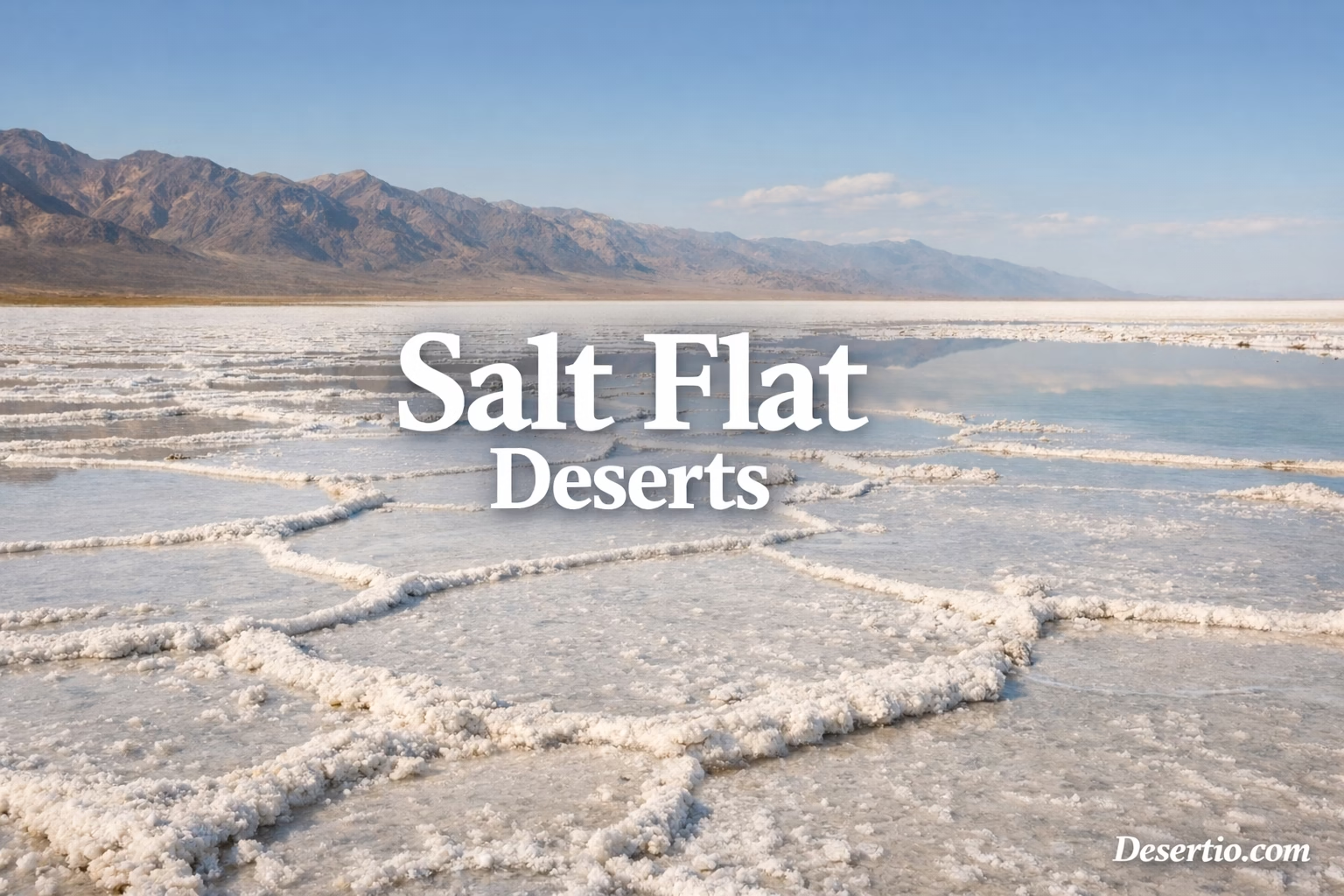
Salt flat deserts look like someone ironed the Earth smooth, then dusted it with snow-white minerals. Step onto one and it feels like walking across a dried-up ocean—hard, bright, and oddly quiet. These landscapes are also called salt pans or playas, and they form where water arrives, then vanishes, leaving salt behind like a stubborn footprint.
- What Makes Salt Flat Deserts So Different
- 🌊 A Lake That Quit
- 🧂 A Mineral Factory
- 🧭 A Trickster Surface
- How Salt Flat Deserts Form
- The Classic Recipe
- Salt Crust Textures You’ll Actually Notice
- Hard Salt Pavement
- Powdery Salt Flour
- Wet Mirror Skin
- The Chemistry Under Your Feet
- Quick Reality Check: Salt Flats Are Not Always “Dry Land”
- Weather And Seasons on Salt Flat Deserts
- Wildlife And Plant Life Around Saline Deserts
- Salt Flat Deserts Vs Sand Deserts
- Iconic Landforms Inside Salt Flats
- Practical Tips for Visiting Salt Flat Deserts
- Salt Flats And Resources
- Common Questions About Salt Flat Deserts
- Are Salt Flat Deserts Always White
- Why Do Salt Flats Crack Into Polygons
- Can A Salt Flat Desert Feel Like Ice
What Makes Salt Flat Deserts So Different
A classic sand desert is built from grains. A salt flat desert is built from leftovers. The core idea is simple: a basin collects water (rain, runoff, or groundwater), that water dissolves minerals, then evaporation wins the tug-of-war. Over time, the basin becomes a giant, flat “pan” coated with evaporite minerals, mostly halite (common salt) and often gypsum.
- Mirror-like flatness that can stretch to the horizon
- Crack patterns and salt polygons that look like a tiled floor
- Extreme glare because white salt reflects sunlight like crazy
- Fast-changing surfaces—a thin wet layer can turn a solid crust into a slick skin
🌊 A Lake That Quit
Most salt flats are the after-image of an ancient lake. When climate shifts or drainage changes, the water shrinks, minerals concentrate, and salt crust starts to spread. Picture a bathtub that keeps refilling a little, then drying out again—each cycle leaves a new ring.
🧂 A Mineral Factory
Salt flats are basically natural chemistry labs. Dissolved ions travel with water, then lock into crystals as the surface dries. The crust might be fluffy, glassy, or rock-hard depending on humidity, wind, and how much brine sits just below.
🧭 A Trickster Surface
From a distance, salt flats can look like safe pavement. Up close, you’ll notice micro-ridges, soft patches, and sometimes thin crust over wet brine. That’s why surface reading matters—this terrain can change mood fast.
How Salt Flat Deserts Form
Salt flat deserts usually need an endorheic basin—a bowl-like landscape where water flows in but has no easy path out. Water gathers, dissolves minerals from rock and soil, then evaporates. The leftover brine becomes more concentrated until minerals start to precipitate and build a crust. This process is strongly tied to broader desert evaporation patterns that control how quickly water disappears and minerals accumulate in arid basins. Repeat this for a long time and you get a broad, bright saline desert.
One detail people miss: the crust isn’t only “top-down.” Capillary action pulls salty water upward from below like a tiny straw network. When that water reaches dry air, evaporation leaves fresh crystals at the surface, thickening the salt pavement without needing a big flood every time.
Think of a salt flat desert as a “fossil shoreline”—not of waves, but of repeated drying events that keep sketching the same white line, thicker each time.
The Classic Recipe
- Closed basin collects water and dissolved minerals
- Concentration increases as water disappears into the air
- Crystallization lays down halite, gypsum, and other evaporites
- Crust growth continues via capillary rise and repeat wet-dry cycles
Salt Crust Textures You’ll Actually Notice
Salt flats aren’t one-size-fits-all. The surface can be glass-smooth in one zone and crumbly a few meters away. Many flats develop polygon patterns—natural “tiles” caused by drying, contraction, and slow brine movement. It’s like mud cracks, only cleaner and often more geometric.
Hard Salt Pavement
A dense salt crust that feels like stone. Often forms where brine supply is steady but shallow. Underfoot it can sound slightly hollow, especially if there are pockets below. Watch for thin spots near channels or edges.
Powdery Salt Flour
A softer, dusty layer of fine crystals. It looks dreamy in photos, but it can hide damp brine below. In dry wind, it can drift like white smoke, collecting in shallow lows.
Wet Mirror Skin
After rain or seasonal flooding, a salt flat can turn into a reflective sheet. The sky doubles. The ground becomes a stage. It’s stunning, and also a reminder that water still runs the show in this saline desert.
The Chemistry Under Your Feet
Most people call it “salt,” but a salt flat desert is usually a mix of minerals. Halite is the headline, yet you can also find gypsum, carbonates, and other evaporites depending on local geology. When brine chemistry shifts, the surface may form different crystal habits—needles, plates, or chunky cubes that catch light in a sparkly, almost frosted way.
| Common Mineral | What It Looks Like | What It Hints At |
|---|---|---|
| Halite | White crust, cubes, crunchy plates | Strong evaporation and salty brine near the surface |
| Gypsum | Powdery coatings or fibrous “silk” textures | Sulfate-rich water and shifting moisture zones |
| Carbonates | Harder, pale layers that can look chalky | Alkaline conditions and long-term mineral buildup |
Salt can also preserve tiny stories. Some flats host microbial communities that thrive in salty water, creating subtle textures and muted colors beneath the crust. It’s wild: a place that looks “empty” can hold busy chemistry and life signatures tucked into the brine.
Quick Reality Check: Salt Flats Are Not Always “Dry Land”
A thin wet layer can sit on top of a crust and behave like ice. Another zone can be powder-dry and stable. Same salt flat, different microclimates. Keep an eye out for darker patches—they often mean moisture close to the surface.
Weather And Seasons on Salt Flat Deserts
Salt flat deserts often live at the mercy of seasonal water. Dry months build and harden the salt crust. Wet months can add a shallow film that refreshes the surface and sometimes creates that famous mirror effect. Daily temperature swings can be sharp too—hot sun, cool nights, and plenty of dry air that pulls moisture from everything.
Wind matters more than you’d think. It sculpts the top layer, shifts salt flour, and can leave tiny ridges that mess with “perfect flatness.” Even a gentle breeze can turn loose crust into sparkly grains that skitter across the surface like little white insects.
Wildlife And Plant Life Around Saline Deserts
The center of a salt flat can look totally blank, yet the edges tell a richer story. Around the margins you’ll often find salt-tolerant plants (halophytes) that handle salty soils like champs. In wetter seasons, shallow pools can become temporary dining spots for water birds, turning the rim of the flat into a surprisingly lively strip.
Life here plays by different rules. Instead of deep roots and thick forests, you get small, tough specialists—plants that manage salt by storing it, shedding it, or blocking it. Some microorganisms even color brine with faint pinks or reds. Think of it as minimalism with attitude, painted in tiny pigments.
Salt Flat Deserts Vs Sand Deserts
Both are “deserts,” but they behave differently. A sand desert is a sea of moving grains. A salt flat is more like a mineral floor—sometimes solid, sometimes fragile, often reflective. If sand dunes are waves, then a salt flat is a frozen lake bed that forgot how to be wet, then remembered once in a while.
| Feature | Salt Flat Desert | Sand Desert |
|---|---|---|
| Main Material | Evaporite crust (halite, gypsum) | Quartz and other sand grains |
| Typical Shape | Broad, flat pan | Dunes, ripples, and shifting ridges |
| Surface Behavior | Can be hard or deceptively soft over brine | Loose, flowing, easy to sink into |
| Visual Signature | Bright white glare and polygon cracks | Warm tones and dune shadows |
Iconic Landforms Inside Salt Flats
Even when the terrain looks flat-flat-flat, salt flats hide features that make them more than a blank page. You might spot salt polygons—crack networks that form natural tiles. Some areas have low mounds where crystals pile up. Others show delicate ridges created by wind and repeated wetting. And in certain flats, small openings called “eyes” reveal brine below, like peeking windows into the underground chemistry.
When a salt flat is perfectly dry, it can feel like walking on a giant ceramic plate. When it’s slightly wet, it can feel like walking on a mirror that forgot it’s liquid.
Practical Tips for Visiting Salt Flat Deserts
If you ever step onto a salt flat desert, your comfort depends on a few simple moves. First, respect the glare; salt reflects sun like a bright wall. Second, treat water like your best friend, not an afterthought—dry air is sneaky. Third, pay attention to the surface: a crisp crust can shift to soft brine in a short distance. That mix of hard and slippery is the signature personality of many salt pans.
- Wear UV-protective eyewear and consider a brimmed hat for sun control.
- Choose footwear you can rinse; salt can crust up fast and feel gritty.
- Stick to clearly firm areas if the surface looks damp or darker.
- Bring a small brush or cloth—salt dust clings like powdered sugar.
Photography tip that actually works: keep an eye on the horizon line and use small objects for scale. On a salt flat, distance lies. A person can look like a tiny pin on a white board, then suddenly feel close. That’s the charm—this place messes with your brain in a playful, optical-illusion kind of way, like a real-world infinity room made from minerals.
Salt Flats And Resources
Because salt flat deserts concentrate minerals, they can draw attention for practical uses—salt itself, brines, and other dissolved materials. The important bit for understanding the landscape is the process: minerals collect where water repeatedly arrives, then disappears. This is why you’ll sometimes hear about brine-rich zones and evaporite layers below the crust. It’s a stacked history—like a layer cake—only made of chemistry and time.
Even when people aren’t extracting anything, a salt flat still “works” as a natural system. Seasonal flooding refreshes the surface. Dry phases thicken the salt crust. Wind rearranges fine crystals. Put it together and you get an environment that feels still, but is never really static. Tiny changes build up, and the surface keeps rewriting itself with new crystals and fresh crack lines.
Common Questions About Salt Flat Deserts
Are Salt Flat Deserts Always White
Often, yes—because halite is bright. Still, some flats show beige, gray, or faint pink tones depending on other minerals and microbial pigments. Moisture can also darken the surface, making color shifts more obvious under low-angle light.
Why Do Salt Flats Crack Into Polygons
As brine dries, the surface contracts and fractures, a lot like drying mud. The difference is the material: a salt crust can grow and heal between cracks as capillary brine rises and deposits fresh crystals. That push-and-pull tends to organize cracks into tidy polygon networks.
Can A Salt Flat Desert Feel Like Ice
It can, especially when a very thin wet layer sits over hard crust. The surface becomes slick, reflective, and surprisingly smooth. It’s not frozen, it just behaves a bit like a wet tile. That’s why season timing matters if you’re planning a visit or even just curious about the surface conditions.
Salt flat deserts are a special kind of desert magic: water-made emptiness. They’re born from vanishing lakes, shaped by evaporation, and polished into bright, flat horizons that feel almost unreal. If sand deserts are a moving story, salt flats are a quiet page—still packed with details if you look closely.
