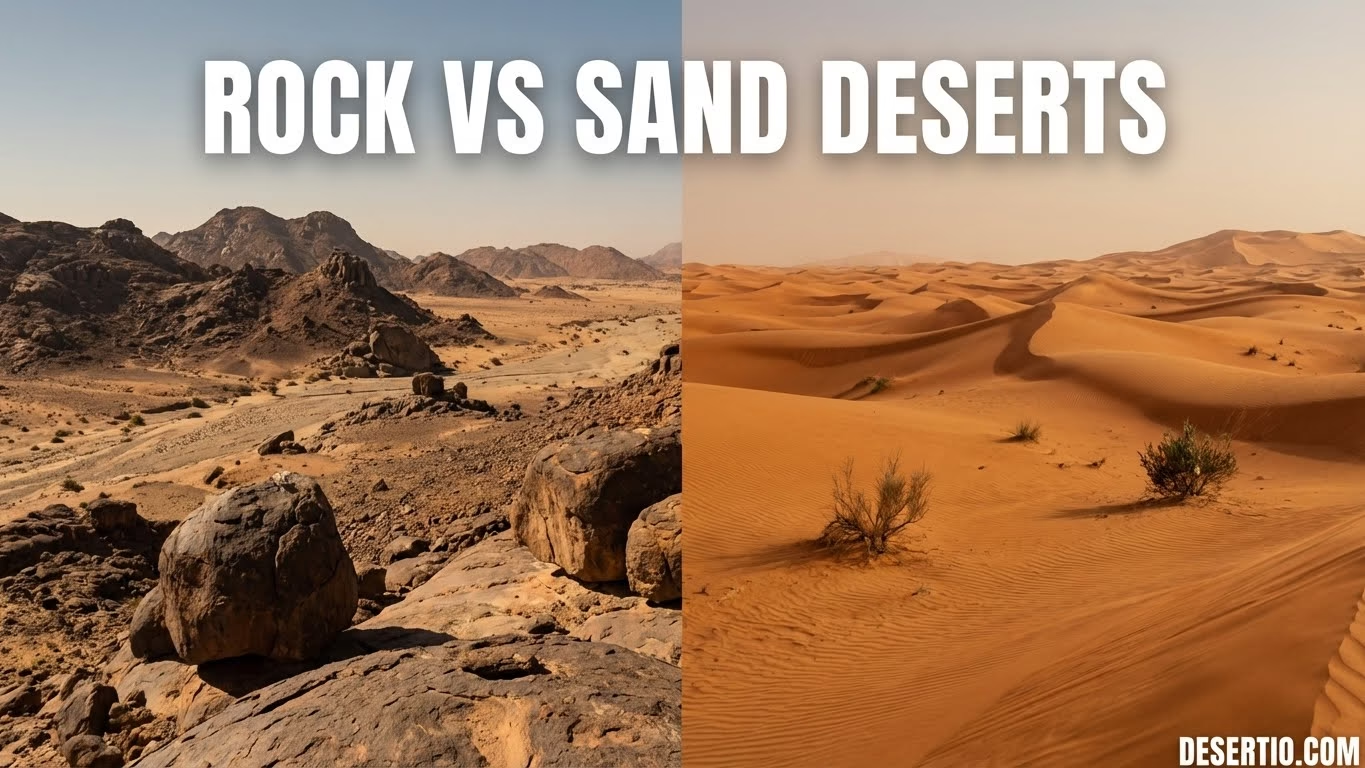
Deserts aren’t one-size-fits-all. Some are built from moving sand, others from bare rock and gravel. If you picture endless dunes, you’re not alone—yet sand-covered terrain is only one flavor. This guide helps you spot sand deserts versus rock deserts with clear, practical clues.
- Jump Points For Fast Reading
- Rock And Sand Deserts In Real Life
- Sand Deserts
- Rock Deserts
- How Sand Deserts Work
- Wind Moves Sand In Three Main Ways
- Common Dune Shapes You Can Recognize Fast
- What Sand Surfaces Feel Like
- How Rock Deserts Stay Rock-Forward
- Desert Pavement: The Pebble “Shield”
- Hamada And Gravel Plains: Where Sand Doesn’t Win
- Rock Surfaces Have Their Own Wind Art
- Rock vs. Sand
- Why Many Deserts Are More Rock Than Sand
- Wind And Water: The Tag Team
- A Simple Rule Of Thumb
- Field Clues You Can Use Immediately
- Comfortable, Low-Impact Ways To Explore
- On Sand
- On Rock And Gravel
- Mini Glossary For Rock Vs Sand Talk
- Common Questions People Have
Jump Points For Fast Reading
Pick what you need: quick comparison, dune basics, rock-surface clues, or a mini glossary. No fluff—just useful stuff.
Rock And Sand Deserts In Real Life
Think of a desert surface like a wardrobe. A sand desert wears a flowy blanket of grains that can shift overnight. A rock desert wears armor: gravel, stones, and bedrock that often looks “fixed” from far away. Both are shaped by wind, sun-driven weathering, and occasional short rains.
Sand Deserts
Sand-focused landscapes are all about grain motion. When wind is strong enough, grains start hopping and skipping, and dunes become a slow-motion wave field. Expect ripples, slip faces, and a surface that “forgets” footprints quickly.
- Main feel: soft, yielding, sometimes squeaky underfoot
- Signature shapes: dunes, sand sheets, ripple fields
- Key process: wind transport (especially saltation)
- Big clue: smooth slopes with a sharper “downwind” face
Rock Deserts
Rock-dominated surfaces often look like a stone mosaic. Wind can remove fine dust over time, leaving a tight layer of pebbles and cobbles—a classic desert pavement. You may also see bare bedrock, cliffs, and angular debris that barely budges.
- Main feel: firm, crunchy, stable
- Signature shapes: pavements, rock flats, gravel plains
- Key process: deflation + weathering, plus occasional runoff
- Big clue: tightly packed stones with little loose sand between them
Sand deserts are like a living quilt. Rock deserts are like a tiled floor—built piece by piece, then locked in place.
How Sand Deserts Work
A sand desert needs a steady supply of loose grains and enough wind energy to move them. Sand usually starts as broken-down rock from mountains or old sediment layers. Over time, running water and wind sort the particles, concentrating sand where it can pile up into dune fields (often called sand seas or ergs).
Wind Moves Sand In Three Main Ways
Sand transport sounds fancy, but it’s basically a grain relay race. Each method favors different sizes of particles, and together they sculpt the surface into patterns you can read like a map.
- Saltation: grains hop and land, kicking others forward; it’s the workhorse of dune building
- Surface creep: larger grains roll or shuffle when hit by hopping sand
- Suspension: the finest dust stays aloft longer, creating hazy skies and thin deposits
Common Dune Shapes You Can Recognize Fast
Dunes aren’t random piles. Their shapes reflect wind direction, sand supply, and how steady the winds are. Once you learn a few, you’ll start spotting patterns everywhere—like seeing constellations after someone points them out.
- Crescent dunes: curved, often formed under a dominant wind direction
- Linear dunes: long ridges shaped by winds that vary but keep a general rhythm
- Star dunes: multi-armed giants where winds come from several directions
- Parabolic dunes: U-shaped forms often influenced by surface anchoring like sparse vegetation
What Sand Surfaces Feel Like
On a calm morning, sand can look smooth and almost polished. Add wind and it becomes a soft conveyor belt. Ripples line up like tiny corduroy. In some dune sands, grains can even make a faint sound—an odd little reminder that physics is always working, even when everything looks still.
How Rock Deserts Stay Rock-Forward
A rock desert is often the result of removal rather than addition. Wind and short-lived flows can carry away fine material, leaving behind heavier fragments. Over time, those fragments may settle into a tight, interlocking skin known as desert pavement. Picture a jar of mixed nuts: shake it long enough and the bigger pieces rise and lock together—same idea, just slower and powered by nature.
Desert Pavement: The Pebble “Shield”
Desert pavement is a surface layer of closely packed stones—often pebble to cobble size—with finer material beneath. Once the “shield” forms, it can reduce further erosion by protecting the fine layer below. You may notice a darker sheen on some stones; that can be desert varnish, a thin coating that can develop over long periods under arid conditions.
Hamada And Gravel Plains: Where Sand Doesn’t Win
Some rock deserts are broad bedrock or boulder-strewn surfaces (often called hamada), while others are expansive gravel plains (sometimes called reg). The common thread is limited loose sand at the surface, plus plenty of rock fragments produced by thermal stress—heating and cooling that cracks rock like a slow, steady squeeze.
Rock Surfaces Have Their Own Wind Art
Wind doesn’t just move sand; it can also sculpt rock. Look for ventifacts (stones with faceted, wind-shaped faces) and streamlined ridges carved in softer materials. Sometimes you’ll see shallow grooves and edges that look “shaved” in one direction—like the land got a careful haircut. Yep, teh desert can be surprisingly stylish.
Rock vs. Sand
| Feature | Sand Desert | Rock Desert |
|---|---|---|
| Surface | Loose grains with ripples and dune slopes | Gravel, stones, or bare bedrock; often interlocked |
| What Wind Does Most | Builds and shifts dunes through saltation | Removes fines; polishes and shapes rock; supports pavement |
| Easy Visual Clue | Clean, smooth slopes with a sharper downwind face | “Stone carpet” look; little loose sand between pebbles |
| Footprints | Appear fast, fade fast | Less visible; crunchier underfoot |
| Typical Micro-Shelter | Shaded lee sides of dunes; ripple troughs | Gaps under stones; tiny pockets in gravel and cracks |
Why Many Deserts Are More Rock Than Sand
Here’s a useful mental reset: dunes are iconic, but they’re not the default everywhere. Creating large sand seas requires the right mix of sand supply, open space, and wind patterns that keep sand from getting trapped by plants or moisture. In many dry regions, gravel and bedrock dominate because fine particles get whisked away, leaving a tougher surface behind. This contrast between dune fields and gravel plains is one example of how different types of deserts develop distinct surface styles.
Wind And Water: The Tag Team
Desert shaping is a two-person band: wind sets the rhythm, and water drops in for short solos. Even rare rains can move sediment in quick bursts, sorting material by size and leaving new layers for wind to rework. That’s why you can find sandy patches next to rock flats—different tools, same workshop.
- Wind excels at sorting, transporting, and sculpting surfaces
- Runoff excels at spreading gravel and carving short channels
- Heat drives cracking and granular breakdown of exposed rock
A Simple Rule Of Thumb
If sand is available and the wind can keep it moving, expect dunes and ripples. If sand is scarce or constantly removed, expect gravel armor and pavement. It’s not magic—it’s a budget. The desert spends what it has.
Field Clues You Can Use Immediately
Want a quick ID without overthinking it? Use these surface clues. They’re simple, visual, and surprisingly reliable—even when sand and rock mix together in the same area.
- Look For Ripples: tight, repeating ridges usually mean active sand transport
- Check The “Gaps”: lots of loose sand between stones suggests a sandy surface; tight interlocking stones suggest pavement
- Find The Steep Face: a sharp slip face often points downwind on dunes
- Notice The Shine: dark, glossy coatings on stones can hint at long-exposed rock surfaces
- Listen Underfoot: soft hush on sand, crisp crunch on gravel plains
Comfortable, Low-Impact Ways To Explore
Desert surfaces can look tough, but many features are delicate at small scales—especially crusts and tiny shelter spots between stones. A friendly approach is simple: step on durable ground, avoid scuffing areas with a dark crust, and keep your curiosity focused on patterns rather than “collecting” pieces.
On Sand
Soft ground is forgiving. Still, it helps to read the surface: ripple crests can be sharper than they look, and the lee side of dunes can hold fine, loose grains. A wide-brim hat, breathable layers, and steady pacing make a huge difference—simple, comfortable, and easy.
On Rock And Gravel
Firm ground feels easier, but watch for loose pebbles on slopes. If you see a tight stone pavement, try stepping lightly and avoiding scuffs—those surfaces can be the desert’s long-built “skin.” It’s like walking on a carefully arranged mosaic—better admired than rearranged.
Mini Glossary For Rock Vs Sand Talk
These terms show up a lot in desert discussions. Knowing them helps you “translate” landscapes quickly, whether you’re reading a map, a signboard, or just trying to describe what you see.
- Erg: a large area dominated by wind-blown sand, often dune-rich
- Sand Sheet: a broad, flatter sand cover with fewer tall dunes
- Reg: a gravelly desert plain (a rock-forward surface)
- Hamada: a rocky plateau or bare rock desert surface
- Desert Pavement: a tight surface layer of stones that protects finer sediment beneath
- Ventifact: a wind-shaped stone, often faceted or polished
- Deflation: wind removal of fine particles from the ground surface
Common Questions People Have
Can A Desert Be Both Rocky And Sandy?
Absolutely. Many desert regions are a patchwork. You might see gravel plains beside small dune belts, with sand pooling in low areas and rock dominating higher ground. The mix often changes with wind corridors and where water once spread sediment.
Do Dunes Mean The Desert Is “Young”?
Not necessarily. Dunes can be active and moving today, while the sand itself may have a long story. What matters is whether the surface is currently being reworked by wind. A dune field is more like a living surface than a timestamp.
Why Do Some Rock Deserts Look So Flat?
Flat-looking rock deserts often reflect long-term surface stability plus gradual removal of fine material. Over time, stones settle into a tight layer and create a very even texture—like a natural cobblestone patio that just happens to stretch to the horizon.
