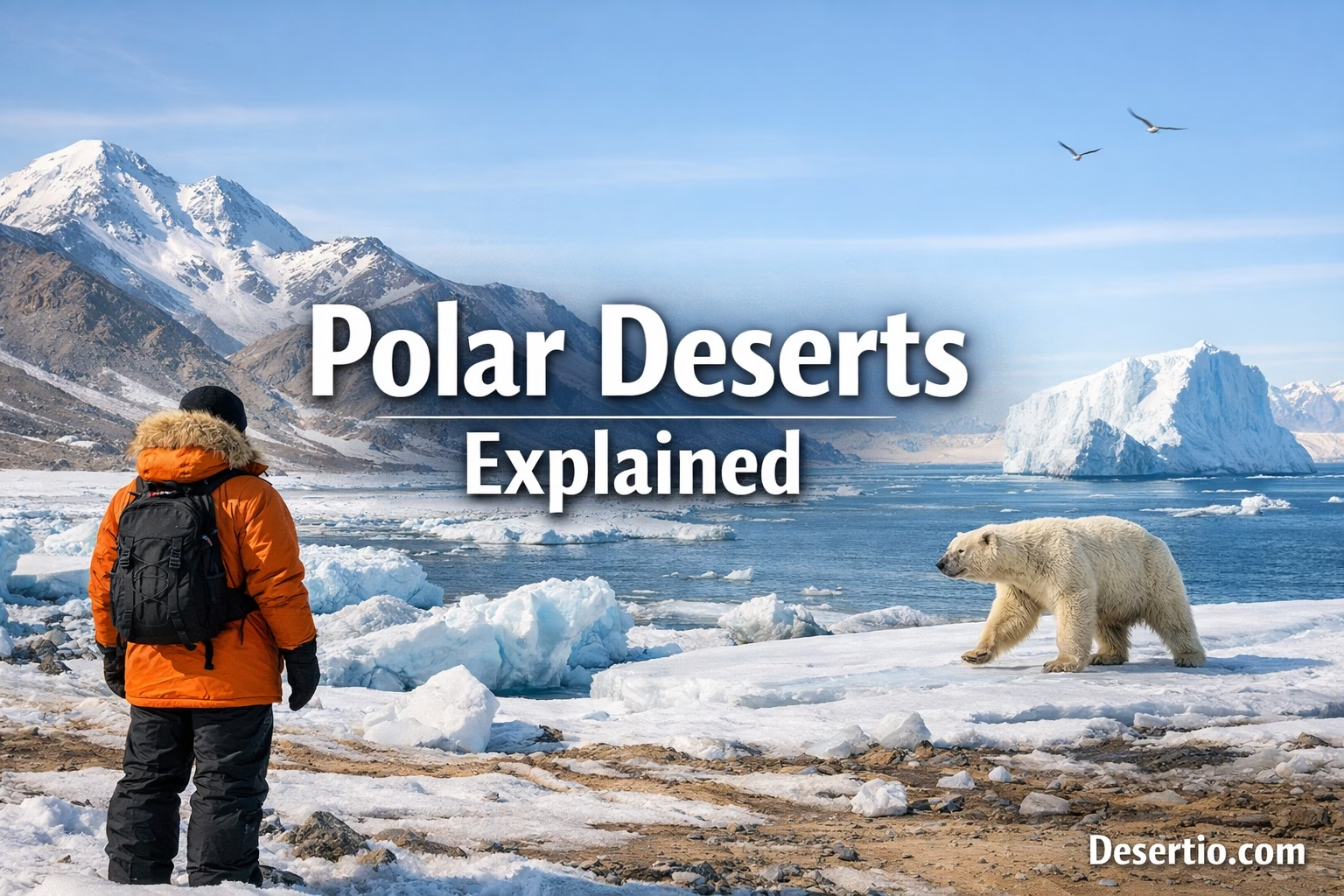
A Cold Desert With a Dry Secret
A polar desert can look like a frozen ocean of white, yet it behaves like a true desert because moisture rarely arrives and precipitation stays tiny.
- A Cold Desert With a Dry Secret
- Fast Facts That Clear Up Confusion
- What Makes a Desert “Polar”
- Where Polar Deserts Occur
- Arctic-Region Polar Deserts
- Antarctic Polar Deserts
- Climate Rules of the Game
- Landforms That Shout “Polar Desert”
- Soil, Ice, and Permafrost
- Life in a Polar Desert
- Common Survival Tricks
- Where Life Clusters
- Why Polar Deserts Matter
- Visiting and Respecting These Places
- A Practical “Do This” Checklist
- Quick Comparison Table
Think of a polar desert as a giant freezer with the humidity turned way down. The key isn’t heat—it’s how little precipitation falls each year. In many places, snow drifts around more than it actually falls from the sky, so the ground keeps its dry, stripped-back feel.
Fast Facts That Clear Up Confusion
- A polar desert is defined by low precipitation, not by sand. Ice and rock can still count as “desert.”
- Cold air holds less water vapor, so clouds struggle to form and snowfall stays limited.
- Wind often “dries” the surface through sublimation—ice turns to vapor without melting.
What Makes a Desert “Polar”
A polar desert climate is built from three main ingredients: very cold air, low precipitation, and long stretches of either daylight or darkness. In warmer deserts, you notice dryness on your lips. In a polar desert, dryness shows up in quieter ways—crisp snow that never “packs,” dusty rock surfaces, and air that feels almost freeze-dried.
Key Terms You’ll See in Polar Desert Guides
Permafrost: ground that stays frozen for at least two years. It can be ice-rich or mostly frozen soil and rock.
Active layer: the thin surface zone that can thaw in “warm” months. It’s short-lived, and it reshapes the land through repeated freeze–thaw.
Sublimation: ice turning straight into water vapor. In a polar desert, this can remove snow without a single drip.
Katabatic winds: heavy, cold air sliding downhill. These winds can keep valleys shockingly dry by pushing clouds away and scouring snow.
Where Polar Deserts Occur
You’ll find polar deserts near both poles, but they don’t look identical. Some are dominated by ice sheets. Others are rocky “dry” zones with patchy snow and exposed ground. Either way, the signature stays the same: low precipitation and a landscape shaped by cold-driven physics.
Arctic-Region Polar Deserts
In the far north, a polar desert often appears as high-latitude plateaus, rugged islands, and icy interiors. Sea ice nearby doesn’t guarantee snowfall inland—cold air can be too stable to lift and form clouds. Expect permafrost and a short, sharp melt season.
- Low precipitation with frequent wind redistribution
- Long freeze seasons and brief thaws
- Patterned ground and frost-shaped soils
Antarctic Polar Deserts
In the far south, the biggest polar desert is tied to a massive ice sheet and an interior that can be extremely dry. Some valleys are so sheltered and wind-scoured that bare rock dominates for long stretches. That blend—cold, low precipitation, and persistent winds—creates a desert feel even without sand.
- Very low precipitation inland
- Dry, wind-shaped surfaces where snow can’t settle
- Salt and mineral crusts in some ice-free zones
Climate Rules of the Game
The heart of a polar desert climate is simple: cold air can’t “carry” much water. With less water vapor available, storms weaken and clouds thin out. Add stable air layers that resist rising motion, and you get a place where precipitation stays rare even when the horizon looks icy.
A polar desert isn’t “wet and cold.” It’s cold and dry—like a white world running on almost no water budget.
Wind matters more than many people expect. In a polar desert, strong flow can move snow like sand, polish exposed rock, and speed up sublimation. That’s why you might see hard snow ridges and scoured patches right next to deeper drifts—same area, different wind behavior, totally different surface.
Landforms That Shout “Polar Desert”
Hot deserts have dunes. A polar desert has its own signature shapes—built from ice crystals, frozen ground, and wind. Look closely and you’ll spot patterns that feel almost designed, like nature used a ruler and a compass.
- Sastrugi: wind-carved snow ridges that can look like frozen waves mid-surf
- Frost polygons: geometric cracks and raised edges in permafrost terrain
- Ventifacts: stones shaped and smoothed by wind-driven grains
- Dry valley surfaces: gravel, salt crusts, and bare ground in sheltered zones with low precipitation
Soil, Ice, and Permafrost
In a polar desert, “soil” often means a thin mix of rock fragments and dust over frozen ground. The active layer may thaw for a short window, then refreeze, stirring the surface through a slow churning called cryoturbation. Over time, this creates tidy stone circles and stripes—patterns that can stretch across whole slopes.
Permafrost also controls how water behaves. Liquid water can’t sink far when the ground beneath is frozen, so meltwater tends to move in thin surface films, collect in shallow pockets, or refreeze quickly. That’s why tiny flows and damp spots can be outsized in importance to a polar desert ecosystem, even if they last only hours or days.
Here’s the sneaky part: salt can lower the freezing point of water, allowing briny moisture to linger where pure water would lock up. Those salty patches can become micro-hotspots for life, even when thier surroundings look completely barren.
Life in a Polar Desert
A polar desert doesn’t do lush forests. It does small and stubborn. Life often hides in rock pores, beneath translucent stones, or inside thin mats that grab any passing moisture. Think lichens, hardy mosses, cold-tolerant algae, and microbes that “pause” when conditions get too dry.
Common Survival Tricks
- Go dormant during dry spells, then “wake up” fast when moisture appears
- Use dark pigments for protection from intense light reflecting off snow and ice
- Grow in sheltered cracks where wind can’t steal every bit of humidity
Where Life Clusters
- Sun-warmed rock faces with tiny melt films
- Edges of seasonal streams or shallow ponds in brief warm periods
- Under stones that trap moisture and reduce wind drying
Why Polar Deserts Matter
A polar desert is one of Earth’s cleanest natural laboratories. With low precipitation and slow chemical weathering, surfaces can preserve traces of past conditions for a long time. Ice layers and sediments can store environmental snapshots, helping researchers read long stories from very thin lines—like a diary written in dust and ice.
Polar deserts also help explain the broader desert basics in a fresh way. They prove that “desert” is about water supply, not temperature. Once you get that, the map of world deserts suddenly makes more sense—some are hot, some are cold, but the common thread is aridity and limited precipitation.
Visiting and Respecting These Places
If you ever visit a polar desert through a permitted trip or guided program, treat it like a museum with no glass cases. Footprints can last, fragile soil crusts can break, and small living patches are easy to miss. Keep it simple: follow marked routes, give wildlife plenty of space, and avoid stepping on dark biological mats or crusts that look like harmless stains.
A Practical “Do This” Checklist
- Pack layers that handle wind and dry cold—cotton is usually a poor choice
- Use sun protection; bright surfaces can reflect light hard even in cold air
- Bring a reusable bottle; water logistics matter in remote desert settings
- Keep gear clean to avoid transporting seeds or soil between sites by accident
Quick Comparison Table
Both types share low precipitation, yet the daily experience feels totally different. This table keeps the comparison grounded and easy to scan, with real-world cues you can picture.
| Feature | Hot Desert | Polar Desert |
|---|---|---|
| Main “Dryness” Driver | Subtropical sinking air and high evaporation | Cold air holds little moisture + stable layers |
| Typical Surface Look | Sand, gravel plains, rock plateaus and dunes | Snow, ice, exposed rock, patterned ground and crusts |
| Water Behavior | Flash floods, quick evaporation, dry riverbeds | Short melt pulses, refreezing, sublimation |
| Wind Effects | Dune migration, dust storms, sand blasting | Snow sculpting, scouring, katabatic winds in some areas |
| Daylight Pattern | Fairly regular day/night cycle | Long stretches of daylight or darkness by season |
