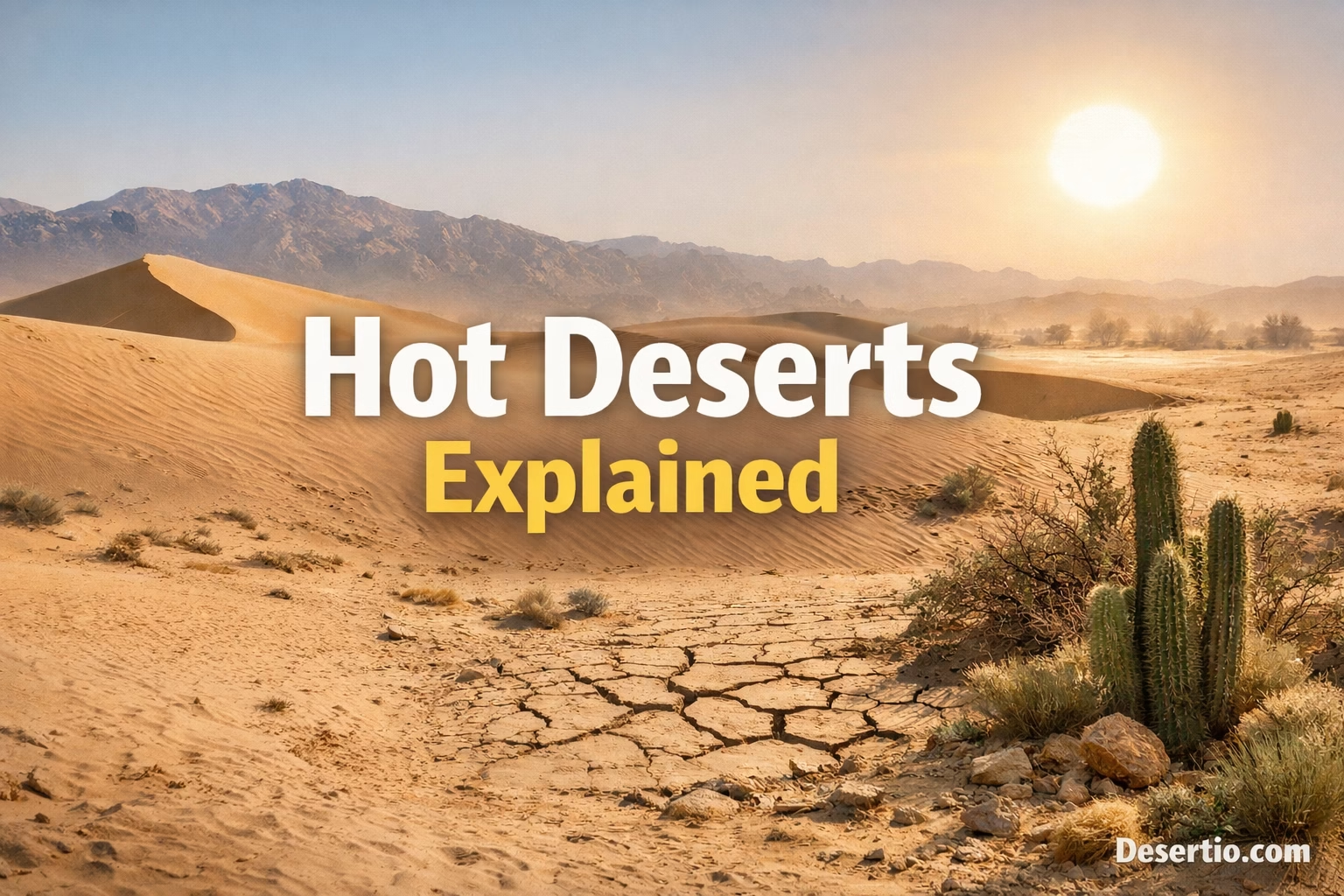
Hot deserts sound like endless sand, yet the real headline is dry air and relentless sun. A place earns the word desert when rain barely shows up, not just because it feels like an oven.
- Hot Deserts
- What Makes a Desert Hot
- Hot Desert Climate Snapshot
- Landforms You’ll See
- Wind-Shaped Features
- Water’s Quick Work
- Soil and Water: The Hidden Story
- Plants That Beat the Heat
- Animals and Their Clever Moves
- Daily Life Around Hot Deserts
- Comfort-First Tips for Hot Desert Visits
- Famous Hot Deserts to Know
- Hot Deserts vs. Other Desert Types
Hot Deserts
If you remember only a few things about hot deserts, make it these. They keep the water budget tight and the energy budget high.
- Rainfall is low and often unpredictable.
- Evaporation usually beats precipitation.
- Sunshine is intense, so surfaces heat fast.
- Vegetation looks sparse, yet life is busy—just good at hiding.
Hot desert weather is a simple recipe: sinking air, clear skies, and very little rain. The details are where it gets fun.
What Makes a Desert Hot
Many hot deserts sit under broad belts of high pressure where air slowly sinks. Sinking air warms up, and warm air is thirsty—it holds moisture instead of dropping it as rain. That’s why hot desert regions often have blue-sky weeks that feel almost unreal.
Heat also builds because cloud cover stays low, letting solar energy pour in all day. At night, the same clear sky lets heat escape, so hot desert nights can feel surprisingly fresh. It’s like a skillet that sears fast, then cools when you pull it off the flame.
Not every hot desert forms the same way. Some sit deep inland, far from moist air. Others live near cold ocean currents that make stable air and stubborn fog, yet still keep rainfall tiny. Different paths, same result: very limited water.
Hot Desert Climate Snapshot
These ranges fit many hot desert climates. Local terrain can shift the numbers, yet the pattern stays familiar: low rain, high sun, and big swings. Think of them as useful guardrails, not strict rules.
| Feature | Typical Range in Many Hot Deserts | Why It Matters |
|---|---|---|
| Annual Rain | 0–250 mm (often in short bursts) | Water arrives in surprises, not steady schedules. |
| Summer Daytime Highs | 35–45°C (sometimes higher) | Heat drives evaporation and stress on living things. |
| Night Temperatures | 10–25°C (can dip lower) | Cooling nights give recovery time to plants and animals. |
| Humidity | Often low (varies by coast/inland) | Low humidity makes shade feel powerful. |
| Sunshine | Very high in clear-sky zones | Radiation shapes everything from skin to soil. |
Landforms You’ll See
Sand dunes steal the spotlight, yet many hot deserts are more rock than sand. Wind and rare water flows act like two artists sharing one canvas—wind sketches broad shapes, water carves sharp lines when it finally shows up. That mix creates signature desert scenery with clean edges.
Wind-Shaped Features
- Dunes: mounds and ridges of sand that migrate with dominant winds.
- Sand seas: vast dune fields where movement never fully stops.
- Desert pavement: a tight surface of pebbles left behind as finer grains blow away.
Water’s Quick Work
- Wadis: dry channels that turn lively after sudden storms.
- Playas: flat basins that briefly hold water, then dry into cracked patterns.
- Alluvial fans: fan-shaped spreads of gravel where flows spill out of hills.
Soil and Water: The Hidden Story
Hot desert soil can look empty, yet it often holds a quiet chemistry set. Low rain means fewer wash-through cycles, so salts and minerals can build near the surface, sometimes forming hard layers. That’s why digging a little can reveal a crusty surprise—nature’s own sealed lid.
When rain does fall in a hot desert, it may come as short, intense bursts. Water races over dry ground, flows into channels, and disappears again. A lot of the action is flashy and fast. In the middle of it all, groundwater pockets can be the long-term bank account that supports oases and deep-rooted plants.
Plants That Beat the Heat
Plants in hot deserts don’t “fight” dryness—they design around it. Many store water, shrink their leaves, or coat surfaces with waxy skins that reduce water loss. Some open their pores at night, using clever chemistry to sip CO₂ while the air is cooler. It’s quiet genius in a harsh enviroment.
- Succulents keep water in thick tissues, like reusable canteens.
- Deep-rooted shrubs reach hidden moisture, staying steady when the surface is bone-dry.
- Ephemeral wildflowers wait as seeds, then sprint through life after rain—fast, bright, and gone.
- Salt-tolerant plants handle mineral-rich soils that would stress many other species.
Animals and Their Clever Moves
In hot deserts, survival is often about timing. Many animals turn nocturnal, emerging when the ground cools and the air softens. Others burrow, using soil as natural insulation. You’ll see behaviors that feel like smart scheduling: hide at noon, feed at dusk, and keep water loss low.
Some creatures pull water from food, others recycle moisture inside their bodies with impressive efficiency. Big ears, light coats, and long legs can help dump heat. It’s a toolkit built for hot desert living, where shade becomes a luxury and cool ground feels like a secret doorway.
Daily Life Around Hot Deserts
People who live near hot deserts tend to shape routines around the sun. Early mornings and evenings become the busy hours, while mid-day slows down. Homes and shelters often lean on thick walls, shade design, and airflow tricks to stay comfortable without wasting energy. Simple choices—where a doorway faces, how a courtyard is shaded—can change how a space feels.
Comfort-First Tips for Hot Desert Visits
Planning a trip into a hot desert? Keep it easy, keep it smart. The goal is simple: enjoy the landscape while respecting heat and dry air.
- Time your day: do active stuff early, rest when the sun is harsh.
- Hydrate steadily: sip often, not just when you feel thirsty.
- Use shade: a hat and light clothing act like portable shelter.
- Mind the ground: sand, rock, and salt flats reflect heat back at you.
Famous Hot Deserts to Know
Several hot deserts are frequently cited in global climate and geography studies. Each is defined by distinct features such as dunes, gravel plains, coastal fog, or exposed rock formations. What they share is aridity and environmental conditions shaped by intense solar radiation and limited water availability.
- Sahara: immense scale, mixed terrain, and powerful temperature swings.
- Arabian Desert: classic dune seas and vast open horizons.
- Namib: coastal fog and old dunes with sharp color contrast.
- Atacama: extreme dryness in places, with unique coastal influences.
- Sonoran: iconic cacti and a seasonal rhythm that can include two rainy periods.
- Thar: a lively desert region with strong human presence and varied landscapes.
- Australian Hot Deserts: broad interiors where dunes and shrublands repeat in big patterns.
Hot Deserts vs. Other Desert Types
It helps to separate hot deserts from the bigger desert family. All deserts share low precipitation, yet temperature and seasonality change the vibe. Cold deserts can be dry and chilly, while coastal deserts may have foggy mornings and cool air with almost no rain. Different outfits, same dry stage.
So when you see “hot desert,” picture a climate where sunlight dominates, moisture is scarce, and living things lean on efficiency. That’s the heart of hot deserts explained: not just heat, but the whole system that makes dryness stick.
