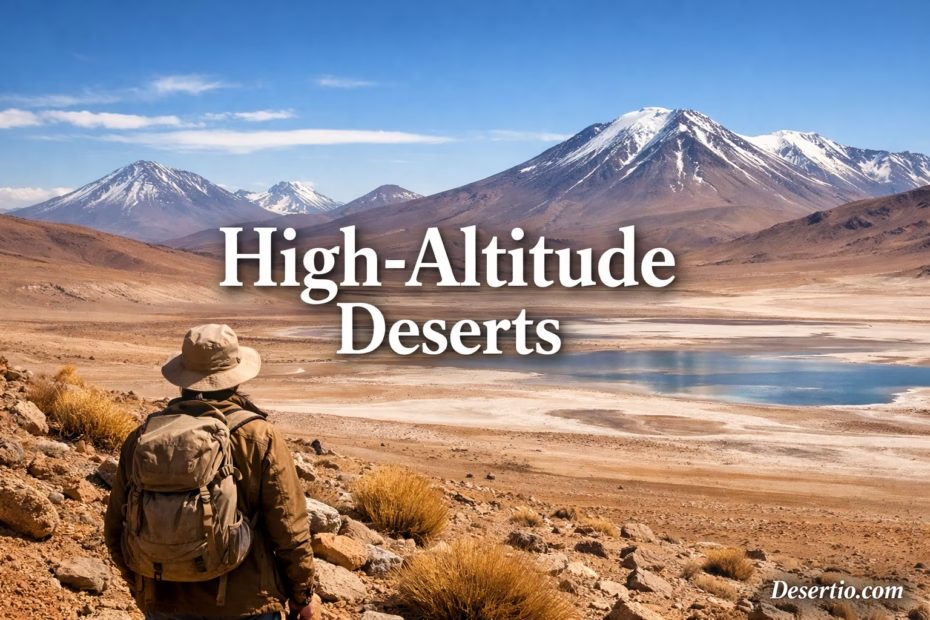
High-altitude deserts are the sky-level cousins of classic sand seas—dry places that sit so high you can feel the thin air in your lungs. What surprises most people is how these landscapes mix desert dryness with mountain cold in the same breath. You’ll often see snowy ridgelines nearby, yet the ground stays stubbornly parched.
- Fast Snapshot Of High-Altitude Deserts
- Why They Feel So Different
- What Counts As A High-Altitude Desert?
- Typical Climate Profile
- Why They Are Dry Up High
- Weather You Can Feel In One Day
- Sun
- Wind
- Cold
- Landforms That Tell The Story
- Life Strategies In Thin Air
- Common Adaptations You’ll Notice
- Water: Where It Hides And How It Moves
- How To Visit Without Stress
- Pack Like A Pro
- Move Smart At Altitude
- Photography And Stargazing Tips
Fast Snapshot Of High-Altitude Deserts
Think low moisture, big temperature swings, and intense sunlight. Add wind-polished rock and wide-open views, and you’re in the right headspace.
- Typical Elevation: above 2,500 m (often much higher)
- Dryness: little rain, lots of evaporation
- Feel: crisp air + bright sun + quiet
- Signature Look: gravel plains, salt crusts, and volcanic tones
Why They Feel So Different
The air is thinner, so heat escapes fast after sunset, while UV radiation hits harder during the day. That combo makes the same valley feel like two seasons in 24 hours.
Quick Terms: rain shadow, diurnal range, saline flats, alpine desert.
What Counts As A High-Altitude Desert?
A desert is defined by water scarcity, not by sand. A high-altitude desert keeps that dryness but adds elevation as the main twist: fewer clouds, colder nights, and stronger sun. Many sit on plateaus or broad basins ringed by tall ranges, where moist air loses its punch long before it arrives.
Typical Climate Profile
| Trait | High-Altitude Desert | Lower-Elevation Desert |
|---|---|---|
| Day–Night Shift | Large, often sharp and fast | Moderate to large, but usually less sudden |
| Precipitation | Low, sometimes as snow or brief storms | Low, more often as rain bursts |
| Sun Exposure | Very strong UV, clear skies | Strong sun, more haze in some regions |
| Ground Feel | Rocky, crisp, with salt crusts and gravel | Sandy or rocky, dunes more common |
Why They Are Dry Up High
Altitude doesn’t “remove” water by magic. It changes how air moves and cools, and that’s where the dryness is born. The big player is often the rain shadow: moist winds rise over mountains, drop their moisture, and the far side ends up with leftover dry air. Add cold temperatures (cold air holds less moisture), and your landscape can stay dry even when peaks nearby wear snowcaps.
- Mountain Barriers: uplift squeezes moisture out, leaving dry leeward basins.
- Cold, Thin Air: less water vapor potential, so cloud-building gets harder.
- Fast Evaporation: strong sun and wind can pull moisture from soil quickly.
- Closed Basins: water has nowhere to go, so it concentrates into salt flats.
A high-altitude desert is like a sunlamp in a freezer: bright, dry, and full of surprises.
Weather You Can Feel In One Day
These deserts love drama, just not the loud kind. Mornings can feel fresh and calm, midday can turn bright and stingingly sunny, and evenings often drop into a quick chill. That rapid swing (the diurnal temprature range) shapes everything: how rocks crack, how plants hug the ground, and how you pack your day.
Sun
With fewer particles in the air, sunlight feels extra direct. Expect fast tanning and fast burning, so shade and coverage matter.
Wind
Wind is the patient sculptor here. It sands down corners, moves dust, and leaves stones looking polished. On some days it’s a gentle push; on others it’s a restless hum.
Cold
After sunset, the ground “lets go” of heat quickly. That’s why a clear night can feel crisp even when the afternoon felt warm.
Landforms That Tell The Story
High-altitude deserts often look minimal, but the ground is busy. You’ll spot alluvial fans fanning out from canyon mouths, dry lakebeds with cracking patterns, and wind-shaped stones called ventifacts. In colder pockets, freeze–thaw cycles can nudge stones into polygons and stripes, like nature’s slow-motion mosaic.
- Gravel Plains: a “desert pavement” of stones that protects finer soil below.
- Salt Flats: white crusts formed where water evaporates and minerals stay.
- Dry Washes: channels that look quiet until a short storm wakes them up.
- Volcanic Cones: dark cinders and lava textures in some high plateaus.
Life Strategies In Thin Air
Life in a high-altitude desert is all about smart budgeting: save water, avoid wind, and dodge the harshest sun. Plants often grow low and tight—think cushion shapes and small leaves—so they lose less moisture and stay a bit warmer at night. Some surfaces host microbial crusts that bind soil grains together, helping the land hold onto what little water it gets.
Common Adaptations You’ll Notice
- Waxy Coatings: leaves look silvery to reduce sun stress.
- Deep Roots: reaching for hidden moisture pockets.
- Season Timing: quick growth bursts after brief snowmelt.
- Night Activity: many animals prefer cooler hours.
Water: Where It Hides And How It Moves
In these landscapes, water loves to play hide-and-seek. A lot of it arrives as snow and melts slowly, feeding short-lived streams. Some basins trap water with no outlet, creating salty lagoons or seasonal pools. Even when you don’t see water, it can sit below the surface as ground ice or in shaded pockets where evaporation stays low.
How To Visit Without Stress
If you’re planning a trip to a high-altitude desert, treat it like a two-part environment: mountain altitude plus desert dryness. The good news is simple habits go a long way, and they make the experience more comfortable.
Pack Like A Pro
- Layers: a warm mid-layer plus a wind shell.
- Sun Protection: hat, sunglasses, and sunsceen.
- Water Plan: carry more than you think, and sip often.
- Footing: sturdy shoes for gravel and sharp rock.
Move Smart At Altitude
- Go Easy Day One: let your body meet the thin air.
- Slow And Steady: pace beats pushing hard.
- Warm Evenings: nights cool fast, so keep a cozy layer ready.
- Listen To Your Body: rest when you need to—no hero mode.
Photography And Stargazing Tips
High-altitude deserts can be a photographer’s candy store: clean horizons, big skies, and textures that pop under low-angle light. Aim for early or late sun to bring out ridge shadows and salt patterns. At night, dry air and low humidity can mean crisp stars, especially away from bright towns.
- Golden Hour: best for texture and gentle contrast.
- Wide Lens: makes plateaus feel endless.
- Tripod At Night: for clean star shots.
- Protect Gear: windblown dust is sneaky.
Mini FAQ: High-Altitude Deserts
Are high-altitude deserts always cold? Many have cold nights, but sunny days can feel pleasant. The key is the fast swing between day and night.
Do they have sand dunes? Sometimes, but gravel and rocky surfaces are often more common than classic dune seas. Wind still shapes the land, just with different “ingredients.”
Why do salt flats show up so often? In closed basins, water evaporates and leaves minerals behind. Over time, that builds bright crusts and patterned surfaces.