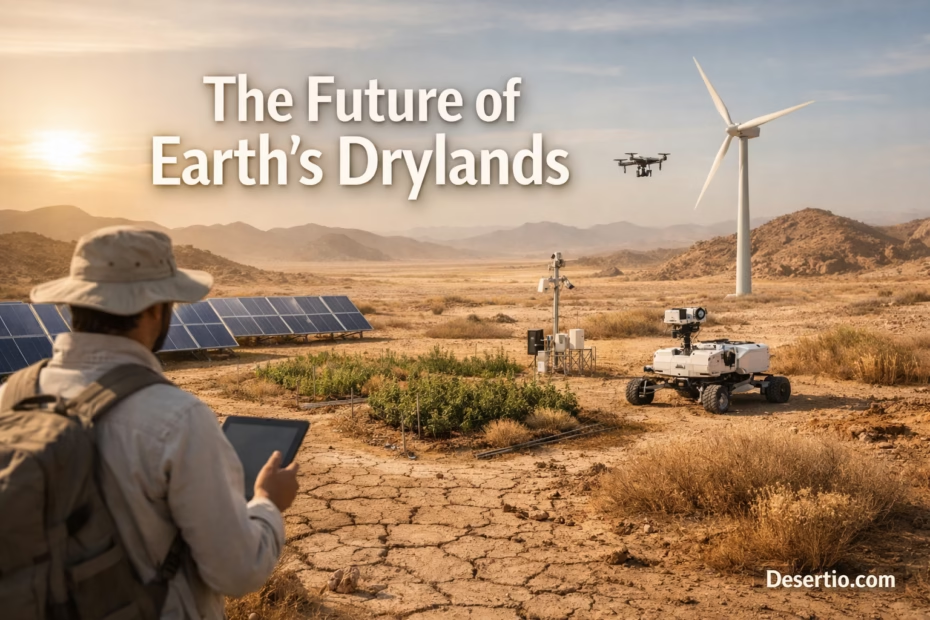
Drylands are the parts of Earth where water is always the main character. Rain shows up late, leaves early, and the sun tries to “edit” every drop back into the sky. The future of drylands will be shaped by how well we understand aridity, protect soil, and plan for resilience—without treating these landscapes like empty space.
- Drylands Are Not Just Deserts
- Dryland Types at a Glance
- Why the Future of Drylands Matters to Everyone
- Key Idea: Drying Is Not Just “Less Rain”
- Forces That Will Shape Drylands Next
- A Resilience Loop
- A Degradation Slide
- Water Strategies That Fit Drylands
- Soil Is the Quiet Engine
- Fast Soil Wins That Add Up
- Rangelands, Grazing, and the Power of Timing
- Restoration That Matches Dryland Reality
- Technology as a Helpful Companion
- Cities and Infrastructure in a Drier World
- Biodiversity Will Move, Mix, and Surprise Us
- A Simple Reader Checklist for Dryland Futures
- The Future Will Be Built in Small Choices
Drylands Are Not Just Deserts
People often picture a classic desert: dunes, mirages, silence. Real-world drylands are broader. They include semi-arid grasslands, scrublands, open woodlands, and “in-between” zones where life works on tight margins. The common thread is simple: evaporation and plant water use can outpace rainfall for long stretches, so water scarcity shapes everything.
A handy idea here is the aridity index—a climate measure that compares precipitation with the atmosphere’s “thirst” for moisture. When that balance tips toward drying, the same amount of rain can go less far. That’s why the future of drylands is not only about rain totals, but about heat, wind, and soil cover.
Dryland Types at a Glance
Not all drylands feel the same. Some still grow crops with careful timing; others are built for grazing, wildlife, and hardy shrubs. This quick table helps frame what’s at stake when we talk about the future of Earth’s drylands and how adaptation changes across zones.
| Dryland Zone | Typical Feel | What Breaks First | What Helps Most |
|---|---|---|---|
| Dry Sub-Humid | Seasonal dryness, workable farming windows | Soil structure and surface cover | Soil health, erosion control |
| Semi-Arid | Rain is fickle, good years and tough years | Vegetation cover and shallow roots | Water harvesting, flexible land use |
| Arid | Long dry spells, bursts of growth after rain | Groundwater and fragile topsoil | Managed water, restoration “patches” |
| Hyper-Arid | Extremely limited moisture most years | Any disturbance lingers | Protection, minimal-impact access |
Think of a dryland like a tight-budget household: it can thrive, but only when spending (water loss) doesn’t outrun income (rain).
Why the Future of Drylands Matters to Everyone
Drylands cover a huge share of Earth’s land, and they support everyday life in ways that are easy to miss. They produce food and fiber, store carbon in soils, host unique biodiversity, and influence water cycles. When drylands work well, they act like steady, quiet infrastructure. When they’re stressed, the ripple effects spread through ecosystems and livelihoods.
Dryland landscapes also teach a valuable lesson: variability is normal. Rainfall can swing, seasons can shift, and plant growth can come in quick waves. A smart future for drylands doesn’t fight that rhythm. It plans around it with flexibility, buffer capacity, and risk-ready design.
Key Idea: Drying Is Not Just “Less Rain”
Two places can get the same rainfall and still feel totally different. If temperatures rise, the air can pull more moisture from soil and leaves. If winds increase or vegetation cover thins, evaporation speeds up. So the future of drylands depends on the whole water balance, not one number on a chart.
Forces That Will Shape Drylands Next
The future isn’t written, but the “pushes” on drylands are clear. Some are climate-driven, some are land-use-driven, and most are tangled together. Here are the big ones, explained in plain terms with real-world meaning and practical impact.
- Hotter air: A warmer atmosphere increases evaporative demand, so soils dry faster and plants need more water to do the same job. That can squeeze growing seasons and raise heat stress.
- Rainfall timing shifts: Drylands often rely on a few key storms. When rain arrives in fewer, heavier bursts, more water runs off instead of soaking in, which harms infiltration and weakens seedling survival.
- More extreme swings: Big wet years and big dry years can come closer together. That whiplash can destabilize vegetation and increase erosion risk if ground cover is low.
- Pressure on groundwater: When pumping outruns recharge, water tables fall. That can reduce spring flow, stress deep-rooted plants, and make drought impacts feel sharper.
- Soil disturbance: Repeated tillage, bare soil, and poorly timed traffic break soil aggregates. Once the “crumb structure” is gone, dust and runoff rise, and soil fertility slips.
A Resilience Loop
When soil cover stays high and water gets a chance to sink in, drylands can build momentum. More infiltration means more plant growth, which means better shade and cooler soil, which then supports roots and microbial life.
- Protect the surface with mulch, litter, or living plants.
- Keep water on the land longer with micro-catchments.
- Build soil carbon so rain behaves like it found a sponge.
A Degradation Slide
If ground is left bare, wind and water strip the best bits first. Less cover means hotter surfaces, lower infiltration, and weaker plant recovery. Over time, it can feel like the landscape “forgets” how to hold moisture.
- Topsoil loss reduces nutrients and seed banks.
- Runoff rises, so rain becomes less useful.
- Recovery costs jump because the land needs active restoration.
Water Strategies That Fit Drylands
In many drylands, “more water” is not realistic, so the smarter move is better water behavior. The goal is to slow, spread, and sink rainfall—then use it efficiently. A good plan treats water like a guest you want to keep around a bit longer, not a stranger you wave through the door.
- Micro-catchments: Small shaped basins or contour features that guide water to roots. They boost infiltration and reduce runoff.
- Mulch and litter: Organic cover cuts evaporation, cools the soil, and protects the surface from crusting. It’s a simple water saver with outsized impact.
- Deficit irrigation: When irrigation exists, targeting the most sensitive growth stages can produce stable yields with less water. Done right, it supports efficiency and reliability.
- Water reuse: In built environments, treating and reusing water can take pressure off scarce sources. It turns a linear system into a loop and improves resilience.
Soil Is the Quiet Engine
Healthy dryland soil is not just “dirt.” It’s structure, pores, biology, and a surprising amount of storage. Add organic matter and the ground can hold more moisture per storm. Lose structure and even a decent rain can behave like it fell on wax paper. The future of drylands depends on soil aggregation, living roots, and surface protection.
One underappreciated hero is the soil crust community in many dry places—tiny organisms that help stabilize surfaces. When thier habitat stays intact, dust drops and infiltration improves. When it’s repeatedly broken, the land gets louder: more dust, more runoff, more stress on seedlings and shrubs.
Fast Soil Wins That Add Up
- Keep something growing as much as possible: living roots support microbes and improve porosity.
- Cover bare ground: residues, mulch, or low-cover plants can cut evaporation and reduce erosion.
- Disturb less: fewer passes help soil aggregates hold, which boosts water capture when storms hit.
Rangelands, Grazing, and the Power of Timing
Many drylands are built for rangelands—grasses, shrubs, and open spaces that respond to pulses of rain. Grazing can fit this system when it respects recovery time. The trick is timing: giving plants rest after grazing so roots rebuild and soils stay covered. That’s how forage and land stability can improve together.
Flexible approaches matter more than rigid rules. Stocking and movement that adjust to the season often protect vegetation better than fixed schedules. In a future with more climate swings, systems that can “breathe” are the ones that keep ground cover and reduce erosion.
Restoration That Matches Dryland Reality
Dryland restoration works best when it feels like guiding rather than forcing. Instead of trying to “green” everything, effective projects often focus on strategic patches: gullies, bare slopes, wind corridors, and critical habitat nodes. The goal is to rebuild functions—water capture, soil stability, seed survival—so the landscape can do more of the work on its own.
- Assisted natural regeneration: protecting existing sprouts and seed sources so the land rebounds with local genetics and less input.
- Native plant mosaics: mixing species with different root depths to spread risk and boost stability.
- Erosion control basics: small check features, roughness, and barriers that slow flow and let sediments settle, improving soil building.
Technology as a Helpful Companion
Tech can make the future of drylands less guessy. Satellites track vegetation greenness, ground temperature, and bare soil. Simple sensors monitor soil moisture. Forecast tools give earlier warnings. The best use of tech is humble: it supports decisions, respects local knowledge, and strengthens preparedness.
Look for tools that answer practical questions: “Is ground cover dropping faster than normal?” “Did the last storm soak in or run off?” “Which areas recover quickly after rain?” When data stays tied to actions—like changing grazing timing, protecting vulnerable slopes, or prioritizing restoration zones—monitoring becomes management.
Cities and Infrastructure in a Drier World
Drylands are not only wild landscapes; many people live in dryland towns and cities where heat and water demand meet hard limits. The future here looks like smarter shade, better building materials, and water systems that reuse and reduce losses. Think of a city as a big surface: when it’s dark, sealed, and unshaded, it “spends” water and comfort quickly.
- Shade-first design: trees where feasible, shade structures, and thoughtful street geometry to cut heat load.
- Leak reduction: quiet repairs that save huge volumes and protect reliability.
- Stormwater capture: directing intense rainfall into infiltration zones so cities gain a local buffer.
Biodiversity Will Move, Mix, and Surprise Us
Dryland species are experts at tough living: deep roots, reflective leaves, night activity, seasonal bursts. As conditions shift, ranges may move and timing may change. A future-friendly approach focuses on connectivity—keeping pathways and habitat mosaics so plants and animals can adjust without hitting hard walls. It’s less about freezing nature in place, more about keeping options open.
One practical piece is protecting “refuge” spots: shaded gullies, rocky slopes, seep zones, and areas with deeper soils. These pockets can act like lifeboats during hot spells and help repopulate surrounding areas after rain returns. In the long run, patch diversity supports ecosystem stability.
A Simple Reader Checklist for Dryland Futures
If you’re watching the future of drylands with curiosity, these signals are more useful than doom-y headlines. They point to function, not just appearance, and they work across many dryland ecosystems.
- Ground cover is increasing or staying stable through seasons.
- After storms, water soaks in rather than racing off—good infiltration.
- Soils feel crumbly, not sealed—better structure.
- Plants show varied heights and spacing—healthy mosaic patterns.
- Management adapts fast to the season—strong flexibility.
The Future Will Be Built in Small Choices
The future of Earth’s drylands will not hinge on one miracle fix. It will come from thousands of decisions that protect soil cover, respect rainfall variability, and keep water on the land long enough to matter. When drylands are treated as living systems—dynamic, valuable, and worth designing for—they can stay productive, diverse, and surprisingly generous.