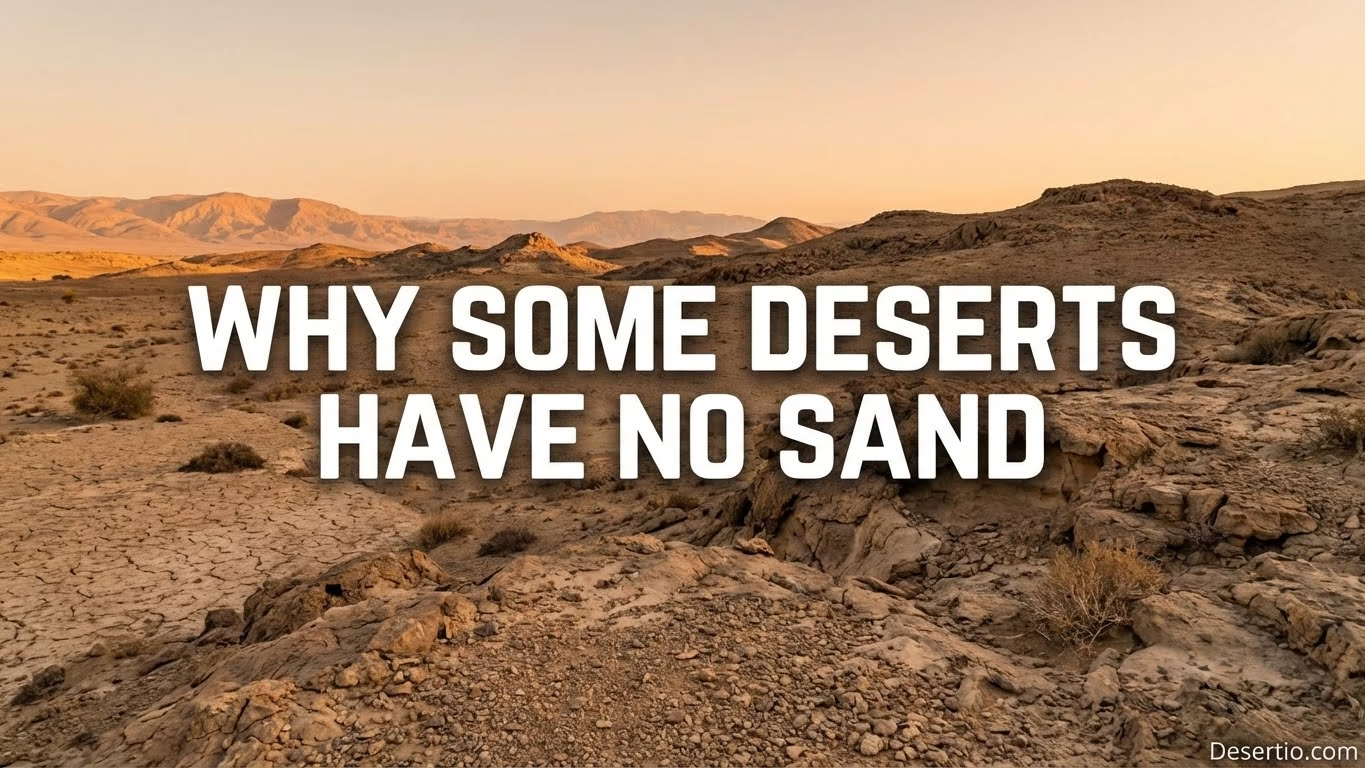
When people picture a desert, they usually imagine endless sand dunes. But here’s the fun twist: many deserts are sand-poor, and some are practically sand-free. A desert is mainly about scarce rainfall, not a sand requirement. In fact, only about one-fifth of Earth’s desert surfaces are truly sand-covered. The rest? Think rock, gravel, clay, salt, and crusty ground that behaves like a natural “floor.”
- Sand Is Optional, Dryness Is The Rule
- Desert Means Dry, Not Sandy
- Quick Snapshot: Common Sandless Surfaces
- Why Some Deserts Do Not Build Sand Dunes
- 1) There Is Not Much Sand To Begin With
- 2) Wind Acts Like A Giant Sieve
- 3) Water Shows Up In Quick Bursts, Then Disappears
- 4) The Ground Can Glue Itself Together
- 5) Cold Deserts Play By Different Rules
- Sandless Desert Types You Can Recognize Fast
- Hamada: Rock Plateau Desert
- Reg: Gravel Desert Pavement
- Playas: Clay Pans And Dry Lake Beds
- Salt Flats: Crust Over Loose Ground
- Myth Vs Reality: The Sandless Desert Edition
- Myth
- Reality
- Small Details That Explain A Big Landscape
- How To Tell If You Are In A Sandless Desert
- Look
- Feel
- Common Questions
- Mini Glossary
Sand Is Optional, Dryness Is The Rule
Sand dunes are the “postcard” version of deserts, but many deserts look more like open-air geology museums with hard surfaces and scattered stones.
Desert Means Dry, Not Sandy
A place can be called a desert when it gets very little precipitation—often under 250 mm (about 10 inches) per year—and loses moisture fast through evaporation. That definition comfortably includes hot deserts, cold deserts, and even polar deserts. In broader climate terms, this threshold is central to what defines a desert, regardless of whether sand is present.
Sand is just one possible surface layer. To build classic dunes, you need a steady supply of sand-sized grains and enough wind to move them—but not so much rain that plants lock everything down. Remove any one ingredient, and the “dune recipe” falls apart. Thats why sandless deserts exist in plain sight, hiding behind a mental stereotype and a movie-set look.
Quick Snapshot: Common Sandless Surfaces
- Hamada: bare rock and rugged slabs, like a natural stone plaza.
- Reg (Desert Pavement): gravel armor that shields finer material underneath.
- Playas (Dry Lake Beds): flat clay that cracks into polygons and turns dusty.
- Salt Flats: bright crust made of evaporated minerals.
- Badlands: soft rock carved into ribs and gullies, often with almost no loose sand.
Think of sand as confetti. It gathers only where the party conditions are right—steady supply, steady wind, and a surface that doesn’t trap or cement it.
A Handy Mental Picture
Why Some Deserts Do Not Build Sand Dunes
1) There Is Not Much Sand To Begin With
Not all landscapes naturally produce sand-sized grains. Some rocks break into large chunks and pebbles instead of neat grains. Others weather into clay or dissolve into salts, leaving little loose sand behind. If the surrounding terrain is dominated by tough bedrock or coarse debris, a desert may end up mostly rocky or gravelly—with only small sandy pockets.
Even when sand exists, it might be trapped upstream in basins, tucked into sheltered corners, or mixed with bigger fragments that are harder for wind to sort. Sand dunes need a reliable sand pipeline. If the pipeline is weak, dunes stay tiny, scattered, or absent, while the main stage becomes stone and hard ground.
2) Wind Acts Like A Giant Sieve
Wind doesn’t lift everything equally. It loves fine dust and light grains. Over time, wind can strip away the smaller particles in a process often called deflation, leaving behind larger pebbles and cobbles. Picture a beach where someone quietly vacuumed the flour and sugar but left the trail mix—that leftover stony layer can become desert pavement, a natural protective skin.
Once that stony “skin” forms, it starts resisting further removal of fine material. The surface becomes more stable, meaning less loose sand can accumulate. The wind may still move dust and occasional sand grains, but the ground is now wearing a gravel jacket that changes the whole enviroment of sediment movement. In other words: the surface locks in, and dunes struggle to get going.
3) Water Shows Up In Quick Bursts, Then Disappears
Deserts can have brief, intense rain that triggers sheetwash—thin flows that spread out and move sediment across wide areas. That water can carry away fine material or spread it into flats, leaving behind coarser fragments. Then, as the water evaporates, minerals can precipitate and create a cemented crust. A crusty surface is bad news for classic dune building because it reduces the loose, dry sand that wind can pile up.
This is how you get those iconic playas—flat, smooth basins that can briefly flood, then dry into hard clay with polygon cracks. Instead of dunes, the landscape becomes a giant natural tabletop. If sand blows onto a playa, it often gets stuck in damp patches, mixed into mud, or swept aside by the next shallow flood.
4) The Ground Can Glue Itself Together
In many deserts, tiny amounts of moisture move upward through soil by capillary action, then evaporate near the surface. That can leave behind salts or carbonates that act like a gentle cement. Over time, this helps bind particles and tighten the surface. Add in windblown dust that packs into pores, and you can end up with a firm crust or stone-armored pavement that doesn’t easily release sand to the wind.
This “glue” effect also explains why some areas feel surprisingly solid underfoot. It’s not that sand never arrives—often it does—but the surface is a sticky trap in a dry disguise. When the top layer is crusted or armored, loose sand has fewer places to collect into big dune fields. Instead you see patchy ripples and thin sheets, while the dominant look stays rock-and-crust.
5) Cold Deserts Play By Different Rules
Some deserts are dry because they’re cold, not because they’re hot. In these places, moisture is often locked up as ice and snowfall is limited. Freeze-thaw cycles can break rock apart into fragments, but the combination of low liquid water and seasonal freezing can limit the kind of loose, dry sand supply that fuels massive dunes. You get a lot of grit, rubble, and sometimes fine dust—but not always the steady dune-building blend.
Cold deserts can still have sand in spots, sure. But the “no sand” look is common because surfaces may be stabilized by frozen ground, scattered stones, or compacted soils. The result feels more like a wide-open gravel plain than a sand ocean.
Sandless Desert Types You Can Recognize Fast
Hamada: Rock Plateau Desert
A hamada is the “stone desert” look—broad expanses of exposed bedrock with scattered boulders. Wind and time have removed many loose fines, so what’s left is a hard, rugged surface. If you expected soft dunes, a hamada can feel like walking on a giant sidewalk made by geology.
Reg: Gravel Desert Pavement
A reg often looks like someone poured a layer of pebbles across the land. That pebble layer can be tightly packed—sometimes with a subtle dark sheen—and it protects finer sediment beneath. It’s basically nature’s armor plating, and it makes big sand dunes much harder to form right there.
Playas: Clay Pans And Dry Lake Beds
A playa sits at the low point of a closed desert basin. During rare wet spells it can hold shallow water, then dry into smooth clay and salts. The surface can be so flat it feels unreal, like a mirror turned to stone. Sand that blows in often gets mixed into mud or redistributed, so dunes don’t easily dominate the scene.
Salt Flats: Crust Over Loose Ground
Salt flats form where evaporation leaves behind mineral crusts. Instead of loose sand, you get a bright, crunchy surface that can break into plates. It’s a landscape of chemistry as much as wind. A salt crust can also stabilize the surface, keeping fine sediment from turning into a long-lived dune field.
| Surface Style | What It Looks Like | Why Dunes Do Not Take Over | Quick Clue Underfoot |
|---|---|---|---|
| Erg (Sand Sea) | Dunes, ripples, shifting slopes | Sand supply is high and loose | Footprints sink easily; grains feel dry |
| Reg (Desert Pavement) | Pebble blanket, often tightly packed | Wind has removed fines; stones form armor | Crunchy, firm steps; little loose sand |
| Hamada (Rock Desert) | Bare rock, slabs, scattered boulders | Little sand production; rock dominates the surface | Hard ground; sharp edges; minimal grit |
| Playa (Clay Pan) | Flat, cracked polygons, dusty edges | Flood-then-dry cycles spread fines; crusts stabilize | Hard when dry; slick when damp; fine dust |
| Salt Flat | White crust, plates, sparkly crystals | Evaporated minerals create a cemented cap | Crunchy crust; salty taste in the air nearby |
| Badlands | Ridges, gullies, sculpted slopes | Erosion carves soft rock; sediment is often silt/clay | Powdery fines; crumbly ground; sharp textures |
Myth Vs Reality: The Sandless Desert Edition
Myth
“A desert is basically sand.” If there is no sand, it must be something else—a rocky wasteland, maybe.
Reality
Desert means water-limited. A desert can be rocky, gravelly, clayey, or salty—and still be 100% desert.
Small Details That Explain A Big Landscape
If you want the “why” in one breath: deserts without sand usually have either low sand supply, strong sorting that removes fines, or surfaces that stabilize and cement whatever arrives. The magic is in the grain size. Dunes thrive on sand-sized grains; remove them, and the desert chooses a different outfit.
- Too coarse: lots of pebbles and cobbles, not much sand.
- Too fine: dominated by dust and clay that crusts or blows away.
- Too glued: salts and carbonates help form hard skins that reduce loose grains.
- Too armored: a stony layer protects the ground and limits sand accumulation.
And yes—some deserts can switch styles across short distances. You might cross a gravel plain and then hit a pocket of low dunes tucked behind a ridge. It’s the same desert system, just different sediment neighborhoods responding to wind direction, local slopes, and how easily the ground lets sand pile up.
How To Tell If You Are In A Sandless Desert
Here are simple field clues you can use without any fancy gear. Think of it as a quick “spotter’s guide” for non-sandy deserts, built around texture and surface behavior.
Look
- Shiny pebbles or tightly packed stones: likely desert pavement.
- Wide bare rock: likely a hamada surface.
- Flat cracked clay: likely a playa or clay pan.
- White crust: likely salt influence.
Feel
- Firm crunch under boots: gravel armor over finer material.
- Hard “tile” sensation: crusted clay or salt at the surface.
- Minimal slipping: less loose sand, more fixed ground.
- Dusty puffs with little grit: fine sediment, not dune sand.
Common Questions
Can A Desert Have Both Sand And No-Sand Areas?
Yes. Many deserts are mosaics. One zone may have dunes where sand is abundant and wind funnels it into piles, while nearby zones are dominated by gravel plains or rock plateaus where sand is scarce or surfaces are stabilized.
Do Sandless Deserts Still Have Wind-Shaped Features?
Absolutely. Wind can sculpt rock and move dust just as dramatically as it moves sand. You’ll often see polished stones, sorted gravel, and smooth flats where fines were carried away or locked into crust.
Why Do Some “Stone Deserts” Look Dark Or Glossy?
Over long periods, rock surfaces can develop thin coatings and patinas while the stones become tightly packed. The result can look dark or subtly shiny, especially on desert pavement where stones sit like interlocking tiles.
Is A Salt Flat The Same Thing As A Sandless Desert?
A salt flat is a type of desert surface. It forms where water briefly collects and then evaporates, leaving salts behind. Many salt flats are found within broader deserts, acting like bright crusty floors inside a larger dry region.
Mini Glossary
- Erg: a large dune field or “sand sea,” dominated by wind-blown sand.
- Reg: a gravel plain, often forming desert pavement that protects finer sediment.
- Hamada: a rocky desert surface with exposed bedrock and minimal loose sand.
- Playa: a flat desert basin that can flood briefly and dry into clay and salts.
- Deflation: wind removal of fine particles, leaving coarser material behind.
