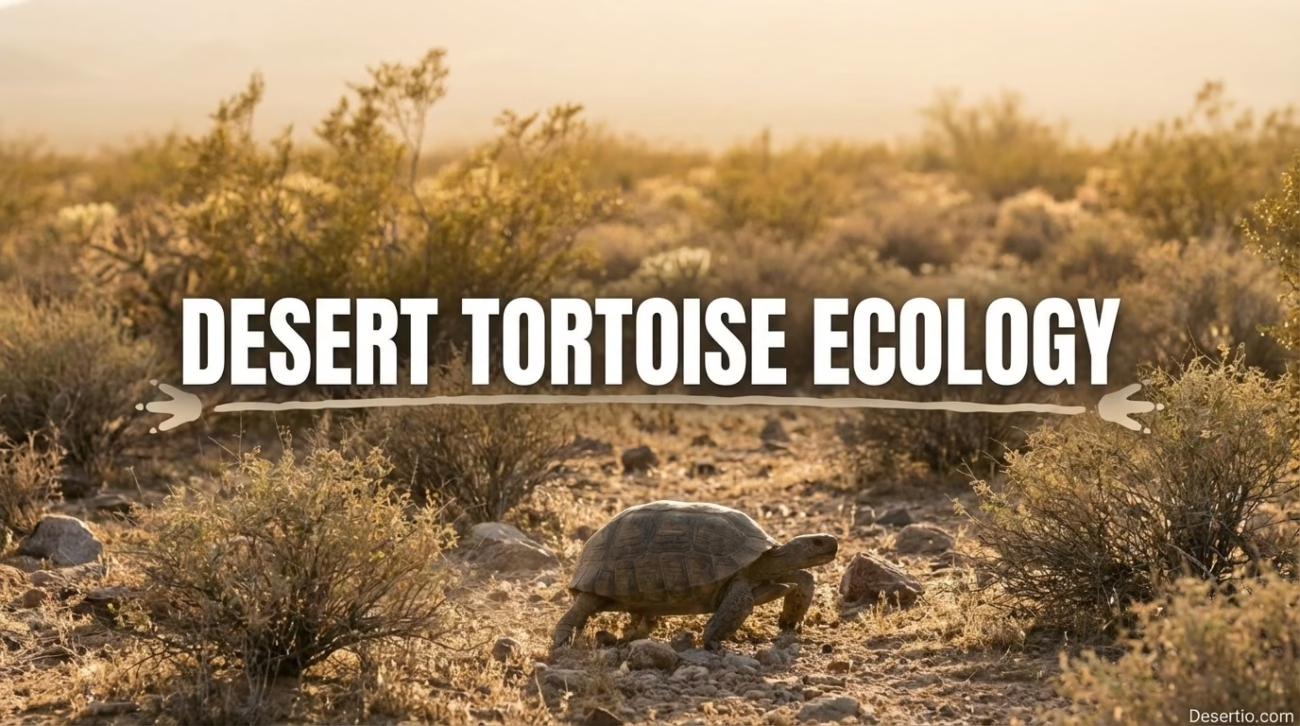
Desert tortoises are the quiet experts of dry country—built for places where rain is a surprise and shade is a luxury. If you zoom in on their daily choices, you’ll see an animal that treats heat, water, and time like a budget. Everything in desert tortoise ecology revolves around three anchors: microclimate, food timing, and energy savings.
- Where Desert Tortoises Fit In The Desert Puzzle
- Habitats They Tend To Favor
- Body Design That Matches Heat, Wind, And Dry Air
- Hydration Without A Water Bottle
- Thermoregulation By Timing
- The Burrow As A Personal Climate System
- What A Typical Burrow Does For The Tortoise
- Food Web Role And Plant-Based Diet
- What They Commonly Eat In Many Desert Regions
- Daily Rhythm And Seasonal Activity
- Reproduction, Nest Ecology, And Hatchling Life
- A Simple Life Cycle In Ecological Terms
- Why Nest Microclimate Matters
- Burrow Networks and Their Ecological Impact
- Ecological Contributions Often Noticed In Field Studies
- Mojave And Sonoran Desert Tortoises In Ecological Comparison
- Common Questions About Desert Tortoise Ecology
Where Desert Tortoises Fit In The Desert Puzzle
“Desert tortoise” often points to a group of closely related land tortoises that live in North America’s warm deserts. In the Mojave Desert, the best-known species is the Mojave Desert tortoise (Gopherus agassizii). In much of the Sonoran Desert, the animal commonly called the desert tortoise is Morafka’s desert tortoise (Gopherus morafkai). The names matter because habitat use and seasonal activity can differ across deserts, even when the lifestyle looks similar at first glance.
Habitats They Tend To Favor
Desert tortoises don’t just “live in sand.” They key in on usable ground: soils that can hold a burrow, plant communities that provide seasonal greens, and terrain that offers small-scale shade. Picture creosote flats, rocky slopes, desert washes, and low foothills—patchy, textured landscapes where shelter and forage can be found within a workable distance, conditions typical of habitats used by many animals living in desert ecosystems.
- Open Scrublands with scattered shrubs that cast short, sharp shadows
- Rocky Canyons And Hillsides where crevices and firm ground create reliable retreats
- Desert Washes that green up after rain and deliver short bursts of tender plants
Body Design That Matches Heat, Wind, And Dry Air
A desert tortoise is basically a walking strategy for staying alive in low moisture. Its shell is protection, yes, but it’s also a thermal mass. The limbs are sturdy for pushing soil and navigating gravel. The skin reduces water loss. Even the slow pace is part of the plan—less movement means less water spent. In ecology terms, you’re looking at a creature tuned for efficiency, not speed.
Hydration Without A Water Bottle
One of the most famous traits is bladder water storage. A desert tortoise can hold a remarkable reserve, acting like a personal canteen. That stash supports survival through long dry stretches when plants are crisp and rainfall is a memory. The chemistry is clever too: by tolerating high urea levels, the tortoise can reduce moisture loss through waste. It’s desert accounting in living form, with water treated as the most valuable currency.
Thermoregulation By Timing
Instead of “beating the heat,” desert tortoises schedule around it. Activity often clusters in cooler parts of the day and in milder seasons. When the surface turns into a skillet, the tortoise shifts underground, where temperatures and humidity are more stable. Think of it like stepping from blazing sunlight into a calm library—same world, totally different rules. That shift is the backbone of desert tortoise behavior and energy conservation.
The Burrow As A Personal Climate System
If you want to understand desert tortoise ecology in one word, make it burrow. Burrows buffer extremes—cooler during scorching periods, less chilly during cold snaps, and generally more humid than open air. This isn’t a side detail. It’s the central technology desert tortoises use to turn harsh landscapes into livable ones.
What A Typical Burrow Does For The Tortoise
- Reduces Heat Stress by offering a cooler core environment than the surface for many hours
- Limits Water Loss because underground air can be more humid than open desert air near ground level
- Creates Predictability in a landscape where weather swings can be dramatic from one day to the next
A burrow isn’t just a hiding place. It’s a microhabitat the tortoise builds and maintains, like carving out a pocket of calm inside a noisy world.
Food Web Role And Plant-Based Diet
Desert tortoises are primarily herbivores. Their menu shifts with the seasons, tracking what the desert offers in short, bright pulses. After rain, annual wildflowers and tender greens can pop up fast. Later, tougher plants and dried grasses may dominate. The diet isn’t random grazing—there’s a constant balancing act between water content, fiber, and minerals.
What They Commonly Eat In Many Desert Regions
- Annual Forbs and wildflowers during brief green seasons when available
- Grasses and herbaceous plants as the landscape dries and toughens
- Cactus Pads And Flowers in places where prickly pear is common in season
Shell growth and long-term body maintenance depend on calcium-rich foods and efficient digestion of fibrous plants. That’s why you’ll often see ecological discussions highlight forage quality, not just forage quantity. In desert terms, a few weeks of excellent greens can echo through the year like a well-stocked pantry, supporting energy reserves and hydration.
Daily Rhythm And Seasonal Activity
Desert tortoise activity is a dance with temperature. When the surface is comfortable, movement and feeding increase. When conditions push past comfort, the tortoise shifts to shade, shelter, or burrows. Across many desert regions, activity often peaks in spring and again in late summer or fall, though the exact pattern depends on rainfall, elevation, and local plant cycles. The key idea is simple: they do the most when the desert gives the most, and they pause when the landscape goes hard and dry for long stretches.
| Seasonal Window | Typical Surface Behavior | Burrow Use Pattern |
|---|---|---|
| Cooler Spring (Green-Up) | More foraging, more movement, frequent basking in mild sun | Used as a base between feeding trips |
| Early Summer (Warming) | Shorter activity bouts, often mornings and late afternoons | Longer daytime stays underground |
| Peak Heat (Hot Period) | Limited surface time, careful use of shade and brief outings | Burrows become the main living space |
| Late Summer/Fall (Second Wind) | Renewed movement if temperatures ease and forage appears | Used nightly and between foraging sessions |
| Cool Season (Low Activity) | Very little surface activity in many areas | Extended underground stays in a stable microclimate |
Reproduction, Nest Ecology, And Hatchling Life
Reproduction is where desert tortoise ecology turns into a story of timing and tiny margins. Nesting usually follows seasonal patterns of warmth and soil conditions that allow digging and incubation. Clutches are typically laid in shallow nests, and incubation length can vary with temperature. This is also where temperature-dependent sex determination becomes a fascinating ecological lever: incubation temperatures around the low 30s °C can shift sex ratios, with a narrow band near roughly 31 °C often associated with balanced outcomes, while cooler and warmer ranges tend to tilt toward one sex or the other.
A Simple Life Cycle In Ecological Terms
- Egg Stage: development occurs underground in a temperature-driven environment within the nest
- Hatchling Stage: small bodies rely on shelter and careful thermoregulation right away
- Juvenile Stage: growth is gradual, closely tied to seasonal food and water availability over years
- Adult Stage: long lifespan supports a slow-and-steady reproductive strategy across decades
Why Nest Microclimate Matters
Nest depth, soil texture, and shade nearby shape the thermal profile of incubation. In deserts, that’s everything. The nest is like a quiet oven with no thermostat—its heat comes from the sun, the soil, and the daily rhythm of the surface. Small differences in nest conditions can change incubation time and influence hatchling traits, linking landscape directly to population ecology.
Burrow Networks and Their Ecological Impact
Desert tortoises are often described as ecosystem engineers, and the term is accurate. Their burrows provide shelter from heat and dry wind, and many other species use them. This affects how animals occupy and move through arid landscapes. Digging activity also changes soil structure and influences nearby plant growth on a small but measurable scale over years.
Ecological Contributions Often Noticed In Field Studies
- Microhabitat Creation through burrows and soil disturbance near shelter sites
- Plant Interaction through selective grazing and seed movement via droppings in some seasons
- Nutrient Cycling from concentrated organic matter around resting and shelter areas in patches
Mojave And Sonoran Desert Tortoises In Ecological Comparison
Ecology is shaped by where an animal lives, and these tortoises are tied to different desert “personalities.” Broadly speaking, the Mojave Desert tortoise is associated with Mojave desert scrub landscapes, while Morafka’s desert tortoise is linked to many Sonoran settings, including more rugged, rocky terrain. The split into distinct species was supported by genetic and geographic evidence, highlighting that “desert tortoise” is not a single uniform blueprint. It’s a family of solutions built for slightly different deserts and rhythms.
| Common Name | Scientific Name | Typical Desert Association | Habitat Notes |
|---|---|---|---|
| Mojave Desert Tortoise | Gopherus agassizii | Mojave Desert | Often linked to open scrub, washes, and burrow-friendly soils |
| Morafka’s Desert Tortoise | Gopherus morafkai | Sonoran Desert | Commonly associated with rocky slopes, canyons, and varied desert vegetation |
Common Questions About Desert Tortoise Ecology
How Can A Desert Tortoise Live With So Little Water?
It’s a combination of behavior and physiology: seasonal feeding on moisture-rich plants when available, limited activity during extreme conditions, and impressive internal water storage. The bladder reserve functions like a built-in tank, while the tortoise’s metabolism and waste chemistry help reduce water loss. Put together, it’s a low-spend lifestyle where water is protected as carefully as shade.
What Makes Burrows So Important Ecologically?
Burrows create stable microclimates. They soften temperature highs and lows, increase local humidity, and offer predictable refuge. Because deserts are defined by extremes, anything that reduces extremes becomes powerful. In many landscapes, burrows also become part of a wider shelter network used by other animals at different times, turning a single excavation into a community resource.
Is Their Diet Really Just “Anything Green”?
Not quite. Desert tortoises feed on a wide range of plants, yet their ecology is closely tied to seasonal plant quality. Tender annuals can provide moisture and nutrients during green-up periods, while later-season foods may be drier and more fibrous. Over time, the tortoise’s feeding patterns reflect a practical goal: get enough hydration, fiber, and minerals to support slow growth and long life.
