Why Desert Temperatures Swing So Wildly
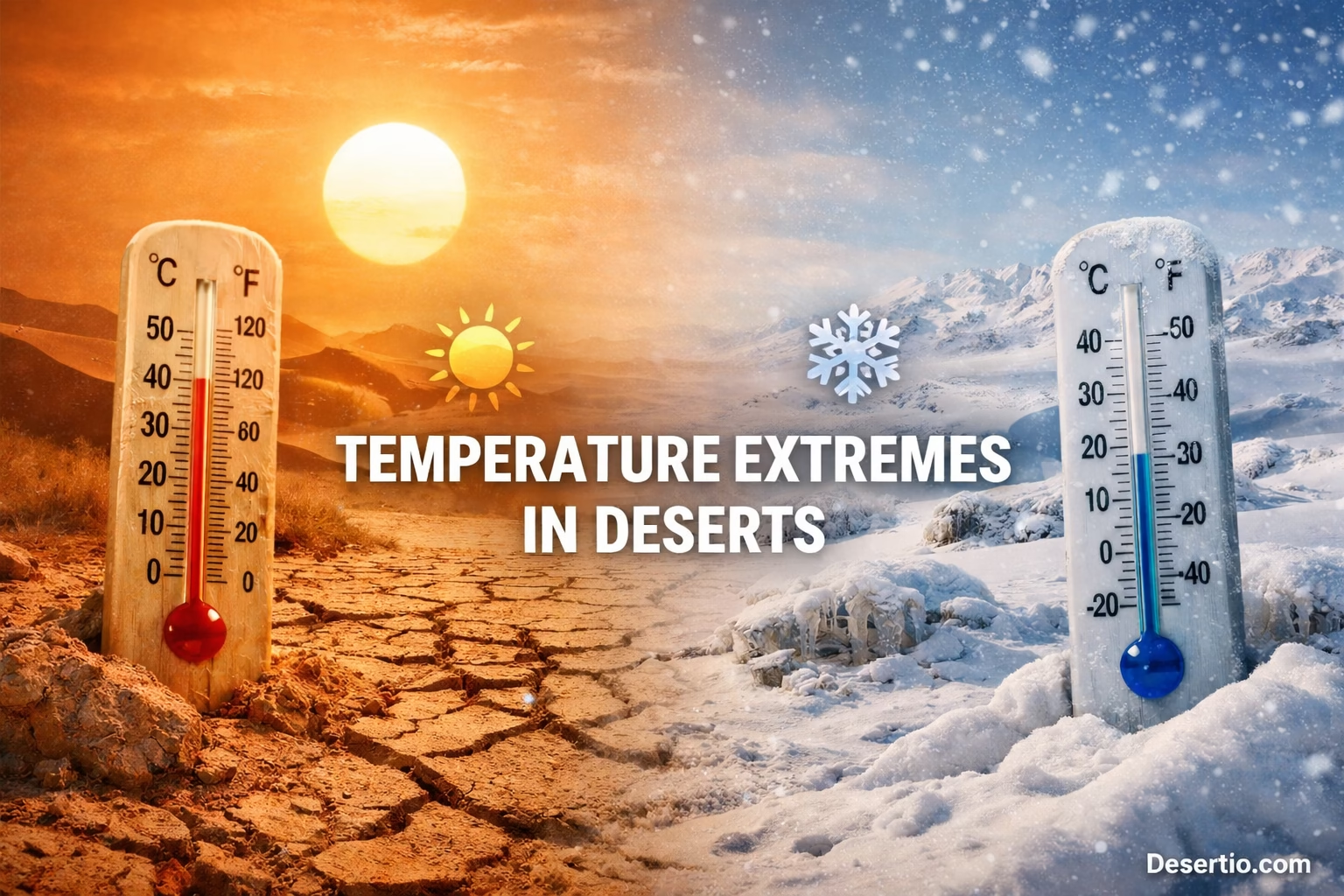
Desert temperature extremes can feel like a prank. Blazing sun at noon, then a surprisingly chilly night that makes you reach for a layer you didn’t expect. The secret is simple: deserts are built for fast heating and fast cooling. Dry air, clear skies, and bare ground team up to create a big day–night swing that’s hard to match anywhere else—patterns closely tied to broader desert climate dynamics that control heat flow and daily temperature changes across arid regions.
- Why Desert Temperatures Swing So Wildly
- Key Facts
- Air Temperature Vs Ground Temperature
- Why Days Get So Hot
- Why Nights Can Turn Cold So Fast
- Hot Deserts, Cold Deserts, and High Deserts
- Hot Deserts
- Cold And High Deserts
- Real Examples Of Extreme Numbers
- What Makes The Swing Bigger Or Smaller
- Bigger Day–Night Range
- Smaller Day–Night Range
- How To Read Desert Forecasts Without Getting Surprised
- Comfort-First Packing Notes
- Mini Glossary For Desert Temperature Talk
Key Facts
- “Desert” means dry, not automatically hot—cold deserts are a real thing.
- Big swings come from low humidity and clear skies that let heat escape at night.
- The ground can get far hotter than the air—surface temperature is a different beast.
- A little cloud cover can act like a blanket and soften the nighttime drop.
Air Temperature Vs Ground Temperature
When people say “it was 50°C in the desert,” they usually mean air temperature—measured in shade, with the sensor protected from direct sun. But deserts also have ground temperature (the “skin” of sand or rock), and it can run much hotter. Mixing them up is an easy way to misunderstand desert temperature extremes and why your shoes feel like they’re on a warm pan.
| What’s Measured | Where | Why It Matters | Desert-Relevant Note |
| Air Temperature | About 1–2 meters above ground, shaded | Best for weather reports and how hot it feels in the air | Official heat records use air readings |
| Ground / Surface Temperature | Top “skin” of sand/rock | Controls burn risk, convection, and how fast the surface cools | Can soar far above air temperature in strong sun |
| Land Surface Temperature | Satellite-derived surface estimate | Shows hotspots and large-scale patterns | One satellite-observed peak hit 70.7°C on the Lut Desert surface |
Why Days Get So Hot
Deserts usually have cloud-free skies, so sunlight pours in like a spotlight. With little moisture to fuel evaporation, less incoming energy gets “spent” on turning water into vapor. More of it goes straight into warming the ground and the air. Think of it like two pans on a stove: a damp pan uses heat to steam, while a dry pan warms up fast.
Surface type matters too. Pale sand reflects some sunlight, dark rock absorbs more—either way, many desert surfaces have low thermal inertia, meaning they heat quickly once the sun is high. Sparse plants also mean less shade and less cooling transpiration. That’s why the ground can feel fiercely warm even when the breeze seems okay.
Dry air is like a window: it lets sunlight in easily, then it doesn’t hold onto heat very well once the sun leaves.
Why Nights Can Turn Cold So Fast
After sunset, deserts flip the script. The ground starts dumping heat upward as infrared radiation. In humid places, water vapor and clouds act like a cozy blanket, re-radiating some heat back down. In deserts, that “blanket” is thin. The result is radiative cooling that can feel sudden—like someone opened a giant freezer door.
Calm, clear nights are the champs of cooling. With fewer clouds, heat escapes more freely. With little vegetation, there’s less stored moisture to release warmth slowly. Some landscapes also trap cooler air in low spots, forming a shallow cold pool. That’s how you can get a huge diurnal range even when the daytime was all sun and glare.
Hot Deserts, Cold Deserts, and High Deserts
Not all deserts run on the same temperature playlist. The shared theme is low precipitation, but the feel depends on latitude, elevation, and season. That’s why desert temperature extremes can mean “very hot,” “very cold,” or “both in the same week,” with a wide daily swing on top.
Hot Deserts
These are the “classic” image: high sun, dry air, and long warm seasons. Daytime air temperatures can be very high, while nights still cool quickly when skies stay clear.
- Strong sunlight drives fast daytime heating
- Low humidity lets nighttime heat escape
- Sand and rock cool quickly, boosting day–night contrast
Cold And High Deserts
Elevation changes everything. Thin air holds less heat, and winters can be seriously cold even in dry places. Some cold deserts can dip toward -40°C in harsh winter spells, while still warming strongly under sun at other times.
- Higher elevation lowers average temps
- Clear nights amplify radiative cooling
- Seasonal swings can be huge—temperature can feel “two-climate” in one place
Real Examples Of Extreme Numbers
Numbers help, as long as you compare apples to apples. The biggest mistake is mixing air temperature with surface temperature. Below are well-known examples that show different kinds of desert extremes—heat in the air, heat on the ground, and deep cold in a polar desert.
| Example | Type | What It Shows |
| 56.7°C (Death Valley) | Air | One of the most cited highest air temperatures measured under standard conditions |
| 70.7°C (Lut Desert) | Surface | Satellite-observed land surface peak—shows how hot ground can get vs air |
| Day near 38°C, night near -4°C (Sahara, seasonal example) | Air | A classic diurnal range pattern: warm days, surprisingly cool nights |
| -89.2°C (Antarctic interior) | Air | The cold end of a polar desert—dry, clear, and extremely cold |
What Makes The Swing Bigger Or Smaller
Two desert nights can feel totally different even in the same month. That’s because temperature extremes depend on a handful of “dials” you can almost picture someone turning: humidity, cloud cover, wind, and the ground’s ability to store heat. Nudge any one of these, and the day–night gap shifts.
Bigger Day–Night Range
- Very dry air (less “heat-trap” effect)
- Clear skies (more nighttime radiative loss)
- Calm wind (cold air settles near the ground)
- Loose sand and bare rock (heats/cools quickly)
- High elevation (thinner air stores less heat)
Smaller Day–Night Range
- Higher humidity (more heat retained overnight)
- Cloudy nights (clouds act like insulation)
- Breezy conditions (mixes air, reduces sharp ground cooling)
- Rocky ground with higher thermal inertia (slower temperature change)
- Nearby water or frequent fog (moderates extremes)
How To Read Desert Forecasts Without Getting Surprised
If you want comfort, look past the daily high. Check the overnight low and the wind at sunset. A night that’s only “mild” on paper can feel colder if wind kicks in, while a calm clear night can drop fast near the ground. For planning, the most useful number is the diurnal temperature range—the gap between the day’s high and night’s low.
Comfort-First Packing Notes
- Bring layers: a light daytime setup plus a warm mid-layer for evening.
- Choose breathable fabrics for day heat, then add wind resistance for night chill.
- Protect electronics: big temperature changes can cause condensation when moving between cool and warm spots.
- Time your activities: early morning and late afternoon often feel best, with softer sun and steady temperatures.
Mini Glossary For Desert Temperature Talk
Diurnal Temperature Range: the difference between a day’s high and night’s low. In deserts, this can be dramatic because nights cool quickly after a sunny day.
Radiative Cooling: the surface losing heat as infrared energy to the sky. Clear, dry nights let that loss happen fast, fueling sharp drops in temperature.
Thermal Inertia: how slowly a material changes temperature. Low thermal inertia (common in dry, loose surfaces) means quick heating and quick cooling.
Land Surface Temperature: a satellite-derived estimate of how hot the ground surface is. It’s useful for spotting hot zones, but it’s not the same as the air temperature you feel at head height.
