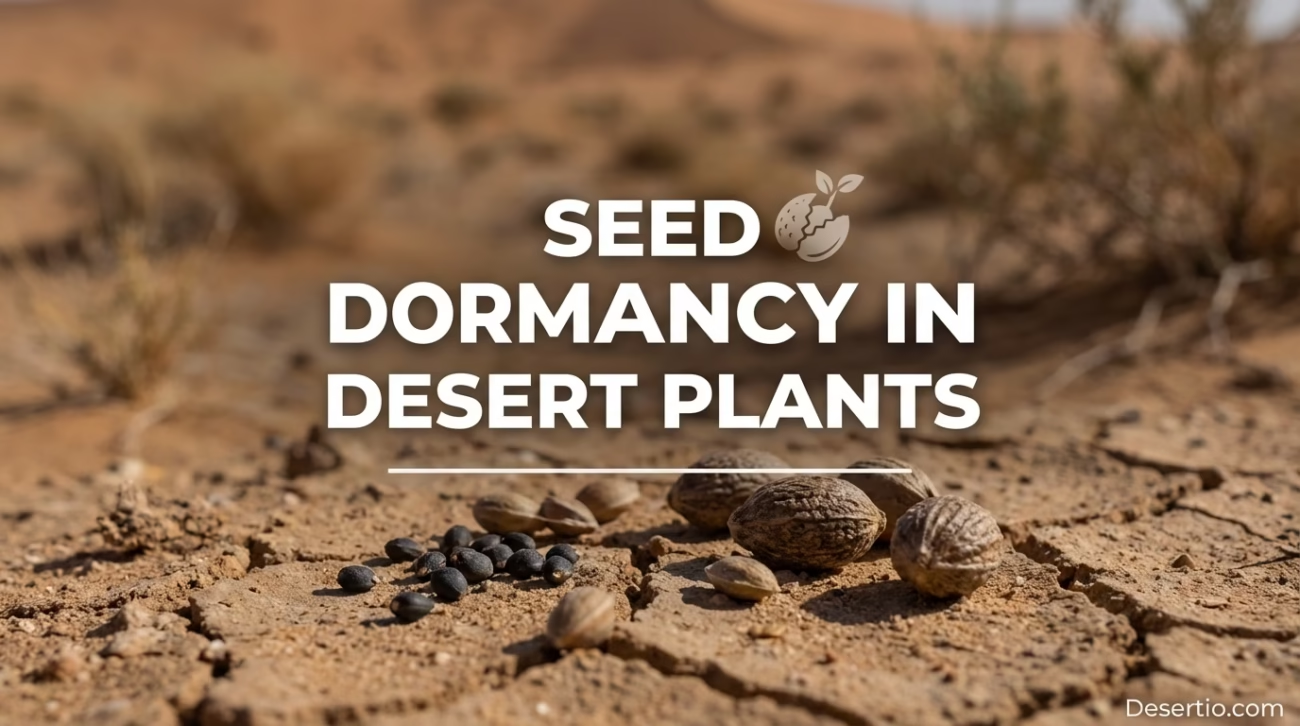
In deserts, rain is a surprise guest. Some years it arrives right on cue, and other years it barely shows up. Seed dormancy is how desert plants stay ready for that unpredictability without gambling everything at once. A dormant seed is alive, packed with potential, yet held back by a built-in pause button—like a tiny time capsule that opens only when the odds look good. Strategies like this shape how desert plants and animals survive extreme environments. This is one of the smartest survival moves in drylands.
- Why Seed Dormancy Matters In Deserts
- What Seed Dormancy Really Is
- Dormancy Vs. Quiescence
- Types Of Dormancy Found In Desert Plants
- How Desert Seeds “Lock” Themselves
- Physical Dormancy: The Waterproof Coat
- Physiological Dormancy: The Hormone Brake
- Morphological And Morphophysiological Dormancy: The Slow Embryo
- Combinational Dormancy: Two Locks, One Door
- Environmental Cues That Release Dormancy In Deserts
- Bet-Hedging: Why Not All Seeds Germinate At Once
- How A Single Seed Crop Spreads Risk Across Years
- Examples You Can Picture Across Desert Landscapes
- Hard-Coated Legumes
- Annual Wildflowers And Small Herbs
- Salt-Tolerant Shrubs
- Cacti And Other Succulents
- How Dormancy Is Studied And Identified
- Managing Dormancy In Propagation And Restoration Settings
- Common Misconceptions About Dormant Desert Seeds
- Mini Glossary
Why Seed Dormancy Matters In Deserts
Desert plants often face two big problems at the same time: unpredictable water and fast-changing temperatures. If every seed sprouted after the first small shower, seedlings could dry out days later. Dormancy spreads risk across time by building a soil seed bank—a hidden reserve of viable seeds waiting below the surface.
What Dormancy Buys A Plant
- Time to wait for a truly wet spell
- Staggered germination across multiple seasons
- Protection from brief “false start” rains
- Population stability when years vary wildly
Where It Shows Up Most
- Desert annual wildflowers with boom-and-bust years
- Woody shrubs that recruit seedlings only in “good” years
- Many legumes with hard, water-tight coats
- Species that rely on a long-lived seed bank to persist
A Desert Seed Is A “Maybe,” Not A “Now.” Dormancy turns germination into a careful decision. It’s like keeping matches dry in a stormy backpack: you don’t strike them at the first drizzle—you wait for a moment that can actually start a lasting flame of growth.
What Seed Dormancy Really Is
Seed dormancy means a viable seed does not germinate even when basic needs seem met. That’s different from simple “waiting” because conditions are obviously wrong (often called quiescence). Dormancy is internal: the seed’s coat, embryo, or chemistry blocks germination until a specific set of cues arrives. In deserts, those cues are often tuned to rainfall timing, temperature windows, and soil signals.
Dormancy Vs. Quiescence
| Concept | What Stops Germination | What “Unlocks” It |
|---|---|---|
| Dormancy | Internal barrier (coat, hormones, embryo state) | Specific cues like after-ripening, temperature cycling, moisture patterns, or coat opening |
| Quiescence | External shortage (no water, too cold/hot) | Basic needs return (water + suitable temperature) |
Types Of Dormancy Found In Desert Plants
Desert floras are diverse, so dormancy comes in multiple “locking styles.” Some are physical, some chemical, some developmental. Many species mix strategies, which makes perfect sense in a landscape where the future is rarely guaranteed. Below are the major types you’ll see described in desert seed ecology.
| Dormancy Type | Main Barrier | Common Release Cues In Deserts | Often Seen In |
|---|---|---|---|
| Physical (Hard-Coated) | Water can’t enter the seed | Heat cycling, surface weathering, abrasion, micro-cracks | Many legumes and other hard-seeded groups |
| Physiological | Hormonal “brake” in embryo tissues | Cool or warm seasonal windows, after-ripening in dry soil, moisture + temperature pairing | Many desert annuals and shrubs |
| Morphological | Embryo is underdeveloped at dispersal | Time + moisture at suitable temperatures | Some perennials with slower life history |
| Morphophysiological | Underdeveloped embryo plus hormonal brake | Seasonal sequences (time + temperature pattern) | Several temperate-desert and semi-arid taxa |
| Combinational | Physical barrier and physiological brake | Coat opening first, then seasonal cue completes release | Hard-coated species that also “time” germination |
How Desert Seeds “Lock” Themselves
Physical Dormancy: The Waterproof Coat
In physical dormancy, the seed coat is built like a rain jacket. It is water-impermeable, so the seed can’t hydrate enough to start germination. Over time, natural wear creates a tiny entry point for water—often at a specialized spot on the coat. Think of it as a sealed bottle that needs its cap loosened. This is especially common in hard-seeded desert legumes.
Physiological Dormancy: The Hormone Brake
Physiological dormancy is less about armor and more about timing. The embryo has internal controls that keep it from sprouting until conditions match a safe season. Many seeds balance hormones so the “go” signal stays low until the right combination of cues appears. Temperature windows matter a lot here—cool, moist periods may signal a longer stretch of usable water. In deserts, this can prevent germination during a single risky shower.
Morphological And Morphophysiological Dormancy: The Slow Embryo
Some desert seeds are dispersed with an embryo that is not fully developed. These seeds need time in the soil to finish internal growth before germination is even possible. When a hormonal brake is layered on top, it becomes morphophysiological dormancy. It’s like a project saved as a draft: the file exists, but it can’t “run” until finishing steps are complete. This can synchronize germination with predictable seasonal rhythms.
Combinational Dormancy: Two Locks, One Door
Combinational dormancy pairs a hard coat with a physiological brake. First, water entry must become possible. Then, the embryo still waits for a seasonal signal. It’s a double-lock system—useful in places where rain can be brief and misleading. This strategy can stretch germination across multiple years even in the same seed batch.
Environmental Cues That Release Dormancy In Deserts
Desert seeds don’t “guess.” They listen for cues that hint at a usable growing window. Some cues are simple (water), others are layered (water plus a temperature pattern). Different species key into different signals, which helps many plants share the same landscape without all sprouting on the same day. Here are the most common triggers.
- Moisture Pulses: a soaking event that penetrates deeper soil layers can be a stronger “green light” than a quick surface wetting.
- Temperature Cycling: big day-night swings can help break physical dormancy by stressing the seed coat.
- Seasonal Temperature Windows: some seeds germinate mainly in cooler or warmer parts of the year, matching likely rainfall patterns.
- Light: tiny seeds near the surface may use light as a depth detector; no light can mean “too deep”.
- Soil Chemistry Signals: nitrate and other cues can indicate recent moisture and microbial activity—often a good sign for seedlings.
- After-Ripening: time spent dry in the soil can gradually relax physiological barriers, preparing seeds to respond when rain finally arrives.
Depth Changes The Rules. The top few centimeters of desert soil can heat up fast and dry out faster. Seeds buried a bit deeper may get more stable moisture, which is why many dormancy systems are tuned to signals that imply water will last. A seed that waits for a “real” wet pulse often wins the long game.
Bet-Hedging: Why Not All Seeds Germinate At Once
Even in a good year, deserts can throw curveballs. Many species use bet-hedging: only a fraction of seeds germinate when conditions look favorable, while the rest stay dormant. It’s like keeping money in more than one pocket. This creates a multi-year cushion inside the soil seed bank, helping populations persist through rough sequences of seasons.
How A Single Seed Crop Spreads Risk Across Years
- Seeds disperse into soil and litter, forming a seed bank.
- Some seeds are ready soon; others keep dormancy as a safety lock.
- A rain event triggers germination for the “ready” fraction.
- The dormant fraction remains in reserve, even if the year looks promising.
- Over time, natural cues release dormancy in different batches.
- Across multiple years, this staggering helps stabilize the population.
Examples You Can Picture Across Desert Landscapes
Different desert plant groups lean on different dormancy styles. The details vary by species and region, but these patterns are common enough to help you “read” a desert seed strategy. Think in categories, not strict rules—nature loves exceptions. Still, the themes below show up again and again.
Hard-Coated Legumes
Many desert legumes produce seeds with physical dormancy. Their coats can resist wetting for long periods, then open after repeated heating and cooling near the soil surface. Mesquite-type shrubs and many “acacia-like” desert trees often fit this pattern. When the coat finally lets water in, germination can be fast.
Annual Wildflowers And Small Herbs
Desert annuals frequently rely on physiological dormancy and bet-hedging. Seeds may be primed to germinate only in a specific temperature season, even if water arrives earlier or later. This keeps seedlings aligned with the most reliable growth window. The result is that famous “burst” of blooms in the right year.
Salt-Tolerant Shrubs
In salty or alkaline desert soils, some seeds delay germination until rain has diluted surface salts. Dormancy and germination controls can be tightly linked to osmotic conditions—a practical filter that prevents sprouting when the soil solution is too harsh. It’s a built-in “taste test” for the root zone. Moisture quality matters, not just moisture quantity.
Cacti And Other Succulents
Many succulent seeds are small and sensitive to surface conditions. Germination may depend on light and warmth, which can signal that a seed is near the surface and able to emerge. Some form short to moderate seed banks, while others rely more on repeated reproduction over time. Small seeds can be picky. That pickiness can be a survival trait in disguise.
How Dormancy Is Studied And Identified
Because dormancy can look like “nothing is happening,” researchers rely on a mix of simple checks and careful observation. The goal is to separate viability (is the seed alive?) from dormancy status (is it locked?). The methods below are described in a general way, since exact protocols depend on species.
- Imbibition Check: does the seed take up water, or does the coat stay sealed?
- Temperature Window Tests: do seeds germinate only under certain seasonal temperatures?
- Time Effects: does dry storage gradually increase germination, suggesting after-ripening?
- Light Sensitivity: does germination shift when seeds are kept in darkness versus light?
- Seed Coat Examination: is there a visible “water gap” area or a coat structure linked to hard-seededness?
Managing Dormancy In Propagation And Restoration Settings
In nurseries and restoration projects, dormancy can be an ally or a hurdle. The trick is understanding which lock is present. Physical dormancy may require the coat to become permeable, while physiological dormancy often needs the right seasonal signal. Good practice starts with matching the method to the dormancy type.
Common Approaches For Hard-Coated Seeds
- Controlled scarification to allow water entry (mechanical or thermal approaches are species-dependent)
- Careful hydration trials to confirm the coat barrier is resolved
- Staged sowing to mimic natural spread of germination
Common Approaches For Physiological Dormancy
- Providing the correct temperature window for that species
- Allowing time for after-ripening when appropriate
- Monitoring germination across multiple sowing dates to reflect natural timing
One Size Never Fits All. Even within a single desert genus, different species can rely on different dormancy locks. That’s why clear identification beats guesswork. When the lock is understood, germination becomes far more predictable.
Common Misconceptions About Dormant Desert Seeds
- “Dormant” does not mean “dead.” Dormancy is a controlled pause, not failure.
- Rain alone isn’t always enough. Many seeds need rain plus the right temperature timing.
- Not germinating immediately can be adaptive. Staggering protects a population from bad luck years.
- Seed banks are not static. Seeds enter, exit, and age within the soil, shaped by microhabitats and burial depth.
Mini Glossary
| Term | Meaning In Plain English |
|---|---|
| Soil Seed Bank | The hidden stock of viable seeds stored in soil and litter |
| After-Ripening | A time-dependent change, often during dry storage, that reduces physiological dormancy |
| Imbibition | Water uptake by a seed—necessary for germination to start |
| Scarification | Making the coat permeable so water can enter (used for hard-seeded species) |
| Temperature Window | A range of temperatures in which a species is “willing” to germinate |
| Bet-Hedging | Only part of the seed crop germinates at once, keeping the rest as a backup |
