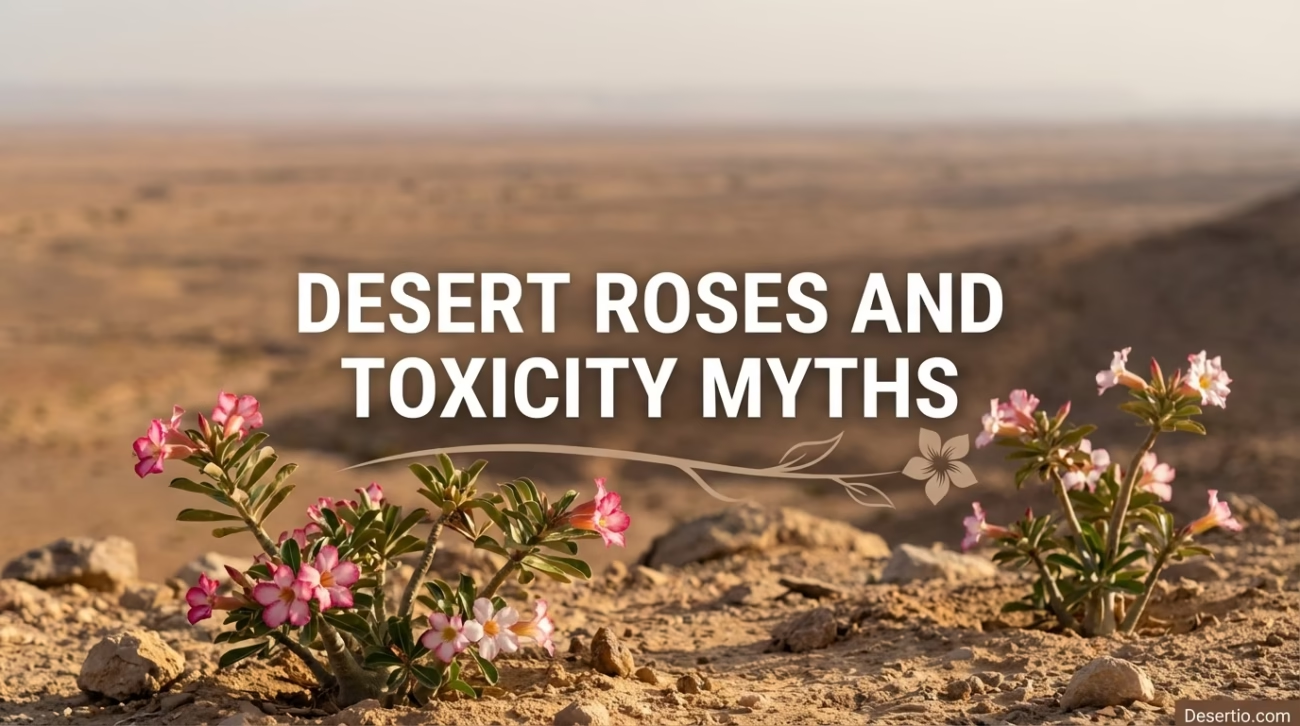
Why The Name “Desert Rose” Creates Confusion
The phrase desert rose sounds like a single, tidy thing. It isn’t. In real life, it’s a name shared by two very different “roses”: a succulent plant (usually Adenium obesum) and a rosette-shaped mineral (usually gypsum or barite) that forms in sandy, evaporative desert settings. Both appear in environments shaped by desert wildlife and plant adaptations, which is why the same nickname can surface in both biology and geology. That name overlap is the spark behind most toxicity myths. People hear a warning about one “desert rose” and assume it applies to the other.
- Why The Name “Desert Rose” Creates Confusion
- When People Mean The Plant
- When People Mean The Mineral
- Desert Rose Plant: Adenium Basics
- What The Word “Toxic” Usually Means Here
- Mineral Desert Roses: Gypsum and Barite Rosettes
- Where “Crystal Toxicity” Myths Usually Start
- Common Toxicity Myths, Explained Without The Drama
- Myth 1: “Touching A Desert Rose Is Dangerous”
- Myth 2: “The Crystal Is Toxic Because It Has ‘Barium’”
- Myth 3: “Adenium Is Safe Because It’s A Houseplant”
- Myth 4: “All Desert Roses Are The Same Thing”
- Desert Rose Plant Vs Desert Rose Crystal
- Handling And Display That Keeps Things Easy
- If You’re Handling Adenium
- If You’re Handling The Crystal
- Common Questions About Desert Roses And Safety
- Are Desert Rose Crystals Toxic To Touch?
- Is Adenium Toxic Just By Being In A Room?
- Why Do Some People Say Desert Roses Are “Deadly”?
- What’s The Safest Way To Describe This To Kids?
When People Mean The Plant
Adenium is a desert-adapted succulent with a swollen base, glossy leaves, and bold flowers. It’s popular in pots and warm-climate gardens because it thrives on bright light and modest watering. Its milky sap is the part that drives most safety talk, so it gets labeled “toxic” in a lot of guides.
When People Mean The Mineral
The desert rose crystal is a natural rosette of gypsum or barite that grows as mineral-rich water evaporates in arid basins. Sand grains often get trapped between “petals,” giving it a weathered, dune-born look. It’s a geology story, not a botanical one.
Most “desert rose toxicity” confusion comes from mixing up the plant and the crystal. Once you separate them, the myths get a lot smaller.
Desert Rose Plant: Adenium Basics
Adenium obesum belongs to the dogbane family (Apocynaceae), a group known for plants that produce protective latex. In the wild, adeniums grow in dry, sunny regions where long rainless stretches are normal. That environment shapes its look: a thickened trunk or base (often called a caudex) for water storage, and leaves that can drop when conditions get harsh. It’s a survival specialist with a desert mindset.
The part to understand is the sap. When you prune, scratch, or snap a stem, adenium releases a white latex. This latex isn’t “mysterious venom.” It’s a plant defense system—like a thorn, but in liquid form. The chemistry can include cardiac glycosides, compounds that can be harmful if ingested. That’s why responsible plant references describe the desert rose as not for tasting, not for experimenting, and not for curious chewing.
One more nuance: toxicity is not a magic aura. A potted adenium doesn’t “poison the air,” and simply existing near it doesn’t create a problem. The realistic concerns are direct: sap contact (especially eyes or broken skin) and ingestion (especially for pets and small children). Keep it in the same mental category as other “look, don’t snack” ornamentals—pretty, resilient, and best handled with basic common sense.
What The Word “Toxic” Usually Means Here
- Not edible: chewing leaves, stems, seeds, or sap is the main avoidable risk.
- Sap awareness: fresh latex can be irritating if it gets where it shouldn’t.
- Low drama with routine handling: careful pruning and handwashing keeps things simple.
- Extra caution with pets: some animals explore with their mouths, so placement matters.
Mineral Desert Roses: Gypsum and Barite Rosettes
The desert rose crystal forms when mineral-rich water moves through sandy sediment and then slowly evaporates in arid conditions. As the water disappears, crystals grow outward in thin, flattened blades. Sand gets caught between layers, so the final shape looks like stone petals. It’s a small, quiet piece of desert geology—like a flower pressed into rock, with evaporation doing the “gardening.”
Most mineral desert roses are made of gypsum (calcium sulfate dihydrate) or barite (barium sulfate). That second word—barium—is where many internet myths take off. Barite is very stable in its natural sulfate form, and the specimen in your hand is not the same thing as “loose chemicals.” The more practical reality is physical: these rosettes can be fragile, their edges can be sharp, and any fine mineral dust is best kept out of eyes and lungs. That’s a handling issue, not a spooky one.
Where “Crystal Toxicity” Myths Usually Start
- Name confusion: people hear warnings about the plant and apply them to the mineral (or the other way around).
- Word traps: terms like latex, barium, or sulfate sound alarming when they’re stripped of context.
- Dust assumptions: “dust can irritate” turns into “the whole crystal is dangerous,” which is a leap.
- Viral oversimplification: short posts love absolute statements; deserts rarely do absolutes.
For the mineral desert rose, a grounded way to think is this: it’s a collectible rock specimen. Treat it like you’d treat a chalky or powdery stone—don’t grind it, don’t make dust, wash hands after handling if you’re sensitive, and keep small pieces away from mouths. Simple rules, clean outcome.
Common Toxicity Myths, Explained Without The Drama
Myth 1: “Touching A Desert Rose Is Dangerous”
Touching the mineral is typically a non-issue for most people. Touching the plant is also usually fine in everyday situations—until there’s fresh sap from a cut. The realistic takeaway is sap awareness, not fear. If you prune or repot adenium, gloves and a hand wash afterward keep the experience pleasant and ordinary.
Myth 2: “The Crystal Is Toxic Because It Has ‘Barium’”
A barite desert rose is barium sulfate, a very stable mineral form. People often confuse “an element name appears” with “it behaves like a lab chemical.” Minerals don’t work like clickbait. The practical concerns remain physical—fragility, sharp edges, and avoiding unnecessary dust. That’s the kind of safety that fits on the back of a museum display card, not a warning siren.
Myth 3: “Adenium Is Safe Because It’s A Houseplant”
“Common” doesn’t always mean “edible.” Adenium is widely grown, yet it’s still best treated as non-food. Place it where pets can’t chew. When you cut stems or roots, expect sap and handle it thoughtfully. The goal isn’t to be nervous—it’s to be intentional.
Myth 4: “All Desert Roses Are The Same Thing”
This one is the root of the whole mess. A desert rose plant is living tissue with latex sap. A desert rose crystal is a mineral rosette shaped by evaporation in sand. Same nickname, wildly different reality. Once you separate them in your mind, most myths collapse like a sandcastle when the tide comes in—quietly and completely. Different “roses,” different rules.
Desert Rose Plant Vs Desert Rose Crystal
| Feature | Desert Rose Plant (Adenium) | Desert Rose Crystal (Gypsum/Barite) |
|---|---|---|
| What It Is | A living succulent shrub with flowers and milky sap | A mineral rosette formed as water evaporates in sand |
| Desert Connection | Evolved for hot, dry climates and intense sun | Grows in arid basins where minerals crystallize in sandy sediments |
| Main Myth Trigger | Latex sap and “toxic plant” labels | Words like “barium” and confusion with the plant name |
| Real-World Safety Focus | Avoid ingestion; manage fresh sap during cutting | Avoid making dust; handle gently to prevent breakage |
| Best Household Placement | Bright window or patio spot, out of reach of nibblers | Stable shelf or display area where it won’t fall or chip |
Handling And Display That Keeps Things Easy
Desert environments teach a simple lesson: small choices matter. With both types of desert rose, the “smart” approach is calm and repeatable. Think of it like wearing a seatbelt—not because you’re afraid, but because it’s effortless once it becomes habit. Low effort, high payoff.
If You’re Handling Adenium
- Expect milky sap when cutting; avoid touching eyes during work.
- Use gloves for pruning and repotting if you’re sap-sensitive.
- Clean tools and hands after trimming—quick rinse, job done.
- Place pots where pets can’t casually chew leaves or dropped bits.
If You’re Handling The Crystal
- Keep it dry; many gypsum specimens dislike water and scrubbing.
- Handle over a soft surface to avoid chips—these rosettes can be brittle.
- Skip sanding, drilling, or grinding; that’s where dust becomes the story.
- Store small pieces out of reach of mouths—kids and pets explore by tasting.
Common Questions About Desert Roses And Safety
Are Desert Rose Crystals Toxic To Touch?
In typical collector and display use, a desert rose crystal is treated as a normal mineral specimen. The sensible focus is physical care: avoid making dust, and handle gently because the “petals” can snap. If you wash your hands after handling rocks (a good habit in general), you’re already doing the best practice.
Is Adenium Toxic Just By Being In A Room?
No. A healthy adenium sitting on a shelf isn’t a problem by default. The realistic risk is ingestion or fresh sap exposure during cutting. If you keep it out of chewing range and handle pruning like you’d handle any plant with latex, it stays a beautiful, manageable desert houseplant.
Why Do Some People Say Desert Roses Are “Deadly”?
It’s usually a mash-up of two things: the plant’s cardiac glycosides (which make ingestion a serious idea to avoid) and the name confusion with the mineral “desert rose.” Strong words travel faster than careful explanations. The more accurate framing is calmer: adenium is a non-edible ornamental, and the crystal is a fragile mineral rosette. Both can be enjoyed safely with clear labels and thoughtful placement.
What’s The Safest Way To Describe This To Kids?
Try a simple rule: “Look with your eyes, not your mouth.” For the plant, add: “If we cut it, we wash our hands.” For the crystal, add: “It breaks easily, so we hold it over a table.” It’s friendly, memorable, and it keeps the focus on behavior—where safety actually lives. Simple words, real-world impact.
