Desert rain has a reputation for being rare, dramatic, and a little mysterious. Yet rainfall patterns in deserts aren’t random at all—most of the time they follow a quiet set of rules shaped by atmospheric circulation and local geography, the same broader desert climate systems that control heat, storms, and moisture across arid landscapes. The surprise comes from how patchy and brief desert rain can be, like a spilled cup of water that only wets a few tiles. There’s also a twist: some places feel “desert-dry” even when a few storms do show up, because evaporation can outrun precipitation.
- Quick Map of Desert Rain
- What “Desert” Means for Rain
- Why Deserts Don’t Get “Regular” Rain
- Lift: The Missing Ingredient
- Virga: Rain That Never Lands
- Main Rainfall Patterns Found in Deserts
- Seasonality: When Deserts Get Their Rain
- Where the Rain Lands: The Patchwork Effect
- Mountains and Slopes
- Storm Cells and Outflows
- Intensity: Why a Little Rain Can Hit Hard
- How to Read Desert Rain Forecasts Like a Local
- Fog Deserts: Rain Isn’t the Whole Story
- Year-to-Year Swings: The Desert’s Wild Card
- Measuring Rain in Dry Places
- Common Questions
Quick Map of Desert Rain
Desert precipitation usually arrives in one of a few “styles”: short thunderstorms, winter fronts, or monsoon bursts. The big idea is simple: deserts sit where rising air is scarce, so cloud-building has to “borrow” lift from storms or terrain.
- Subtropical hot deserts: infrequent rain, often intense when it happens.
- Cold-winter deserts: more seasonal moisture, sometimes as snow.
- Coastal fog deserts: tiny rain totals, but fog moisture can matter.
- Monsoon-influenced deserts: a sharp summer peak with daily storm rhythms.
What “Desert” Means for Rain
A lot of people memorize a single number—about 250 mm (10 inches) a year—but aridity is the real headline. A place can get a modest amount of rainfall and still behave like a desert climate if potential evaporation is huge. Think of it like trying to fill a bucket with a hole: some water arrives, but it doesn’t stay.
That’s why rainfall patterns in deserts are best described by timing and variability, not just totals. One year can be nearly dry, the next can have a few big storms that change the scenery overnight.
Why Deserts Don’t Get “Regular” Rain
The engine behind many deserts is sinking air linked to broad high-pressure belts. When air sinks, it warms, and warm air is a lousy place for cloud droplets to grow. So desert rainfall often depends on “special deliveries”: passing storm systems, summer moisture surges, or mountain lift that forces air upward. Without that lift, the sky can look busy and still stay rain-free.
Lift: The Missing Ingredient
To make rain, air has to rise, cool, and condense. In deserts, the “push” often comes from heated ground (building tall clouds), from fronts sliding in, or from mountains acting like a ramp. When that ramp is on the wrong side, you get the famous rain shadow.
Virga: Rain That Never Lands
One classic desert trick is virga: rain falling from a cloud but evaporating before it hits the ground. Dry air below the cloud can erase those drops like chalk in a breeze. So you might see rain curtains in the distance while the ground stays dusty and unchanged.
Main Rainfall Patterns Found in Deserts
When you zoom out, rainfall patterns in deserts cluster into a handful of repeatable setups. Each one has its own “feel”—some are noisy and quick, others are quiet and steady. The most useful approach is to ask two questions: where does the moisture come from, and what makes the air rise?
| Pattern Type | Typical Timing | What It Looks Like on the Ground | Common Range (Annual) |
|---|---|---|---|
| Convective Thunderstorms | Late afternoon in warm seasons | Short downpours, very patchy | 0–200 mm in many arid zones |
| Monsoon Bursts | Weeks to months in summer | Clusters of storms, humid spells | 100–300 mm where monsoon influence reaches |
| Winter Fronts | Cool season | Broader coverage, gentler rain or snow | 50–250 mm (sometimes more, still arid) |
| Coastal Fog Moisture | Many mornings near cold currents | Dew and fog drip, little measurable rain | 0–50 mm rainfall in the driest fog deserts |
| Remnant Tropical Moisture | Occasional, late warm season | Widespread soaking when it arrives | Rare, but can deliver a large share of a year’s total |
Seasonality: When Deserts Get Their Rain
Deserts don’t share one calendar. Some have a clear winter wet season, others depend on a summer surge, and a few are stingy all year. The pattern usually matches where the nearest storm tracks travel and when moisture can reach the region. If you’re trying to understand desert precipitation, focus on seasonal peaks and the gaps between them.
- Winter-rain deserts often get broader, longer-lasting storms that arrive with shifting weather belts and frontal systems, bringing steadier precipitation.
- Summer-rain deserts can flip from dry to lively fast, with thunderstorms fed by seasonal moisture flow and daily heating.
- Bimodal deserts can have two smaller peaks, where cool-season fronts and warm-season convection both contribute to annual totals.
- Hyper-arid deserts may go very long stretches with minimal measurable rainfall; when rain does show, it can feel outsized compared to the usual baseline.
Where the Rain Lands: The Patchwork Effect
In many deserts, rainfall is a game of microscales. One wash gets soaked, the next stays dry. A ridge can wring out extra showers while a nearby basin barely sees drops. That patchwork happens because storms are often localized and the terrain quietly steers winds, updrafts, and cloud growth.
Mountains and Slopes
Even modest hills can act like a wringer. When wind is forced upward, clouds thicken, and orographic lift can squeeze out extra rain. Downwind, air sinks and dries, reinforcing a rain shadow that can keep nearby valleys noticeably drier.
Storm Cells and Outflows
Thunderstorms can be self-contained “rain factories.” A single cell can dump heavy rain in 20 minutes, then fade. Gust fronts can kick up new clouds downwind, so rain pops up in unexpected places, almost like dominoes. That’s desert convection doing its thing.
Desert rain is less like a steady shower and more like a spotlight: bright, focused, and often somewhere else than where you’re standing.
Intensity: Why a Little Rain Can Hit Hard
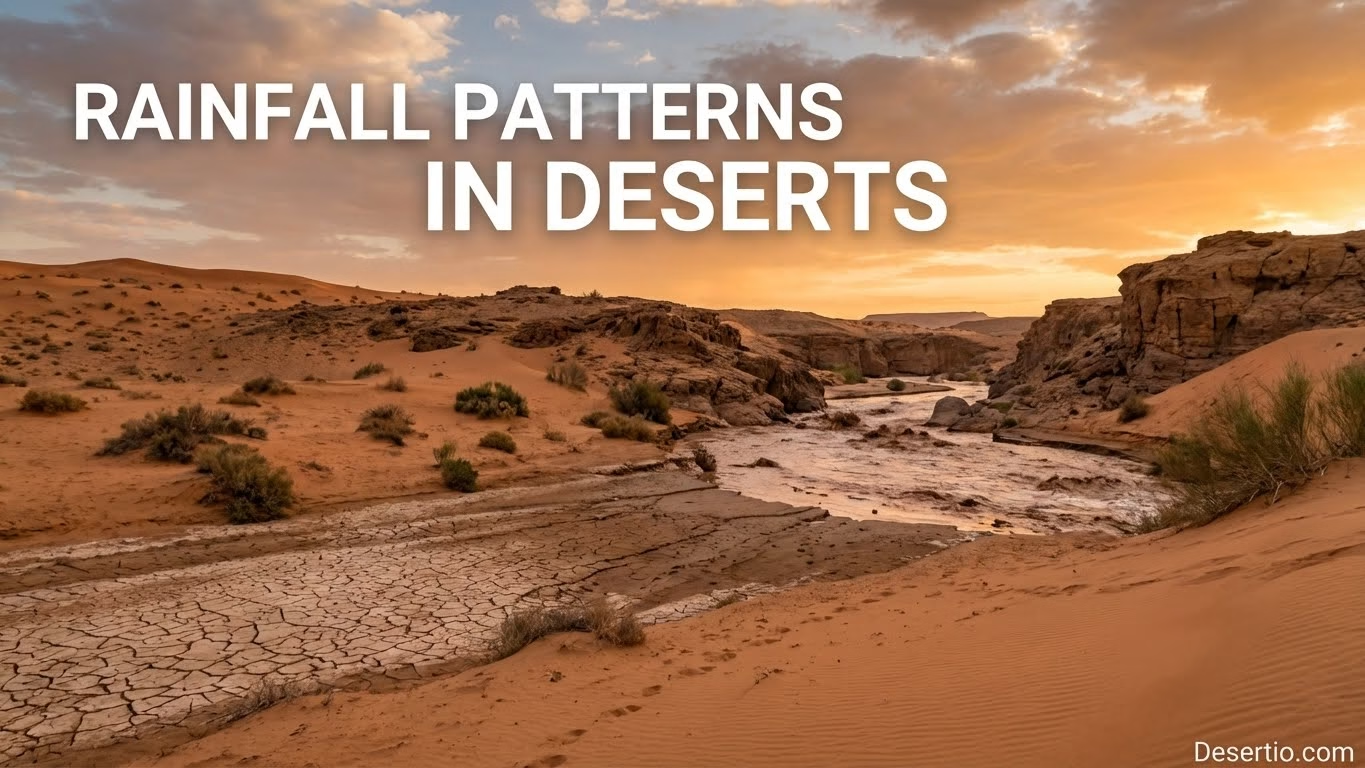
Desert storms can be short yet intense because warm air can hold lots of water vapor, and once a storm forms, it may unload quickly. Another ingredient is the ground itself: dry soils can be crusty and slow to absorb water at first, so rainfall can run off fast into channels. This doesn’t mean deserts are “always flooding,” it just means timing matters—a brief downpour over the right terrain can do more than an hour of light rain.
A practical takeaway: if you’re outdoors, treat dry washes like sleeping rivers. They may look harmless, and sometimes they are, but they can also become busy quickly during localized storms. Staying aware is just smart desert etiquette, not drama.
How to Read Desert Rain Forecasts Like a Local
Forecasts for deserts can feel “wrong” if you expect a single yes/no answer. A better mindset is probability and location. When a forecast says 30% chance, it often means “storms are possible somewhere,” not “it will drizzle over everything.” For rainfall patterns in deserts, watch for triggers—humidity, instability, and lift—then look for where storms are most likely to spark.
- Check timing: convective storms often favor late-day peaks, while fronts can bring overnight or day-long periods.
- Look at wind direction: wind can steer storm lines and also decides which slopes get uplift and which sit in a rain shadow.
- Use radar when available: you can see storm cells and their motion, which matters more than a general “chance of rain.”
- Respect distance: in deserts, a storm 10–30 km away can still affect you through runoff; the sky can be clear overhead while a wash downstream reacts.
Fog Deserts: Rain Isn’t the Whole Story
Some coastal deserts are famous not for rain, but for fog. Cool ocean currents can help build a stable layer that produces frequent low clouds and fog, while actual rainfall stays tiny. In these places, fog drip and dew can be surprisingly important to small plants and animals, even though gauges barely record precipitation. It’s a neat reminder that “water input” isn’t always the same as “rainfall.”
Year-to-Year Swings: The Desert’s Wild Card
One of the defining traits of desert rainfall patterns is interannual variability. Big climate patterns in the ocean-atmosphere system can nudge storm tracks and moisture flow, so one year brings a handful of well-timed storms and another year stays stubbornly dry. That swing is why desert vegetation often relies on patience—seeds and organisms are built to wait for the right pulse of water.
Measuring Rain in Dry Places
Measuring desert precipitation is trickier than it sounds. A single storm might soak one station and miss another a few kilometers away. Wind can also blow raindrops sideways, and strong heat can speed up evaporation from shallow collectors. That’s why modern monitoring often blends rain gauges, weather radar, and satellite estimates. It’s the combo that helps fill in the patchy picture—especially in remote areas where gauge coverage is sparse and sattelite snapshots add context.
Common Questions
Do deserts ever get snow?
Yes. Many cold-winter deserts get snowfall, especially at higher elevations. It still “counts” as precipitation, but it may melt slowly, and dry air can cause sublimation—ice turning straight into vapor—so the ground doesn’t always stay wet for long.
Why does rain feel so sudden in deserts?
Because many storms are convective: they build fast when heat and moisture line up, then collapse just as quickly. Add dry air and you get sharp edges—one neighborhood gets a downpour, another stays dusty. That’s classic desert rainfall variability.
Can a desert have a rainy season?
Absolutely. Some deserts have a clear wet season tied to seasonal shifts in winds and moisture supply. The key is that the rainy season can still be short and stormy, and the rest of the year stays very dry, keeping the overall arid climate feel.
Is “less than 250 mm” always the definition of a desert?
It’s a handy rule of thumb, but deserts are more reliably defined by aridity—how water supply compares to water demand. Some places can edge above that rainfall number and still behave like deserts because evaporation is so strong. That’s why desert climate classification often uses moisture balance, not only totals.
