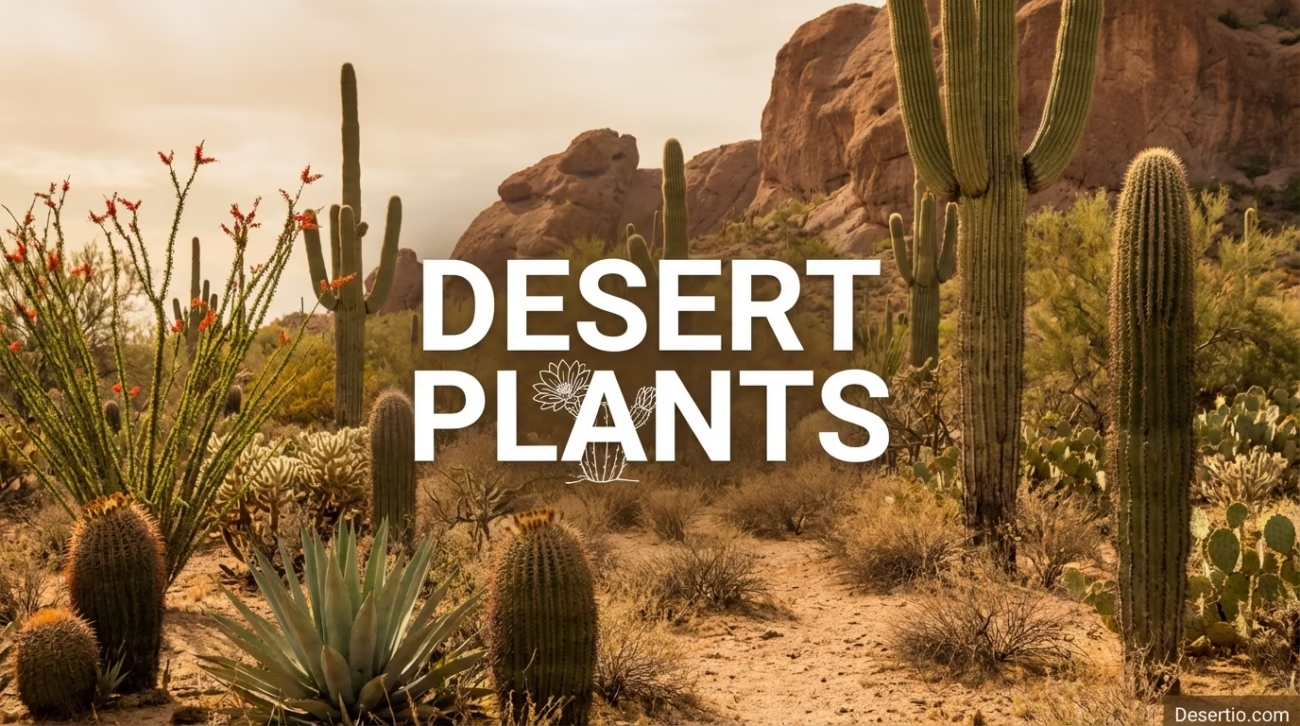
Desert plants are masters of scarcity. Where rain is shy and the sun feels like a spotlight, these species still build leaves, flowers, seeds, and whole miniature worlds. The secret isn’t “toughness” in a vague sense—it’s design: clever chemistry, smart shapes, and timing that’s almost theatrical. If you’ve ever looked at a cactus or a silver-leaved shrub and thought, “How is that even possible?”, welcome to the logic of arid-land botany.
- What “Desert Plant” Really Means
- Three Big Challenges
- Three Core Solutions
- The Water-Saving Toolkit
- Succulents: Living Water Tanks
- Photosynthesis That Works With The Clock
- Leaves That Refuse To Waste Water
- Roots: The Hidden Half Of Desert Success
- Salt, Heat, And Light: The Extra Hurdles
- Small Details That Make A Big Difference
- Life Strategies: Perennials, Ephemerals, And Everything Between
- Where Desert Plants Thrive Around The World
- Hot Deserts
- Cold Deserts
- Desert Plant Types You’ll See Again And Again
- Iconic Desert Plants And What They Teach
- Saguaro Cactus
- Creosote Bush
- Welwitschia
- Saltbush
- How to Spot Desert Plant Adaptations
- Desert Plant Communities: More Than Individual Survivors
- Desert Plant Vocabulary You’ll Actually Use
What “Desert Plant” Really Means
A “desert plant” is usually a xerophyte—a plant shaped by life with very little available water. Many deserts receive low rainfall (often under about 250 mm / 10 inches per year), yet the bigger challenge is water balance: heat and wind can pull moisture from leaves faster than roots can replace it. Desert plants solve that math with traits that reduce loss, store reserves, or dodge drought altogether.
Not every desert plant lives in a sea of dunes. You’ll find them on rocky slopes, gravel plains, salt flats, dry washes, and foggy coastal deserts. Some specialize in hot deserts, others in cold deserts, and many thrive in the in-between zones where drought arrives in long, quiet waves. In every case, adaptation is the storyline.
Three Big Challenges
- Water scarcity that can last weeks, months, or longer.
- Heat and dry air that accelerate water loss from leaves and stems.
- Unpredictability—rain might arrive in bursts, not in a gentle schedule.
Three Core Solutions
- Conserve: lose less water per day.
- Capture: gather water quickly when it appears.
- Pause: slow down growth until conditions improve.
The Water-Saving Toolkit
Desert plants don’t “hold their breath” forever. They manage transpiration—the water vapor lost through stomata—like a budget. Some spend tiny amounts all day; others spend almost nothing by day and do their gas exchange at night. Either way, water economy is the main theme.
| Adaptation | What It Achieves | Common Examples |
|---|---|---|
| Waxy cuticle | Slows evaporation from surfaces | Many desert shrubs, succulents, evergreen xerophytes |
| Leaf reduction (spines, tiny leaves) | Less surface area, less water loss | Cacti (spines), creosote-like shrubs, thorny acacias |
| Succulence | Stores water in fleshy tissues | Cacti, agaves, aloes (often desert margins), many euphorbias |
| CAM photosynthesis | Opens stomata at night to reduce daytime loss | Many cacti, agaves, some orchids and bromeliads in dry habitats |
| Hairy or reflective surfaces | Cools leaves, reduces airflow, reflects sunlight | Silver-leaved shrubs, desert sages, woolly succulents |
| Dormancy and seed banks | Waits out drought without “wasting” growth | Desert annuals, many wildflowers, some grasses |
That table is the “what.” The fun part is the “how.” A waxy cuticle isn’t just a shiny coating—it’s a waterproof jacket built from plant waxes and cutin. Leaf hairs can create a calmer layer of air near the surface, like a soft windbreak. Tiny leaves often appear alongside heat-dumping strategies, such as lighter colors or steep leaf angles.
In deserts, the trick is not finding water once. The trick is stretching one good drink into a long, steady life.
Succulents: Living Water Tanks
Succulents store water in specialized tissues—think of them as biological canteens. In cacti, the green stem does most of the photosynthesis, while spines take over the leaf’s job. Many succulents also use mucilage, a gel-like substance that helps retain water and stabilize cells. These water-saving designs don’t just support plants—they also shape the habitats used by many desert animals and other wildlife. The result is hydration that lasts beyond a short rainy window.
Succulence comes in styles. Some plants swell into barrels or columns, some form tight rosettes, and others hide water in thick leaves that look almost sculpted. Even the ribs on many cacti matter: they let the stem expand and shrink like an accordion without tearing skin. It’s engineering you can see with your eyes.
Photosynthesis That Works With The Clock
Most plants open stomata in daylight to take in carbon dioxide, then lose water as a side effect. Many desert plants flip the script with CAM photosynthesis (Crassulacean Acid Metabolism). They open stomata at night, store carbon in organic acids, then use that stored carbon during the day while stomata stay mostly closed. It’s like shopping for air when the store is empty and cool, then cooking at home when it’s hot. Timing becomes a survival trait.
Deserts also host plenty of C4 plants, especially grasses and some shrubs in very sunny, warm regions. C4 photosynthesis concentrates carbon dioxide inside leaf tissues, helping photosynthesis run efficiently when stomata are only partly open. You can think of it as a high-efficiency engine that keeps working in heat, with less water loss per unit of growth.
- Night: CAM plants open stomata, take in CO₂, store it as acids.
- Early morning: stomata begin to close as heat rises.
- Day: stored CO₂ is released internally for photosynthesis.
- Afternoon: many species slow growth and protect tissues from heat.
- Next night: the cycle repeats with fresh “air shopping.”
Leaves That Refuse To Waste Water
When you picture a desert plant, you might imagine spines. That’s one strategy, but deserts are full of leaf designs that quietly do the job. Some plants keep leaves small and thick. Others coat leaves in hairs or wax, giving them a pale, dusty look. Many shrubs carry leaves that smell aromatic because they contain oils—those oils can reduce browsing pressure and may also influence surface evaporation. The look is beautiful, but the goal is efficiency.
Another classic move is leaf timing. A plant might leaf out quickly after rain, then drop leaves when the soil dries. That’s not “giving up.” It’s a smart shift from an expensive, thirsty structure to a leaner form. In some species, the stem takes on more photosynthesis so the plant can keep a low-water lifestyle without going completely idle. This is flexibility in green form.
Roots: The Hidden Half Of Desert Success
If you could see desert roots, you’d stop calling deserts “empty.” Root systems are often the biggest investment. Some species spread wide and shallow to capture brief rains—imagine a living umbrella under the soil. Others send down deep roots to tap moisture far below the surface, sometimes reaching groundwater. Many use a mix of both, combining fast capture with long-term access.
Desert roots are also quick. After rain, fine roots can grow rapidly to absorb water before it evaporates or drains away. When the soil dries, those fine roots may die back, saving energy. Some woody plants can even move water within soil layers through a process often called hydraulic lift, helping nearby roots access moisture in upper layers at night. It’s subtle, but root dynamics can shape whole plant communities.
Salt, Heat, And Light: The Extra Hurdles
Many deserts include salty soils—dry basins, coastal flats, or areas where evaporation concentrates minerals. Plants adapted to salt are called halophytes. Some exclude salt at the root surface; others store it in older tissues or specialized cells. A few even excrete salt through tiny glands, leaving crystals on leaves. These solutions protect the plant’s water uptake, because salt makes water harder to pull into roots. Managing salt is really about keeping water usable.
Heat and intense sunlight also demand protection. Many desert plants use reflective colors, vertical leaf angles, or dense spines that create shade on the stem. Some plants “pause” photosynthesis at the hottest time to prevent damage, then resume when conditions ease. A thick outer skin, protective pigments, and careful water control all work together like a sun-proof outfit. It’s not one trick—it’s a stacked system.
Small Details That Make A Big Difference
When you’re reading a plant like a detective, look for micro-features: stomata set in pits, a heavy waxy sheen, tiny leaf size, and surfaces that feel velvety or rough. These textures are not decoration. They’re practical tools for water control and temperature management.
- Spines can shade tissues and reduce airflow near the surface.
- Leaf hairs can reflect sunlight and calm the boundary layer of air.
- Rosettes can funnel dew or light rain toward roots.
Life Strategies: Perennials, Ephemerals, And Everything Between
Desert plants don’t all play the same long game. Some are perennials—shrubs, succulents, and trees that persist year after year by running lean and steady. Others are ephemerals: plants that sprint through their life cycle after rain, flower fast, set seed, and disappear back into the soil as a seed bank. This is not a small detail. It’s a core way deserts stay colorful and alive despite long dry spells. Timing is as important as anatomy.
Desert annuals often carry seeds that remain viable through multiple seasons. Some seeds wait for the right combination of moisture and temperature, which prevents “false starts” from brief showers. In wet years, the landscape can erupt into a wildflower pulse; in dry years, the same terrain looks quiet. The plants are still there—just in a different form. That invisible seed reserve is future growth stored underground.
Where Desert Plants Thrive Around The World
Desert plant communities depend on more than heat. Temperature range, rainfall timing, soil type, and even fog patterns shape what can grow. Hot deserts often feature shrubs and succulents built for intense sun. Cold deserts can lean toward grasses, hardy shrubs, and plants that handle freezing winters. Coastal fog deserts can support species that harvest moisture directly from fog, turning airborne water into a real resource. That’s desert diversity.
Hot Deserts
Think of regions like the Sahara, Arabian deserts, and parts of the Sonoran and Chihuahuan. Plants here often feature succulence, spines, waxy skins, and night-shift photosynthesis. Many shrubs keep tiny leaves or photosynthetic stems, using minimal water for steady survival.
Cold Deserts
Places like the Gobi or the Great Basin can be dry and seasonally cold. Many plants rely on deep roots, compact shapes, and growth timed to spring moisture. You’ll see shrubs and grasses that tolerate drought and frost, with short bursts of growth when conditions are right. This is two-stress living: cold plus dryness.
Soils add another layer. Sandy soils drain quickly, rewarding fast water capture and storage. Clay soils can hold water longer but may crack and harden, favoring plants with strong root persistence. Rocky soils can hide moisture in crevices, supporting shrubs and succulents that anchor into small pockets. Desert plants are rarely “random.” They match microhabitats with almost obsessive precision, and that precision is ecology in action.
Desert Plant Types You’ll See Again And Again
Even though deserts vary, the same broad plant “roles” show up across continents. Spotting these categories makes the landscape easier to read. Each type is a different answer to the same question: how do you keep growing when water is rare? Here are the big players, each with signature traits and repeatable patterns. Recognition gets easy fast.
- Succulents that store water in stems or leaves (cacti, agaves, many euphorbias, lithops).
- Drought-deciduous shrubs that drop leaves during dry periods to save water.
- Evergreen xeric shrubs with small, tough leaves and waxy coatings.
- Deep-rooted trees along washes and oases (mesquite-like forms, desert acacias, date palms in managed oases).
- Desert grasses that grow quickly after rain and persist as tough clumps.
- Ephemeral annuals that appear after rain, then return to seed.
Iconic Desert Plants And What They Teach
Some desert plants are so distinctive that they’ve become symbols of their regions. Beyond their looks, they’re excellent “case studies.” Each one highlights a different solution set—storage, timing, root strategy, surface design. When you understand the logic behind a single iconic species, you start seeing patterns across deserts worldwide. That pattern recognition is the real skill.
Saguaro Cactus
Famous in the Sonoran Desert, the saguaro shows stem-based photosynthesis, ribbed expansion, and a water-storing trunk. Its spines help shade the surface, and its slow growth reflects a long-haul strategy. The big lesson: stability beats speed in dry climates.
Creosote Bush
Common in North American hot deserts, creosote-like shrubs highlight small leaves, waxy coatings, and careful growth pacing. After rain, they can respond fast, then settle back into a frugal mode. The big lesson: deserts reward controlled spending of water. That’s strategic restraint.
Welwitschia
In the Namib region, welwitschia is a legend: two long leaves that keep growing over time, paired with moisture capture in a fog-influenced environment. It proves deserts aren’t always defined by rain alone. The big lesson: water can arrive from the air, and plants can evolve to use it. That’s creative sourcing.
Saltbush
In salty or alkaline desert soils, saltbush-type plants show salt management and drought tolerance side by side. Many have grayish leaves that reflect sunlight and reduce heat load. The big lesson: sometimes the battle isn’t only for water—it’s for usable water. That’s chemical balance.
How to Spot Desert Plant Adaptations
You don’t need a lab to understand desert plants. Your eyes can catch most of the key signals. When you see thick stems, tiny leaves, pale surfaces, and spines, you’re looking at a plant built to reduce water loss. When you see shallow-rooted annuals after rain, you’re watching a landscape use timing as its advantage. Reading these cues turns a desert walk into a storybook, where every shape is a sentence. That’s field intuition.
- Check surface texture: waxy, leathery, hairy, or glossy often signals water conservation.
- Look for leaf size: smaller or absent leaves usually mean less transpiration.
- Notice plant shape: columns, spheres, and rosettes often manage heat and storage well.
- Scan for shade tools: spines, ribs, and dense branching can create self-shading.
- Think about timing: flowers after rain and sudden green-up often point to ephemeral strategies.
Desert Plant Communities: More Than Individual Survivors
Desert plants don’t live as isolated heroes. They form communities that shape wind flow, shade, soil stability, and moisture patterns. A shrub can create a cooler patch under its canopy, where seeds have a better chance to sprout. Some plants trap leaf litter and dust, slowly building richer soil “islands.” Over time, these small advantages add up, and deserts become mosaics of microhabitats. This is quiet collaboration.
Flowering cycles also shape the broader ecosystem. When rains arrive, many species bloom in waves, providing nectar and pollen for insects and other pollinators. During dry periods, persistent shrubs and succulents often become key sources of shelter and food. The pattern is not steady—it follows pulses of rain and drought. That shifting rhythm defines desert ecology.
Desert Plant Vocabulary You’ll Actually Use
Desert botany has big words, but the useful ones are friendly once you attach them to real traits. These terms help you describe what you’re seeing without guessing. Each one is a shortcut to a whole set of adaptations and habitat clues. Consider this your language map for arid landscapes. Clarity is the point.
| Term | Plain-English Meaning | Why It Matters |
|---|---|---|
| Xerophyte | A plant adapted to low water availability | Explains drought-focused traits like wax, small leaves, or succulence |
| Succulent | A plant with water-storing tissues | Signals storage-based survival and often slow, efficient growth |
| CAM | Photosynthesis that takes in CO₂ mainly at night | Strong clue for extreme water conservation |
| Halophyte | A plant adapted to salty soils | Common in salt flats and dry basins where evaporation concentrates salts |
| Ephemeral | A plant that lives fast after rain, then returns to seed | Explains sudden blooms and why “empty” ground can be full of potential |
Are All Desert Plants Cacti?
No—and that’s part of the charm. Cacti are a major desert group in the Americas, but deserts worldwide are rich with shrubs, grasses, bulb plants, and non-cactus succulents. “Desert plant” is a habitat label; “cactus” is a specific plant family. Different label, different meaning.
Can Desert Plants Be Active In Cold Weather?
Yes. In cold deserts, many plants take advantage of spring moisture and mild temperatures, then slow down during the hottest part of summer or the coldest part of winter. Activity depends on water availability and temperature, not heat alone. That season-based pacing is desert timing.
Why Do So Many Desert Plants Look Gray Or Silver?
Those pale tones often come from hairs, wax, or microscopic surface structures that reflect sunlight. Less absorbed light can mean less heat stress and lower water loss. It’s a visual sign of solar management, like a natural sunshade. That look is function first.
