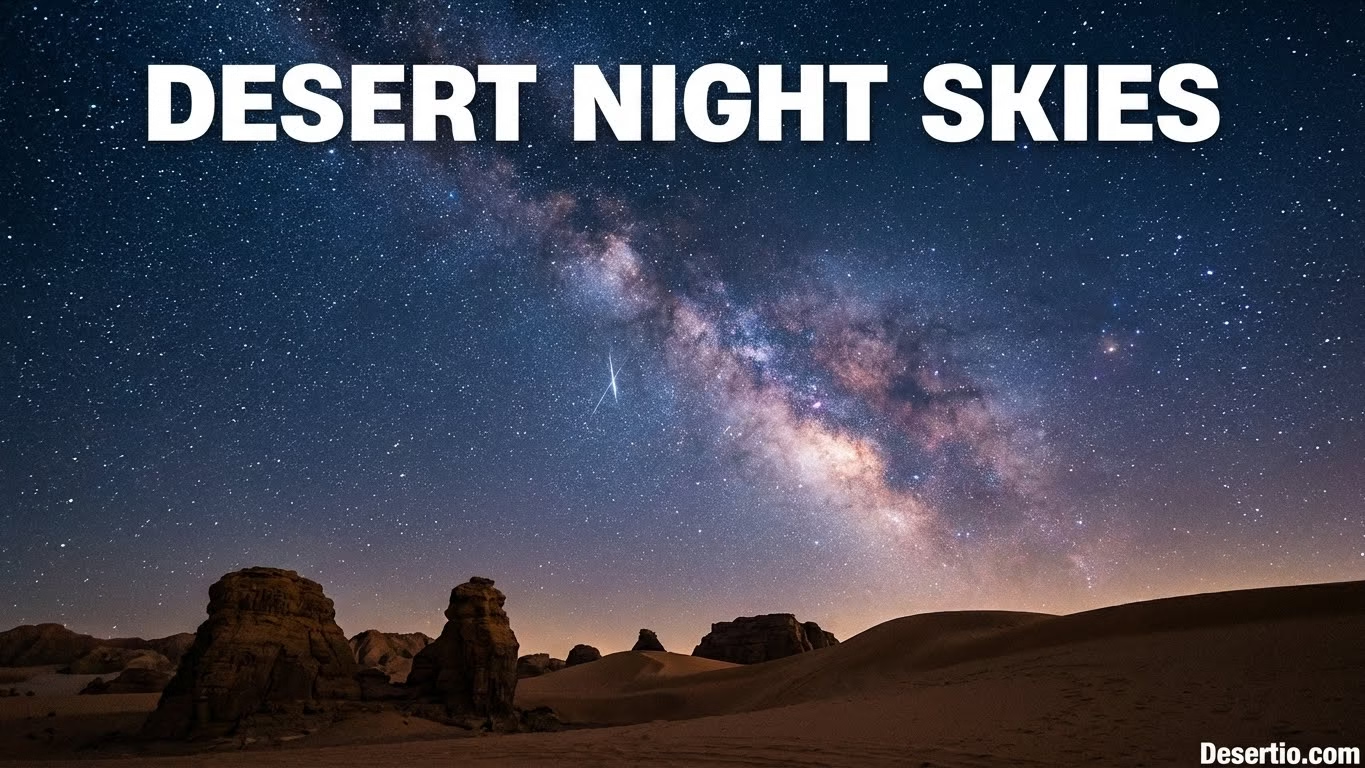
A desert night sky can feel like someone quietly switched off the world and left the stars on. With dry air and wide-open horizons, the darkness turns into a kind of outdoor planetarium—only better, because it’s real.
- Quick Snapshot
- What Makes Desert Night Skies So Clear
- The Sky Phenomena You Can Spot
- The Milky Way Core
- Meteors
- Zodiacal Light
- Airglow
- Timing Matters More Than Gear
- Finding A Truly Dark Spot
- Comfort And Night-Ready Packing List
- Simple Stargazing Steps For Beginners
- Desert Night Sky Photography Basics
- Respect The Darkness
Think of desert night skies as a clean window into space. Less moisture in the air means fewer halos around bright objects, and dust-free nights can make the Milky Way look like spilled sugar across black velvet.
Quick Snapshot
For brighter stars and richer dark-sky detail, aim for low humidity, a moonless window, and distance from lights. That simple combo does more than any fancy gadget.
- Best vibe: a calm, clear night after the desert cools down
- Best view: a wide horizon with minimal nearby lighting
- Best comfort move: layers—deserts can turn chilly fast
What Makes Desert Night Skies So Clear
Clarity is mostly about what isn’t in the air. Many deserts have very low humidity and fewer tiny water droplets to scatter light. Add stable transparency on a good night and faint star clouds suddenly pop into view, a visibility boost shaped by broader arid climate conditions that define many desert environments.
The desert also cools quickly after sunset, which can settle the atmosphere once the ground stops radiating heat. Give the evening a little time and star sharpness often improves. That’s why late-night stargazing can feel calmer, with steadier air and cleaner contrasts.
The Sky Phenomena You Can Spot
On a truly dark night, you’re not just seeing “stars.” You’re seeing structure: clusters, lanes, and soft glows that most city skies hide. The desert makes these subtle patterns easier because light scatter is lower and dark adaptation happens faster.
The Milky Way Core
When conditions line up, the Milky Way looks less like a faint stripe and more like a glowing river with dark “banks.” Those dark patches are dust lanes blocking starlight, and in excellent transparency they become bold, giving the sky a textured, layered look.
Meteors
Meteors are quick, bright reminders that space is active. A desert’s wide view helps because you can watch a big slice of sky without buildings in the way. Use peripheral vision, keep a comfortable chair, and let patience do the heavy lifting.
Zodiacal Light
Sometimes you’ll notice a soft, triangular glow near the horizon, especially in very dark places. That’s zodiacal light, sunlight scattered by fine dust in the inner solar system. It’s delicate and easy to miss, so a moon-free sky and minimal light pollution matter a lot.
Airglow
On some nights the sky has a faint natural glow—sometimes greenish, sometimes more neutral. That’s airglow, a gentle upper-atmosphere light show that can make desert night skies feel alive. In very dark conditions, this subtle glow adds depth instead of washing things out.
Desert darkness isn’t empty. It’s a canvas where space finally gets the room it deserves.
Timing Matters More Than Gear
If you want maximum stars, chase the nights when the Moon is out of the way. A bright Moon can be beautiful, yet it also brightens the sky and hides faint detail. For classic Milky Way contrast, a new-moon window usually feels like someone turned the universe up a notch.
| Moon Phase | What The Sky Feels Like | Best For |
|---|---|---|
| New Moon | Deep darkness with high contrast | Milky Way, faint stars, zodiacal light |
| First/Last Quarter | Mixed light—dark in one part of the night | Planets, brighter constellations, casual stargazing |
| Full Moon | Silvery landscape with fewer faint stars | Moonlit scenery, wide desert views, easy night walks |
Season matters too, because different parts of the sky become prominent at different times of year. The trick is simple: pick a dark time, then give your eyes 20–30 minutes to adapt. That’s when hidden star haze becomes visible and you start noticing patterns you didn’t know existed.
Finding A Truly Dark Spot
“Desert” doesn’t automatically mean “dark.” A single bright light source can flood a huge area. When you can, choose a place where the horizon stays clean and the nearest lights are far enough away that the sky keeps its inky look. If the sky background looks deep and matte, you’re in good territory.
A handy mental model is the Bortle scale, which describes sky darkness from bright urban skies to extremely dark ones. You don’t need to memorize numbers—just watch what you can see. If the Milky Way looks textured and clearly structured, you’re experiencing real dark-sky quality.
Comfort And Night-Ready Packing List
Deserts love surprises: warm sunset, cool midnight. Comfort keeps your attention on the sky instead of your toes. Bring layers, a simple red flashlight, and something soft to sit on—because stargazing is basically “looking up” with style.
- Warm layers (light jacket + extra layer)
- Water and a small snack
- Red light or a red mode on a flashlight
- Chair or mat for a relaxed neck
- Binoculars (optional, surprisingly fun)
Simple Stargazing Steps For Beginners
If you’re new to desert night skies, keep it simple. Your eyes are the best tool you already own. Start with big shapes (constellations), then move to brighter targets (planets), and only after that chase faint treasures like star clouds and clusters.
- Stand still for a minute and let dark adaptation begin.
- Find a bright landmark in the sky (a planet or the Moon).
- Use that as a reference point to trace constellation lines.
- Then relax—your brain starts noticing more the longer you watch.
Desert Night Sky Photography Basics
Astrophotography in the desert can be wonderfully forgiving because the sky often has strong contrast. You don’t need a huge setup. A steady tripod, a camera that lets you use manual mode, and a wide lens are enough to start capturing star detail.
As a starting point, try a wide aperture (like f/2.8), a shutter around 15–20 seconds, and an ISO around 1600–3200. Then adjust based on results. If stars look like tiny lines, shorten the exposure. If the image looks too dim, raise ISO gently or shoot a few frames and stack them later for cleaner night-sky texture.
Focus is the part that tricks people. Use manual focus, zoom in on a bright star in live view if you can, and fine-tune until it looks like the smallest pinpoint. Once focus is locked, avoid bumping the lens. That tiny bit of care turns okay photos into crisp starfields with clear separation.
Respect The Darkness
Darkness is fragile. A white flashlight can reset everyone’s night vision in seconds. Use red light, keep screens dim, and let your eyes stay adapted. When you protect the dark, you protect the whole experience—and desert night skies reward you for it.
Leave the place as you found it, keep noise low, and enjoy the quiet. The desert at night has a special kind of calm, and the sky feels bigger when everything on the ground stays simple. Add a little patience and curiosity, and you’ll start seeing more than stars—you’ll see the story the night is telling.
