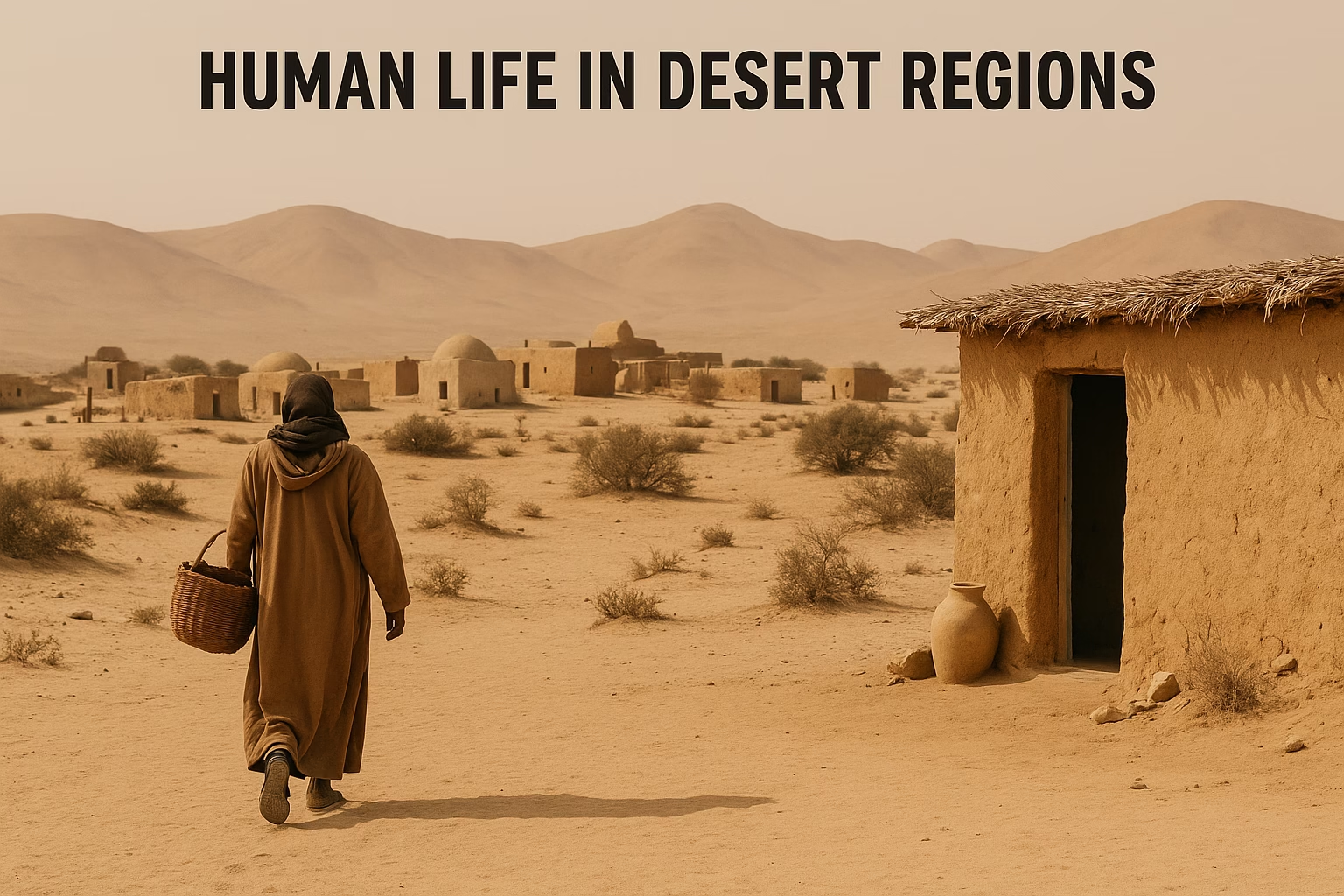
Life in desert regions is shaped not only by climate but also by values. Many traditions of generosity and hospitality grew directly from the realities of desert culture and community life, where travelers, neighbors and strangers often depended on shared food, water and shelter to survive. When resources are scarce, sharing becomes a moral rule, not just a nice gesture.
From nomadic herders in the Sahara to high-tech cities in the Arabian Peninsula, millions call deserts home. They build cool houses without air-conditioning, store water like treasure, design clothes that protect skin, and create cultures deeply shaped by heat, dust and open sky.
Where People Actually Live in Dry Lands
Even in the driest landscapes, people don’t live “in the middle of nowhere.” Human life in desert regions concentrates around a few key places where conditions are just a bit kinder than the surroundings.
- Oases – spots where groundwater reaches the surface, allowing palm trees, small farms and villages.
- River valleys – such as stretches of the Nile or other desert rivers, where irrigation makes dense settlement possible.
- Coastal deserts – close to the sea, with fishing, ports and sometimes fog bringing a bit of moisture.
- High plateaus and foothills – cooler than low sandy basins, with occasional rain or snow.
These areas act like islands of life in a sea of rock and sand. Roads, trade routes and modern highways often connect one oasis or valley town to another, forming a loose network of desert communities spread across huge distances.
Everyday Life Under Heat and Cold
Deserts are famous for daytime heat, but nights can be freezing. People design daily life around this extreme temperature swing. Activities like herding, travelling or working outdoors often start in the early morning and late afternoon, when the sun is softer and the air feels bearable.
Traditional houses in many desert settlements use thick mud-brick or stone walls. These materials act like a thermal battery: they absorb heat during the day and release it slowly at night. Small windows, shaded courtyards and narrow streets create cool pockets of air, so people can rest and socialize without constant mechanical cooling.
Clothing also works as technology. Long, loose robes and head coverings may look heavy, yet they trap a layer of air, shield skin from the sun and help sweat evaporate slowly. This simple, clever design gives desert people a chance to move safely through intense radiation and blowing sand.
In many deserts, shade and wind are as valuable as money.
Local wisdom
Water: The Real Currency of Desert Regions
In desert regions, water is not just a resource; it is the base of every decision. Where to build a village, when to move herds, how many crops to plant, even how large a family can grow – all depends on access to reliable water.
Over centuries, communities created smart systems to capture and share every drop:
| Water Strategy | How It Works | Main Benefit |
|---|---|---|
| Deep wells | Simple shafts reaching underground aquifers in very dry zones. | Provides steady water for small oasis communities. |
| Qanats / foggaras | Gentle underground tunnels bringing water from mountains to fields. | Reduces evaporation in hot, open landscapes. |
| Rainwater harvesting | Collecting flash-flood water in cisterns and small reservoirs. | Turns rare storms into long-term supply. |
| Modern desalination | Removing salt from seawater for cities and industry. | Supports large coastal desert cities. |
In big urban areas, pipelines stretch for hundreds of kilometers, delivering water from distant mountains, rivers or the sea. Households, farms and factories are tied to this fragile network. A serious breakdown can quickly affect millions of people living in arid environments.
Food, Herds and Changing Livelihoods
For a long time, many desert communities relied on mobile herding. Families moved with camels, goats or sheep, following seasonal pastures and rare rain. Animals provided milk, meat, wool and transport – a complete survival package shaped for dry lands.
Around oases and river valleys, people grew crops like dates, wheat, barley and vegetables. Palm trees offered shade for smaller plants and protected soil from wind. Simple irrigation channels guided water carefully across fields, because wasting it was not an option in this kind of enviroment.
Today, livelihoods are more mixed:
- Pastoralism still exists, but many herders have semi-permanent homes and use trucks instead of camels for long moves.
- Irrigated farming uses pumps, drip irrigation and greenhouses to grow fruit, vegetables and fodder for animals.
- Mining and energy – oil, gas, minerals and large solar farms create jobs but also bring environmental risks.
- Tourism and services – desert safaris, cultural tours and new service jobs in growing cities.
In some places, young people now work online, in call centers or digital jobs, while their parents still keep a few animals. Old and new economies blend, and so do desert lifestyles.
Culture, Belief and Community in the Sand
Life in desert regions is shaped not only by climate but also by values. Generosity and hospitality are central in many desert societies. When water and food are scarce, sharing becomes a moral rule, not just a nice gesture.
Storytelling traditions are strong. Under clear night skies, people share tales of ancestors, caravans and stars. These stories carry practical lessons about navigation, survival and respect for nature. They also give children a sense of identity rooted in the desert, not in spite of it.
Architecture and art reflect the landscape. Designs on textiles, pottery and buildings often echo dunes, winds or the shapes of animals. Religious and spiritual practices, too, can be linked to rain, wells, mountains and the endless horizon, reminding communities how fragile human life in drylands can be.
Community rituals – weddings, seasonal festivals, rain prayers – help people stay connected, especially when families are spread across distant camps and towns.
These gatherings strengthen social safety nets: if someone loses animals or crops, relatives and neighbors are more likely to step in and support them.
Modern Desert Cities and Technology
In the last century, some desert regions have seen rapid growth of large cities. Oil and gas wealth, trade routes and political decisions turned quiet coastal or inland settlements into crowded urban hubs with airports, highways and skyscrapers.
These cities depend heavily on technology:
- Air conditioning makes indoor life possible during extreme heatwaves.
- Desalination plants and long pipelines supply drinking water and irrigation.
- Solar farms turn intense sunlight into electricity, reducing reliance on fossil fuels.
- Remote sensing and satellites track sandstorms, droughts and groundwater levels.
At the same time, planners are experimenting with greener designs: shaded streets, wind-catching towers, rooftop gardens and building materials that reflect heat. When these ideas are combined with local knowledge, desert cities can become more livable instead of just bigger.
Risks: Desertification and a Fragile Balance
Not every dry place is a natural desert. Overgrazing, deforestation, poor irrigation and climate change can turn once-productive lands into degraded, dusty semi-desert zones. This process, often called desertification, pushes people to move to cities or migrate to other regions.
Communities respond in different ways: planting windbreaks, rotating grazing areas, restoring native plants and using water-saving technologies. There is growing focus on teaching children how to protect soil and water, so future generations can stay in their homeland instead of abandoning it.
Human life in desert regions is always a negotiation with nature. Too much pressure on fragile land can break the balance quickly. Careful planning, fair water use and respect for local knowledge are key if people want to keep living, farming and dreaming in these dry landscapes.
When all of this comes together – tradition, smart technology and a bit of humility toward the land – deserts stop looking empty. They start to appear as they truly are: complex human homes, full of creativity, patience and quiet strength.
