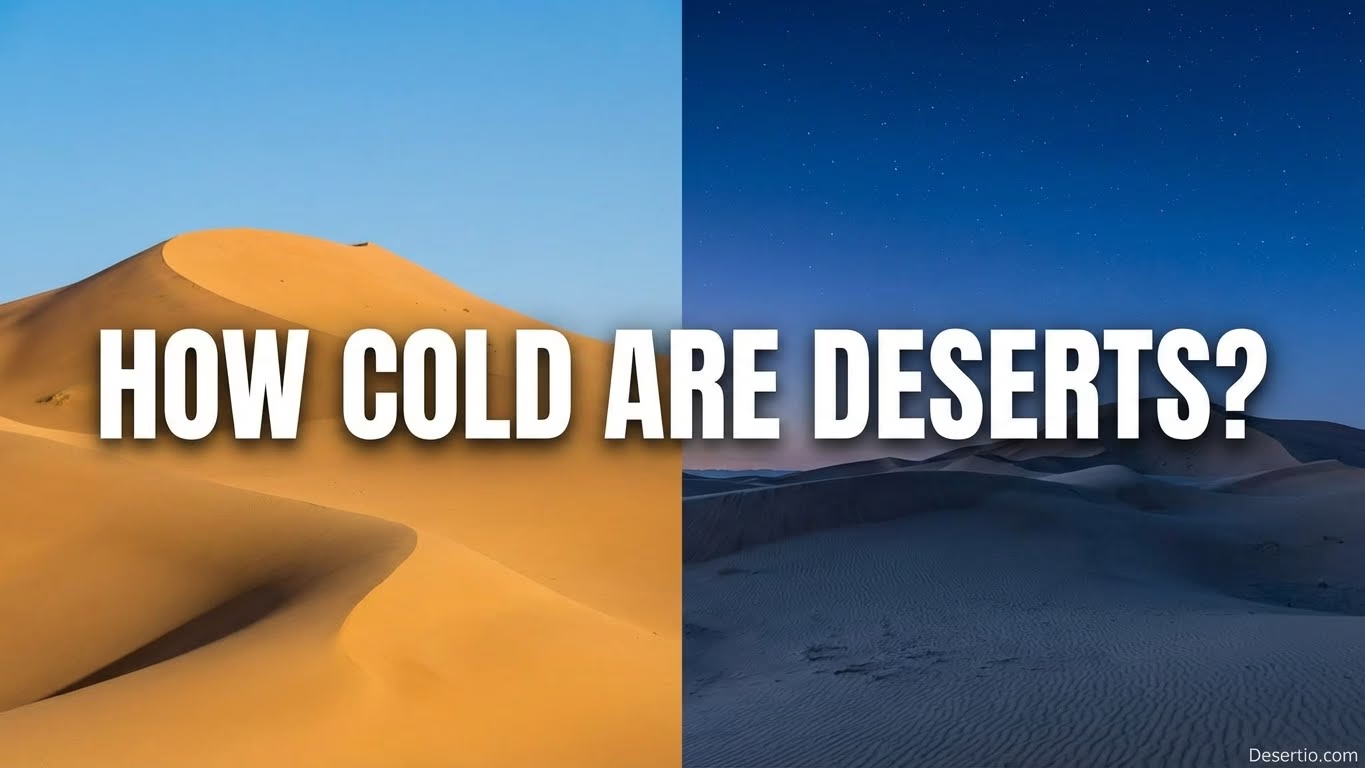
People picture deserts as sun-baked dunes, but a desert climate can be surprisingly cold—sometimes freezing cold. The big twist is that dry air doesn’t hold heat well, so daytime warmth can vanish fast after sunset.
- Cold Desert Truths in One Glance
- What Makes a Place a Desert
- Dry Air
- Clear Skies
- Little Vegetation
- Why Desert Nights Drop So Fast
- How Cold Can Deserts Get
- Cold Desert Types You Might Not Expect
- When Deserts Feel Colder Than the Thermometer
- Wind
- Fast Sunset Cooling
- Dry Skin Cooling
- How Desert Life Handles Cold
- Practical Tips for Handling Cold Desert Weather
- Quick Layering Recipe
Cold Desert Truths in One Glance
- Desert means low precipitation, not “always hot.” That’s the whole secret.
- Clear skies + dry air = rapid nighttime cooling and sharp temperature swings.
- Elevation can turn “hot desert” into cold nights. Height changes everything.
- Wind can make cold feel harsher even when the thermometer looks mild.
What Makes a Place a Desert
A desert is defined by water scarcity, not by sand or heat. Many climatologists use a rough guide of about 250 mm (10 inches) of yearly precipitation or less, but the deeper idea is dryness: evaporation can outpace the water that falls. So you can have a hot desert, a cold desert, or a place that’s hot by day and cold by night.
Dry Air
Low humidity means less heat trapping at night. Water vapor is a powerful greenhouse gas, so when it’s scarce, heat escapes more easily.
Clear Skies
Clouds act like a blanket. In many deserts, nights are cloud-free, so the ground can radiate its warmth straight into space.
Little Vegetation
Fewer trees and less moist soil means less stored heat and less nighttime buffering. The surface cools fast, so temps drop.
Why Desert Nights Drop So Fast
Think of the desert like a skillet on a stove: the sun cranks it up, then the heat source clicks off. With dry air and clear skies, the ground loses energy through radiational cooling. Sand and rock also tend to have low heat storage compared to wetter ground, so the surface can chill quickly—leading to big diurnal swings (day vs. night), a pattern closely tied to broader desert temperature dynamics that shape heat balance across arid regions.
The desert sun feels like a heater, and the night can feel like someone opened a giant freezer door.
It’s the same place—just a different energy balance.
How Cold Can Deserts Get
There isn’t one number, because desert cold depends on latitude, elevation, and how far the air is from moderating oceans. Some “hot” deserts can dip to near freezing on winter nights, while high-elevation deserts can see hard frosts even when afternoons are bright and comfortable. True cold deserts (and polar deserts) can reach deep subzero conditions for long stretches.
| Desert Setting | Common Cold Pattern | What Usually Drives It |
|---|---|---|
| Subtropical Sandy Deserts | Warm days, nights often cool to cold in winter | Dry air, clear skies, low humidity “blanket” |
| High-Plateau Deserts | Nights can drop below 0°C even after sunny afternoons | Thin air + elevation + strong radiational cooling |
| Continental Interior Deserts | Winter can bring very cold snaps, sometimes far below freezing | Distance from oceans, cold air masses, low humidity |
| Polar Deserts | Long periods of extreme cold | Low sun angle, ice/snow surfaces, persistent dry air |
One famous benchmark: the coldest officially measured air temperature on Earth is -89.2°C, recorded in Antarctica. Antarctica is also a desert because it’s so dry, not because it lacks ice. That fact alone flips the usual desert stereotype on its head.
Cold Desert Types You Might Not Expect
“Desert” is a dryness label, so cold versions show up in a few different flavors. Each one has its own cold signature, but all share the same low moisture core.
- Polar Deserts: Very low precipitation (often as snow), long cold seasons, and huge heat loss under clear skies.
- High-Elevation Deserts: Strong sun, thin air, and nights that can feel shockingly cold—classic temperature whiplash.
- Coastal Fog Deserts: Dry rainfall totals, but frequent fog; days can be cool and nights damp-cold, with less extreme swings.
- Continental Interior Deserts: Big seasonal contrast; winter air can be biting, summers can still run hot.
When Deserts Feel Colder Than the Thermometer
Cold isn’t only the number on a screen. In a desert, wind can strip warmth fast, especially when you stop moving. Low humidity can also make your skin feel tight, and if you sweat in the afternoon then cool down at dusk, the chill can hit like a snap. Add open terrain with little shelter and you get that wide-open cold feeling.
Wind
Moving air steals heat. Even a mild breeze can make near-freezing conditions feel sharper.
Fast Sunset Cooling
Once the sun drops, radiation loss ramps up. The change can feel instant—like flipping a switch.
Dry Skin Cooling
Dry air helps sweat evaporate quickly, which can cool you fast. Great in heat—then not so great at night.
How Desert Life Handles Cold
Desert organisms are basically temperature engineers. Many animals avoid the cold by using burrows that stay more stable than open air. Some are nocturnal but time their activity around comfort windows. Plants often reduce water loss with waxy coatings and tiny pores, and some can tolerate frost by keeping sensitive growth close to the ground, where temperatures can be a little kinder.
Desert survival is rarely about “heat only.” It’s about handling extremes—bright days, cold nights, and very little water.
Practical Tips for Handling Cold Desert Weather
If you’re planning time in a desert, pack for two different days: the sunny one and the cold one. This is where small choices—like a beanie—feel magical after dark.
- Dress in layers: a light base layer, a warm mid layer, and a wind shell.
- Cover the “leak points”: hat, neck gaiter, and gloves are small but high-impact.
- Plan your evening early: set camp before sunset; the cold ramp comes fast.
- Sleep system matters: use an insulated pad and a bag rated for below the night’s expected low.
- Stay hydrated: dry air pulls moisture from you even when it’s cold. Pair water with salty snacks.
- Keep sun protection: cold deserts still have strong sun; sunglasses and sunscreen stay useful.
Quick Layering Recipe
Afternoon
Breathable shirt
Wide-brim hat
Light sun layer
Sunset
Fleece or light puffy
Wind shell
Warm socks
Night
Beanie + gloves
Insulated pad
Bag rated colder
