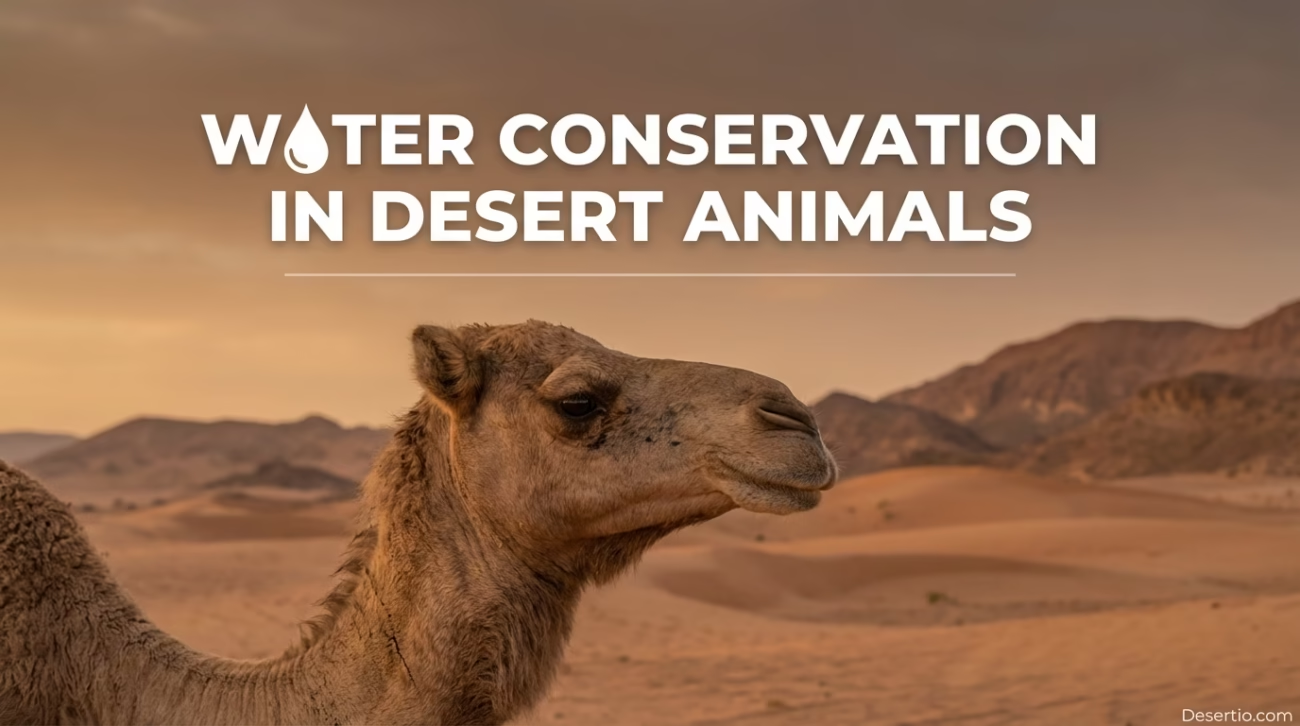
Water is the real currency in drylands. For desert animals, it’s not just “find a drink and relax”—it’s a full-time balancing act where every breath, bite, and step has a cost. The magic is how many species stay comfortable on what looks like almost nothing, using tight control of losses and clever ways to “earn” water through food and chemistry. A lot of it is hidden in plain sight, and it’s way more precise than most people expect.
- Why Water Is Hard To Hold Onto In Deserts
- Where Water Leaves The Body
- Where Water Comes From
- Kidneys Built For Concentration
- How The Concentration Trick Works
- Dry Waste: Urea, Uric Acid, And Salt Management
- Breath Recycling: Saving Water In The Air You Exhale
- Skin, Fur, Scales, And Cuticles: Quiet Barriers That Matter
- Behavior That Saves Water Without Looking Like “Water Saving”
- Timing The Day
- Using Microhabitats
- Getting Water From Food: Preformed Water And Metabolic Water
- Spotlight Example: Kangaroo Rats
- Heat Management Without Spending Water
- Reptiles: Low Loss, Slow Pace, Smart Storage
- Insects: Tiny Bodies, Tight Valves, And Water-Smart Surfaces
- Birds: Flying On A Water Budget
- Seasonal Modes: Torpor, Estivation, And Water-Saving “Standby”
- Common Water-Saving Patterns Across Desert Animals
Why Water Is Hard To Hold Onto In Deserts
In hot, dry air, water escapes fast. Evaporation is a bully—pulling moisture off skin, out of lungs, and even from the surface of the eyes. Desert animals survive by treating water loss like a leaky bucket problem: first seal the leaks, then refill the bucket in small, reliable ways. That “refill” might be dew on plants, watery prey, or metabolic water made inside the body.
It helps to think in three lanes: water that comes in, water that is created, and water that slips away. The winners aren’t always the ones that find big water sources. Often it’s the ones that reduce losses so much that tiny inputs feel like a steady paycheck. Even a small shift—slightly drier droppings, slightly less moisture in exhaled air—adds up into real survival.
Where Water Leaves The Body
Loss is usually dominated by evaporation and waste removal. The biggest escape routes tend to be:
- Breathing: moist air leaving the lungs
- Skin: sweating, panting, and passive evaporation
- Urine: dissolved salts need liquid to exit
- Feces: water trapped in undigested material
- Eggs Or Milk: reproduction can be a hidden water expense
Where Water Comes From
Desert animals refill the tank through three main pathways, often mixing them:
- Free Water: actual drinking when available
- Preformed Water: moisture inside plants or prey
- Metabolic Water: water produced when food is “burned” for energy
Kidneys Built For Concentration
If desert life had a signature organ, it would be the kidney. Many desert mammals have kidneys that excel at concentrating urine, meaning salts and nitrogen waste leave the body with minimal water. The key is a clever plumbing design called countercurrent exchange, which creates a gradient that pulls water back into the body while pushing waste outward. It’s not flashy, but it’s life-saving.
Concentrated urine is only half the story. Desert specialists often produce very dry feces, too. That dryness isn’t accidental—water gets reabsorbed in the gut like a sponge wringing itself out. Add those together, and the “waste stream” becomes more like a thick paste than a watery leak. On a white-sand afternoon, that’s a huge advantage.
How The Concentration Trick Works
This is the kidney story in a simple sequence. Keep an eye on the theme: move water back, keep solutes moving out.
- Filtration: blood is filtered; useful molecules are reclaimed later
- Gradient Building: salts are shifted to create a concentrated zone deep in the kidney
- Water Recovery: water flows back into the body where the gradient is strongest
- Final Tuning: hormones adjust how “tight” the final water saving becomes
The result is a body that can handle hot days without bleeding water at every bathroom break. It’s precision engineering done with living tissue, and it shows up again and again across desert mammals—from rodents to large grazers—each with their own dialed-in settings.
Dry Waste: Urea, Uric Acid, And Salt Management
Animals can’t keep nitrogen waste. It has to leave. The question is how wet the exit needs to be. Mammals mostly excrete urea, which requires water to dissolve. Birds and many reptiles lean on uric acid, which can leave the body as a semi-solid paste. That switch alone reduces water costs, which is why arid regions are full of uric-acid experts.
Salt is another quiet villain. Desert diets can be salty, and water sources can be mineral-heavy. Some animals rely on kidneys for salt handling; others use specialized salt glands that push excess salt out through the nose or near the eyes. It’s a neat trick: the body can dump salt without dumping too much water, keeping the internal “salinity” in a safe range.
| Animal Group | Main Nitrogen Waste Form | Typical Water-Saving Angle | Common Desert Example |
|---|---|---|---|
| Mammals | Urea | Highly concentrated urine; dry feces | Kangaroo rats, camels |
| Birds | Uric acid | Paste-like waste; careful breathing heat exchange | Desert larks, sandgrouse |
| Reptiles | Uric acid | Low skin water loss; behavior avoids overheating | Horned lizards, tortoises |
| Insects | Uric acid and related compounds | Waxy cuticle; spiracle control; tiny evaporation surface | Darkling beetles |
Breath Recycling: Saving Water In The Air You Exhale
Breathing is a sneaky water leak because lungs need moisture. Desert animals often use nasal passages like a recycling system. When cool, dry air comes in, it warms and humidifies. When warm, wet air goes out, it can be cooled along nasal structures so water condenses and gets reclaimed. That’s free water recovery powered by anatomy, and it matters most when the outside air is bone-dry.
Desert breathing isn’t just moving oxygen in and out. In many species, it doubles as a humidity management system.
This becomes especially powerful inside burrows. Burrows tend to be cooler and more humid than the surface, which reduces respiratory water loss and evaporation from skin. Many desert rodents spend daytime hours underground for that reason, much like other animals living in desert ecosystems that depend on tiny temperature and humidity differences to survive. It’s not just hiding—it’s microclimate engineering done with claws, and it turns harsh conditions into a manageable routine.
Skin, Fur, Scales, And Cuticles: Quiet Barriers That Matter
When you picture desert survival, you might imagine dramatic behavior. A lot of the real story is surface chemistry. Many reptiles have scales that reduce water loss, and insects often have waxy cuticles that act like a thin raincoat turned inside out. Mammals add fur that can help shade the skin and reduce direct solar heating, lowering the need for evaporative cooling. It’s not always pretty, but it’s effective.
Insects add another twist: they can regulate tiny breathing openings called spiracles, opening them briefly and closing them for long stretches. That reduces water loss while still allowing gas exchange. Tiny body, tiny valves, big savings. In deserts, that kind of on-off control is worth more than a large water tank. It’s timing as a survival trait.
Behavior That Saves Water Without Looking Like “Water Saving”
Some of the best water conservation strategies don’t involve water at all. They involve heat. If an animal avoids overheating, it avoids sweating, panting, and other evaporative costs. That’s why so many desert species are nocturnal or crepuscular. They’re not “night lovers” for fun—cooler hours mean cheaper living, water-wise.
Timing The Day
Activity windows can be razor-thin. Many species hunt, forage, or travel when temperatures are lowest, then rest during peak heat. This reduces water loss because the body doesn’t need to fight the environment with evaporation. It’s an elegant use of time as a resource.
- Nocturnal foraging when air is cooler
- Crepuscular movement at dawn and dusk
- Heat-hour rest in shade, burrows, or rock crevices
Using Microhabitats
Shade isn’t just comfort; it’s a water tool. A few degrees cooler can mean dramatically less water needed for cooling. Animals pick spots that “feel” different: under shrubs, against north-facing rocks, inside burrows, or on elevated perches that catch night breezes. It’s location as a water strategy.
- Burrows for cooler, more humid air
- Shade tracking as the sun moves
- Rock shelter for stable temperatures
Getting Water From Food: Preformed Water And Metabolic Water
Desert animals do not always need to drink because water can be obtained from food. Moist plant tissues, insects, and small vertebrate prey can contain substantial amounts of preformed water. Many herbivores adjust feeding times to target plants with higher moisture content at certain hours, and many carnivores obtain much of their water from prey. In arid environments, this strategy is a basic part of water balance.
Then there’s metabolic water. When the body breaks down carbohydrates, fats, and proteins for energy, water is produced as part of the chemistry. Fat is especially interesting here because its oxidation produces plenty of water relative to its mass. This is one reason the idea of “energy storage” can double as hydration backup. It’s not the same as carrying a canteen, but it’s a built-in trick that works silently.
Spotlight Example: Kangaroo Rats
Kangaroo rats are a classic case of living with almost no direct drinking. They can meet water needs largely through metabolic water from dry seeds, paired with extremely efficient kidneys and dry feces. Their lifestyle supports it: daytime in burrows, nighttime foraging, and careful breathing that helps reclaim moisture. It’s a full system, not one superpower, and it’s remarkably consistent across desert rodents that share similar conditions.
Heat Management Without Spending Water
Evaporation cools the body, but it’s expensive in deserts. Many large desert mammals reduce that cost by allowing body temperature to fluctuate more than typical mammals—warming during the day and cooling at night. This reduces the need for sweating or heavy panting. It’s like letting the body act as a thermal battery, using stored heat rather than paying water to dump heat immediately. The approach is subtle, yet powerful.
Camels are often mentioned here, and for good reason. Their humps store fat, not water, yet that fat can be converted into energy and metabolic water. Camels also have physiological traits that help tolerate dehydration and then rehydrate efficiently when water appears. Even their blood cells have a shape and flexibility that supports big hydration swings. It’s not “one miracle feature,” it’s a stack of small, well-tuned advantages.
Reptiles: Low Loss, Slow Pace, Smart Storage
Reptiles often play a different game: reduce water loss so strongly that “normal” living becomes affordable. Many have skin that limits evaporation and behavior that avoids heat spikes. Their uric-acid waste also helps keep exits dry. Add in the ability to slow metabolism during harsh periods, and you get a package that’s built for scarcity. It’s less about constant activity and more about staying stable.
Some desert reptiles and amphibians store water internally in ways that sound almost unreal until you see the logic. Desert tortoises, for example, can retain water in the bladder for later use. Some desert frogs and toads can survive long dry stretches by burrowing and entering a state of dormancy, reducing water loss to a minimum until rain returns. It’s not drama; it’s pause mode done with biology.
Insects: Tiny Bodies, Tight Valves, And Water-Smart Surfaces
Insects thrive in deserts because they’re small, and small bodies can be wrapped in effective barriers. A waxy cuticle reduces evaporation, and spiracles can be opened and closed in patterns that limit water escape. Many desert insects also hide in microhabitats—under stones, in sand, inside plant litter—where humidity is higher. That combination of surface control and microclimate choice is seriously efficient.
Some insects take advantage of atmospheric moisture when conditions allow it. Along certain coasts and fog-prone deserts, beetles and other small animals can collect tiny droplets from mist or fog on their bodies and guide them toward the mouth. It’s not a daily guarantee, but in the right place it becomes a reliable bonus. Nature loves these “small, repeatable wins,” and deserts reward them.
Birds: Flying On A Water Budget
Birds face a special challenge: flight and heat can increase respiratory water loss. Many desert birds rely heavily on uric acid to keep waste dry, and they carefully manage activity timing and shade use. Some species can tolerate higher body temperatures for short periods, reducing the need for evaporative cooling. In drylands, that’s like choosing a route that costs less fuel—except the fuel is water.
Diet does a lot of the heavy lifting. Insects, seeds, and plant material can provide both energy and moisture, and many birds choose foods that balance salt and water needs. When free water is available, some species make focused trips to drink and then rely on efficient physiology the rest of the time. It’s a flexible approach, and that flexibility is a survival skill in landscapes where conditions can change quickly.
Seasonal Modes: Torpor, Estivation, And Water-Saving “Standby”
Deserts aren’t always equally dry; they pulse. Some periods are brutally dry, others briefly productive. Many animals match that rhythm with “standby modes” like torpor (short-term slowing) or estivation (long-term dormancy during heat and drought). Lower metabolism means less breathing, less movement, and less water loss. It’s the biological version of dimming the lights to save power, and it’s shockingly effective.
Reproduction can also sync with water availability. Timing births or egg-laying around better conditions reduces the water strain of producing milk, guarding nests, or growing young tissues. Even the structure of eggshells and nesting choices can affect moisture loss. In deserts, “when” is often as important as “how,” and this timing is a quiet masterpiece of adaptation.
Common Water-Saving Patterns Across Desert Animals
If you zoom out, many desert species share the same blueprint: reduce evaporation, reclaim water wherever possible, and rely on food-based hydration more than constant drinking. The details differ—fur versus scales, burrows versus shade—but the physics is the same. Deserts reward efficiency, and these patterns show how evolution keeps finding similar answers to the same dry question.
- Concentrate waste to cut water loss
- Shift activity to cooler hours
- Exploit microclimates like burrows and shade
- Extract water from food and metabolism
- Relax body temperature control to reduce sweating
