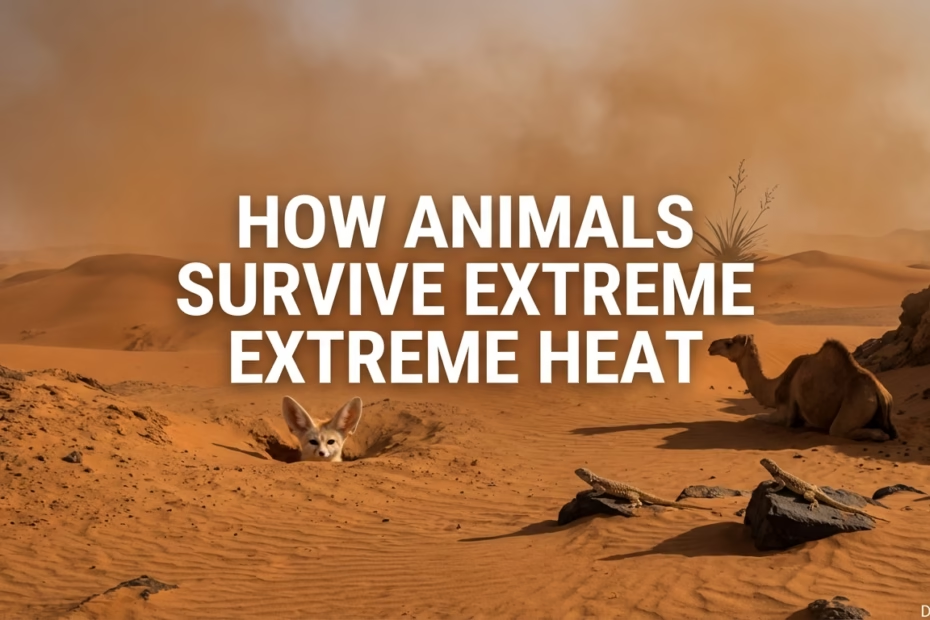
Extreme heat is more than “hot weather.” It is a nonstop energy pressure that pushes warmth into bodies faster than many tissues can comfortably handle. Animals that live in scorching places don’t rely on one magic trick. They stack smart behaviors, clever body design, and fine-tuned biology so their heat balance stays steady. Think of it like running a busy kitchen: you don’t stop the stove from making heat, you manage airflow, timing, and cooling so everything keeps working.
- The Core Idea Behind Heat Survival
- Heat Is A Balancing Act
- Behavioral Strategies That Outsmart The Sun
- Timing The Day
- Using Microhabitats
- Water-Smart Cooling When Every Drop Counts
- Dry Air, Wet Biology
- Body Design That Works Like Hardware
- Physiology: The Internal Thermostat
- Bird Tricks For Hot Skies
- Reptiles And Amphibians: Heat Managers By Design
- Why Burrows Matter So Much
- Small Creatures, Smart Physics
- How Heat Survival Changes Across Animal Sizes
- Field Signs Of Heat Management You Can Actually Notice
- Common Questions About Heat Survival
- Do All Animals Sweat To Cool Down?
- Why Don’t Desert Animals Just Stay Thin And Bare?
- Is Shade Always Cooler Than The Air?
- What Makes Burrows So Effective In Extreme Heat?
The Core Idea Behind Heat Survival
To stay comfortable, an animal has to keep heat coming in and heat going out in the right range. When the air is hotter than the body (or the sun is blasting like a spotlight), cooling becomes a game of strategy and trade-offs, especially with water and energy.
- Behavior: choosing the right place and time to move, rest, and feed.
- Body Design: shapes and surfaces that manage heat like well-built hardware.
- Physiology: internal settings that shift safely when heat ramps up.
Heat Is A Balancing Act
Heat moves in a few predictable ways, and animals exploit those rules with quiet precision. When you see a lizard flattening on warm ground in the morning, or a fox resting in shade at noon, you’re watching physics in fur and scales. The routes of heat transfer matter because they decide what “cooling” even means.
| How Heat Moves | What It Feels Like | What Animals Do About It |
|---|---|---|
| Radiation (sun/sky) | Sunlight warming skin fast | Use shade, face away from the sun, lift bodies off hot surfaces, choose reflective colors |
| Conduction (touch) | Heat from hot sand or rock | Stand tall, step lightly, rest on cooler soil, burrow into stable underground temperatures |
| Convection (moving air) | Breeze taking heat away | Use windy ridges, spread wings/ears, change posture to catch airflow |
| Evaporation (water turning to vapor) | Sweat/panting cooling power | Use sparingly, protect moisture, recover water in nasal passages, time activity to cooler hours |
In very hot air, radiation and conduction can become the real troublemakers. When the ground is scorching, even standing still can feel like standing above a heater. That is why so many desert species rely on microhabitats: tiny pockets of shade, cooler soil, or airflow that make a big difference.
Surviving heat is rarely about “enduring.” It’s about choosing the right microclimate again and again, like stepping from sun to shade at exactly the right moment.
Behavioral Strategies That Outsmart The Sun
Behavior is the fastest tool in the kit. An animal can’t instantly change its skin or kidneys, but it can change when it moves and where it rests. Many of the most effective heat tactics look simple from afar, yet they are high-impact choices that keep body temperature from creeping upward.
Timing The Day
In hot regions, the clock is a survival tool. Many animals shift activity to dawn, dusk, or night because cooler air makes every step cheaper. Nocturnal schedules are common in rodents, small carnivores, and many reptiles.
- Feed early when air and ground are cooler.
- Rest through the hottest hours in shade or burrows.
- Move again as the sun drops and surfaces cool.
Using Microhabitats
Shade is obvious, but microhabitats go beyond a single shadow. Burrows, rock crevices, vegetation bases, and even the lee side of a dune can create cooler, calmer air. A burrow can act like a natural air-conditioned room, holding steadier temperatures than the surface.
- Burrowing to reach stable underground temperatures
- Pressing close to cooler surfaces like tree trunks or shaded rock
- Climbing to catch breezes when the ground is radiating heat
Even posture matters. Some birds droop wings to create shade over the body, and some ungulates angle themselves to reduce the sunlit area. It’s not dramatic. It’s quiet geometry doing real work, and it keeps heat gain from winning the tug-of-war.
Water-Smart Cooling When Every Drop Counts
Evaporative cooling is powerful: sweat, panting, and moist skin can dump heat quickly. The catch is water. In dry heat, moisture disappears fast, so many hot-climate animals treat evaporation like a premium currency: spend it only when the payoff is worth it.
- Reducing water loss with highly concentrated urine and dry feces
- Recycling moisture in nasal passages so exhaled air gives water back to the body
- Getting water from food (juicy plants, prey, nectar) to limit drinking trips
Dry Air, Wet Biology
Some desert specialists can go long periods without drinking because they minimize losses and maximize what they already have. A classic example is the kangaroo rat, famous for living with very little direct water intake. It relies on tight water budgeting and moisture gained through food and metabolism. The lesson is broader than one species: in extreme heat, conservation often beats replacement.
You can also see water-saving logic in skin and feathers. Waxy coatings, dense fur, and certain scale structures reduce water loss, acting like built-in packaging. That same “packaging” can also slow heat flow, so the animal can wait out the worst hours with less emergency cooling.
Body Design That Works Like Hardware
Body shape can make heat easier to manage before physiology even kicks in. Long limbs can lift a body into cooler air above hot ground, and large ears can act like radiators, sending heat out when blood flow increases. You’re seeing a biological version of heat sinks and ventilation.
| Design Feature | Heat Advantage | Where You Often See It |
|---|---|---|
| Large Ears | More surface area for heat loss when blood flows near the skin | Fennec foxes, jackrabbits, many desert mammals |
| Long Legs | Lifts body away from hot ground; improves airflow | Gazelles, ostriches, wading birds in hot flats |
| Light Coloration | Reflects more sunlight, reducing radiant heat gain | Many desert mammals, birds, and insects |
| Insulating Fur Or Feathers | Blocks external heat and slows internal heat transfer | Camels, desert birds, small mammals that shelter midday |
| Countercurrent Heat Exchange | Conserves water and limits heat gain/loss in limbs and nasal passages | Many mammals and birds with specialized blood vessel layouts |
That insulation point surprises people. Thick fur in a hot place sounds wrong, yet it can act like a roof. In strong sun, a good “roof” reduces how much heat reaches skin. The animal then controls cooling through behavior and blood flow, rather than letting the sun pour heat directly into tissues. It’s shade you can wear.
Physiology: The Internal Thermostat
When heat is extreme, internal adjustments become essential. Physiology can be subtle, like shifting blood flow toward the skin, or bold, like allowing body temperature to drift within a safe range. The overall theme is control: animals keep the brain and key organs protected while the outer body handles the hottest work.
Letting Body Temperature Drift (Heterothermy)
Some large desert mammals allow body temperature to rise during the day and fall at night. That reduces the need for heavy evaporative cooling in peak heat. Picture it like a thermal battery: store heat temporarily, release it later when the air is cooler.
Selective Cooling For The Brain
In several species, blood flow patterns and specialized structures help keep the brain cooler than the rest of the body. This is especially useful when the body surface is dealing with intense heat. It is a priority system: protect the control center first.
Heat-Tolerant Proteins And Cellular Protection
Cells respond to heat by using protective proteins that help maintain normal function when temperatures rise. You can think of these as molecular support beams that keep essential components stable under stress.
Breathing can also become a cooling system. Panting increases evaporation in the mouth and airways, and some birds use a rapid throat movement called gular flutter to boost cooling without the same muscular effort as heavy panting. It’s a neat example of efficiency in the face of heat.
Bird Tricks For Hot Skies
Birds face a special challenge: flight is heat-expensive, and feathers insulate well. Many hot-climate birds solve this with behavior and targeted cooling. You’ll often see them rest during the hottest hours, choose breezy perches, and manage heat with airflow and evaporation.
- Wing drooping to shade the body and increase convective cooling
- Gular flutter to evaporate moisture efficiently
- Perching high where wind strips heat away
- Using light plumage to reduce radiant heat gain
Some desert birds also carry water in specialized ways (for example, transporting moisture to offspring or nesting areas). That isn’t just “cute behavior.” It’s a logistics solution in a landscape where water and cooling are tightly linked.
Reptiles And Amphibians: Heat Managers By Design
Reptiles don’t generate heat the same way mammals do, so they rely heavily on behavioral thermoregulation. You’ll see them shuttle between sun and shade, changing posture and location to keep body temperature in the right range. In extreme heat, many retreat into burrows or under rocks where temperatures are steadier and safer. The result is precision without panic.
Why Burrows Matter So Much
Underground spaces smooth out temperature swings. The surface can spike quickly, while deeper soil changes more slowly. A burrow is like a natural thermostat room, and that stability lets many reptiles conserve water because they don’t need constant evaporative cooling.
Small Creatures, Smart Physics
Insects and other small animals often face brutal surface temperatures because they live close to the ground. Their advantage is speed and scale: they can exploit tiny patches of shade, or move at very specific times. Some species have reflective surfaces that bounce sunlight away, reducing radiant heat gain. It’s like wearing a mirror-finish jacket in a world that acts like an oven.
- Micro-timing: foraging in short windows when heat is briefly manageable.
- Reflective or light surfaces: reducing how much solar energy is absorbed.
- Stilting: lifting the body to reduce contact with hot ground and catch cooler air.
- Underground refuge: returning to cooler nests, tunnels, or shaded cracks.
Some desert beetles also demonstrate how shape and surface can work as climate tools. Grooves, textures, and body angles can affect airflow and condensation behavior. Even when the details differ across species, the pattern stays the same: work with physics, not against it.
How Heat Survival Changes Across Animal Sizes
Size reshapes everything. Small bodies heat up quickly and cool down quickly, so they often rely on shade, burrows, and time windows. Large bodies change temperature more slowly, which can be helpful, but they also need ways to release heat safely. This is why you’ll see large animals leaning on surface area features (ears, long limbs) and controlled heat storage, while small animals lean on shelter and timing.
| Body Size | Main Heat Challenge | Common Solutions |
|---|---|---|
| Small | Rapid overheating on hot surfaces | Burrows, shade hopping, nocturnal activity, short foraging bursts |
| Medium | Balancing activity with water cost | Resting midday, efficient panting, seeking airflow, using vegetation cover |
| Large | Dumping stored heat without wasting too much water | Heat storage, ear/limb radiators, selective cooling, strategic movement timing |
Field Signs Of Heat Management You Can Actually Notice
Even without instruments, hot-weather strategies often show up in plain sight. Watching these signs is like reading a quiet language: you notice where heat is entering, where it is escaping, and what the animal values most in that moment. The details vary, yet the logic is consistent.
- Shade loyalty: animals choosing the same shaded patches again and again
- Posture shifts: lifting the body, turning away from the sun, wing drooping in birds
- Surface avoidance: stepping on cooler rocks, moving along vegetation edges, pausing on elevated points
- Midday stillness: extended resting during peak heat, then renewed movement later
Common Questions About Heat Survival
Do All Animals Sweat To Cool Down?
No. Sweating is just one tool. Many mammals use it, but plenty rely more on panting, changing blood flow to the skin, or using shade and timing so they don’t need constant evaporation. In very dry heat, saving water can matter as much as losing heat.
Why Don’t Desert Animals Just Stay Thin And Bare?
Because the sun is a heat source, not just the air. Insulation can block radiant heat from reaching skin quickly. A thick coat can act like a portable roof. The animal then controls cooling through behavior and circulation. That is managed heat, not passive suffering.
Is Shade Always Cooler Than The Air?
Shade often reduces radiant heat dramatically, even when the air temperature stays high. Also, shade can mean calmer conditions with less direct sunlight on the body. Pair that with a breeze, and the cooling effect can feel much bigger than the temperature reading alone suggests.
What Makes Burrows So Effective In Extreme Heat?
Soil buffers temperature swings. The surface can spike quickly, while deeper layers change more slowly. A burrow is a stable microclimate that reduces heat gain and often helps conserve water by lowering the need for evaporative cooling.