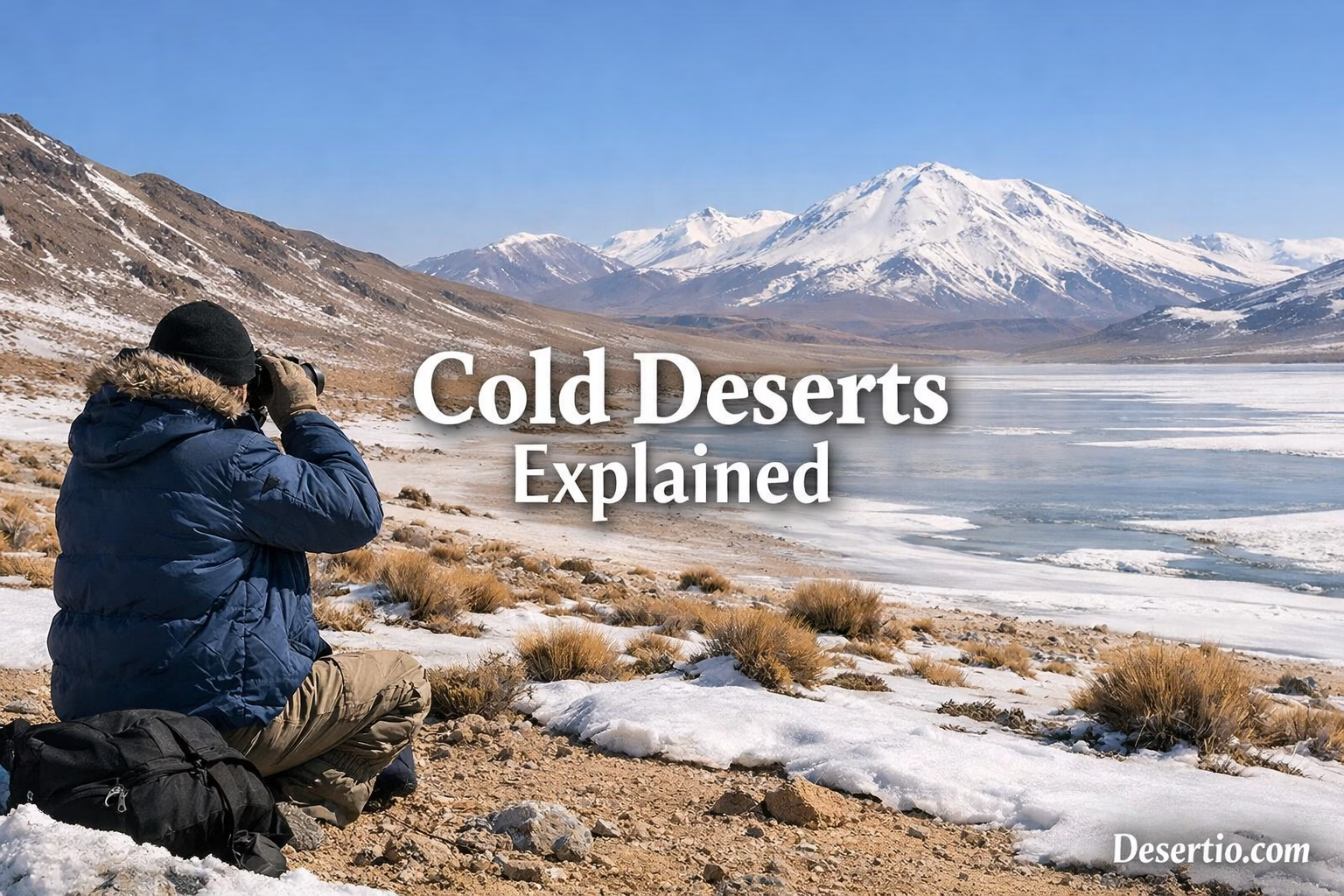
A cold desert is a place where water stays scarce and the air runs dry, even when the ground looks icy and the nights bite. Think of it like a pantry that’s always low on moisture: not much precipitation, a short growing season, and big temperature swings that keep life clever.
- What Makes A Desert “Cold”
- Fast Facts People Usually Miss
- Where Cold Deserts Show Up On Earth
- Polar Cold Deserts
- Mid-Latitude Cold Deserts
- Climate Patterns That Shape Cold Deserts
- Landforms You’ll Recognize
- Water: Rare, Brief, And Sneaky
- Life In Cold Deserts
- Plants That Play The Long Game
- Animals Built For Cold And Dry
- Famous Cold Deserts To Know
- The Gobi Desert
- The Great Basin Desert
- The Patagonian Desert
- Antarctic Polar Desert
- How People Use Cold Deserts
- Visiting A Cold Desert Without Stress
- Clothing That Works
- Gear That Pays Off
- Quick Myth Checks
- Cold Desert FAQ
What Makes A Desert “Cold”
A desert is mainly about aridity, not heat. If an area gets very little precipitation (rain or snow), it can qualify as a desert climate even if the landscape is frosty.
That’s why a snowy plain can still be a desert. Snow might fall, then vanish through sublimation (ice turning straight into vapor) or get locked away as permafrost. The result is the same: plants and animals live on a tight water budget, and bare ground shows up more than you’d expect.
Fast Facts People Usually Miss
- Cold deserts can be windy and bright, with very dry air that pulls moisture from skin.
- Many have desert pavement (a surface of tight stones) and little loose sand.
- “Cold” can mean high latitude or high elevation or both at once.
Where Cold Deserts Show Up On Earth
Cold deserts pop up where the atmosphere is stingy with moisture. Common setups include polar regions, continental interiors, and rain-shadow basins tucked behind mountain ranges. It’s like placing a bowl under a dripping faucet that barely drips—you can wait a long time, and still not collect much, even if the air feels cold.
Polar Cold Deserts
Very low snowfall, strong winds, and long darkness in winter. Ice is common, yet liquid water is rare and brief.
Mid-Latitude Cold Deserts
Hot-ish summers, freezing winters, and big daily swings. Moisture arrives as light snow or short storms, then vanishes fast.
Climate Patterns That Shape Cold Deserts
Cold deserts often feel “clean” in the sky: few clouds, dry air, and lots of sunshine. That combo warms surfaces quickly by day and lets heat leak away at night. The swing can be dramatic—warm midday, cold evening, and those tempratures can flip your comfort level like a light switch.
Precipitation is still low, but it behaves differently than in hot deserts. Snow can sit, then sublimate in a dry breeze. A thin melt can run for minutes, then refreeze. It’s a world of small water moments where timing matters as much as amount.
| Cold Desert Type | Typical Moisture Pattern | Typical Temperature Feel | Common Surface Clues |
|---|---|---|---|
| Polar Desert (High Latitude) | Very low snowfall, lots of blowing snow, frequent sublimation | Cold most of the year, short cool summer, intense wind chill | Ice patches, bare rock, patterned ground |
| Continental Cold Desert (Interior Basins) | Light snow + short storm bursts, quick evaporation | Hot days + cold nights, very cold winters | Desert pavement, salt flats, gravel plains |
| High-Plateau Desert (High Elevation) | Low precipitation, strong sun, dry air | Cool to cold, thin-air radiation chill, bright days | Wind-sculpted ridges, dusty basins, sparse shrubs |
A cold desert is not “cold and wet.” It’s cold and thirsty, with water locked up or gone too fast.
Landforms You’ll Recognize
Cold deserts don’t always match the postcard dune scene. Many are built from gravel, rock, and wind-polished surfaces. Imagine the land wearing a tough “jacket” of stones—desert pavement—that shields finer dust underneath and slows erosion in a quiet, stubborn way.
- Desert pavement: tightly packed stones over finer sediment, often with dark varnish.
- Salt flats and playas: shallow basins where rare water leaves crusty minerals.
- Yardangs: wind-carved ridges where persistent airflow acts like a slow chisel.
- Ventifacts: rocks shaped and faceted by sandblasting winds and flying grit.
- Patterned ground: polygons and stripes linked to freeze–thaw and permafrost.
Water: Rare, Brief, And Sneaky
In a cold desert, water is often a short-lived visitor. A thin snow layer can drift into hollows, then melt in a quick spring pulse. That melt may soak into gravel, refreeze underground, or run in ephemeral channels that are dry again before you finish a sandwich.
When water does show up, it can concentrate in surprising spots: the lee side of a ridge, a shaded gully, a low basin with salty soil. These “micro-oases” don’t look lush, but they matter. A little extra moisture can mean more grasses, more insects, and more birds passing through.
Life In Cold Deserts
Plants That Play The Long Game
Cold desert plants live like careful planners. They save water, grow low, and wait for the perfect moment. Many are shrubs and tough grasses with tiny leaves that waste less moisture. In polar zones, mosses and lichens often steal the show, clinging to rock like living paint.
- Compact shapes that hide from wind, like cushion plants forming tight domes.
- Waxy coatings that cut evaporation and hold morning dew a bit longer.
- Deep roots that sip from buried moisture and snowmelt pockets.
- Fast blooming right after melt, then resting like a paused song until next season.
Animals Built For Cold And Dry
Cold desert animals lean on insulation, smart timing, and efficient bodies. Some stay active year-round, others move with the seasons. Many small mammals use burrows like natural thermoses, while larger animals rely on thick coats and careful feeding routes.
- Burrow living: steadier temperatures and wind protection with less water loss.
- Seasonal diets: switching between seeds, buds, and tough shrubs.
- Body heat tricks: compact shapes, fur density, and group sheltering in colder months.
Famous Cold Deserts To Know
Cold deserts aren’t one-size-fits-all. Some are polar and icy, some are rocky and high, and some are wide interior basins with snow in winter and dry heat in summer. Here are a few you’ll see mentioned often when people talk about cold desert climates, arid ecosystems, and extreme weather contrasts.
The Gobi Desert
Continental cold desert known for huge seasonal swings and wind-shaped terrain. Expect gravel plains, rock outcrops, and patchy dunes.
- Why it’s cold: far inland + elevation, with dry air and strong winter chill.
- Iconic look: wide open horizons and rugged ridges with dusty basins.
The Great Basin Desert
High-basin desert with snowy winters and dry summers. It’s a classic example of cold desert ecology where sagebrush and open valleys dominate.
- Why it’s cold: elevation + clear skies, giving cold nights and sharp winters.
- Iconic look: basin-and-range scenery with dry lakebeds and salt crusts.
The Patagonian Desert
Cool, windy desert with rain-shadow dryness and wide steppe. It’s famous for strong winds, shrubs, and open skies.
- Why it’s cool: ocean influence + winds, keeping air cooler and moisture limited.
- Iconic look: gravel plains, low bushes, and sculpted ridges.
Antarctic Polar Desert
Polar desert where precipitation is tiny and winds can be fierce. Even with all that ice, liquid water is limited and seasonal.
- Why it’s a desert: very low snowfall, with sublimation and blowing snow.
- Iconic look: ice fields, rocky nunataks, and dry valleys in places.
How People Use Cold Deserts
Cold deserts support a mix of seasonal grazing, scientific research, and wide-open recreation. In many places, people plan life around water access, wind, and short warm windows when travel and work feel easier.
From a user perspective, the big takeaway is simple: cold desert conditions reward preparation. The air is dry, sunlight can be intense, and weather flips quickly. Treat it like a two-season day: pack for sun and cold, and you’ll feel comfortable instead of surprised.
Visiting A Cold Desert Without Stress
Clothing That Works
- Layers: a warm base + wind shell with easy venting.
- Sun protection: hat and sunglasses with UV coverage.
- Hands and feet: dry air chills fast, so good socks and simple gloves matter.
Gear That Pays Off
- Water: carry more than you think; dry air is a quiet dehydrator.
- Lip balm and moisturizer: basic comfort, big difference.
- Navigation: wide plains look similar; a map or offline GPS helps.
Quick Myth Checks
- “Deserts are always hot.” Nope—aridity is the key, and cold deserts prove it.
- “All deserts are sand dunes.” Many cold deserts are rocky with gravel plains and stone crusts.
- “Snow means it’s not a desert.” Snow can fall and still leave very low moisture overall, especially with sublimation.
Cold Desert FAQ
Is A Polar Region Always A Desert?
Not always. A polar desert is defined by very low precipitation, not just cold. Some polar coastal zones can be wetter, while interior areas stay extremely dry and fit the desert label.
Why Do Cold Deserts Feel So Dry On Skin?
Because humidity is low and wind often moves moisture away fast. Add strong sun and you get that dry-lips, dry-hands feeling even when the air is cold.
What’s The Biggest Visual Clue You’re In A Cold Desert?
Look for sparse vegetation, open ground, and wind-shaped surfaces. If you see stone crusts, salt flats, or patterned polygons, you’re likely in classic cold desert terrain.
Can Cold Deserts Have Wildflowers?
Yes—when moisture lines up just right. Some cold deserts get brief bloom windows after snowmelt or a rare storm. The show is short, but it can be bright and memorable.
