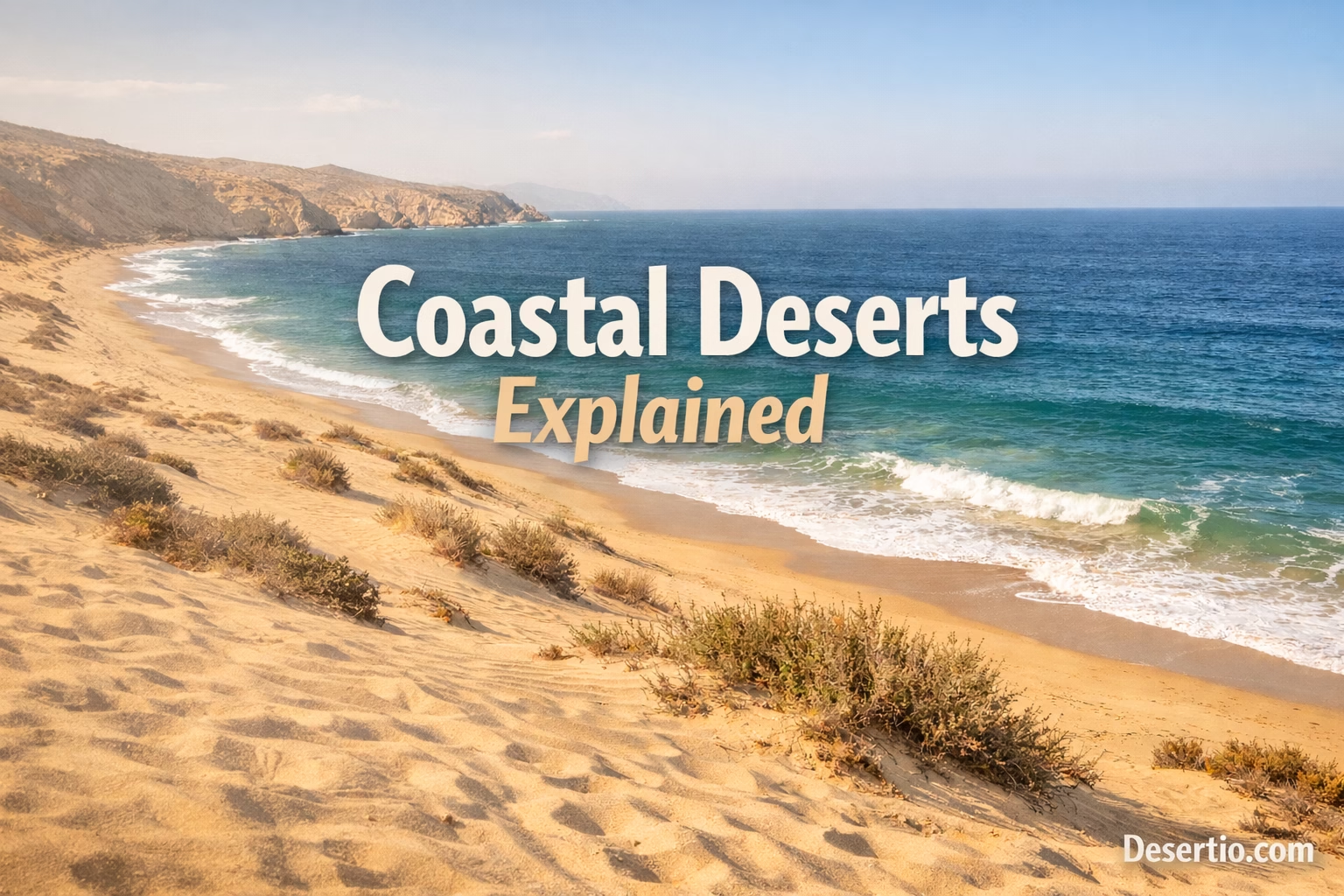
A coastal desert is the kind of dry place that makes you do a double-take: there’s an ocean right beside it, yet the land stays stubbornly dry. The secret is often a cool, moisture-rich marine layer that drifts in low and lazy, but rarely turns into real rain. Think of it like a sealed bottle of mist—full of water you can see, but not water that easily falls.
- Quick Snapshot Of Coastal Deserts
- How Coastal Deserts Form
- The Ocean’s Role
- The Sky’s Role
- What Coastal Desert Weather Feels Like
- Landforms You Commonly See
- Life In A Desert That Drinks Fog
- Smart Plant Strategies
- Animal Adaptations
- Real-World Examples You’ll Hear About Often
- Common Mix-Ups To Avoid
- Why Fog Matters So Much
- Coastal Desert Soils And Hidden “Skin” Layers
- Planning A Visit Without Overthinking It
- Key Terms That Make Everything Click
Quick Snapshot Of Coastal Deserts
Coastal deserts usually sit along cold-current shorelines, where the sea chills the air and helps build a stable temperature inversion. That stability is a rain-blocker: air doesn’t rise much, clouds stay low, and the sky often stays bright and dry even when fog hangs near the ground.
- Feels cooler than you expect thanks to cold ocean currents and coastal fog.
- Rain is rare, but mist and dew can be surprisingly useful water sources.
- Life clusters in patches—tiny fog oases and microclimates.
How Coastal Deserts Form
Most coastal deserts are powered by a simple combo: cold water and steady air. Cold currents along the coast cool the lower atmosphere, which encourages a low cloud deck. Above that sits warmer air that acts like a lid—meteorologists call it an inversion layer. With that lid in place, moisture doesn’t rise high enough to build rain clouds, so the area stays dry even though the air can feel damp. This pattern is one example of the atmospheric processes behind desert formation around the world.
The Ocean’s Role
Cold currents like the Humboldt, Benguela, and California Current help keep near-surface air cool. Cool air holds less water vapor, so it often condenses into fog rather than climbing into tall storm clouds. This is why many fog deserts are also coastal deserts—the ocean supplies moisture, but the atmosphere keeps it trapped low.
The Sky’s Role
Big-scale wind patterns matter too. In many coastal desert zones, air tends to sink rather than rise. Sinking air warms and dries as it descends, which makes it harder for clouds to grow upward. Add that to a strong inversion and you get a climate that loves low clouds, hates rainfall, and stays remarkably consistent.
What Coastal Desert Weather Feels Like
If you picture deserts as always blazing hot, coastal deserts will surprise you. Days can be bright yet mild, nights can be cool, and mornings often arrive wrapped in fog. The ocean acts like a giant temperature buffer, so swings are often gentler than in many inland deserts. You might even feel a strange mix: dry ground underfoot and wet air brushing your face.
| Signature | What You Notice | Why It Happens |
|---|---|---|
| Marine fog | Low clouds hugging the coast | Cold water chills air to its dew point |
| Sparse rainfall | Long dry stretches, few storms | Inversion blocks vertical cloud growth |
| Wind-shaped dunes | Clean dune ridges and ripples | Steady coastal winds move sand efficiently |
| Patchy life | Green pockets, then bare ground | Microclimates form where fog collects |
Landforms You Commonly See
Because coastal deserts sit where land, wind, and sea constantly negotiate, the scenery can feel sculpted. Sand dunes may pile up in long corridors, gravel plains can look like natural pavement, and salt flats may appear where water once pooled and slowly evaporated. In some places, fog and wind team up like two invisible artists, sanding edges smooth and leaving behind sharp contrasts: gold dunes, gray fog, and dark rock.
- Coastal dune fields shaped by consistent winds and shifting sand corridors.
- Deflation hollows where wind removes sand, exposing pebbles and hardpan.
- Salt crusts that form after shallow water evaporates, leaving bright minerals behind.
- Rocky terraces near the shore, where waves and time carve platforms.
Coastal deserts are proof that “dry” doesn’t always mean “cloudless.” A place can be wrapped in mist and still receive very little rain.
Life In A Desert That Drinks Fog
Plants and animals in coastal deserts often behave like careful accountants: every drop counts, every gram of water matters. Some plants depend on fog drip, capturing tiny droplets on leaves, spines, or hairs and guiding that moisture down to roots. In certain regions, “fog oases” (sometimes called lomas in parts of South America) appear like seasonal green islands, blooming when fog is frequent. It’s a neat trick: no rain needed, just a steady supply of airborne moisture.
Smart Plant Strategies
- Surface collectors: waxy leaves and fine hairs trap fog droplets and send them downward like gutters.
- Low, compact shapes: plants stay close to the ground where mist lingers and wind stress is lower overall.
- Slow metabolism: many species use water-saving photosynthesis patterns to stretch moisture further each day.
Animal Adaptations
- Fog harvesting: small creatures can collect condensation on their bodies, then drink it directly.
- Night activity: moving after sunset helps avoid daytime dryness and keeps water loss lower by design.
- Burrow living: underground spaces hold steadier humidity—tiny climate shelters in a dry world.
Real-World Examples You’ll Hear About Often
When people talk about coastal deserts, a few famous names pop up again and again. The Atacama is linked with coastal fog in places where the camanchaca drifts inland. The Namib is also well known for fog-fed ecosystems along its coast. You’ll also find coastal desert conditions in parts of the Baja California region and along sections of the Peru–Ecuador coast. Each location has its own flavor, but the shared theme is the same: ocean nearby, rain kept at arm’s length.
Common Mix-Ups To Avoid
Coastal deserts get confused with a few look-alikes, so here’s a quick reality check. Foggy doesn’t automatically mean wet, and a beach nearby doesn’t mean the climate is mild everywhere. Also, not every sandy coast is a coastal desert—many coasts have dunes but still receive regular rainfall. Context matters, and the big clue is always the same: a pattern of persistent dryness paired with marine moisture that rarely becomes rain.
Why Fog Matters So Much
In a coastal desert, fog can act like a quiet delivery service. It rolls in, deposits micro-droplets, and leaves behind moisture in places you might not notice at first—on rocks, plants, nets, even soil crusts. Over time, that small input helps shape where life can thrive. Some communities and research projects use fog harvesting systems—mesh structures that catch mist so it condenses and drips into containers. It’s a practical reminder that in the right enviroment, air can be a water source.
Fog harvesting works best where coastal fog is frequent, winds are steady, and collectors sit in the path of moving mist.
Coastal Desert Soils And Hidden “Skin” Layers
Soils in coastal deserts may appear lifeless, yet many surfaces are covered by a thin, living layer known as a biological soil crust. These crusts often contain microbes, lichens, and other small organisms that stabilize soil and influence water movement. When fog or dew forms, the crust can briefly become active and carry out metabolic processes during short moisture windows before returning to dormancy.
Planning A Visit Without Overthinking It
If you ever find yourself near a coastal desert, comfort often comes down to layers. Morning fog can feel cool on the skin, midday sun can feel strong, and evenings can swing back to chilly. A light jacket, sun protection, and water (even in a fog desert) make the experience smoother. And keep your eyes open: the most interesting scenes are often subtle—mist moving over dunes, tiny plants catching droplets, and patterns in the sand that look like wind handwriting.
Key Terms That Make Everything Click
These words show up a lot when learning about coastal deserts. Once you’ve got them, the whole topic feels simpler—like finding the right key for a stubborn lock. Microclimate explains the patchy nature of life, marine layer explains the low clouds, and inversion explains the missing rain. Keep those three in your pocket and you’ll read coastal desert landscapes with way more clarity.
- Marine Layer: cool, moist air near the sea that often forms low clouds and fog.
- Temperature Inversion: warmer air above cooler air, acting like a lid that limits rising motion.
- Upwelling: cold, nutrient-rich water rising near coasts, helping cool air and encourage fog.
- Fog Oasis: a pocket where condensation supports plants and animals in an otherwise dry region.
