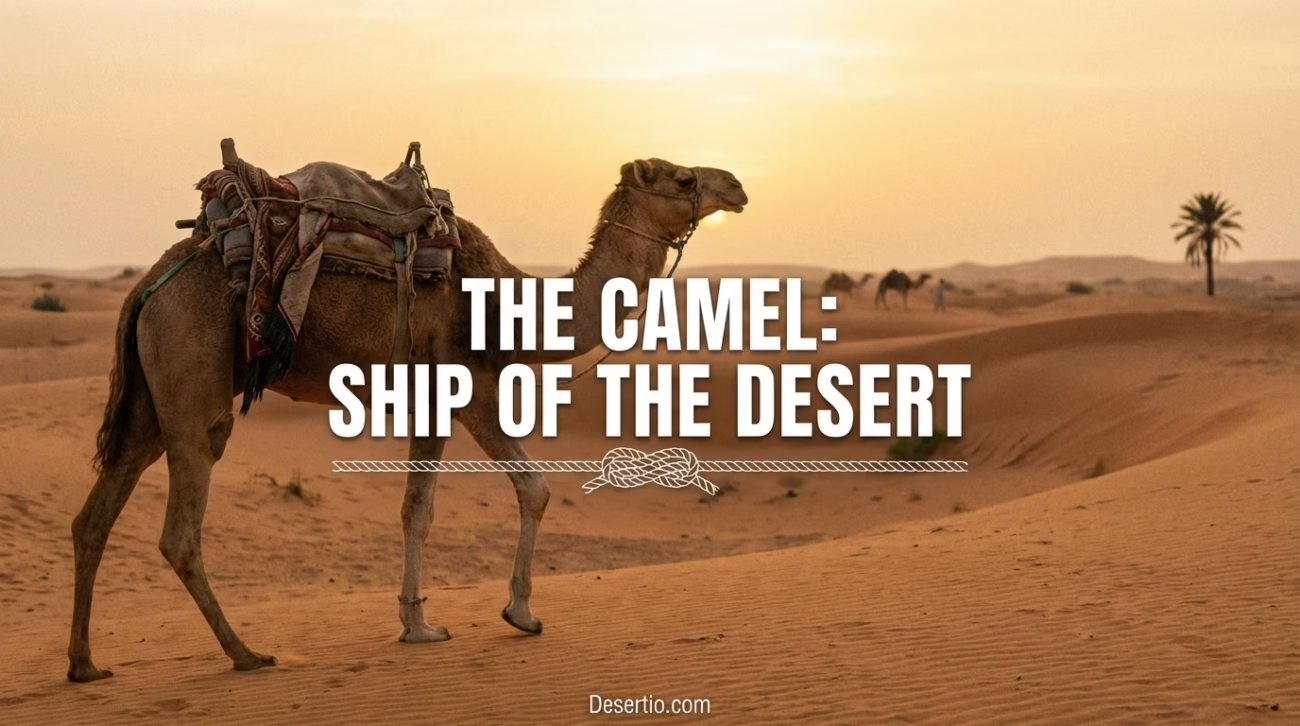
Why People Call Camels The Ship Of The Desert
Camels earned their famous nickname for a simple reason: they move through dry, demanding landscapes with the calm confidence of a vessel crossing open water. Where many animals need frequent shade, steady water, and soft ground, a camel brings its own survival toolkit—water thrift, heat control, sand-ready feet, and a digestive system built for scratchy, sparse plants.
- Why People Call Camels The Ship Of The Desert
- What Makes A Camel Desert-Ready
- Understanding The Camel Body
- The Hump Myth And The Real Story
- Why Storing Fat On The Back Helps
- Water-Saving Toolkit
- Heat Management Without Constant Sweating
- Fur As Climate Gear
- Smart Resting Postures
- Built For Sand, Wind, And Distance
- Eating In A World Of Thorns
- What Camels Commonly Browse
- Family Life And Communication
- Growing Up In The Desert
- Wild Relatives And Desert Biodiversity
- Common Curiosities About Camels
What Makes A Camel Desert-Ready
Water Strategy
Efficient kidneys, moisture-saving breathing, and blood that stays functional during dehydration.
Heat Control
A body that tolerates wider temperature swings, plus insulating fur that works like climate gear.
Sand Navigation
Broad, callused feet and “sandstorm settings” for eyes and nostrils.
It helps to remember one big idea: a camel is not “tough” by luck. It’s a carefully tuned desert specialist, with many small advantages that add up to an animal that can keep going when conditions look empty and endless—an example of the broader pattern of desert species and their adaptations. That’s the real magic.
| Species | Humps | Native Range | Typical Conditions | Standout Traits |
|---|---|---|---|---|
| Dromedary (Arabian Camel) | 1 | Arid regions of North Africa and the Middle East | Hot deserts | Heat tolerance, efficient water use |
| Bactrian (Domestic) | 2 | Central Asia | Cold deserts and steppes | Shaggy seasonal coat, broad climate range |
| Wild Bactrian | 2 | Desert regions of Mongolia and China | Harsh, remote deserts | Leaner build, adapted to extremes |
Understanding The Camel Body
Camels belong to the camelid family, which also includes llamas and alpacas. They are foregut fermenters—often compared to ruminants—yet their stomach is built differently. Instead of the classic four-compartment system seen in cattle, camels rely on a three-compartment digestive design that supports fermentation and steady energy extraction from coarse desert plants. Think “efficient composting” inside the body.
- Long legs keep the body farther from hot ground and help with long-distance travel.
- Thick pads and calluses protect contact points when resting on rough terrain.
- A split upper lip acts like a precise, flexible “grip,” letting camels pick out tiny leaves and shoots.
That “ship” nickname isn’t just about carrying loads. It’s about moving well, staying stable, and conserving resources when the landscape offers very little. Efficiency beats speed out here.
The Hump Myth And The Real Story
A camel’s hump is iconic, so it’s easy to assume it’s a water tank. It’s not. A hump is primarily a fat reserve—stored energy that can be used when food is scarce. When that fat is used up, the hump can shrink and even droop. It’s more like a pantry than a canteen.
Why Storing Fat On The Back Helps
- Heat management: Concentrating fat in one place can reduce insulation across the rest of the body, helping heat escape where it should.
- Energy on demand: When plants are sparse, stored fat keeps the body fueled without constant grazing.
- Comfortable resting: A camel can lie down with a body shape designed for desert surfaces, using natural padding points.
Simple idea, big payoff. That’s a theme with camels.
Water-Saving Toolkit
Camels are famous for “not needing water,” but the truth is more interesting: they’re built to lose less, function well during dehydration, and then refill quickly when water appears. It’s a smart budget, not a miracle.
- High-Performance Kidneys
Camels can produce very concentrated urine, which helps the body hold onto precious water instead of wasting it. - Moisture-Saving Breathing
Inside the nose, specialized surfaces help reclaim moisture from exhaled air, especially when conditions are dry. - Oval Red Blood Cells
Camel red blood cells have a distinct shape that supports circulation during dehydration and helps the body handle rapid rehydration. - Big Rehydration Capacity
When water is available, camels can drink an impressive amount in a single session—often cited at roughly 30 gallons (about 110 liters) or even more in some settings.
One detail people love: camels can tolerate major dehydration—far beyond what most mammals could handle—then bounce back when water returns. That doesn’t mean they never need water. It means their bodies are set up to bridge the gaps. Desert life is all about gaps.
Heat Management Without Constant Sweating
In many deserts, the real enemy is not heat alone—it’s heat plus low humidity, where sweating can drain your body like a leaky canteen. Camels reduce that leak by letting their body temperature fluctuate more than most mammals. When dehydrated, their internal temperature range can widen (commonly described around 34°C to 41°C), which helps reduce the need for evaporative cooling. Less sweating, less water loss.
Fur As Climate Gear
Thick fur can sound like the wrong outfit for a hot desert, yet it works like insulation. It can reduce heat gain from direct sunlight, especially across the back. Shade, carried on the body.
Smart Resting Postures
Camels often rest in ways that limit full-body exposure and encourage airflow under the body. Small behavioral choices matter in extreme heat. It’s practical, not dramatic. Practical wins.
Built For Sand, Wind, And Distance
A desert isn’t just “hot.” It’s abrasive, shifting, and windy. Camels handle all three with a set of visible, easy-to-miss features. Everything has a job.
- Broad, callused feet: Their feet expand when stepped on and contract when lifted, helping them walk on soft sand and even snow. More surface area, less sinking.
- Eye protection: Long eyelashes, bushy brows, and an extra protective membrane help shield eyes from blowing sand.
- Closable nostrils: In dusty wind, a camel can narrow or close its nostrils to keep sand out. Built-in sandstorm mode.
And yes, camels can travel far with weight. In working contexts, they are often described carrying around 90 kilograms (about 200 pounds) while covering long daily distances when conditions allow. Endurance is the headline.
Eating In A World Of Thorns
Desert plants don’t play nice. Many are tough, fibrous, or thorny—nature’s way of saying “please don’t eat me.” Camels reply with specialized lips and a mouth built for rough textures. Their split upper lip works like two independent fingers, and the inside of the mouth can include cone-like structures that help guide sharp plant material safely toward the throat. Not picky. Just prepared. Desert dining, upgraded.
Camels are also foregut fermenters with a three-compartment stomach, which helps them extract nutrition from dry grasses, shrubs, and other low-water plants. This matters because the desert menu is often low in protein and high in fiber. Camels make the most of “tough greens.”
What Camels Commonly Browse
- Dry grasses and hardy ground cover
- Shrubs with small leaves
- Salt-tolerant plants in arid flats
- Occasional thorny vegetation, handled with specialized mouth structures
Family Life And Communication
Camels are often imagined as solitary silhouettes on the horizon, yet many live in social groups. Herd life can include a dominant adult male and a mix of females and young, while some males form separate groups. Communication is surprisingly rich: moans, groans, bleats, and low rumbles all play a role, alongside body language like ear position and head carriage. It’s a whole conversation system.
A camel herd is not silent. It’s more like a low-volume radio station—steady, expressive, and tuned to the needs of the group.
This social flexibility is another desert advantage. In open landscapes, a group can share awareness of water, food patches, and changing conditions. Many eyes, one direction. That’s efficient.
Growing Up In The Desert
Camel reproduction is slow-paced compared to many mammals, which fits a world where resources can be scarce. Gestation is commonly described as about 12 to 14 months. Newborn calves can stand and walk very quickly—sometimes within an hour—staying close to the mother as the pair reconnects with the group. Early mobility is survival.
| Gestation | About 12 to 14 months |
| Typical Birth | Usually one calf |
| Nursing | Often 10 to 18 months (varies with conditions and species) |
| Full Adult Size | Commonly reached around 7 years |
The long growth timeline makes sense in deserts: raising a large animal takes steady investment. Camels spread that investment across time, matching a landscape where good seasons come and go. Slow build, strong payoff. That rhythm fits the desert.
Wild Relatives And Desert Biodiversity
While most people meet camels in domestic settings, the camel family also includes a rare wild member: the wild Bactrian camel. It lives in remote desert regions and is recognized internationally as critically endangered. Conservation programs focus on protected areas and careful management so this unique desert specialist remains part of the world’s natural heritage. A quiet success story worth protecting.
Common Curiosities About Camels
Do Camels Store Water In Their Humps
No—humps store fat, not water. The real water-saving magic comes from physiology: efficient kidneys, moisture-saving breathing, and dehydration tolerance. Myth busted, story improved.
Why Are Camel Feet So Wide
Wide, callused feet help spread weight across soft ground. Their foot pads can expand when stepping down and contract when lifting up, making sand travel smoother and less tiring. Like built-in snowshoes. Same idea, desert version.
How Can Camels Handle Blowing Sand
Camels rely on layered defenses: long eyelashes, protective eye membranes, and nostrils that can narrow or close in dusty wind. These features protect vision and breathing when the desert air turns gritty. Sandstorm-ready by design.
