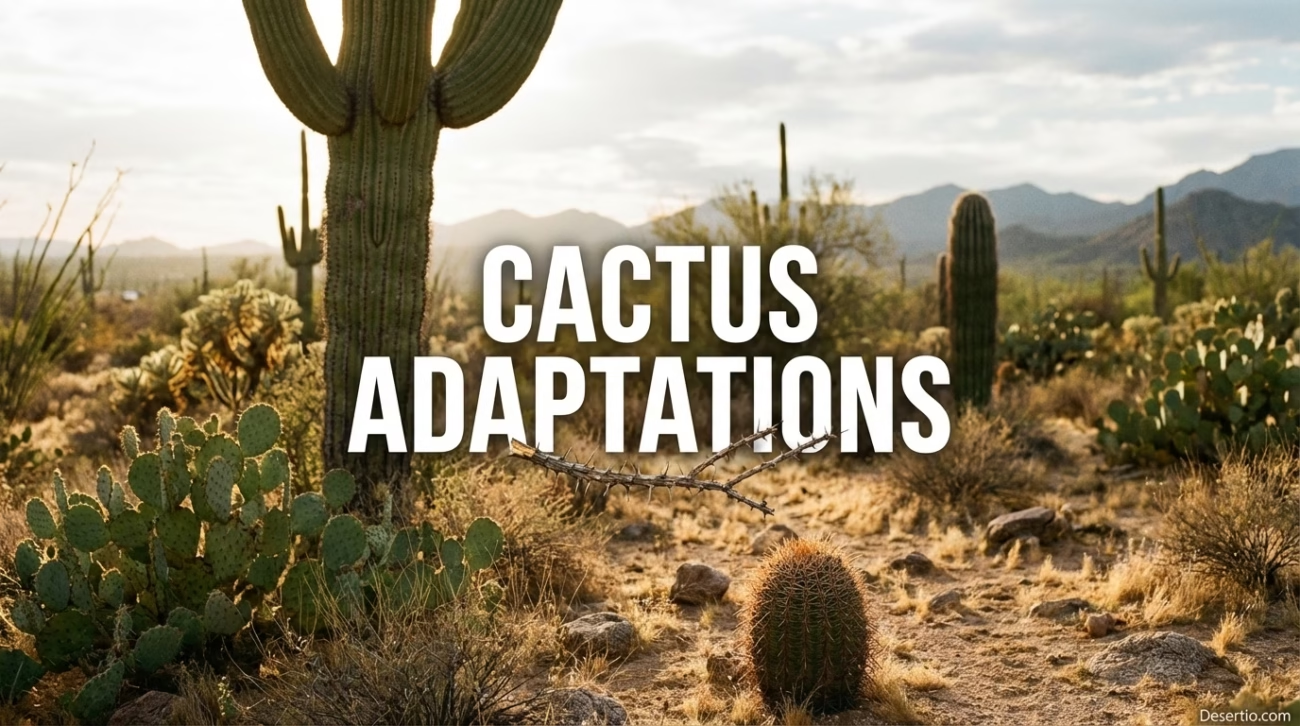
Cacti look simple at first glance, but their bodies are packed with survival engineering. In places where rain is rare and sunlight hits like a spotlight, a cactus runs the same three-part play again and again: save water, avoid overheating, and keep growing anyway—an approach that helps support the wider web of desert wildlife and plant life.
- The Desert Problem, Solved In Plant Form
- What Makes A Cactus A Cactus
- Areoles: The Cactus “Switchboard”
- Leaves Reimagined
- Living Water Storage, Built Like An Accordion
- Night-Time Photosynthesis Without The Water Bill
- What CAM Changes Inside The Plant
- Spines, Hairs, and Skin That Manage Sun and Wind
- Roots That Gamble On Short Rain
- Surface Networks
- Anchors And Depth
- Body Shapes That Create A Cooler Microclimate
- Small Details With Big Effects
- Flowers And Seeds Timed To Dry Country
- Not All Cacti Live In Deserts
- Dry Deserts
- Forests And Highlands
- Common Mix-Ups That Matter
- How The Pieces Fit Together
The Desert Problem, Solved In Plant Form
A cactus is basically a water manager with a green body. Its “design” works because each feature supports the others: stems store, skins seal, spines shade, and roots grab moisture fast when it finally shows up.
- Water Storage: thick tissues hold a reserve for dry stretches.
- Water Protection: waxy surfaces and smart pores reduce loss.
- Heat Control: shape, color, and spines help manage sun and wind.
- Rapid Uptake: roots respond quickly to short, patchy rainfall.
What Makes A Cactus A Cactus
Lots of plants are “succulents,” but true cacti belong to the family Cactaceae and share a signature structure: the areole. An areole is a small, specialized growth point where spines, new stems, and flowers can emerge. It’s the cactus equivalent of a tiny control panel, and it explains why cactus surfaces look dotted, tufted, or neatly patterned.
Areoles: The Cactus “Switchboard”
From areoles, a cactus can produce spines, fuzzy hairs, branching pads, or blooms. That flexibility matters in dry habitats because the plant can shift effort toward protection or reproduction depending on conditions.
- Spines emerge here (and can vary by age and exposure).
- Flowers form here, often timed to brief favorable windows.
- New growth can start here after rain or warmth returns.
Leaves Reimagined
In most plants, leaves are the main photosynthesis engine. In cacti, leaves are usually reduced to spines, while the green stem takes over photosynthesis. That swap reduces water loss because stems can be built with thicker skin and fewer exposed edges than thin leaves, while still keeping chlorophyll in play.
- Lower Surface Area means less evaporation.
- Stems can store water and photosynthesize in the same tissue.
- Spines add shade without “leaf-level” water loss.
Living Water Storage, Built Like An Accordion
Many cacti are shaped to handle big swings in water content. After rain, tissues swell; during dry spells, they shrink. Ribbed stems and pleated surfaces act like an accordion, expanding without tearing and contracting without collapsing. Inside, water is held in large storage cells, often supported by mucilage, a gel-like substance that helps retain moisture and slow dehydration.
A cactus is a water tank wrapped in sun-proof clothing, with valves that open at the safest time of day.
| Stem Feature | What It Does | Why It Helps In Dry Places |
|---|---|---|
| Ribs And Pleats | Expand after rain, contract during drought | Prevents cracking and keeps surface area efficient across seasons |
| Succulent Storage Tissue | Holds water in large cells | Creates a buffer against long dry stretches |
| Thick Outer Skin | Reduces water loss from the surface | Keeps stored water from “leaking” away under heat and wind |
| Waxy Cuticle | Acts like a moisture-sealing coat | Limits evaporation while still allowing gas exchange at the right times |
Night-Time Photosynthesis Without The Water Bill
The most famous cactus trick is CAM photosynthesis (Crassulacean Acid Metabolism). Instead of opening pores during the hottest hours, many cacti open their stomata mostly at night, when air is cooler and humidity is usually higher. They take in carbon dioxide after sunset, store it in a chemical form, then use it for photosynthesis the next day while keeping pores mostly closed. It’s a smart swap: timing becomes a tool for saving water.
- Night: stomata open, carbon dioxide enters, and is stored for later use.
- Day: stomata stay mostly closed; the plant uses stored carbon dioxide to keep photosynthesis going with minimal water loss.
- Result: high water-use efficiency in heat and drought.
What CAM Changes Inside The Plant
CAM is not just “photosynthesis at night.” The plant is actively managing chemistry across time. Acids build up overnight, then are used during the day. That’s why some CAM plants can taste more tangy in the morning and milder later, a small clue that night storage is happening under the surface.
Spines, Hairs, and Skin That Manage Sun and Wind
Spines look like simple “don’t touch me” tools, but they also act like a climate-control layer. By replacing broad leaves with spines, a cactus cuts the surface area that loses water. At the same time, spines and hairs can create a thin boundary layer of air close to the stem, reducing drying winds. In strong sun, they can cast small shadows that keep stem temperatures more stable, especially on exposed faces where heat buildup is intense.
- Reduced Evaporation: less leaf area means less water lost.
- Shade And Light Scattering: spines can filter sunlight before it hits green tissue.
- Wind Softening: clustered spines can slow airflow right at the surface.
- Temperature Buffering: hairs and dense spines can reduce midday heat spikes.
The outer stem is also built for dryness. Many species have a thick cuticle and a waxy coating that slows water loss. Some stems look bluish or powdery because of surface wax, a natural “sunscreen” effect that can reflect part of the incoming light. Under that skin, water-storing tissues stay protected, while carefully placed stomata handle gas exchange on the plant’s schedule.
Roots That Gamble On Short Rain
Rain in arid regions often arrives fast and disappears fast. Many cacti respond with wide, shallow roots that sit near the surface, ready to absorb moisture before it evaporates. In some species, fine “rain roots” can appear quickly after a wet event, boosting absorption during the brief window when the topsoil is damp. It’s a bold strategy: be ready rather than be deep.
Surface Networks
A shallow network can spread outward like a living net. That helps capture light rainfall, dew-like moisture, and brief runoff. The payoff is speed: absorb first, then store it in succulent tissue.
- Fast uptake during short wet events
- Large surface contact with damp topsoil
- Flexible growth when conditions change
Anchors And Depth
Not every cactus relies only on shallow roots. Some develop deeper, more anchoring roots that help with stability and can tap moisture stored deeper in the ground. The “mix” depends on species and habitat, but the theme stays the same: efficient water capture without wasting energy on constant growth in dry soil. Adaptability is the real superpower.
- Stability for tall or top-heavy forms
- Access to deeper moisture in some settings
- Resilience across different soil types
- Sense The Moment: when soil moisture rises, roots increase uptake quickly.
- Store The Win: water moves into stem reservoirs where it’s safer.
- Slow The Loss: skins, wax, and timing keep that reserve from evaporating away.
Body Shapes That Create A Cooler Microclimate
Even cactus geometry is an adaptation. A spherical cactus can minimize surface area compared with its volume, which helps reduce water loss. A tall column can lift parts of the plant into moving air, helping manage heat. Ribs, grooves, and clustered spines create tiny shaded pockets on the surface, so the stem isn’t absorbing full sunlight everywhere at once. Think of it as self-made shade: a cactus carries its own microclimate on its skin, with texture doing real work.
Small Details With Big Effects
- Orientation: some forms angle growth to manage peak sun exposure.
- Surface wax: can reflect light and reduce heating of green tissue.
- Sunken stomata in some species can reduce direct airflow over pores.
- Hairy coatings: trap air and soften drying winds at the stem surface.
Flowers And Seeds Timed To Dry Country
A cactus can’t spend water freely, so reproduction is often timed and efficient. Many species produce blooms during specific seasonal windows when conditions are most reliable. Some flowers open at night, others during the day, matching the activity of different pollinators. The goal stays consistent: move pollen with high success while keeping the rest of the plant in water-saving mode. Even the placement of flowers on the plant can matter, with areoles acting as the launch point for blooms.
- Brief Blooming: short flowering periods reduce long-term resource costs.
- Targeted Timing: opening hours align with likely pollinator activity.
- Protected Buds: buds often develop in sheltered spots among spines or wool.
- Seed Persistence: durable seeds can wait for the right moisture conditions.
Seedlings are the most delicate stage, so many cacti “prefer” to start life in safer micro-sites, such as shaded ground or under light cover from other vegetation. Shade reduces heat stress and slows evaporation, giving a tiny plant a better chance to establish roots. It’s a gentle form of risk management: the cactus doesn’t need constant moisture, but a seedling appreciates a calmer start, especially when sun and wind are strong and topsoil dries quickly.
Not All Cacti Live In Deserts
It’s easy to picture cacti only in sandy, sun-blasted landscapes, but the family is more diverse than that. Some cacti live in rocky highlands, some in coastal scrub, and some as epiphytes in humid forests. Even there, the core challenge can still be water timing: an epiphytic cactus may sit on tree branches where water arrives in pulses rather than as a steady supply. In other words, “desert-like” pressure can happen without sand dunes, and cactus adaptations—storage, efficient gas exchange, and protective skins—still make sense.
Dry Deserts
Classic cactus territory highlights water storage, spine shading, and rapid root uptake. Heat and wind make water loss the main problem.
Forests And Highlands
In cooler or wetter regions, cacti may rely more on pulsed water storage and efficient physiology. The same tools still apply, just tuned for intermittent supply rather than constant dryness, with adaptation showing up in form and timing.
Common Mix-Ups That Matter
Cacti get talked about like they’re all the same, but their survival tools vary by species, habitat, and life stage. Clearing up a few mix-ups makes cactus adaptations easier to understand, and it keeps the story grounded in real biology rather than stereotypes. A cactus is not just “a plant with needles”; it’s a whole package of structure and timing.
- Spines Are Not The Same As Thorns: in cacti, spines are modified leaves produced from areoles, not woody thorns from stems.
- Succulent Does Not Always Mean Cactus: many plants store water, but only cacti have true areoles.
- Desert Form Is Not Universal: some cacti climb, trail, or live on trees, yet still use storage and efficient gas exchange.
- Water Storage Is Only Half The Trick: saving stored water through skins, wax, and stomatal timing is just as important.
How The Pieces Fit Together
Cactus adaptations make the most sense when viewed as a team. A shallow root system brings in a sudden pulse of water, and the stem stores it. The outer skin and wax reduce loss, while spines and surface textures manage heat and airflow. Then CAM photosynthesis handles gas exchange when conditions are kinder, keeping water loss low without shutting down growth. That teamwork is why a cactus can sit in blazing sun and still look calm—because under the surface, everything is coordinated.
