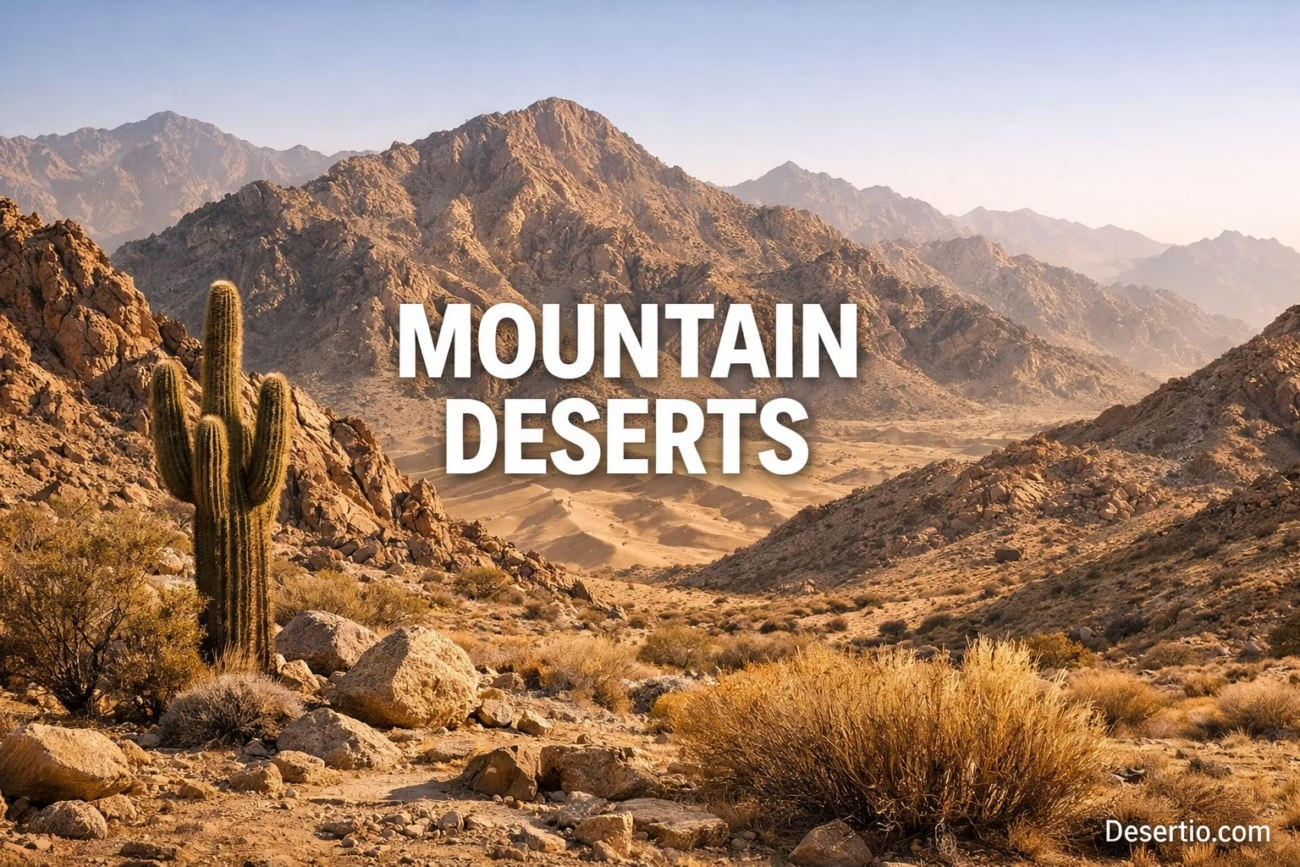
Mountain deserts are where thin air meets big-sky dryness. Think of them as deserts that live high on ridgelines, plateaus, and basins tucked between ranges—places where moisture gets squeezed out on one side of the mountains and the other side is left with clear, sharp light and very little rain. They can feel like a paradox: bright sun, cool shade, and landscapes that look simple at first glance, then reveal layers of geology, wind, snow, and time.
- What Counts As A Mountain Desert
- Where Mountain Deserts Show Up Around The World
- The Science Behind The Dryness
- How A Rain Shadow Works
- Climate Patterns You’ll Notice Right Away
- Sunlit Days
- Cold, Clear Nights
- Landforms That Tell The Story
- Soils And Water: Sparse, Yet Surprisingly Complex
- How Water Moves In A Mountain Desert
- Plants Built For Height, Sun, And Thirst
- Animals That Thrive On Efficiency
- Common Adaptation Themes
- Food Web Notes
- Human Presence In Mountain Deserts
- Mountain Desert Subtypes You’ll Hear About
- Geology Meets Weather: Why Surfaces Look So “Clean”
- How To Spot A Mountain Desert Landscape By Its Patterns
What Counts As A Mountain Desert
A mountain desert isn’t just a desert with a few hills. It’s a dry region shaped by elevation and relief, where altitude and mountain weather patterns help keep precipitation low. Many fall under the broad desert idea of receiving very limited yearly precipitation, often in the neighborhood of a few hundred millimeters or less, but the defining trait is how the mountains influence moisture and temperature.
- Elevation Matters: Higher ground cools air quickly, so nights can be cold even when days feel warm. That daily swing is a classic high-altitude desert signature.
- Mountains Steer Moisture: Ranges force air upward, wringing out water on windward slopes and leaving dry “shadow” zones leeward.
- Basins Count Too: Many mountain deserts sit in intermontane basins, valleys and plateaus boxed in by ridges that block humid air.
Because of their height, these deserts are often called cold deserts or high deserts. “Cold” doesn’t mean frozen all year. It means the average temperatures are lower than in tropical deserts, and winter conditions can be real—snowfall, frost, and long stretches of crisp, dry air.
Where Mountain Deserts Show Up Around The World
Mountain deserts appear wherever topography and circulation team up to limit moisture. You’ll find them on lofty plateaus, behind coastal ranges, and deep within continents where oceans feel far away. Famous examples include parts of the Tibetan Plateau, the Andean Altiplano, the Great Basin of North America, and dry valleys and basins scattered through major ranges. Each one has its own flavor, but they share the same core story: lift, drop, dry.
| Mountain Desert Setting | Common Elevation Feel | Typical Moisture Pattern | Landscape Clues |
|---|---|---|---|
| Rain-Shadow Basins | High valleys and leeward plains | Dry air descending after storms drop rain on the windward side | Alluvial fans, dry washes, basin playas |
| High Plateaus | Broad uplands, big horizons | Limited moisture inflow, strong sun, cold nights | Salt flats, shallow lakes, wide gravel plains |
| Intermontane Steppe-Deserts | Mid-to-high basins between ridges | Seasonal precipitation, often sparse | Bunchgrasses, sage-like shrubs, wind-shaped surfaces |
| Volcanic High Deserts | Elevated lava fields and cones | Porous ground with patchy runoff and springs | Basalt flows, cinder cones, scattered wetlands |
That table gives you a clean map of the idea, but the real magic is how these settings blend. A high plateau can also sit in a rain shadow. A basin can be dry most years, then briefly alive with snowmelt-fed streams. Mountain deserts are like a well-worn book: simple cover, deep chapters.
The Science Behind The Dryness
Moisture doesn’t just disappear. It gets redirected, lifted, cooled, and squeezed out. The backbone mechanism is orographic lifting—air rising over mountains—followed by leeward drying as air descends and warms. This sequence is part of broader mountain desert climate dynamics, where elevation and atmospheric circulation combine to limit precipitation. As descending air warms, it can hold more water vapor, relative humidity drops quickly, and cloud formation becomes far less likely.
How A Rain Shadow Works
- Moist air moves toward a mountain range and is forced upward.
- As it rises, it cools, and water condenses into clouds and precipitation.
- After crossing the crest, the air descends, warms, and dries out.
- The leeward side ends up with much less precipitation and more frequent clear skies.
In mountain deserts, the windward slopes spend the water, and the leeward slopes live on the change.
Another ingredient is continentality. Deep inland, far from ocean moisture, air masses arrive already dried out. Add high altitude—where air is thinner and holds less heat—and you get a climate that can feel bright, crisp, and surprisingly cool, even at latitudes where you might expect steady warmth.
Climate Patterns You’ll Notice Right Away
Mountain deserts have a personality. Days can feel bold; nights can feel shy. The sun hits hard because the atmosphere is thinner, and humidity is low—features typical of a high-elevation desert climate. Heat escapes quickly after sunset, creating the famous diurnal temperature range, a daily swing that can be dramatic in some seasons. The air often feels clean, almost polished.
Sunlit Days
Strong solar input is common, and the light can feel almost like a spotlight. With low humidity, shade matters more than you’d expect, and surfaces warm quickly.
Winds can be steady, especially in open basins, shaping dunes where sand is available and polishing gravel plains into desert pavements.
Cold, Clear Nights
After sunset, heat drains away fast. Frost and ice can appear even when the day felt mild. That’s a hallmark of high deserts.
Snow may fall in some regions, but the air is often so dry that snow can sublimate—going straight from ice to vapor—under blue-sky conditions.
Precipitation in mountain deserts is often seasonal and sometimes arrives as snow rather than rain. When it does rain, storms can be short and local. That’s why you’ll see landforms built by pulses: flashy runoff, quick channel cutting, and fan-shaped deposits at the base of slopes.
Landforms That Tell The Story
Mountain deserts are a playground for geomorphology. With sparse vegetation, the ground is exposed, and the landscape shows its processes openly. Erosion and deposition don’t hide behind thick soils or forests here. They show up as clean lines, sharp edges, and textured surfaces.
- Alluvial Fans: Cone-shaped spreads of gravel and sand where steep streams exit mountains and lose energy. Look for braided channels and coarse stones near the fan head.
- Bajadas: When multiple fans merge into a continuous apron along a mountain front. They can look like a giant, gently sloping ramp.
- Pediments: Rock-cut surfaces at mountain bases, often covered by a thin veneer of sediment. They’re like stone sidewalks built by time.
- Playas And Salt Flats: Flat basin floors where water collects briefly and evaporates, leaving salts behind. These are classic in closed, endorheic basins.
- Dunes In Unexpected Places: Wind can stack sand in sheltered basins or along valley margins, especially where dry lakebeds supply fine sediment.
In mountain deserts, basins are the pantry. They collect what the slopes deliver—water, sediment, and salts—then sort it all under sun and wind.
Rock surfaces can also develop features like desert varnish, a thin dark sheen that forms over long periods on exposed stones in some arid regions. It’s not paint, and it’s not a quick process. It’s more like a slow-written signature of chemistry, dust, and time, sometimes highlighted by deep browns and blacks on stable surfaces.
Soils And Water: Sparse, Yet Surprisingly Complex
Soils in mountain deserts can be thin and young on steep slopes, then thicker and more layered on stable basin floors. Because water arrives in small doses, salts and carbonates can accumulate, creating distinct horizons beneath the surface. In some cold high deserts, freeze-thaw cycles shape soils into patterned ground—subtle circles, stripes, and ripples that feel almost designed.
How Water Moves In A Mountain Desert
Water rarely arrives as a steady supply. It behaves like a visitor who shows up unannounced, stays briefly, then leaves clues behind.
- Snowmelt can feed springs and short-lived streams, especially in late winter and spring.
- Ephemeral channels carry runoff during storms, carving dry washes that may be empty most of the year.
- Infiltration can recharge small aquifers where gravel and fractured rock allow water to seep down.
- Evaporation concentrates minerals on basin floors, sometimes building salt crusts and hard pans.
Because water is patchy, life and landforms cluster around it. A tiny spring can support a ribbon of green in an otherwise tan basin, creating a micro-habitat that feels like a hidden room in a vast house. Even when vegetation is sparse, you’ll often see subtle bands where moisture lingers longer—at the toe of a slope, along a shallow channel, or near a shaded cliff base.
Plants Built For Height, Sun, And Thirst
Mountain desert plants don’t just “tolerate” dryness. Many are engineered for it. Add altitude—strong sun, cold nights, wind—and you get a community of species that often look compact, tough, and efficient. Cushion plants, bunchgrasses, hardy shrubs, and seasonal wildflowers can dominate depending on the region. The overall vibe is low and aerodynamic, like nature trimmed everything down to reduce exposure.
- Small Leaves Or Spines: Less surface area means less water loss. In some zones, waxy coatings add extra protection.
- Deep Or Wide Roots: Some plants dive for moisture; others spread out to catch brief rains and snowmelt.
- Compact Growth Forms: Cushion and rosette shapes reduce wind stress and trap a slightly warmer microclimate.
- Seasonal Timing: Many species grow fast during short wet windows, then rest. That rhythm is a hallmark of pulse-driven ecosystems.
At high elevations, ultraviolet radiation is stronger, and plants often produce protective pigments. That’s why you may see leaves with reddish or purplish tones, especially in cold, windy seasons. It’s not just for looks—it can help shield tissues from intense light and temperature stress.
Animals That Thrive On Efficiency
Mountain desert animals tend to be masters of energy and water budgeting. Many are active at cooler times, use burrows for stable temperatures, or rely on metabolic water from food. You’ll often find a mix of small mammals, hardy ungulates in some regions, reptiles at lower or warmer edges, and birds that take advantage of open terrain and thermal winds.
Common Adaptation Themes
- Burrowing for temperature stability and protection from wind.
- Crepuscular activity (dawn and dusk) to avoid peak sun and conserve water.
- Efficient kidneys in many desert-adapted mammals, producing concentrated urine.
- Camouflage that matches gravel, sand, and scrub—quiet colors that blend in.
Food Web Notes
Because plant growth is often seasonal, the whole food web can pulse. In wetter periods, insects and rodents may become more abundant, supporting birds of prey and other predators. In drier stretches, activity often shifts to sheltered microhabitats and hardy forage.
One detail that surprises people: mountain deserts can host wet pockets—small wetlands, seeps, or lake margins—right next to dry gravel plains. That closeness creates a mosaic where biodiversity can be richer than the “bare” look suggests. It’s like a patchwork quilt stitched from dryness and water.
Human Presence In Mountain Deserts
People have lived in and around mountain deserts for a long time, often focusing on the same anchors that plants and animals do: water, shelter, and seasonal rhythm. Where snowmelt feeds streams, communities have historically used careful water management to support gardens and fields. In broader basins, pastoral traditions often align with highland grazing cycles, moving with vegetation windows rather than fighting them.
- Water-Shaped Settlement: Springs, river corridors, and meltwater channels tend to host the most consistent habitation.
- Architecture And Materials: Stone, earth, and timber where available often dominate, chosen for thermal comfort and durability.
- Seasonal Work: Many activities track the climate pulse—planting and harvest in short growing windows, herding schedules tuned to forage.
Modern science also values mountain deserts for their clear skies and low humidity, which can support astronomy and atmospheric research. The environment is like a natural laboratory—simple inputs, visible outputs—making it easier to observe how wind, temperature, and water shape land and life.
Mountain Desert Subtypes You’ll Hear About
Not every mountain desert behaves the same. A useful way to understand them is to sort by what creates and maintains the dryness. This isn’t about rigid labels. It’s about dominant drivers—the main forces doing the heavy lifting.
Rain-Shadow Mountain Deserts
These form on the leeward side of major ranges. The windward slopes receive more precipitation, while the downwind basins stay noticeably drier. Expect big alluvial fans, dry washes, and strong wind signatures in open valleys.
High Plateau Deserts
These are broad, elevated expanses where altitude limits moisture and amplifies temperature swings. The horizons feel vast. Salt flats, shallow lakes, and gravel plains can be common, along with cold-season constraints on plant growth.
Intermontane Basin Deserts
These sit between ranges, often in closed drainage systems. Water that arrives tends to stay inland, evaporate, and leave minerals behind. Look for playas, alkaline soils in places, and patchy vegetation tied to groundwater depth.
Geology Meets Weather: Why Surfaces Look So “Clean”
In humid climates, plants and thick soils soften the landscape. In mountain deserts, that soft blanket is thin or missing, so rock and sediment stay exposed. Wind can remove fine particles, leaving behind a stone armor known as desert pavement. It’s like a self-made protective layer: once the fines blow away, the remaining gravel shields the ground beneath from further erosion.
Freeze-thaw cycles add another twist. Water sneaks into cracks, freezes, expands, and slowly pries rock apart. Over time, slopes can feed basins with angular debris, building talus cones and coarse fan deposits. It’s quiet work. No drama. Just repetition—nature’s version of sanding wood, one pass at a time.
How To Spot A Mountain Desert Landscape By Its Patterns
If you’re looking at a dry highland and wondering if it qualifies as a mountain desert, focus on patterns rather than single clues. One sign can mislead. A set of signs tells the truth. The scene usually mixes dryness indicators with altitude indicators.
- Sharp Daily Temperature Swings: Warm sun, cool shade, and cold nights are common, especially with clear skies.
- Fan-Shaped Deposits at mountain fronts: Alluvial fans and merged bajadas often frame basins.
- Closed Basins with flat floors: Playas, salt crusts, or seasonal shallow water can appear.
- Low, Tough Vegetation: Bunchgrasses, cushion forms, and scattered shrubs rather than tall continuous canopy.
- Wind-Sorted Surfaces: Gravel pavements, ripples, dunes in pockets, and dust-swept flats.
Put those together and the picture becomes clear: a landscape shaped by relief-driven weather, built from pulses of water and long stretches of drying. Mountain deserts aren’t empty. They’re edited—trimmed to essentials—and that’s exactly why they’re so fascinating to study.
