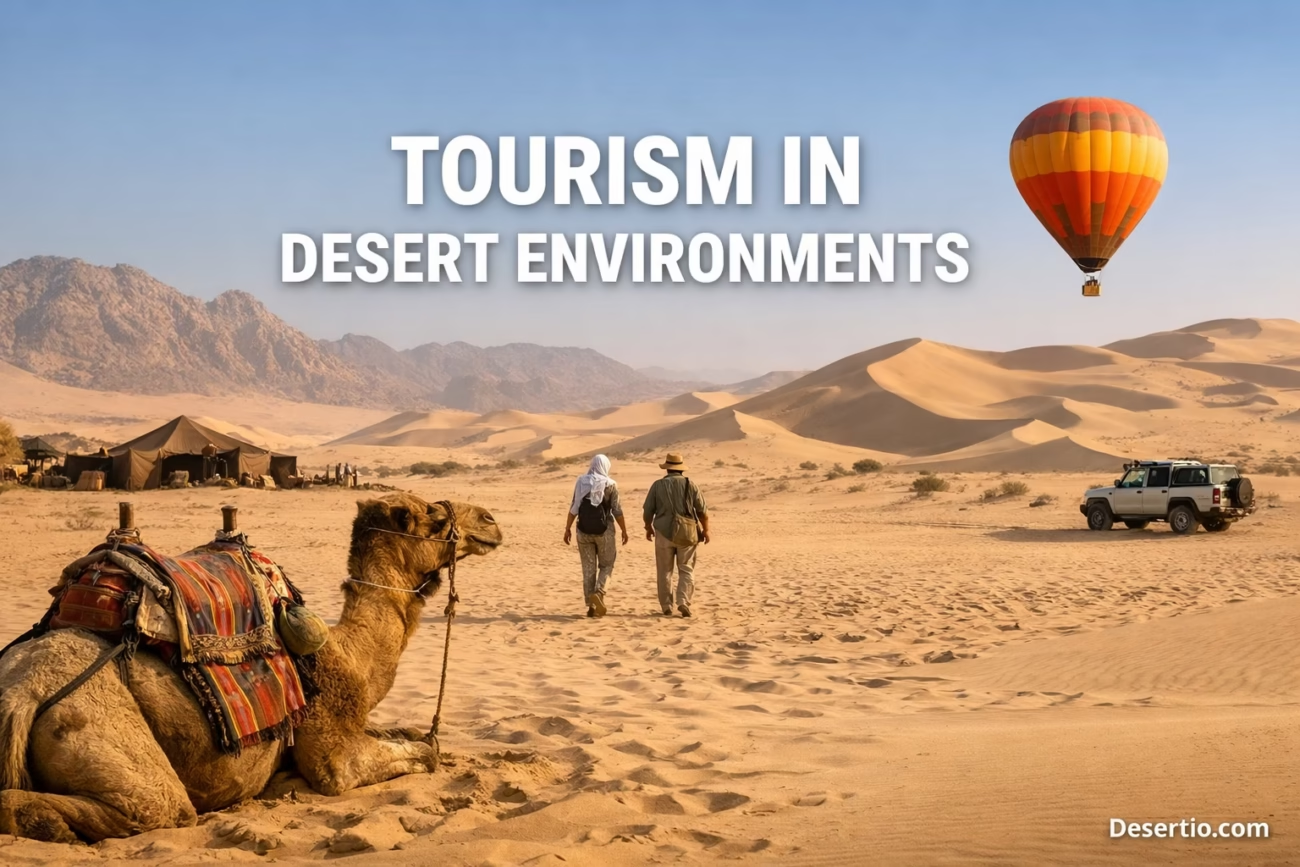
Desert tourism is a special corner of travel because deserts are defined first by low precipitation, not by sand. Many geographers use a simple benchmark: a desert is an area that typically receives under about 250 mm of precipitation per year. That single detail shapes everything visitors notice—big skies, sharp light, wide horizons, and a sense of space that feels almost cinematic.
- Desert Tourism Starts With Water And Weather
- Landforms That Shape Desert Experiences
- What People Do In Desert Environments
- Nature-Based Experiences
- Culture And Heritage Experiences
- Desert Ecology People Miss At First Glance
- Infrastructure That Makes Desert Tourism Work
- What “Low-Impact” Can Mean In A Desert Setting
- How Desert Tourism Is Managed
- Common Management Approaches Seen Worldwide
- Comfort Factors Visitors Notice Quickly
- Common Questions People Ask About Tourism In Desert Environments
- Desert Tourism Across Different Desert Types
- What Makes A High-Quality Desert Experience
When tourism enters these dry landscapes, it meets a place built around water scarcity and temperature swings. Days can be warm, nights can cool quickly, and wind can redraw the surface in subtle ways. A good desert experience feels simple on the outside, yet it rests on careful choices about access, infrastructure, and respect for slow-moving ecosystems.
Desert Tourism Starts With Water And Weather
Deserts are shaped by an imbalance: evaporation often exceeds incoming moisture. That helps explain why many deserts have clear days, crisp visibility, and an atmosphere that can feel remarkably transparent. For tourism, this means iconic features—dunes, rock formations, salt flats, and wide-open plains—tend to stay visually striking because plant cover is lighter and the landforms are more exposed.
It also means comfort and operations revolve around a few basics: shade, water logistics, and timing. In hot deserts, the midday sun can feel intense, while evenings bring relief and a different personality to the landscape. In cold deserts, dry air and elevation can make the climate feel surprisingly crisp even under bright sunshine. Either way, desert tourism is guided by the rhythm of the place, not the other way around.
In a desert, the landscape doesn’t shout. It whispers in dunes, stone, and starlight—then leaves you room to listen.
Landforms That Shape Desert Experiences
“Desert” is an umbrella word. Under it, you’ll find sandy seas, gravel plains, rocky plateaus, and salt-crusted basins—each one offering a different style of tourism. Knowing the landform helps explain why some deserts are famous for dunes, others for hiking routes through rock corridors, and others for geology that looks like another planet.
| Desert Surface Type | What It Often Looks Like | Why It Matters For Tourism | Common Visitor Focus |
|---|---|---|---|
| Sandy Dune Fields (Ergs) | Rolling dunes, rippled sand, dune ridges | Wind shapes routes and viewpoints; footprints and tracks show clearly | Dune walks, scenic viewpoints, sandboarding areas, sunrise/sunset viewing |
| Gravel And Stone Plains (Regs/Serir) | Firm pebbly surfaces, wide open flats | Often easier for walking and vehicle access where permitted | Driving corridors, desert cycling zones, open-sky photography |
| Rocky Plateaus And Highlands (Hamada) | Exposed bedrock, boulders, sharp ridges | Offers shade pockets and dramatic landforms | Hiking, rock scenery, canyon viewpoints, geological interpretation |
| Salt Flats And Playas | Bright, flat pans; salt crusts; seasonal surface changes | Surface conditions can vary; visual scale is extraordinary | Wide-angle photography, guided walks, night-sky viewing on open horizons |
Many deserts also feature wadis (dry river valleys that carry water only during rare rains) and oases (fertile pockets where fresh water is reliably available). These places often become natural hubs for routes, settlements, and visitor services. In tourism terms, they can feel like living rooms inside a vast outdoor house—small, green, and full of life.
What People Do In Desert Environments
Desert tourism works best when activities match the terrain and climate. Some experiences are high-energy; others are quiet and observational. The common thread is immersion: seeing how light, wind, and distance create a landscape that’s always changing, even when it looks still.
Nature-Based Experiences
- Dune And Rock Walks that highlight texture, slope, and horizon lines
- Stargazing in areas with minimal light and wide-open sky views
- Wildlife Watching focused on early/late activity patterns in arid zones
- Geology-focused outings to explain dunes, salt crusts, and erosion-sculpted rock
- Silence-based experiences like mindful observation and soundscape listening
Culture And Heritage Experiences
- Local guiding that explains routes, landmarks, and place names
- Traditional transport and hospitality experiences where offered and regulated
- Craft and storytelling sessions rooted in desert living knowledge
- Food traditions shaped by preservation methods and seasonal availability
- Architectural tours highlighting shade, courtyards, thick walls, and ventilation
There’s also a growing niche of science-minded tourism in deserts: astronomy visits, geology interpretation, and nature education walks. Deserts often provide clear views, strong contrasts, and open space—ideal for learning. When interpretation is done well, visitors leave with a sharper sense of how aridity shapes life, not just scenery.
Desert Ecology People Miss At First Glance
Deserts can look empty until you know where to look. Many plants and animals run on a strategy of timing: short bursts of activity around cooler hours, then long periods of stillness. Some plants wait for rare moisture events; some animals avoid heat by using shade, burrows, or crevices. A desert tour that includes ecology turns a “nice view” into a story about adaptation.
One of the most important and least visible features is biological soil crust (often called biocrust). It’s a living layer that can include microorganisms, lichens, and mosses, forming a thin skin on the ground in many dry regions. This layer supports soil stability and helps the surface hold together. That’s why many desert destinations create marked routes and viewing points—so visitors can enjoy the landscape while the ground stays healthy for the long run.
Oases deserve special attention because they concentrate life. Where fresh water is present, plant cover increases, shade becomes natural, and biodiversity often feels surprisingly rich. In tourism, oases often become rest areas, cultural hubs, and interpretive sites that explain how water moves underground through springs, aquifers, or wells.
Infrastructure That Makes Desert Tourism Work
Desert tourism runs on invisible systems: water supply, energy, transport corridors, and waste handling. Visitors may see a camp, lodge, or trailhead; behind it sits a chain of decisions about efficiency and durability. In arid settings, “lightweight” isn’t just style—it often means designs that reduce heat gain, use shade intelligently, and minimize water demand.
Architecture in desert regions often leans on proven ideas: thick walls, small openings, courtyards, wind-catching designs, and shaded outdoor rooms—approaches rooted in long traditions of desert culture and climate-adapted architecture. Modern operators may add solar energy, water-saving fixtures, and logistics that keep supplies steady without overbuilding. When tourism infrastructure stays compact and well-sited, the desert keeps its signature feeling: space, quiet, and clean lines.
What “Low-Impact” Can Mean In A Desert Setting
- Route Concentration so foot and vehicle traffic stays on designated corridors
- Water-Smart Operations that prioritize reuse and efficient supply chains
- Lighting choices that protect night-sky quality while keeping paths clear
- Waste systems that keep sites tidy and reduce what needs to be transported out
- Small footprint layouts that preserve the open horizon people came to see
How Desert Tourism Is Managed
Many well-known desert destinations use a management style that feels simple to visitors: clear routes, guided zones, and a few well-placed viewpoints. Under the surface, it’s a balancing act between access and stewardship. Common tools include zoning, capacity planning for popular spots, and guide training that connects visitors with local knowledge shaped by generations of human life in desert environments.
Protected areas often add another layer: signage, ranger presence, and rules that preserve wildlife behavior, quiet zones, and sensitive surfaces. In deserts, small disturbances can stay visible for a long time, so management tends to focus on prevention rather than repair. The visitor experience usually improves with this approach—fewer scattered tracks, cleaner viewpoints, and a stronger sense that the landscape is being cared for.
Common Management Approaches Seen Worldwide
- Designated Access Routes for walking, driving, or mixed use
- Guided-only zones in areas with high sensitivity or complex navigation
- Timed entry windows at popular viewpoints to keep the atmosphere calm
- Interpretation programs that teach dunes, geology, and desert life strategies
- Visitor facilities clustered in a few nodes to reduce scattered development
Comfort Factors Visitors Notice Quickly
Deserts teach you fast: comfort is about managing heat, sun, and dryness. Even experienced travelers are often surprised by how strong solar radiation feels on open ground, or how quickly the air cools after sunset. This is why desert operators prioritize shade design, rest points, and sensible pacing. When these basics are in place, visitors can focus on what they came for—beauty, silence, and scale.
Another factor is visibility. Dry air can make distant cliffs, dunes, and mountains look closer than they are. That optical clarity is part of the magic, and it’s also why desert tourism leans on established routes and clear wayfinding. With good guidance, the landscape feels expansive without feeling confusing.
Common Questions People Ask About Tourism In Desert Environments
Are All Deserts Made Of Sand?
No. Many deserts are dominated by rock, gravel plains, or salt pans. Sand dune fields are famous, yet they’re only one part of desert geography. In many regions, the “classic dune scene” is a highlight within a larger mosaic of stone, ridges, and flats.
Why Are Desert Night Skies So Memorable?
Dry air and frequent clear conditions can improve visibility. Add wide horizons and low local lighting in remote areas, and the sky becomes the main stage. Many desert destinations now protect night-sky quality with thoughtful lighting choices and viewing zones.
What Makes An Oasis Important For Tourism?
An oasis concentrates fresh water and vegetation, which creates shade and habitat. Historically, oases supported routes and settlements; today they often become visitor hubs for learning about water management, agriculture, and desert-adapted plant life.
Why Do Many Desert Sites Emphasize Staying On Marked Routes?
Because desert surfaces can include living soil layers and slow-forming patterns in sand and stone. Keeping movement on defined corridors helps preserve the look and function of the place while still letting visitors enjoy open landscapes and close-up texture.
Desert Tourism Across Different Desert Types
Tourism looks different in each desert type. Hot subtropical deserts are known for dune seas, oases, and big day-night contrasts. Cold deserts often feature high plains, crisp air, and dramatic visibility. Coastal fog deserts can feel unexpectedly cool, with mist patterns and stark terrain. Each setting asks for a slightly different style of access, interpretation, and infrastructure—yet the visitor reward is the same: awe with breathing room.
- Hot Deserts: shade-centered design, sunrise/sunset emphasis, dune and oasis interpretation
- Cold Deserts: wide-angle scenery, geology walks, night-sky programs, high-plain ecology
- Coastal Deserts: fog and cloud effects, salt-and-stone landscapes, seasonal light variation
- High-Altitude Arid Zones: strong visibility, crisp nights, compact visitor nodes
What Makes A High-Quality Desert Experience
The best desert experiences feel uncluttered. They give you time to look, a few well-chosen explanations, and access that doesn’t overwhelm the landscape. Quality shows up in small details: routes that match the landform, facilities that blend in, guides who can explain dunes and rock without overtalking, and operations that treat water as the precious resource it is. When those elements line up, desert tourism becomes meaningful—not because it’s loud, but because it’s clear.
Deserts also reward curiosity. Learn one concept—like how different winds shape different dune forms—and suddenly the landscape becomes readable. That shift is the heart of desert travel: turning “vast and empty” into “vast and detailed.”
