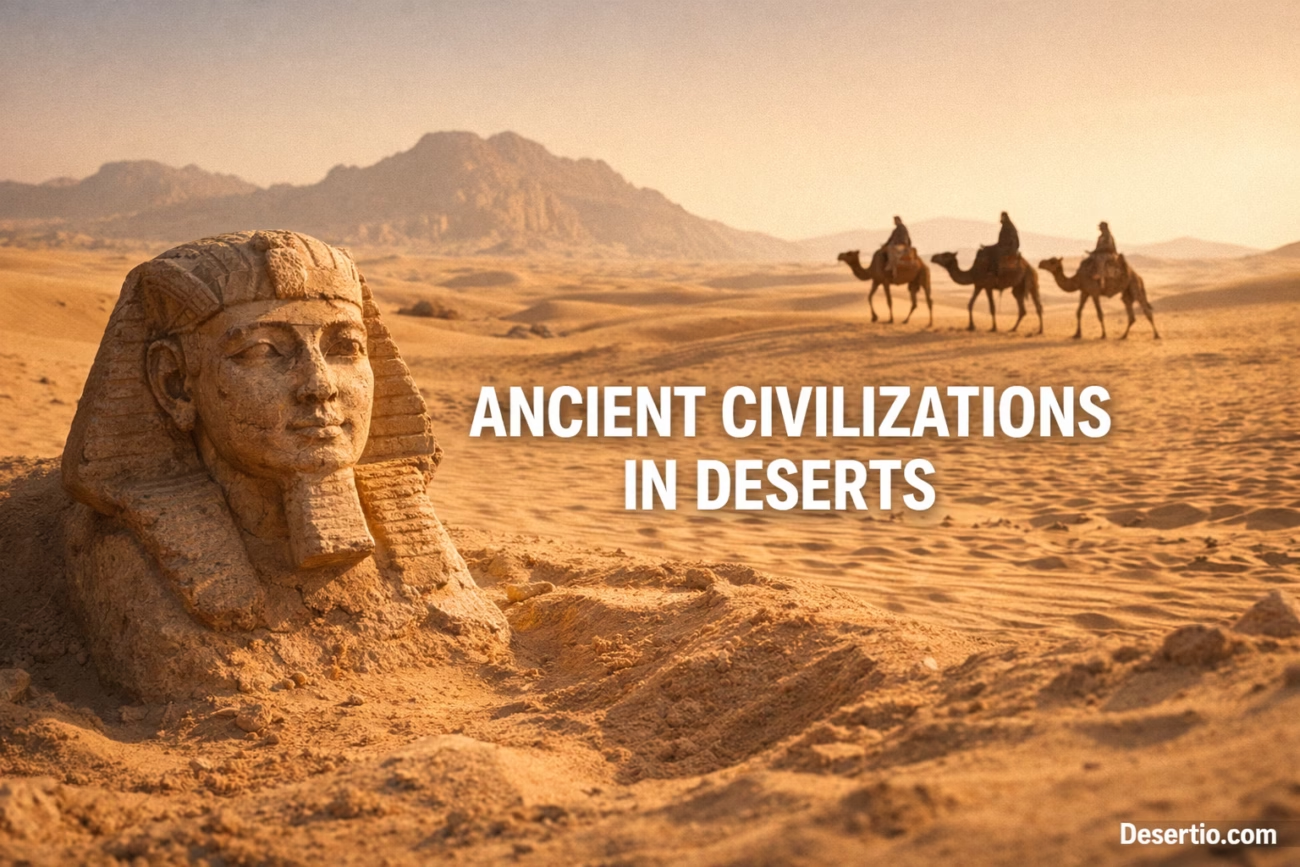
Deserts get painted as blank spaces on the map, yet they’ve hosted dense, organized life for thousands of years. The trick is simple and dazzling: people learned to read scarce water like a language. Along river edges, around oases, and inside sheltered valleys, communities built systems that turned arid landscapes into places where cities could rise, trade could flow, and ideas could travel far beyond the dunes—an enduring pattern visible across many forms of human culture in desert environments.
- Water Shapes Everything
- Trade Turns Distance Into Wealth
- Climate Leaves Sharp Evidence
- What “Desert Civilization” Really Means
- Why Deserts Nurtured Civilization
- Water: The Real Currency Of Arid Lands
- Surface Water Strategies
- Groundwater Strategies
- Desert Civilizations Compared
- Nile-Edge Worlds: Cities Between Sand And River
- Rocky Desert Cities: The Nabataean Talent For Water
- Sahara Oasis Networks: Agriculture Without A Major River
- Sonoran Desert Canal Communities: Hohokam Engineering At Scale
- Coastal Deserts Of The Andes: Nazca Water Access Below The Surface
- Silk Road Oases: Cities Built Around Water Stops
- Common Patterns Across Desert Civilizations
- How Desert Water Systems Work In Practice
- Food And Materials: What Thrived In Dry Country
- Trade And Exchange: The Desert As A Connector
- What Desert Archaeology Reveals Especially Well
- Preservation Advantages
- Common Challenges
- Reading Desert Ruins With Fresh Eyes
Water Shapes Everything
In dry country, infrastructure is destiny. Canals, cisterns, and underground channels decide where fields sit, where homes cluster, and how large a settlement can grow. A well-managed water network can feel like an invisible city wall—quiet, strong, and always working.
Trade Turns Distance Into Wealth
Deserts can be tough to farm, but they’re often perfect corridors. Caravans move along predictable routes between water stops. Those stops become markets, then towns, then hubs. Over time, oasis cities can link coasts, mountains, and river valleys into one economic pulse.
Climate Leaves Sharp Evidence
Dry air preserves things that rot elsewhere—wood, textiles, seeds, footprints, even handwriting. That means desert archaeology can be unusually intimate. You’re not only seeing monuments; you can sometimes glimpse everyday life in the materials people touched.
What “Desert Civilization” Really Means
It rarely means a city planted in the middle of endless sand. More often, it means a society living at the desert’s useful edges—riverbanks, foothills, wadis, coastal fog zones, and oases—using engineering and planning to stretch resources across space and seasons.
- Rivers that cut through drylands and bring reliable silt and water
- Oases fed by springs or groundwater, supporting orchards and gardens
- Seasonal channels where flash floods can be captured and stored
- Coastal deserts where marine air and mountain runoff create narrow bands of fertility
Why Deserts Nurtured Civilization
It sounds like a contradiction, yet deserts can reward organization. When resources are limited, coordination becomes a superpower. Communities that agree on water turns, canal repairs, storage rules, and planting schedules can outgrow neighbors who rely on luck. Add the desert’s long sightlines and predictable routes, and you get places where planning can matter as much as rainfall.
- Clear boundaries between fertile pockets and dry ground encourage compact settlement
- Stable travel lanes make long-distance trade more predictable than in dense forests
- High solar energy supports drying, storage, and year-round work rhythms
- Open terrain helps communities monitor canals, fields, and route traffic
In desert country, water management isn’t a side project. It’s the main architecture.
Water: The Real Currency Of Arid Lands
Across the world’s deserts, the same idea repeats with local flair: capture water when it appears, protect it from loss, and deliver it where it can grow food. Some regions leaned on broad floodplains, others on tight canyons, and others on groundwater. The methods vary, but the goal is always reliability—a steady rhythm that lets families commit to fields, homes, and craftwork. That’s why desert regions produced standout innovations like cistern chains, terraced runoff capture, and underground channels.
Surface Water Strategies
- Canals that move river water onto fields
- Basin irrigation that spreads floodwater across level plots
- Check dams that slow flows and trap fertile silt
Groundwater Strategies
- Underground aqueducts that tap sloping water tables
- Wells paired with storage basins
- Subsurface channels that reduce evaporation losses
Desert Civilizations Compared
Different continents, different materials, same core problem: how to turn scarcity into stability. The table below highlights a few well-studied examples where desert settings shaped city form, farming choices, and engineering traditions—each with its own signature style.
| Region | Desert Setting | Water Approach | Signature Strength | Approximate Flourishing |
|---|---|---|---|---|
| Nile Valley | River corridor bordered by vast deserts | Flood-based fields, canals, storage | Large-scale state planning | c. 3100–30 BCE |
| Petra Region | Rocky desert valleys and seasonal floods | Cisterns, channels, pipelines, dams | Urban water harvesting | c. 300 BCE–700 CE |
| Central Sahara (Fezzan) | Oases within a major desert | Underground channels and wells | Oasis agriculture networks | c. 500 BCE–600 CE |
| Sonoran Desert (Salt–Gila) | Hot desert around dependable rivers | Long canal systems and field grids | Canal-based farming towns | c. 1–1450 CE |
| Nazca Region (South Coast Andes) | Coastal desert valleys | Subterranean aqueducts and wells | Water access engineering | c. 100 BCE–800 CE |
| Tarim Basin Oases | Oases ringed by arid basins | Oasis irrigation and underground channels in some areas | Long-distance exchange hubs | c. 200 BCE–1000 CE |
Nile-Edge Worlds: Cities Between Sand And River
The Nile Valley is one of the clearest examples of a desert margin powering a civilization. Most of the surrounding landscape is dry, yet the river creates a long, thin ribbon of life. That contrast pushes settlement into a tight corridor, which makes coordination easier: fields, canals, and towns line up like beads. Over centuries, this geography supported administration, large building programs, and specialized labor. The desert itself also mattered—stone quarries, mineral zones, and travel routes through wadis formed a broader economic landscape beyond the fields, stitched together by logistics.
One underrated desert advantage is preservation. Dry conditions helped protect texts, wooden objects, and organic remains in certain contexts. That means the story isn’t only carved in stone; it can also show up in fragile items that rarely survive in wetter climates. When you see desert-edge civilizations clearly, you notice a pattern: the river feeds the body, and the desert feeds the toolkit—materials, routes, and space for work that needs dryness and sun.
Rocky Desert Cities: The Nabataean Talent For Water
In rugged desert valleys, rain doesn’t arrive often, but it can arrive fast. This is where water harvesting becomes almost theatrical—channels cut into rock, carved basins, and carefully placed cisterns that catch sudden flows before they vanish. The Nabataean tradition is famous for turning that challenge into urban comfort. Petra’s setting is a masterclass: narrow gorges funnel water, open areas offer storage space, and stone surfaces make it possible to guide runoff with precision. The result is a city that feels improbable until you remember one rule: nothing is wasted in a well-run desert system.
Water control also supports trade. When a settlement can provide dependable water in a dry region, it becomes a natural stop on regional routes. Over time, caravan traffic encourages warehouses, workshops, and shared public spaces. In desert cities like these, engineering isn’t hidden. It’s part of the urban identity—visible in carved channels, neatly shaped reservoirs, and the calm logic of distribution.
Sahara Oasis Networks: Agriculture Without A Major River
The Sahara is vast, yet it has long been dotted with oases—green islands where groundwater and springs can support orchards and gardens. Some ancient societies built impressive networks across these islands, linking them through movement, exchange, and shared know-how. In the Fezzan region, the Garamantian tradition is especially known for extensive water systems that reduced evaporation by keeping flows underground. Think of it like moving water through cool tunnels instead of leaving it under the sun. That simple idea can turn a small oasis into a broader agricultural zone, capable of supporting towns and specialized work.
Oasis life often centers on layered farming. Date palms provide shade overhead, while smaller trees and crops grow beneath. This stacked structure creates a microclimate—a pocket of cooler air and softer light. It’s a living example of desert design: protect moisture, protect soil, and build routines that match the rhythms of wells and channels. The desert doesn’t disappear; it frames the oasis, making its green geometry even more striking.
Sonoran Desert Canal Communities: Hohokam Engineering At Scale
In the Sonoran Desert of North America, rivers like the Salt and Gila offered dependable flow compared with the surrounding drylands. The Hohokam tradition built long canal networks that carried river water onto fields, supporting farming settlements in a hot desert setting. The impressive part is not only length; it’s organization. Canals require surveying, maintenance, scheduling, and shared rules. When that system works, you get stable harvests, craft specialization, and community spaces that reflect a confident settlement pattern. A canal is more than a ditch—it’s a social agreement made visible.
Desert canals also shape the landscape into readable patterns: main channels, branches, field grids, and pathways along banks. Over time, this creates a human-made map on the ground—almost like veins across a broad plain. Even today, canal alignments can influence later land use, showing how arid-land engineering leaves long shadows. The key takeaway is simple: deserts don’t only test people; they also reward communities that master shared systems.
Coastal Deserts Of The Andes: Nazca Water Access Below The Surface
Coastal deserts along the Andes can look almost lunar—dry plains broken by narrow valleys. In places like the Nazca region, water is often available, but not always in the most convenient form. Subterranean aqueduct systems and well features helped move and access water while reducing evaporation. The famous spiral openings associated with some systems aren’t just beautiful—they’re functional, making it easier to reach water and maintain channels. In a climate where surface moisture disappears quickly, underground flow can be a quiet advantage, and it supports permanent agriculture in a place that seems unwilling to cooperate.
Engineering and culture often blend in desert settings. When water is precious, the structures around it—openings, walls, channels, and access points—become landmarks. They guide daily routines and shape how communities think about place and time. The desert becomes a stage where small interventions matter. A stone-lined channel can feel like a signature, and a well opening can become a community anchor. In that sense, desert infrastructure is also cultural design.
Silk Road Oases: Cities Built Around Water Stops
In large arid basins, life clusters where water emerges—at the mouths of rivers, along mountain-fed streams, or where groundwater can be reached. The Tarim Basin region is a classic example of oasis geography: settlements form a ring, each oasis a node with farms, workshops, and storage. Because distances are long, oases double as service centers: they supply food, fodder, and rest. Over generations, these stops can develop into towns known for crafts, written records, and distinctive local styles. The desert is not a barrier here; it’s a spacing mechanism that organizes the network.
In some oasis regions, underground channel methods (often associated with karez-type systems) help carry water from higher ground to fields and neighborhoods while limiting evaporation. You can picture it like a cool pipeline made of earth and stone, guided by slope. Where that works, it stabilizes farming and makes urban life more predictable. The bigger story is how deserts turn reliability into value: a dependable water stop becomes a dependable trade stop, and dependable trade supports urban growth.
Common Patterns Across Desert Civilizations
- Settlement clusters around controllable water sources
- Storage culture: granaries, reservoirs, and careful allocation
- Route knowledge that connects far places through repeatable paths
- Material intelligence: stone, adobe, and plaster used to manage heat and airflow
These patterns show up in very different deserts. The details change—local stone here, canal grids there—but the logic stays steady: protect water, reduce loss, and make the landscape predictable enough for families and markets.
How Desert Water Systems Work In Practice
Even with different tools and materials, arid-land water systems often follow a similar sequence. It’s a practical chain from landscape reading to daily upkeep. The most successful systems aren’t only clever; they’re maintainable. A design that can’t be repaired with local skills and local materials won’t last long in a hard climate.
- Identify the source: floodwater, river flow, spring, or groundwater slope.
- Capture at the right moment: divert a pulse of water without losing control.
- Store safely: cisterns, basins, or shaded channels to limit loss.
- Distribute fairly: schedules and rules that match field needs and seasons.
- Maintain constantly: clear silt, repair linings, and protect access points.
Food And Materials: What Thrived In Dry Country
Desert civilizations weren’t limited to survival crops. With dependable water, they could cultivate grains, legumes, vegetables, and orchards. In oasis settings, date palms often anchor the system because they provide food, shade, and useful fiber. Along rivers, cereals and pulses can scale up when canal networks work well. The desert also shapes building and craft materials: stone and sun-dried brick handle heat differently than timber-heavy construction, and plastered surfaces can reflect light while protecting walls. In short, the desert pushes people toward efficient choices—plants that fit the climate and materials that match the sun.
- Orchard layering in oases: tall canopy plants plus shaded understory crops
- Canal-fed fields near rivers: predictable planting zones and harvest schedules
- Heat-smart architecture: thick walls, courtyards, and shaded lanes
- Storage focus: dry air supports long-term keeping when containers are well made
Trade And Exchange: The Desert As A Connector
Deserts separate regions, yet they also connect them by forcing movement into specific lanes. Caravans prefer known paths because water stops matter. That concentration of travel can create a rhythm: rest points become markets, markets become towns, and towns become hubs that coordinate exchange. In many desert regions, trade wasn’t only about luxury goods. It also moved essentials—salt, textiles, metals, stone, and crafted tools—plus knowledge about routes and seasons. When you view deserts through this lens, you see a giant network map drawn in spacing and water points, with oasis cities acting like punctuation marks.
Where water is dependable, distance becomes manageable—and the desert starts behaving like a road.
What Desert Archaeology Reveals Especially Well
Drylands can preserve traces that vanish elsewhere. That includes plant remains, wooden tools, woven fibers, and sometimes even inks on writing materials. This makes deserts valuable not because they are easy, but because they are honest archives when conditions align. Of course, sand and salt can be harsh on structures, and shifting dunes can bury sites for centuries. Yet that burial can also protect. It’s like placing history under a blanket—hidden, not destroyed—until winds or careful excavation bring it back into view.
Preservation Advantages
- Organic survival in very dry contexts
- Clear settlement outlines where vegetation is sparse
- Route traces that remain visible across open ground
Common Challenges
- Wind erosion on exposed surfaces
- Salt weathering in some basins and coastal deserts
- Moving dunes that can cover and uncover the same place
Reading Desert Ruins With Fresh Eyes
When you come across an ancient desert site—whether it’s a canal line, a rock-cut cistern, an oasis field pattern, or a river-edge settlement—try to spot the logic behind it. Deserts make priorities visible. You can often tell where water entered the system, where it was stored, how it was shared, and which spaces were protected from heat and wind. It’s like watching a clever machine built from earth and stone. And once you see that machine, you realize the big story: desert civilizations weren’t accidents. They were intentional solutions to an environment that rewards care, craft, and collective organization.
