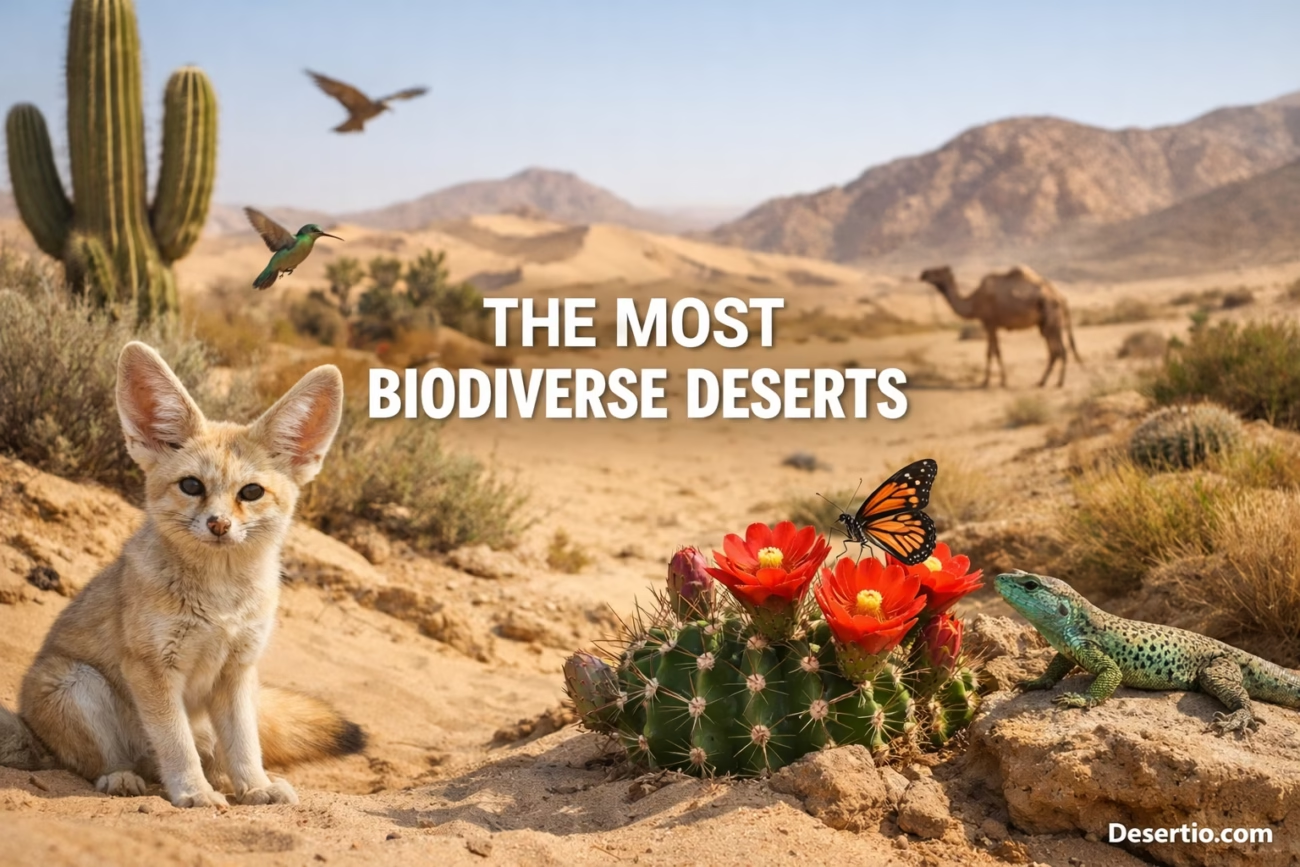
When most people picture a desert, they imagine empty dunes. Real deserts are often the opposite: living mosaics where life stacks itself into every crack of shade, every brief puddle, every foggy morning, and every cool pocket of elevation. In the most biodiverse deserts, scarcity becomes a design feature, not a dead end. You get bursts of wildflowers, insect rush-hours, reptile-rich flats, and thorny woodlands that feel like a patchwork quilt. Desert biodiversity is all about timing, microclimates, and clever survival strategies.
- What Makes a Desert Biodiverse
- Key Ingredients
- How Diversity Shows Up
- How To Read “Most Biodiverse” Without Falling Into A Trap
- Deserts Known For Exceptional Biodiversity
- 1) Sonoran Desert
- 2) Chihuahuan Desert
- 3) Succulent Karoo
- 4) Namib Desert
- 5) Atacama Desert (Coastal Fog Zones)
- 6) Kalahari (Semi-Arid Sands)
- 7) Australian Arid Zone (Multiple Deserts)
- 8) Thar Desert
- Patterns Shared By Biodiversity-Rich Deserts
- Moisture Without “Wetness”
- Lots Of “Edges”
- How Desert Life Packs More Species Into Less Water
- Desert Biodiversity Hotspots Inside Hotspots
- Moisture Concentrators
- Special Soils And Rocks
- Common Life Forms You’ll Find In Biodiverse Deserts
What Makes a Desert Biodiverse
A desert is defined more by low and unpredictable moisture than by heat. These conditions shape the survival strategies of many animals and plants adapted to desert environments. Some deserts are hot, some are cool, some are coastal, and some sit high on plateaus. The “biodiversity winners” tend to share one thing: they create many different “rooms” for life. Not literal rooms, of course—think of them as tiny neighborhoods with their own rules. A north-facing slope stays cooler, a canyon holds shade longer, and a sandy wash funnels water like a quiet underground pipeline. Habitat variety builds species variety.
Another big driver is reliable pulses—not steady rain, but rhythms that living things can predict. Summer monsoons, winter storms, coastal fog, and snowmelt from nearby mountains all act like nature’s calendar. Plants and animals sync their life cycles to those pulses with almost spooky precision. You can see it in seed banks that wait for the right rainfall, and in insects that appear like clockwork after a storm. Timing is the currency in arid ecosystems, and predictable timing allows more species to specialize without crashing into each other.
Key Ingredients
- Topographic complexity (mountains, canyons, bajadas, dunes)
- Multiple moisture sources (storms, fog, springs, snowmelt)
- Soil diversity (sand, gypsum, volcanic rock, clay flats)
- Ecotones where desert meets grassland, woodland, or coastal zones
- Seasonal productivity spikes that fuel food webs
How Diversity Shows Up
- High species richness in certain groups (reptiles, insects, annual plants)
- Lots of endemism (species found nowhere else)
- Specialized niches built around shade, burrows, and short-lived water
- Layered habitats: ground, shrub, canopy, rock faces, and subterranean space
- Behavioral adaptation like nocturnality, torpor, and timed breeding
How To Read “Most Biodiverse” Without Falling Into A Trap
“Most biodiverse” can mean different things depending on what you count. One desert might lead in plant endemism, while another shines in reptiles, and another explodes with insects after rain. So instead of pretending there’s one perfect scoreboard, this article highlights deserts that are widely recognized for exceptional biodiversity through some mix of species richness, endemism, and habitat variety. If you want a mental model, picture a library: some deserts have more books, some have rarer editions, and some have more genres.
One simple rule: deserts become biodiversity powerhouses when they combine multiple habitats with at least one dependable moisture pattern. That combo creates stability inside variability.
Deserts Known For Exceptional Biodiversity
Below are standout deserts and desert-adjacent arid biomes that consistently come up in ecological studies, conservation planning, and biogeography discussions for their remarkable life density under dry conditions. Each one earns its place in a different way—monsoon energy, fog-fed productivity, mountain “islands,” or plant-rich succulent systems. Notice the pattern: the richest deserts are rarely uniform. They’re patchy on purpose.
| Desert / Arid Biome | Moisture Pattern That Matters | Habitat Mosaic | Biodiversity Strength |
|---|---|---|---|
| Sonoran Desert | Seasonal rains (including summer pulses in many areas) | Desert scrub, washes, rocky slopes, coastal zones, “sky island” mountains nearby | High overall species richness across plants, birds, reptiles, and insects |
| Chihuahuan Desert | Summer rainfall pulses and strong elevation gradients | Grasslands, shrublands, gypsum dunes, basins, mountain foothills | Plant diversity and specialized soil communities |
| Succulent Karoo | Winter rainfall with fog influence in some zones | Quartz fields, rocky plains, succulent shrublands | Exceptional plant endemism, especially succulents |
| Namib Desert | Coastal fog as a steady water source | Dune seas, gravel plains, fog belts, ephemeral river corridors | Fog-adapted ecosystems with distinctive invertebrate and plant life |
| Atacama Desert (Coastal) | Fog-driven “lomas” oases plus rare rainfall events | Coastal hills, fog oases, salt flats, volcanic terrains | High endemism in fog-oasis flora and specialized microbes |
| Kalahari (Semi-Arid) | Seasonal rains with sandy soils storing moisture | Sandy savannas, grasslands, pans, wooded patches | Large-scale ecosystem diversity supporting varied wildlife communities |
| Australian Arid Zone (Multiple Deserts) | Irregular rains, strong temperature seasonality in many areas | Dunes, spinifex grasslands, rocky ranges, salt lakes | Notable reptile diversity and endemic arid-adapted plants |
- Sonoran Desert
- Chihuahuan Desert
- Succulent Karoo
- Namib Desert
- Atacama Desert (Coastal Fog Zones)
- Kalahari (Semi-Arid Sands)
- Australian Arid Zone (Simpson, Great Victoria, Great Sandy, And More)
- Thar Desert
1) Sonoran Desert
The Sonoran is often brought up first because it’s a desert with multiple seasons of growth in many areas. That matters. More than one productive season means more chances for plants to leaf out, flower, and set seed—and more steady food for insects, birds, and small mammals. Add rugged terrain and a mix of coastal influence, basins, and mountains, and you get a desert that behaves like a biodiversity machine. It’s not just “dry.” It’s strategically wet in pulses.
- Habitat variety includes desert scrub, rocky hills, sandy flats, and water-carving washes.
- Ephemeral streams (washes) act like highways for nutrients and plant growth.
- Sky island effects nearby create sharp transitions from desert lowlands to cooler highlands, expanding the regional species pool.
- Iconic plant architecture (columnar cacti and drought-adapted shrubs) provides nesting sites, shade, and food.
2) Chihuahuan Desert
The Chihuahuan Desert is famous for its plant diversity, especially in shrublands and grassland edges where elevation, soils, and rainfall timing create sharp ecological boundaries. You’ll see broad basins, rugged mountain ranges, and pockets of unusual soils. Those unusual soils are a big deal: they can support specialized plant communities that don’t show up on “normal” ground. Diversity here is often written in the soil.
- Elevation gradients generate cooler and wetter niches close to hot lowlands.
- Gypsum and calcareous soils can host distinct plant assemblages adapted to mineral-heavy substrates.
- Grassland-desert transitions widen the menu of habitats for birds, insects, and grazers.
- Seasonal bloom cycles can be dramatic after well-timed rains, boosting insect and pollinator diversity.
3) Succulent Karoo
If you care about plants, the Succulent Karoo is a headline act. It’s widely recognized for extraordinary succulent richness and a high level of endemism—species that exist only in this region. The magic lies in a climate rhythm that supports plant specialization, plus complex terrain and soil patterns that encourage “micro-endemism,” where a species may be tied to a very specific slope, soil patch, or rock field. Think of it as a botanical archipelago on land. Small spaces can hold rare worlds.
- Winter rainfall supports growth cycles that differ from many summer-rain deserts.
- Quartz fields and rocky substrates create temperature and moisture quirks right at ground level.
- Succulent specialization includes water-storing leaves, compact forms, and seasonal dormancy.
- Pollination networks can be highly tuned, with flowering times matched to local insect activity.
4) Namib Desert
The Namib shows how a desert can be biodiverse without frequent rain. The secret is fog. Coastal fog drifts inland and condenses on plants, rocks, and even animals. That steady mist becomes a water budget that life can plan around. Pair fog belts with dune seas, gravel plains, and ephemeral river corridors, and you get a desert that offers many ways to live. Fog is the Namib’s quiet rainstorm, and fog-driven ecology supports a distinctive cast of insects, plants, and reptiles.
- Fog harvesting appears in plants, beetles, and other invertebrates that capture moisture from air.
- Ephemeral rivers can create greener ribbons across otherwise dry landscapes, boosting local diversity.
- Dune and gravel habitats host different communities, increasing habitat turnover across short distances.
- Behavioral timing (morning activity, burrowing, shade-seeking) reduces heat stress and widens viable niches.
5) Atacama Desert (Coastal Fog Zones)
The Atacama is often described as extremely dry overall, yet its coastal zones can host surprising life thanks to fog oases known as lomas in parts of the region. When moist air meets cool coastal conditions and rises over hills, fog condenses and creates pockets where plants can grow more consistently than the surrounding terrain suggests. Those pockets become biodiversity islands—green punctuation marks in a wider arid sentence. It’s a desert with hidden pages, and lomas ecosystems are among the most fascinating chapters.
- Fog-fed vegetation supports localized plant communities with strong regional uniqueness.
- Topographic traps (hills and ridges) help fog condense and linger longer.
- Salt flats and rocky zones add habitat contrasts that select for specialized species.
- Biological timing is tuned to rare rainfall events and more frequent fog moisture.
6) Kalahari (Semi-Arid Sands)
The Kalahari is often described as a semi-arid sandy system rather than a classic “bare” desert, and that’s exactly why it can support broad ecological variety. Seasonal rains, sandy soils that can store moisture, and a mix of grasslands and wooded patches create conditions for large-scale biodiversity. It’s not about one intense hotspot; it’s about a wide canvas of habitats that shift through seasons. In the Kalahari, diversity travels in waves, and seasonal productivity shapes the whole food web.
- Sandy substrates influence how water infiltrates and stays available below the surface.
- Vegetation structure ranges from open grass to shrub and woodland patches, expanding niches.
- Pans and low-lying basins can concentrate water and nutrients at certain times.
- Regional connectivity supports movement and mixing of species across a vast landscape.
7) Australian Arid Zone (Multiple Deserts)
Australia’s arid interior is a biodiversity story that often surprises people because “desert” is treated as a single category. In reality, the Australian arid zone spans several deserts and many habitats: dune fields, stony plains, spinifex grasslands, rocky ranges, and salt lakes. One standout feature is reptile diversity. Many Australian reptiles are finely adapted to heat, scarce water, and patchy resources, and the landscape’s habitat variety helps maintain that richness. It’s a continent-scale puzzle where endemism thrives in the pieces.
- Spinifex grasslands create structured habitat and microclimates at ground level.
- Rocky ranges provide crevices, shade, and cooler refuges that expand daily activity windows.
- Dune-stony plain contrasts support different plant and animal communities within the same region.
- Fire and regrowth dynamics (in appropriate ecosystems) can create habitat mosaics over time without requiring frequent rain.
8) Thar Desert
The Thar is a major warm desert system with a strong seasonal rhythm and a mix of dunes, plains, and semi-arid edges. Its biodiversity is often expressed through adapted grasslands, hardy shrubs, and wildlife that thrives on seasonal productivity. Because the Thar sits near varied ecological zones, it can function as a meeting place for species from surrounding habitats, which boosts regional variety. Edges matter in desert biodiversity, and ecotone influence helps explain why this landscape supports a broad community.
- Seasonal vegetation supports timed breeding and foraging cycles.
- Mixed landforms (dunes, plains, rocky patches) create many microhabitats.
- Semi-arid transitions expand the range of plant and animal strategies present.
- Ground-level shelter from shrubs, grasses, and burrows supports survival through heat peaks.
Patterns Shared By Biodiversity-Rich Deserts
Even though these deserts sit on different continents, their biodiversity follows a familiar blueprint. The richest deserts aren’t just “dry places with tough plants.” They’re dynamic systems with fine-scale variety. If you could zoom in like a camera lens, you’d see life sorting itself into preferred temperatures, soil types, and moisture pockets. Microhabitats are the secret rooms, and microclimate is the key.
Moisture Without “Wetness”
Desert water isn’t always rainfall you can see. Fog can act like liquid air. Springs and seeps can create small green zones that matter far beyond their size. Even dew and brief humidity spikes can support insects and microorganisms. Water moves sideways through soils and along rock layers, and hidden moisture often explains why one hillside is alive while the next looks quiet.
Lots Of “Edges”
Edges are where ecosystems overlap. A desert next to mountains, coasts, or grasslands gains extra species because it borrows from neighbors. This is why areas with elevation gradients or coastal influence frequently rank high for biodiversity. More overlap means more options, and ecotones are like biodiversity handshake zones.
How Desert Life Packs More Species Into Less Water
Biodiversity in deserts doesn’t happen by brute force. It happens through specialization. Some plants avoid drought by living fast—germinate, flower, seed, vanish—then wait as seeds for the next good moment. Others invest in deep roots, waxy leaves, and water storage. Animals split the day into shifts: dawn, dusk, night, and the cool hours after a storm. It’s a scheduling masterpiece. In many deserts, behavioral adaptation is as important as physical adaptation.
- Temporal partitioning: species use different times of day or seasons to reduce competition.
- Thermal refuges: burrows, shade pockets, rock crevices, and dense shrubs act like natural air-conditioning.
- Resource pulses: life booms after rain, then tightens its belt without collapsing.
- Mutualisms: pollinators, seed dispersers, and nurse plants help each other in tough conditions.
Desert biodiversity isn’t about constant abundance. It’s about precision: using small windows of opportunity with incredible efficiency.
Desert Biodiversity Hotspots Inside Hotspots
Within biodiverse deserts, there are smaller zones that act like amplifiers. These places often look ordinary from far away, yet they can hold disproportionate species richness. If you’re trying to understand why a desert ranks high, focus on these “inside engines.” They’re the reasons the whole system hums. Hotspots inside deserts are usually defined by water capture, shade persistence, or unique soils.
Moisture Concentrators
- Ephemeral river corridors with deeper soils and periodic flow
- Fog belts along cold-current coasts
- Spring-fed oases and seep zones
- Alluvial fans that collect runoff from higher ground
Special Soils And Rocks
- Gypsum dunes with specialized plant communities
- Volcanic substrates that change nutrient and drainage patterns
- Quartz fields influencing temperature and moisture at ground level
- Rocky outcrops creating crevice habitats and shade geometry
Common Life Forms You’ll Find In Biodiverse Deserts
Different deserts feature different “stars,” yet biodiverse deserts tend to share certain life strategies. The cast changes by continent, but the roles are familiar: water savers, heat dodgers, pulse riders, and shade builders. Deserts are full of engineers—species that create structure for others. A shrub can be an apartment building when you’re small. Keystone structure is a big theme.
- Drought-adapted plants: succulents, deep-rooted shrubs, short-lived annuals, tough grasses
- Reptiles and arthropods: often dominant in hot, dry food webs due to efficient water use
- Nocturnal mammals: small species that forage at night and shelter by day
- Desert birds: many tied to flowering cycles, seed availability, and riparian corridors
If you take one idea from all of this, let it be this: the “most biodiverse deserts” aren’t contradictions. They’re proof that life can become more inventive when resources are limited. Deserts don’t just test survival; they reward clever design. And biodiversity is the scorecard of that design. Arid ecosystems are quietly rich—once you know where, and how, to look.
