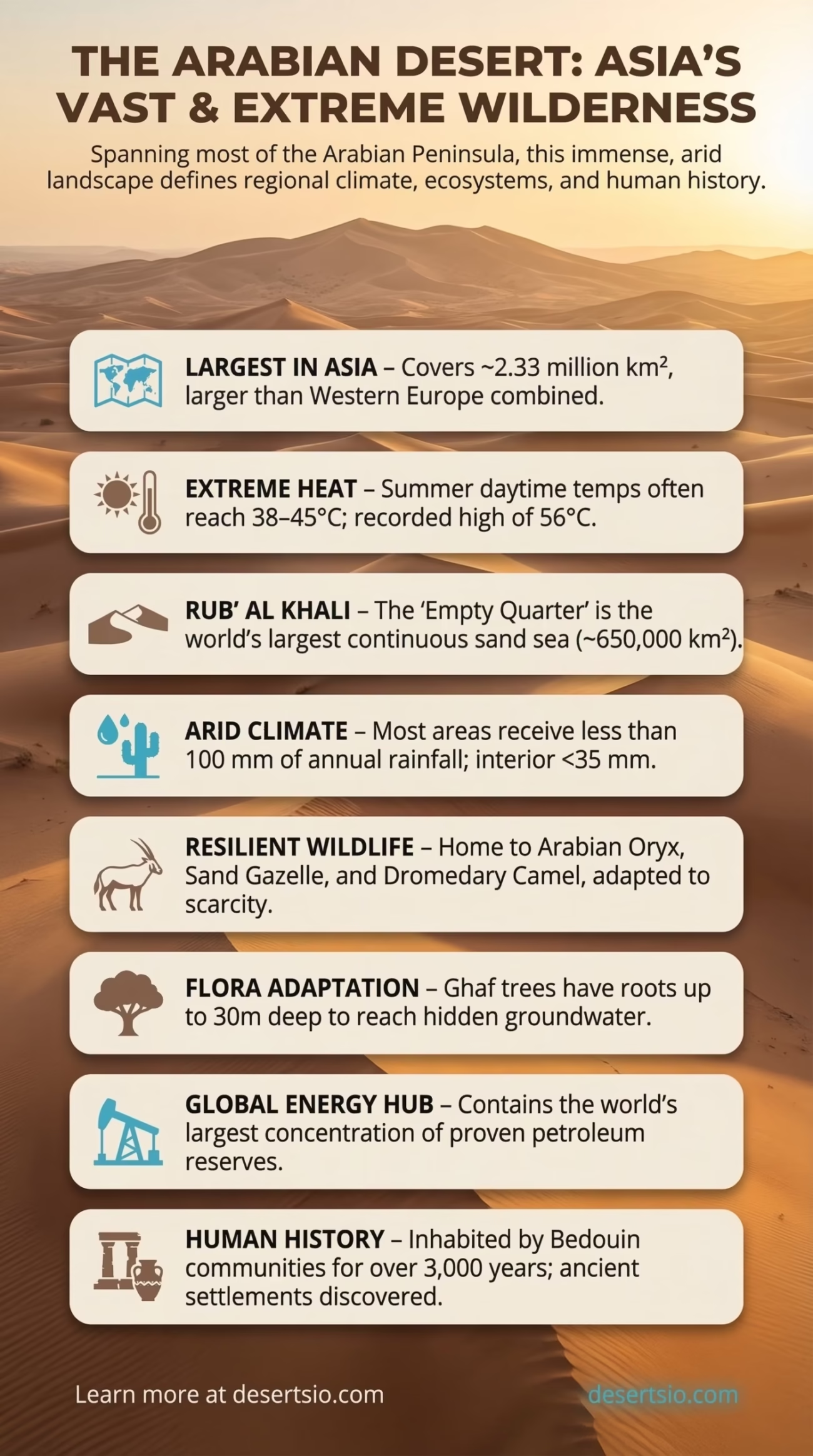
| Location | Arabian Peninsula — Saudi Arabia, Yemen, Oman, UAE, Kuwait, Qatar, Bahrain, Jordan, Iraq |
| Total Area | ~2,330,000 km² (900,000 sq mi) |
| Desert Type | Subtropical hot desert (BWh – Köppen classification) |
| Largest Sand Sea | Rub’ al Khali (Empty Quarter) — ~650,000 km² |
| Highest Recorded Temperature | 56°C (133°F) — recorded in Kuwait (2016) |
| Average Daytime Temperature | 38–45°C (100–113°F) in summer |
| Average Nighttime Temperature | 15–25°C (59–77°F) in summer; can drop to near 0°C in winter nights |
| Annual Rainfall | Less than 100 mm/year; Rub’ al Khali averages under 35 mm/year |
| Dominant Terrain | Erg (sand dunes), hamada (rocky plateaus), sabkha (salt flats) |
| Highest Point | Jabal al-Nabi Shu’ayb, Yemen — 3,666 m (12,028 ft) |
| Major Wadis | Wadi Rumm, Wadi Hadramawt, Wadi Dawasir |
| Human Population | ~60 million (within the broader Arabian Peninsula) |
| Key Resources | Oil, natural gas, salt, gypsum |
The Arabian Desert is not a single, uniform expanse of sand — it is a vast, layered system of ecosystems, geological formations, and human civilizations stretching across nearly the entire Arabian Peninsula. At roughly 2.33 million km², it ranks as the largest desert in Asia and the fourth largest in the world. To put that in perspective, it is larger than the combined area of France, Germany, Spain, Italy, and the United Kingdom. This is a landscape shaped over millions of years, and every grain of sand has a story.
- How the Arabian Desert Formed
- How Big Is It, Really?
- Temperature: The Extremes Are the Point
- Flora: Life That Refuses to Quit
- Fauna: Adapted, Not Defeated
- Human Life in the Arabian Desert
- The Rub’ al Khali: A Desert Within a Desert
- Neighboring and Comparable Deserts
- Oil, Resources, and the Desert’s Modern Identity
- Desertification and Climate Pressures
- The Arabian Desert in Numbers
- A Landscape Still Being Understood
How the Arabian Desert Formed
The geological history of the Arabian Desert begins with plate tectonics — specifically, the rifting of the Arabian Plate from the African Plate roughly 30 million years ago, which opened the Red Sea and began isolating the peninsula. The gradual northward drift of the Arabian Plate, combined with its collision with the Eurasian Plate, uplifted the Zagros Mountains to the northeast and the Hejaz Range to the west. These mountain chains act as orographic barriers, blocking moisture-laden air masses from reaching the interior.
The result? A rain shadow so effective that vast interior regions receive less than 35 mm of annual rainfall — drier than the Sahara in several zones. The Rub’ al Khali basin, the central and southeastern portion of the desert, was likely a fertile, lake-dotted savannah during the African Humid Period (roughly 10,000–5,000 years ago). Fossilized lake sediments and ancient animal bones discovered beneath the sand dunes confirm this. Then came the aridification. And it never reversed.
How Big Is It, Really?
Numbers like “2.33 million km²” can feel abstract. Here is a sharper comparison: the Arabian Desert is more than twice the size of Egypt. It covers roughly 80% of the Arabian Peninsula’s total landmass. The Rub’ al Khali alone — just one sub-region within this desert — is larger than France. It is the world’s largest continuous sand desert, containing an estimated half a trillion tons of sand.
And the terrain is far from monotonous. The Arabian Desert breaks into distinct zones:
- Rub’ al Khali (Empty Quarter) — Southern Arabia; extreme dune fields, some exceeding 250 m in height
- An-Nafud Desert — Northern Saudi Arabia; red-tinted sand dunes, up to 100 m tall, covering ~65,000 km²
- Ad-Dahna Corridor — A narrow arc of reddish sands connecting the Nafud and Rub’ al Khali, sometimes called the “river of sand”
- Hejaz and Asir highlands — Western edge; more rugged, with some seasonal vegetation
- Coastal sabkhas — Salt flats and mudflats along the Persian Gulf and Arabian Sea shores
Temperature: The Extremes Are the Point
Summer days in the Arabian Desert are brutally hot. Daytime temperatures commonly reach 38–45°C (100–113°F) across most regions, and in the Rub’ al Khali, ground surface temperatures — measured at soil level rather than air level — can exceed 80°C (176°F). That is hot enough to cook an egg. In 2016, Kuwait City recorded an air temperature of 54°C (129°F), one of the highest ever reliably measured on Earth.
Nights, however, tell a different story. Desert air holds very little humidity, which means it loses heat rapidly after sunset. Summer nights drop to 15–25°C (59–77°F) — a relief after the day’s intensity. In winter, particularly in elevated or northern areas like the Nafud, nighttime temperatures can fall close to 0°C, and frost is not unheard of. This daily thermal swing — sometimes exceeding 30°C within 24 hours — is a defining physical feature of the Arabian Desert.
Flora: Life That Refuses to Quit
Plant life in the Arabian Desert is sparse but remarkably resilient. The most iconic is the ghaf tree (Prosopis cineraria), which taps deep root systems — sometimes extending 30 meters underground — to reach hidden water. It is the national tree of the UAE and has been sacred to desert communities for thousands of years.
Other notable species include:
- Date palm (Phoenix dactylifera) — Cultivated for over 5,000 years; a staple calorie source for desert peoples
- Sidr tree (Ziziphus spina-christi) — Drought-resistant; its berries are still harvested across Yemen and Oman
- Calligonum comosum (abal) — A thorny shrub found in sand dunes; critical for stabilizing mobile dunes
- Desert hyacinth (Cistanche tubulosa) — A parasitic plant that blooms brilliantly after rare rains
- Succulent halophytes — Salt-tolerant plants colonizing sabkha edges
After rare rainfall events — which do occur, sometimes as dramatic flash floods — the desert can transform almost overnight. Annual plants that have lain dormant as seeds for years suddenly germinate, flower, and complete their entire life cycle within weeks. It is one of nature’s more quietly spectacular performances.
Fauna: Adapted, Not Defeated
The Arabian Desert supports a richer animal community than its surface suggests. The Arabian oryx (Oryx leucoryx) — once extinct in the wild by 1972, then reintroduced through careful breeding programs — now numbers over 1,000 individuals in the wild across Oman, Saudi Arabia, and the UAE. It can survive without drinking water for extended periods by metabolizing moisture from vegetation.
Other notable fauna:
- Arabian sand gazelle (Gazella subgutturosa marica) — Extremely heat-adapted; reduces its own body metabolism in peak heat
- Dromedary camel (Camelus dromedarius) — The biological masterpiece of desert adaptation; can lose up to 25% of body weight in water without harm
- Sand cat (Felis margarita) — The only wild cat species living primarily in true desert; thick paw fur protects against hot sand
- Houbara bustard (Chlamydotis macqueenii) — A migratory bird with critical stopover points across the peninsula
- Arabian horned viper (Cerastes gasperettii) — Master of ambush; half-buries itself in sand to await prey
- Dhub (spiny-tailed lizard, Uromastyx aegyptia) — Can reach 75 cm in length; entirely herbivorous despite the scarcity of vegetation
Human Life in the Arabian Desert
The Bedouin — from the Arabic badawī, meaning “desert dweller” — have inhabited the Arabian Desert for at least 3,000 years, possibly much longer. Traditionally organized into tribal confederations, they mastered trans-desert navigation using star patterns, camel behavior, and intimate knowledge of seasonal water sources called ayn (springs) and bir (wells).
The Bedouin were never a single group. Tribes like the Anizah, Shammar, Banu Yam, Mutayr, and Al Murra each had distinct territories, trade routes, and cultural practices. The Al Murra, for instance, were among the few groups who regularly crossed the Rub’ al Khali — terrain that most considered impassable. Their knowledge of that landscape was (and in many ways still is) unmatched.
Today, sedentarization — the transition from nomadic to settled life — has shifted the demographics dramatically. Many Bedouin communities live in permanent towns while maintaining strong cultural ties to desert traditions. Estimates suggest fewer than 5% of the Arabian Peninsula’s Bedouin population still live fully nomadic lifestyles. And yet, the cultural memory persists: desert poetry, camel breeding, falconry (recognized by UNESCO as an intangible cultural heritage), and traditional navigation knowledge remain deeply alive.
The Rub’ al Khali: A Desert Within a Desert
The Rub’ al Khali — literally “the Empty Quarter” in Arabic — deserves its own mention. Covering approximately 650,000 km², it spans southern Saudi Arabia, parts of Oman, Yemen, and the UAE. It is the world’s largest uninterrupted sand sea. Some dunes here are 250 meters tall and several kilometers long. The terrain shifts constantly under prevailing shamal winds from the northwest. Beneath the sands lie enormous oil and gas deposits — and, curiously, fossil evidence of ancient lakes and river systems from the Pleistocene era. In 2020, researchers published findings of hundreds of Pleistocene-era stone tools and animal fossils in the Rub’ al Khali, suggesting the region was once a populated, green landscape.
Neighboring and Comparable Deserts
The Arabian Desert does not exist in geographical isolation. To its northwest, across the Sinai Peninsula, the Sahara Desert begins — the world’s largest hot desert, covering 9.2 million km². The two share the same subtropical high-pressure belt and similar temperature dynamics, though the Sahara is dramatically larger and more varied in terrain. The Syrian Desert (also called the Badia) sits directly to the north of the Nafud, transitioning the Arabian Desert into a steppe zone across parts of Syria, Jordan, and Iraq.
A fair comparison can be drawn with the Thar Desert of northwestern India and Pakistan — another subtropical hot desert of roughly 200,000 km². The Thar receives marginally more rainfall (100–500 mm annually) and supports a denser human population, but shares the Arabian Desert’s extreme summer temperatures and sand dune landscapes. Both deserts also sit at roughly the same latitude (20–30°N), driven by the same atmospheric pressure systems.
| Desert | Area (km²) | Type | Max Recorded Temp | Annual Rainfall |
| Arabian Desert | 2,330,000 | Subtropical hot | 56°C (Kuwait, 2016) | <100 mm |
| Sahara Desert | 9,200,000 | Subtropical hot | 58°C (Tunisia, 1931) | <25 mm (core) |
| Thar Desert | 200,000 | Subtropical hot | 50°C (Rajasthan) | 100–500 mm |
| Syrian Desert | 500,000 | Subtropical/semi-arid | ~46°C | 100–200 mm |
Oil, Resources, and the Desert’s Modern Identity
Beneath the sands of the Arabian Desert lies the largest concentration of petroleum reserves on Earth. The Arabian Plate’s geological history — ancient shallow seas, organic sediment accumulation, and tectonic compression — created conditions that trapped hydrocarbons across enormous underground structures. Saudi Arabia alone holds approximately 17% of the world’s proven oil reserves. The Ghawar oil field, located in eastern Saudi Arabia, is the largest conventional oil field ever discovered, with an estimated 48 billion barrels of proven reserves.
Beyond oil, the desert landscape also holds commercial deposits of gypsum, salt, phosphate, and silica sand — the latter increasingly valuable in glass and semiconductor manufacturing. And here is an interesting recent development: as of 2023–2024, Saudi Arabia, the UAE, and Oman have all massively accelerated solar energy investments across desert terrain. The Noor Abu Dhabi solar plant — one of the world’s largest single-site solar installations — sits in the desert fringe and generates 1.17 gigawatts of capacity. The irony of turning extreme sunlight into electricity, in a region built on fossil fuels, is not lost on energy analysts.
Desertification and Climate Pressures
The Arabian Desert’s boundaries are not static. Desertification — the process by which previously productive land degrades into desert-like conditions — is accelerating in fringe zones. Agricultural overuse, groundwater depletion, and shifting rainfall patterns are pushing desert conditions further into regions that were once semi-arid. The Arabian Peninsula’s freshwater aquifers, many of which are fossil water reserves (non-rechargeable water deposited thousands of years ago), are being extracted at rates that exceed natural replenishment by orders of magnitude.
Climate projections published in peer-reviewed journals suggest that by 2050, summer temperatures in the Arabian Peninsula’s interior could regularly exceed 50°C — a threshold that poses serious physiological risks for outdoor human activity. This is a genuinely pressing concern for a region where outdoor labor is widespread and urban infrastructure remains heat-vulnerable in many areas.
Dust storms — known locally as haboob or toze — are increasing in frequency. These walls of suspended sand and fine particles, sometimes reaching heights of 1,500 meters, disrupt aviation, affect respiratory health across urban centers, and reduce solar panel efficiency. A single major dust event can carry millions of tons of particulate matter across the Persian Gulf region within hours.
The Arabian Desert in Numbers
- 2,330,000 km² — Total desert area
- 650,000 km² — Area of Rub’ al Khali alone
- 250 m — Height of tallest sand dunes in Rub’ al Khali
- 56°C — Highest air temperature recorded in the region (2016)
- 30 m — Root depth of the ghaf tree to reach groundwater
- 3,000+ years — Estimated continuous Bedouin habitation of the desert
- 1,000+ — Estimated wild Arabian oryx population following reintroduction programs
- 17% — Saudi Arabia’s share of global proven oil reserves
- 48 billion barrels — Proven reserves of the Ghawar oil field
A Landscape Still Being Understood
What makes the Arabian Desert particularly compelling to researchers is how much of it remains scientifically underexplored. The Rub’ al Khali, for instance, has no permanent meteorological stations across most of its interior. Subsurface geology, deep aquifer mapping, and biodiversity surveys in remote areas are still ongoing. Archaeological discoveries keep pushing back the timeline of human activity here — as recently as 2022, a team from Saudi Arabia’s Heritage Commission uncovered evidence of structured settlements dating to 9,000 years ago in the Nafud region, during what was clearly a greener period.
And yet, despite all we do know, the desert retains something fundamentally resistant to full categorization. Ask any geologist, ecologist, or Bedouin elder who has spent real time in the Arabian interior — the answer will be some version of the same thing. It does not give up its secrets easily. That, perhaps more than anything else, is what defines it.
